Sacred Pessimism – a talk to mark 5 years of a new movement

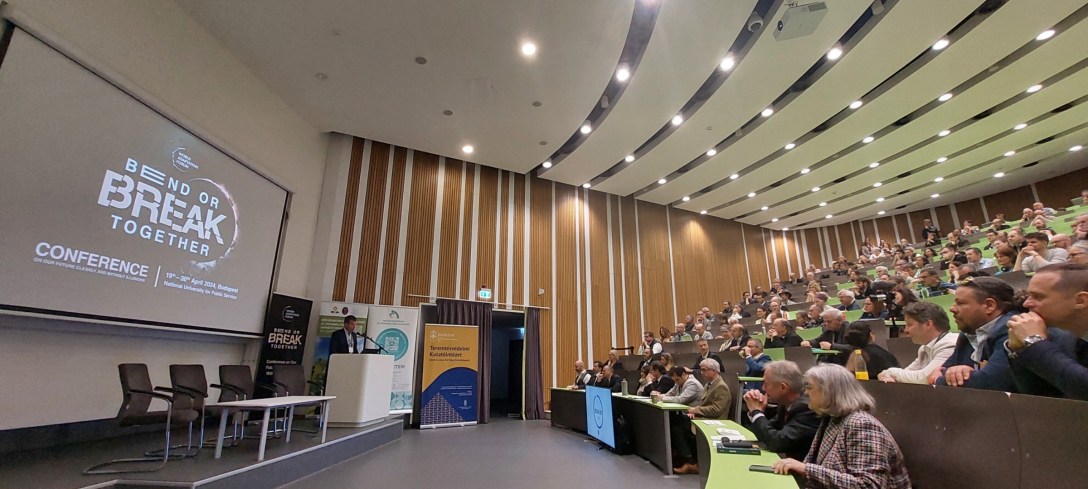
In March 2019, we launched the Deep Adaptation Forum (DAF) as a mechanism for people to collaborate with each other as their best selves in the face of societal collapse. It was my main response to the explosion of interest in the ‘deep adaptation’ paper. The aim of the new Forum was not only to connect people, but also to catalyse and promote initiatives around the world. We served that goal with a small grant and a team of part time freelancers, with the understanding that ‘deep adaptation’ would be shaped by its participants and take myriad forms around the world. Consistent with that bottom-up ethos, I left the Forum in October 2020 and observed from afar as it evolved – and continues to evolve. Last year I was contacted by one of the many national groups that make this movement real-in-place and we discussed the idea of marking the 5th anniversary of the start of this movement. The group is in Hungary, which had emerged as the largest and most active group in the world.

That is why in April this year I visited Budapest to celebrate the dynamism of ‘Deep Adaptation Hungary’ and launch the Hungarian translation of Breaking Together. The draft text of my talk to open the World Adaptation Forum, which they organised, follows below. I focused on the fact that people are making hugely significant and positive changes in their lives due to their acceptance of societal collapse. That doesn’t mean things won’t be tough, or there aren’t many more things that could be done… rather, it’s time to recognise that many people are becoming their best selves because they are not lying to themselves anymore. It is thanks to Balazs Stumpf-Biro and Krisztina Csapó, since 2019, that Hungarians have been finding each other to explore that.  

Continue reading “Sacred Pessimism – a talk to mark 5 years of a new movement”
It’s a big world out there (beyond the limits of English media)

The fact that so much of the world now speaks English has made it convenient for me, as a British man, to interact with people around the globe. Last week, for instance, I was with over 100 climate professionals and activists from across Asia, and the whole retreat (here in Bali) was in my native tongue. The prevalence of the English language means that I can learn about the experiences of people from different parts of the world. In addition, they can more easily learn from each other. But as we enter an era of societal disruption and collapse, the prevalence of English reflects a dominance of systems and cultures which is unhelpful. In Breaking Together, I describe this as Imperial Modernity: “the interlocking set of political, economic, and cultural systems that shape our everyday lives to favour the accumulation of power by elites.” It is why I am interested in learning more about responses to environmental change from outside English-speaking countries, and the ‘West’ more generally. Although living in Indonesia helps, my desire to engage beyond my usual circles is one reason why I am travelling on a book tour this year. 

I lived the majority of my adult life outside the UK, where I was born. Over the years I have noticed that people from English-speaking countries are more likely than people from elsewhere to assume that their framings of philosophies, politics, problems, and suchlike, are both ‘common sense’ and universal. They are also more likely to express an opinion on what is right or wrong in other countries. However, my view is that just because the world speaks English does not mean the English-speaking world contains or defines everything that matters in the world. 

Continue reading “It’s a big world out there (beyond the limits of English media)”