Report on the First Metacrisis Meeting

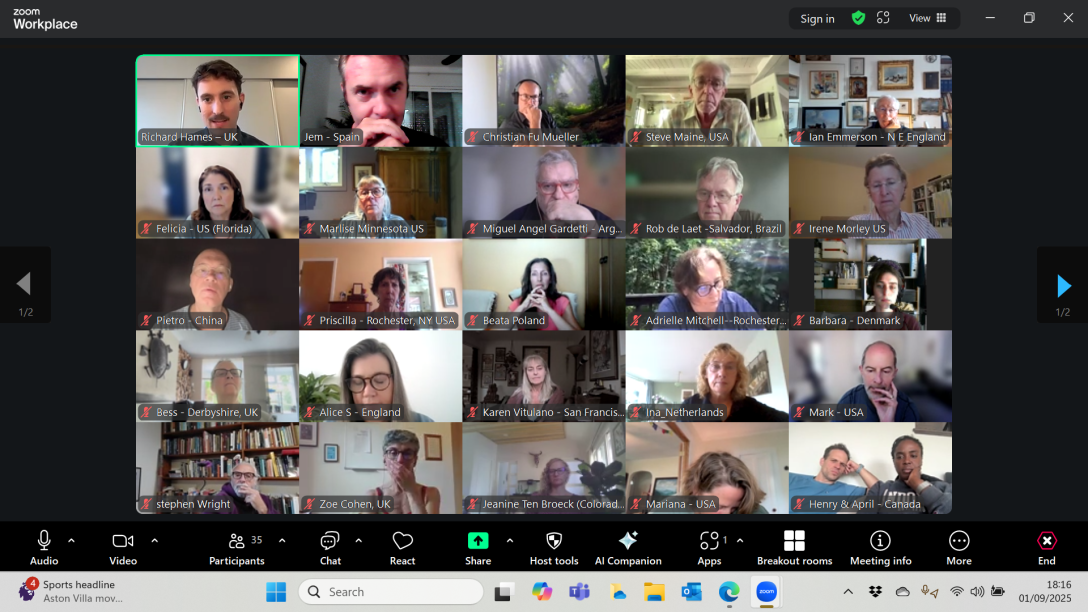
We had some interesting discussions in the first Metacrisis Meeting, on the politics of collapse, with 27 joining for the first session, and 35 for the second. The first session was more participative, whereas the second session had more space for a Q&A with Richard Hames from Novara Media. We were delighted to be joined by people from around the world, including academics, artists, activists, therapists, medics, consultants and local government leaders. 

The Metacrisis Meetings are a salon for discussion of ideas, with no recordings or formal outputs, and under ‘Chatham House’ rules. That means that afterwards, participants can share what was discussed but not claim who said what. The next meeting is on October 6th – and you will receive the background essay for it will be out on September 6th. Read on if you want to have a glimpse of our discussions… (To keep this blog focused on substantive commentary, future summaries of the meetings will only go to members of the metacrisis meetings initiative). 

Continue reading “Report on the First Metacrisis Meeting”

Subcultures of collapse – will there be a convergence?

A couple of years ago, Richard Hames interviewed me for Novara Media on the topic of whether we might see a solidarity-based politics of collapse. That’s what I encouraged in Breaking Together, by presenting my particular philosophy for these times. Richard is unusual amongst journalists on the left of politics for taking societal collapse risk and readiness seriously. He writes a blog on a topic he calls ‘critical collapsology’. His latest piece explores seven subcultures on collapse and suggests there could be a convergence over time. That hypothesis raises some interesting questions, and so I’m sharing about it here, in advance of a webinar in a couple of months (part of a new ‘Metacrisis Meetings’ initiative).

Continue reading “Subcultures of collapse – will there be a convergence?”

Our Humanity Dictates that the Collapse of Other Societies Matters to Us – including Palestine

Update on July 31st 2025:

After publication of this essay, there were a couple of months of what I considered unsatisfactory responses from various persons in senior volunteer roles in the DA Forum, who complained about my public criticism. However, by July, there was a widening of focus to include addressing matters of online group moderator capacity, diversity and accountability. Conversations are ongoing to improve systems. In addition, the original post that was blocked by moderators of the DA FB group has subsequently been accepted here.

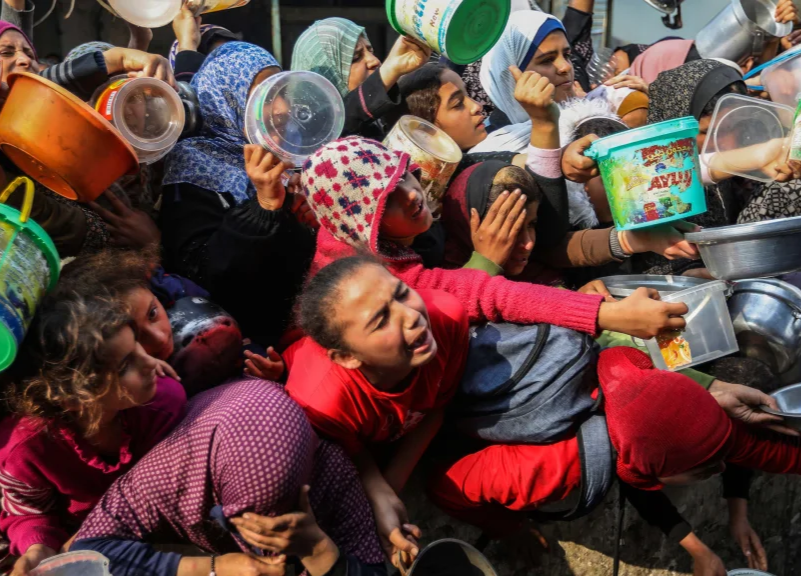
It is painful to think that many of the children pictured above are now starving to death, and the world has watched, without a way to intervene until too late for so many. 

For over a year some people have been saying “one day everyone will have always been against this”. They recognised that many people only move with the herd, as defined by legacy media and cultural bias, and such complacency provides abusers with the time to do great harm. In a metacrisis with societal disruption and collapse, we would benefit from more people with greater ‘critical wisdom’ as I explain in in Chapter 8 of Breaking Together. We can also ask people to learn from their mistaken compliance and complacency, to avoid repeating it.

Many of us are lucky that societal collapse is still only a concept. It can be our way of understanding the increasing difficulties we experience, or the increasing damage to the natural world, or can describe a future breakdown of basic services in our societies. However, for some people the collapse of basic systems for living has been happening for a long time. Moreover, some people are experiencing the daily risk of being killed, the pain of hunger, grieving loved ones, and coping with trauma from regular bombing and displacement. A military-induced collapse of society is one that could be stopped, unlike the wider collapse that unfolds due to environmental and other factors. Therefore any such volitional collapse is something we could try to prevent, or reverse. It is something that calls for our attention and action. That is especially so if our taxes are funding part of it or our financial savings are benefiting from it. 

What I have just written seems self-evident. It should not need explaining. Therefore, it is heartbreaking that a few people who made the reduction of harm from societal collapse a major theme in their lives have been blocking people with a similar perspective from discussing how we might help people in need, with no transparency about that censorship, which means we develop a mistaken impression of the response of our fellow man. I am writing about it here because I think that with your help this situation can change, and with it, both systems and cultural dynamics will improve in the Deep Adaptation communities and movement. 

Continue reading “Our Humanity Dictates that the Collapse of Other Societies Matters to Us – including Palestine”

What did you do in the genocide Daddy?

Jewish voice for peace, April 15th

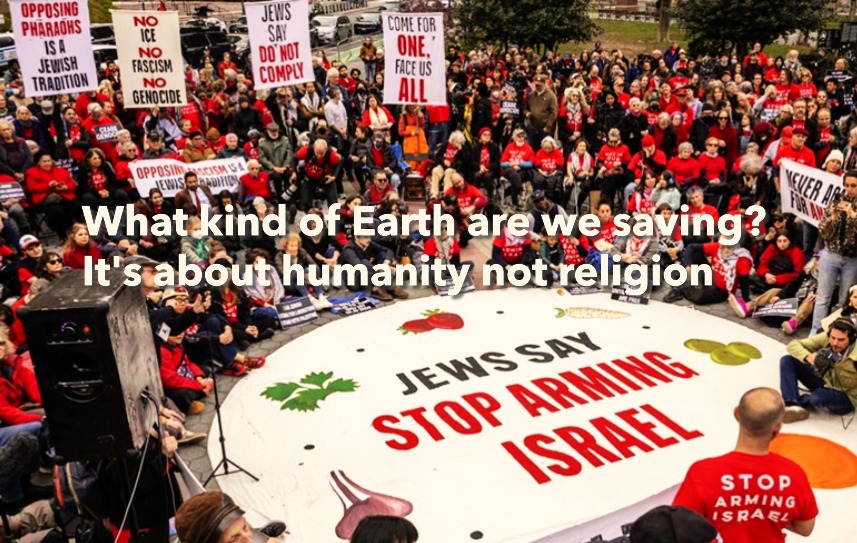
Why should we talk about Gaza and genocide on Earth Day? Partly because we should be talking about it everyday. Partly because the same mix of forces that are destroying the planet are destroying life and land in Gaza. Partly because the mainstream environmental sector won’t be talking about it, as they lie that all we need is more technology, hope and charismatic leadership to save the world. My friend and colleague in the field of collapse readiness, Matthew Slater has marched with the Palestinian flag nearly everyday for the last 18 months. We discussed what he has learned and what more can be done, which resulted in the following guest essay. Please read and then share with individuals by email, not on social media, where such content is likely buried by algorithms.

Thx, Jem

What did you do in the genocide, Daddy?

by Matthew Slater [listen to an audio of this essay]

I find it difficult talking about Palestine.

What is happening is so much more than a regional conflict or an antiterrorist operation. So much more even, than the alleged genocide that is picking up pace. Before I put my case, it will help some readers who rely on mainstream media if I lay out some facts. I will limit myself to 10!

Continue reading “What did you do in the genocide Daddy?”

Should Deep Adaptation spaces be discussing contentious social issues that are (arguably) not directly related to collapse? 

Sometimes people object to any discussions of politics, pandemics, wars, racism, or gender, in Deep Adaptation fora. The ‘little’ matters of ecological destruction and the collapse of societies are stressful enough, even before airing any of our disagreements about politics or current affairs. Consequently, some people wish for a place where such topics are avoided, so the discussion is limited to how to help each other emotionally and practically. Some groups in the Deep Adaptation movement even make it explicit that politics should not be discussed. However, I’ve said for a few years that I think that such a position is no longer tenable, with the issue now being how such conversations can be well held, so they advance understanding rather than discord. That is simply because collapse has been shaped by politics and will be made better or worse by politics in future. Additionally, contentious social issues involving inequality, gender, race, neurodivergence, health and human rights, amongst others, don’t become irrelevant just because societies are fracturing. In fact, for many people such matters can become more important, as they wish to maintain their values and reduce suffering as situations become more difficult. I’ve wondered over the years if we don’t try to apply the ethos of Deep Adaptation to matters of policy and power then how robust is our commitment to that ethos

Continue reading “Should Deep Adaptation spaces be discussing contentious social issues that are (arguably) not directly related to collapse? “

Have you ever seen a relaxing X/Twitter thread?

Have you ever seen a relaxing X/Twitter thread? No, me neither. I hardly ever write them. And when I do, it’s usually about bad news. But I recently tried to transmute some upset into celebration… here is the text of that x/twitter thread. 1/29

A surprise to end the year was @JustCollapse founders Tristan and Kate posting across social media that I am a “far right promoter”. Unfortunately, they didn’t yet reply to my emails about their misunderstandings. But I realised I could take that as an invitation to publicly celebrate my decades of Leftiness 🙂 You might not admire that, but it’s a big part of who I am, so here begins an indulgent Lefty thread! 2/29

A highlight was in 2017, co-writing with Jeremy Corbyn and Marc Lopatin the first speech Corbyn gave about why he sought to become Prime Minister. Biographer Alex Nunns thought his best ever. It was part of a 6 week General Election campaign that gained about 20 points in the polls.  Watch here:  https://youtu.be/P0Cr8CVkdMs 3/29

Continue reading “Have you ever seen a relaxing X/Twitter thread?”

The Politics of Collapse: uncommon conversations for unprecedented times

“Are you leaving just before the election in case there is trouble?”

I was asked this a couple of times in San Francisco, during the week before the US election. That told me of the anxiety that some people were feeling in the run up to the vote. Nearly every time my conversations turned to politics, I heard people express their incomprehension about others supporting a candidate that they do not. I did not hear merely a concern about different priorities. Rather, I heard the belief that other people are stupid or bad. The anti-Trump voters focused on the bad things about him and ignored the real grievances that were motivating people to vote Republican. The pro-Trump voters focused on the bad things that the current US administration has done and ignored the real concerns about the former President. In both directions there appeared to be a belief that they had superior information, intelligence and ethics. When I noted that people are demonising those they disagree with, in ways that ignore real concerns, everyone I chatted with agreed that such negativity towards fellow citizens is not helpful, and that the political situation in the USA is depressing. That got me thinking about how more of us need to be if we are to develop new forms of politics suited to an era of societal disruption and collapse.

Continue reading “The Politics of Collapse: uncommon conversations for unprecedented times”

Expressing ourselves and trying to help, without it mattering

Beyond Mattering
Do I matter?
Is that my driver?
If I matter, then I matter,
With no question, no trying.
To accept I matter, without condition,
Is something I could feel from within,
But can I?
Perhaps with the help of a mantra,
On losing my need to matter.
So, let’s make it now:
I shall not need to matter
But it’s welcome when I do
And I won’t need to have mattered
But it’s welcome if that’s true
Neither will I need to be heard to know
Or known for who I am
For that would be joining a very pointless queue.
But there go those bells from the temple
Durga doesn’t quite agree
She’s sending me some edits
To this mantra on feeling free.
So, let’s try again:
I really won’t matter much
But it’s welcome when I do
And I haven’t mattered much
But it’s welcome if that’s true
I won’t be heard that much
Or much known for who I am
For that’s an endless queue.
I write these words to clarify
And remind my future self
But will I share these words somewhere?
Or leave them on the shelf?
Oh, this need runs deep
To matter
To matter
To ‘share’ to matter
But Durga’s bells remind me
that sharing can be okay
Because, after all
It just won’t matter.
Not much, anyway.

(June 2020, edited June 2023, by me)

Continue reading “Expressing ourselves and trying to help, without it mattering”