Sometimes fevers have been a psychological medicine for me. They force me to stop, which eventually makes me reflect on life. But that’s not the only impact. The delirium from a raised body temperature and cytokines involves an altered state of consciousness. Feelings can bubble up and new perspectives appear. Without my fevers, I might not have taken some of the ‘sharp turns’ of direction in my life. That doesn’t mean I welcome illness, for myself or anyone else. But I now recognise that when we get sick we can welcome potential insights from an altered state of consciousness, as a silver lining to what is otherwise a worrying, painful and boring experience. Why people like me need something as dramatic as a high fever to discover new meanings and directions in life is an interesting question. More on that later. But first I want to share with you a few stories of fevers, which led to me writing my latest song: Always One (Om Mani Padme Hum).
My last high fever happened a few days after I had been bitten by a dog. I had been saying goodbye to the head of the Buddhist Temple, and his dog seemed friendly until I responded with a pat on his head (the dog’s). I doused the wound in iodine, bound it, and said goodbye, leaving with a question in my mind about whether they should keep the dog away from the guests. It was an odd way to end a meditation retreat – a reminder of the random ups and downs of life. Later that day I waited with apprehension for a reply to my whatsapp to the Temple office. “Yes, the dog has been vaccinated for rabies” came the reply. When home, I began searching what the disease risks might be and looking up when I’d last had vaccinations for tetanus and rabies. I discovered I was a couple of years past the time when boosters are recommended. I then discovered the good news that tetanus isn’t as bad as I’d thought, whereas rabies is worse – once you have a fever you will certainly die within weeks. Fortunately, there were no signs of infection at the wound site, and I felt fine, so I decided to do nothing; a decision which I’d wonder about later.
During the retreat I had been sitting with the Buddhist mantra ‘Om Mani Padme Hum.’ I first heard the traditional melody coming from the inside of a plastic golden cat on a shop counter in Hong Kong: the type that has a raised paw swinging back and forth. When people started singing it at the Buddhist Temple, all I could think of were tinny electronic sounds coming from a ‘beckoning cat’. Being a bit of a snob about what I considered ‘consumer tat’, this memory was a bit of a barrier for me to engage with the mantra. But over time, as I sang it in the temple during sacred kirtans, I became curious about its meaning.
The standard translation into English is that “mani padme” means “jewel in the lotus flower.” One explanation is that this is a metaphor for the Buddhist path: the jewel represents the method to attain spiritual wisdom, which is represented by the lotus. Some people like to focus on how the lotus is beautiful despite emerging from mud. Yet all the beautiful flowers emerge from mud or soil, so I don’t accept this perspective for explaining the focus on the lotus. Other interpretations of the mantra involve the meaning of the individual syllables, where Ma dissolves pride, Ni dissolves cravings, Pad dissolves ignorance, and Me dissolves distraction. After my reading, meditating, and insights from a high fever (which would appear after the dog bite), I prefer an additional explanation that recognises the complementarity of the gendered aspects of the terms ‘mani’ and ‘padma’. That led to the lyrics of my new song, so I’d like to explain.
The jewel or bead in the middle of the lotus is the stamen. It releases pollen, as the male contribution to reproduction. That is why the term ‘mani’ is used poetically and in slang to refer to testicles in some Sanskrit-derived languages. Maybe some of us British guys are echoing that when we refer to our ‘crown jewels’. The word ‘padma’ means lotus flower and is a spiritual symbol in all the Dharmic religions. In Hinduism, it is associated with goddesses, who are often seated on a lotus. In some spiritual writings, as well as poetry, myth and slang, the external shape of the lotus is a symbol of the divine feminine, of female reproductivity, and the womb. I’ve been told that it is a far more pronounced meaning in tantric and esoteric traditions within Hinduism and Buddhism. I think recognising the gendered aspects of the flower and stamen gives us an insight on why people throughout the ages regard this mantra as praising the unity of reality and, therefore, of the divine. That is why the mantra begins with Om, the universal sound, and ends with Hum, which means indivisibility.
I settled on the idea that, for me, the lotus mantra is about surrendering to the fundamental unity of everything, including the feminine and masculine principles in the unfolding of creation. But then I had my first cups of blue lotus tea, which had a remarkably heart-opening effect on me. Could it be that some people have been singing in praise of the parts of the lotus flower that have this heart opening effect? Perhaps. In any case, I now serve blue lotus tea at the Buddhist kirtans in my house.
The lotus mantra was one of the first that I learned on guitar. It became a favourite for my cat Buki, who I had rescued when he was one month old, from the same Buddhist temple. If he wouldn’t come in from the paddy fields after I called him, he would show up soon after me playing and singing Om Mani Padme Hum. A Buddhist cat, perhaps? I told my father about this behaviour when I played the mantra to him in the nursing home where he stayed during his final months. Through such moments, my feeling about the mantra came quite far since I heard it in a shop in Hong Kong. It was the same words and melody, but had been re-coded for me as spiritual not kitsch, and meaningful, not cliched. I’ll come back to that in a moment.
Three days after the dog bite, my body temperature hit 41 degrees Celsius and I began to shake uncontrollably. I began to wonder if something rather dramatic and final was underway. As I couldn’t leave the house, I was fortunate to be able to call a medical team and they put me on a paracetamol drip. Could it be a mild form of septicemia? Or tetanus? Or nothing to do with the dog bite? They drew blood and told me we’d know more in an hour. I sent another message to someone else at the Temple to double check. Yes, the dog was vaccinated for rabies. I wanted to know, even if it was too late.
During the fever I had a new insight on the mantra. Or it seemed new, even though it was a logical extension of what I’d understood. If all is One and that One is divine, then although my liking and disliking is a part of that One entity, my perspective doesn’t define or reduce the aspects of existence I am disliking. Which means even rabies, tetanus and plastic cats are part of that divine whole, along with my dislike of them. Moving to a broader level, the destruction wrought by industrial consumer societies, and the pain that is coming as they break down, are all part of the divine whole. The authoritarian and aggressive responses, as well as the loving ones, are part of the divine whole. In my fevered state this insight seemed outrageous and unsettling while also obvious and calming. I was discovering a deeper acceptance of what is painful and wrong, at the same time as accepting my own compulsion to try to change that and live in – and for – a better way. So I still think vaccinating all the dogs in Bali against rabies is a great initiative and that singing the lotus mantra in a temple is nicer than hearing a recording emanate from a plastic cat. I still think that helping people resist manipulation to hate their neighbours as societies become more unstable is important work to do. It’s just I don’t have this sense of alienation, superiority, even hatred, towards phenomena and behaviours that I think are horrible. Or, I didn’t have that sense during the fever. As it was an altered state, and over time, these feelings can creep back in, as my ego craves judgement of that which it isn’t, that which it is afraid of, or which it can’t benefit from.
My phone beeped, and the message from the doctor told me I had raised levels of white blood cells. I had an infection. But already my body temperature had dropped and the spasms stopped. Probably not going to die so soon. My friend Vasudev thought I looked better and he could leave without worry. I’d been ‘motormouthing’ about the mantra. But now on my bed, alone, and breathing deeply with the belief that I wasn’t dying, I started to write about my insights on the mantra. I started writing something resembling poetry. I realised the resonance of Om Mani Padme Hum, with some of the teachings of Hermes Trismegistus on the fundamental unity, balance and flow of everything. As pain is part of the one, why sing the lotus mantra in a blissful way? Why not include all the feelings in the mantra? So still lying on the bed, I picked up my guitar and sang “as there is the light there’s shadow…” and wrote a song that then flowed into the traditional Tibetan melody, but with an added bite.
The reason I reached for my guitar was because I know that fevered states and strong emotions are creative moments for me. One of the worst, and longest, fevers I ever had was late July 2021, from Covid-19. I’d just started playing the guitar and only knew a couple of songs, and got bored of them quickly, so I started to write my own. I remember calling Vasudev and saying “I’ve got a chorus, so how do i write a verse”. He replied “try doubling the chords and see what melody comes.” Bingo. I released that first song with a comedy video (Something’s Needling Me). About a year later, I wrote the song Aspirations in the two days I was stuck in a hotel room with a high fever after the wedding of a couple of close friends. Looking back, I realise fevers have been key in my life other than for song writing. In 2013 after my Inaugural Professorial lecture I had my first ‘dark night of the soul’ during a fever when I considered it might be too late to stop climate chaos. I pulled myself together for 4 more years after that, before finally taking time off work to research the latest climate science for myself, leading to a paper called “Deep Adaptation.”
No one ever told me to welcome the personal development potential of a high fever. That might have helped me relax more into the delirium and keep a note pad for any insights. I don’t think we’ll ever see a world leader at the start of a flu epidemic reminding us to make the most of our fevers. Helping spread the word about adopting a more reverent approach to the next time you notice a sore throat, headache and sweaty brow, is one reason I wrote this essay. Reading around the subject, I discovered there are existing strands of thought on the matter. Carl Jung is one of a number of psychoanalysts who explained the power of fever in shaking our structures of identity. He said a fever could open the psyche to archetypal material and unconscious content, leading to self-discovery. That is because momentarily experiencing liminal states between consciousness and unconsciousness allows access to deeper realms. That would not be news to Indigenous peoples around the world. For instance, ‘spirit sickness’ is regarded by Siberian and Mongolian shamans as the birth of a new, spiritually empowered person. In Mircea Eliade’s ‘Shamanism: Archaic Techniques of Ecstasy’ he documented how many shamans worldwide experience fevers or severe illnesses in their transition into spiritual healers.
In Buddhism, the power of the fever has been recognised since the life of Buddha himself, who taught during a high fever before his death. In Tibet, the 6th Dalai Lama, Tsangyang Gyatso, wrote poems describing fever and illness as “burning away illusions,” bringing him closer to spiritual truth. The founder of a branch of Zen Buddhism, Master Dōgen, wrote similarly about fever, as have various teachers in other strands of Buddhism.
If you don’t ever get ill, then don’t worry, you can access these altered states in other ways. In my case, a native american sweat lodge on my 52nd birthday was important in tuning me to deeper truths and needs right now. I know many people recommend fasting, trance, and psychedelics – it depends on how such experiences are intended and supported. Which would be the subject of another essay.
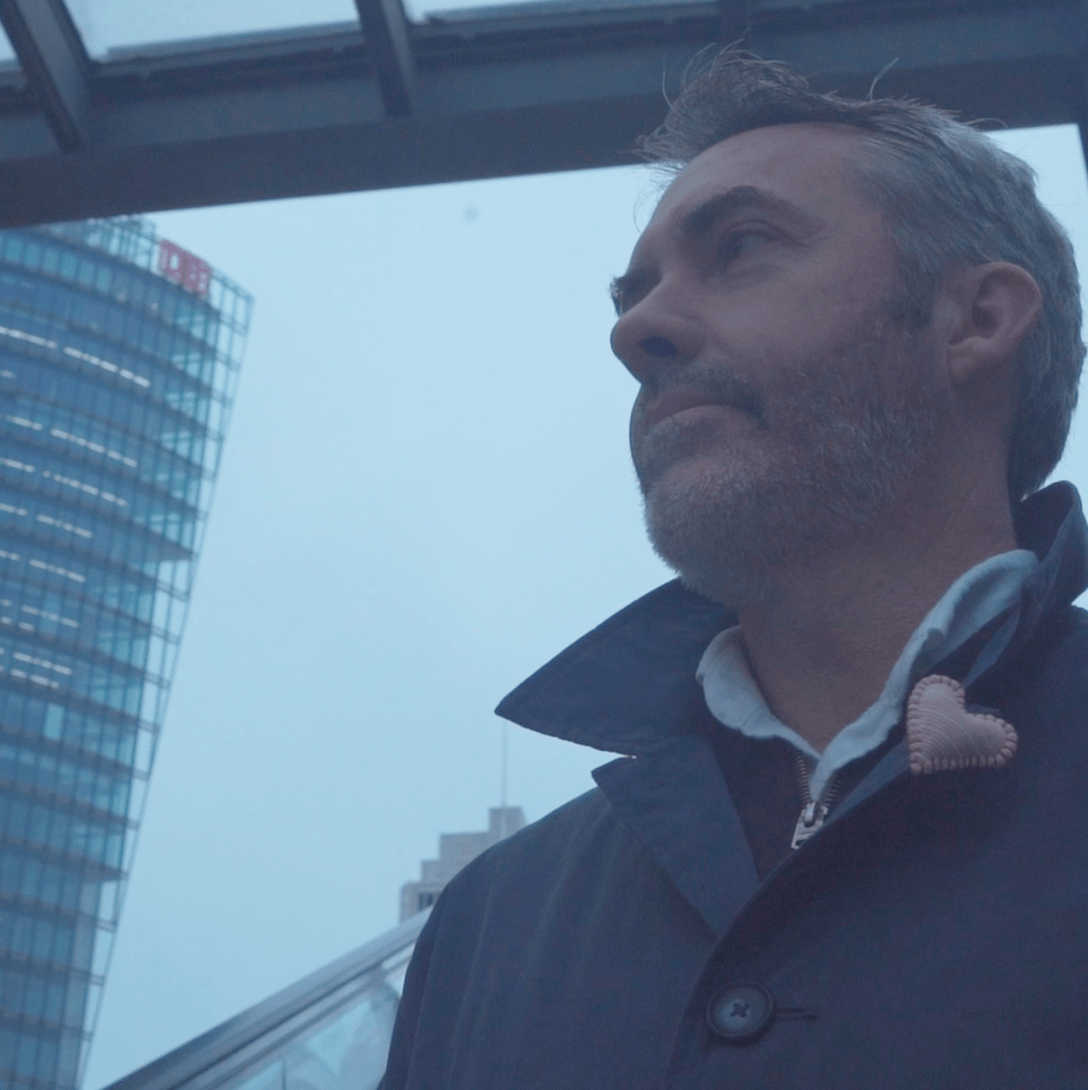
I hope you like the song and video for Always One. It is the 4th release from the Barefoot Stars, my folk band. We sing about what’s important in life in these times of disruption, collapse, loss, and rebirth. Healing Hearts is about transformative grief, Mystical Cat about the quality of consciousness in all living beings, and Aspirations about healing from emotional trauma. I’m pleased to have discovered songwriting and performing in medicine music ceremonies and kirtans. I only have the basic skills, but enough to join others in reconnecting with the joy of existence. I thank Mia and Diana for ace vocals, Adam for playing various instruments and co-producing with me, and Rama for passionate tabla drumming. I was incredibly lucky that Moritz Springer agreed to show up in a winter rush hour in Berlin and film me as I was leaving after my last ever talk on collapse risk to a corporate audience. I’d only suggested the idea to him at the conference the night before. He did a great job on the edit as well. It’s a video collage that may make more sense if you appreciate what I’ve explained about the lotus mantra in this essay.
May all beings be well, but with a few sacred fevers along the way. xJem
—
Lyrics and Chords for Always One (Om Mani Padme Hum)
Intro
[G]As the pain of the [F]world gets to [Am]me
And [G]I can’t stand so [F]many things I [Am]see
And I [F]wallow in the [G]hurt that I [Am]feel
May I re[G]member
May I re[F]member
Yes, we’ll re[Am]member
Verse
[F]As there is the [G]light there’s sha[Am]dow
And [F]as there’s high a[G]bove, there’s be[Am]low
[F]All that comes in [G]love has its sor[Am]row
So we won’t [Dm]feel quietly [G]numb
But we’ll [Em]open our hearts to [Am]what’s to come
For [Dm]all is [G]one
It’s always [Am]one
Chorus
[Dm]Om mani padme hum
[Em]Om mani [Am]padme hum
[F]Om mani [Dm]padme hum
[G]Om mani [Am]padme hum
X2
Then repeat Verse x1 (octave raise at end)
Then repeat Chorus x8 (speeding up if it feels right)
Outro
[Dm]We’re nature growing
[Em]We’re nature [Am]grieving
[Dm]We’re nature feeling
[Em]We’re nature [Am]freeing
[F]We’re nature [Dm]hurting
[G]We’re nature [Am]healing
[[F]We’re nature [Dm]knowing
[G]We’re nature [Am]now
Gratitude
Adam Aldyrus with guitar, bass
Rama Pramuditha with tabla
Diana Beauty with harmonium and vocals
Mia Warner with vocals
Video by Moritz Springer
Music and Lyrics by Jem Bendell
Production by Jem Bendell and Adam Aldyrus
Instruments in the released version
Guitar, Bass, Harmonium, Shakers, Cajon, Tabla, Kartals, One lead male vocal, One backing male vocal, Four female backing vocals.
Discover more from Prof Jem Bendell
Subscribe to get the latest posts sent to your email.
