Why Deep Adaptation needs re-localisation

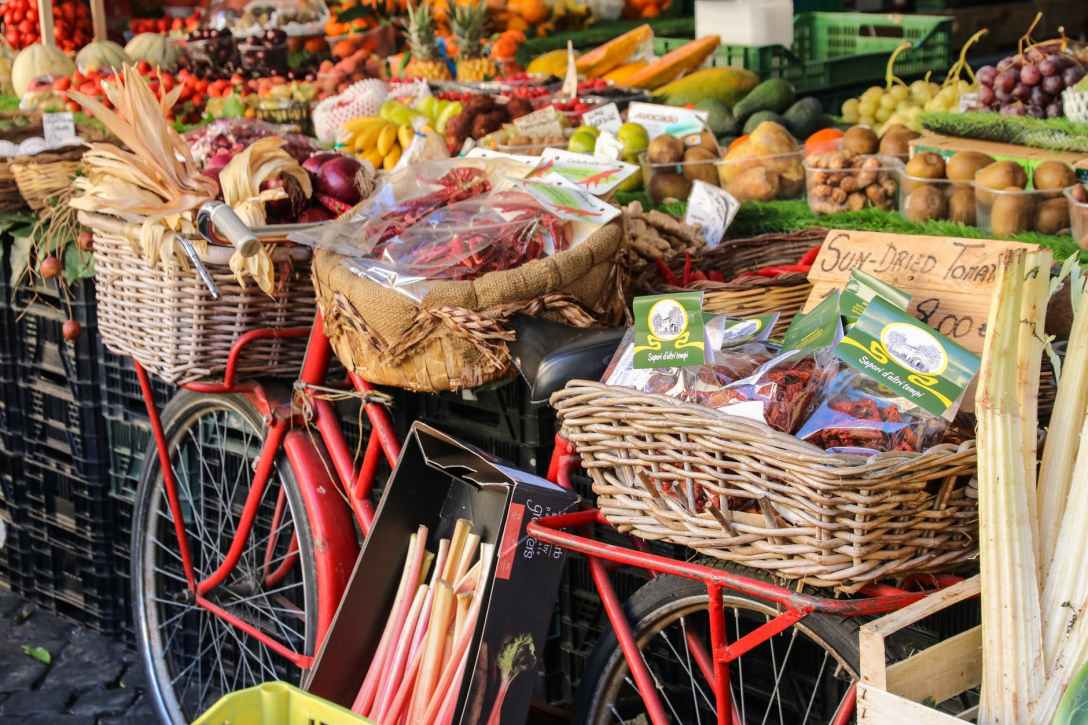
assorted fruits and vegetables in baskets for sale in the fruit market

By Matthew Slater (Community Forge & Deep Adaptation Forum) and Jem Bendell (University of Cumbria & Deep Adaptation Forum).

assorted fruits and vegetables in baskets for sale in the fruit market
Photo by Armand M on Pexels.com

Deep Adaptation is firstly and mainly about coming to terms with the end of our way of life, and finding in ourselves and each other loving responses in place of fear and blame. Many people, having dwelled in that space for a while, then seek various forms of meaningful action, usually around living more fully and trying to reduce future harm. Increasingly, people are putting energy into re-localising their societies and economies. The rationale for such action is often quite personal. In our experience of engaging with people who are seeking to localise their lives as part of their deep adaptation, the following ideas often come up:

  • there are many links between globalised neoliberal economics and the drivers of the climate crisis
  • there is a long tradition of alternative economics promoting localisation for environmental benefit that goes back to EF Schumacher
  • most people express little to no political agency at the national level, whereas local politics appears much more accessible
  • many people find working face-to-face with neighbours easier and more enjoyable than sporadic collaborations at national levels
  • they consider they are more likely to benefit from results of their own local improvements.

It is not that all globalisation is all bad, but that there has been a huge imbalance in power at the global level, with the interests of corporations and banks shaping the agendas. Progressive internationalists can point to many benefits. For instance, global technical standards make the internet available to everyone, our electronic devices (somewhat) compatible, and other infrastructure like GPS means no-one (carrying a phone) gets lost any more. Global law like the human rights charter is a fantastic political achievement despite many countries’ neglect of it. Intergovernmental cooperation is also essential for both cutting and drawing down carbon emissions, as well as adapting to the effects of extreme weather on our societies. So it is important to clarify which aspects of life most need to be local, and indeed, regional and national.

There is one really important reason why we need to rebuild local life, which has been hollowed out by the needs of the economic machine in recent decades, and indeed centuries: that reason is resilience.

There are growing debates about how society will respond, breakdown or collapse through the impact of global heating. Probably the most referenced theory of previous societal collapses is Joseph Tainter’s theory of complex societies. He alleges that when the base conditions change, the layer and layers of governance, bureaucracy built up during long periods of stability come crashing down. That means that our means of global governance, global infrastructure, and global trade, are at the greatest risk – ironically the very things our prevailing ideologies have been driving us towards, in the name of efficiency.

Of course Tainter’s collapse is an interpretation of history, not necessarily a prediction of the future, but it gives grounds for thought. It suggests that if say food, or fuel were to become generally scarce, flows of resources towards the most abstract, and complex organs of society would wither. From that theory, perhaps the Bretton Woods institutions, complex trade agreements, international law, the most complex financial instruments, airlines, computer hardware and social networks, could be amongst the first things to fail?

This could be a matter of ‘falling back’, but it could be worse if we have come to depend on those things. For example much food is imported by air, interest rates in all mortgages are globally linked to high risk finance, and we may struggle to imagine life without mobile phones and social networks. If national infrastructure should start to crumble, life could become very difficult.

A great explanation for all this vulnerability can be found in a biology / economics study which shows that efficiency and resilience lie at opposite ends of a spectrum. Generally, more diverse systems encourage more redundancy and more linkages between components, and more uses for each component. Imagine running across a tightrope – you can go pretty fast unless you fall off! Running across the safety net is less efficient but you are less likely to die. The authors stressed that this principle applied in economics as in other fields. “Economics seems in pursuit of monistic goals and all too willing to sacrifice everything for the betterment of market efficiency… Preoccupation with efficiency could propel into disaster.” Capitalism has always been about building greater efficiency (maximising GDP for a given population), and within that the regular financial mishaps have been regarded as mere abberations. The theoretical cost of super-efficiency is the risk of super-accidents, which implies that economic globalisation is setting us up for the mother of all collapses.

There are several formulations of resilience in general terms. Key amongst them is the need avoid single points of failure, by distributing the work and the processing throughout the system. A related goal for resilience is that the same functions should be fulfilled by different mechanisms so that when conditions change in unforseeable ways, some mechanisms are likely still to work. Localisation is desirable for many reasons, but it is systemically important for these reasons, so after that somewhat long introduction to the topic of localisation for deep adaptation, in the remainder of this blog we will look closer at what it could involve. If you would like to engage on this topic, we recommend joining the Community Action discussion group of the Deep Adaptation Forum.

The most prominent localisation movement in UK at the moment is the Transition Town network, which grew out of the systemic thinking of permaculture. That movement has thoroughly explored what localisation entails in the modern context, and piloted many projects. Ecovillages also play an important role in pioneering deeply different ways of life, which many of them can do, as intentional communities.

So let’s take a closer look. The Transition movement emphasises several areas of life in need of localisation, which we will now expound upon, sometimes using examples from other movements:

Food
Food is usually the highest priority because humans require lots of it, every day, and it requires months of preparation and often lots of organisation to produce and prepare it. The industrialised food system depends on massive inputs of fossil fuels, both to power machinery and for fertiliser, and results in high waste, pollution and often poor nutrition. And yet by growing food in gardens, allotments or on public land, families and communities can dramatically reduce dependence on imports and industry. In most countries there is a large informal food scene, consisting of farmers’ markets and part-time, self-sufficient growers alongside people drying, preserving, baking and occasionally serving labour intensive foods – and those who wish to pay the price. Those who want to support local growers and eat organic food with the seasons can find more and more veggie box schemes, formally known as Community Supported Agriculture.

Energy
Energy prices are increasing over the long term, and our supplies in the West have depended on militarised subjugation of people in other countries. Much energy generated in power stations is lost in transit. The imperative to reduce or stop fossil fuel consumption can involve four approaches: reducing energy consumption and changing usage patterns, nuclear power to which many object forcefully, massive solar and wind farms, and small scale renewable energy, owned by individuals or local communities.

Government
In these kinds of matters, the hand of government is everywhere from creating minimum standards, to reporting requirements, and market influence through taxes, grants, and subsidies. Governments, especially local governments are under enormous pressure to cut costs and sell assets, and this creates an environment, not accidentally, favourable to enterprises led by large corporations with better access to credit, lobbying power, cheap labour etc. Many elected representatives and civil servants don’t really understand the full extent of this process, or if they do, they don’t or can’t organise, stick their necks out, and change it. A recent phenomenon in UK, dubbed flatpack democracy has seen citizens organise, get themselves elected, and accomplish useful things at the local level.

Finance
Modern capitalism favours large institutions which can spread risk and maximise profit for shareholders, which means that small and local businesses find it very hard to get loans. Other non-commercial community institutions, including government struggle for viability, especially after a decade of austerity. Philanthropic funding increasing comes with demands that revenue streams be developed. UK has a law called ‘community right to bid’ which allows local groups to purchase local assets and amenities like post offices, village shops or community pubs. The Plukett foundation helps communities to organise themselves, and the UK government helps them to issue shares for such purposes. We are watching another initiative which aims to create local care cooperatives as an alternative to crumbling state care system. All of this is a far cry from reversing the centralising effect of the last forty years of capitalism.

Currency
The difficulty of all of these things points towards deeper drivers. A number of local money projects in UK were spawned from Transition Towns initiatives, which helped to show the public that money is not the simple/neutral tool it may appear to be to the casual user, but could be designed differently. But the low traction of these projects also showed just how intractable money and assumptions about it are. We critiqued these projects elsewhere. Other initiatives like LETS and timebanking reimagine non-monetary currencies, supporting value-flows and exchange within communities, without banks, debt or government behind the accounting unit. In a forthcoming blog, we will offer two new ideas for local monetary innovation which build on these efforts, while focusing particularly on currency and payment systems that would survive an economic (and banking) collapse.

Leisure
In an era of fuel scarcity we shall have to re-learn how to holiday and play closer to home. In the UK, hardworking people often escape to the sunshine, but a more resilient attitude might be to focus on building quality relationships and having fun with other people, sometimes called ‘staycationing’. Cultivating musical talent, group activities and festivals, form another thread in the transition culture.

Our minds
For the Transition movement, “inner transition” is the mental, psychological and spiritual processes that accompany the social, economic and political transition to a post-peak oil world. It can be a personal or collective process and bears a lot in common with Deep Adaptation. These practices and ideas can be more intense in intentional communities, where living more closely together requires a higher degree of knowledge of self and trust of others.

Learning from the Limits of Localisation Past
There’s one more reason the localisation agenda chimes with Deep Adaptation. We don’t know how meaningful any of our efforts will be on trajectory of climate or the global response of humanity. Perhaps the future will disagree with Tainter and our society will collapse from the bottom up! So what is important to us about the localisation agenda and the practical things people are doing in relation to it, is that it is about a more vibrant way of living right now. Localisation points towards a more grounded, more connected, more human way of life in contrast with the ‘alienation’ many people feel from their work, families and neighbours. Helena Norberg Hodge promotes it for this reason, calling it “The Economics of Happiness”.

In Western countries, these efforts at environmentally-friendly localisation have been around for decades. So as we reflect on the implications for Deep Adaptation, it is useful to consider the limitations of current and past initiatives. Many of them have failed to spread to economically disadvantaged communities. The accusation then heard from some critics is that movements like Transition are elitist and excluding. While the limited extent or diversity of any movement can seem like an unfair criticism of hard-working, well-meaning volunteers, it is nevertheless a central issue for an agenda as all-encompassing as Deep Adaptation. Therefore, a key question for people interested in localisation to promote resilience for unfolding societal breakdowns and likely collapse is to learn from those limitations.

We can learn from situations in other countries where resilience has been improved in the past. In Cuba, for instance, where the past trade embargo led to self-reliant organic agriculture across the whole country. Or in Kenya, where people living on only a few dollars (equivalent) a day in informal settlements have reduced poverty without foreign aid money by issuing their own currencies. We do not know for certain the reasons for these successes, but the answers might be found in:

a) Community leaders convening those local people with the capacity to explore issues, prioritise actions and implement them in ways that reduce dependence on support from outside.
b) Focusing those initial actions on acknowledging and mobilising existing community assets, in order to collaboratively meet immediate needs.

Unfortunately, when funders get involved, they often start by bringing a deficit mindset, characterising communities by what is lacking. External funders’ agendas and mechanisms then privilege a few people in a community who are best able to look outside the community for answers and, once funded, begin to think on behalf of the funder as much as the community. It is why one of us has argued previously for a more solidarity-based approach from grant makers in the face of climate-induced collapse.

For more on this subject, see this Poetry of Predicament podcast.


The Deep Adaptation Forum would welcome any financial support you can offer via patreon.com.

The Spiritual Invitation of Climate Chaos

burning candles

What is the role of religion and spirituality in helping humanity respond to the tragic situation we face with rapid climate change?

Truthfully, I do not know. Because every religion is different. And each religion has its own flavours of adhesion to dogma versus openness to divine guidance in our daily lives. Yet, religion remains hugely important in providing stories of meaning and purpose, of right and of wrong, as well as modes of communication and solidarity across national borders. It also provides stories for how we might consider and learn from catastrophes.

The potential importance of religion for society as we face climate tragedy, and for me as I respond in my personal and professional life, is why I am enquiring deeper into different religious philosophies and practices. Since my Deep Adaptation paper was published in July 2018, I have been surprised to hear from religious leaders in Judaism, Sufism, Christianity, Buddhism, Animism, Shamanism, Druidism and the Brahma Kumaris. Their interest affirmed my intuition that our climate crisis invites us to consider existential questions that are so routinely displaced in modern society. That is why I accepted the invitation to speak at a Buddhist festival last summer. I want to explore how Buddhist philosophies on impermanence, suffering and loving kindness, are relevant as we face climate chaos. The video of that talk is available here.

Questions of existential meaning have become more important to me since early 2018, as I experienced deeper despair over our environmental situation. After looking at the latest climate and ecological science, climate measurements, emissions data and political-economic trends, I concluded that people of my age (47) will see a collapse in the societies in which we live, in our lifetimes – perhaps even before 2030. That outlook invites introspection on what one most believes in and wants to uphold in the coming years. Some people look at the latest climate science and see the likelihood of widespread early mortality for billions of people due to climate induced malnutrition, migration, homelessness, disease, crime and war. I fear that this foretelling of human ‘mega-death’ could be right. In any case, millions around the world are already suffering due to climate disasters that are happening right now. Poverty in more advanced countries is also being exacerbated by rising food prices, as extreme weather damages harvests. As populations become increasingly fearful, they can turn towards protectionism and nationalism; right-wing political narratives based on fear and false promises of security can become more attractive. Awareness of this situation means we experience an invitation to step forward in engaged compassion and solidarity with those who suffer, and to sow the seeds of future solidarity, compassion and forgiveness. With either outlook – collapse or human mega-death – it seems natural to me that people turn towards religion or their personal sense of the divine in order to find solace, meaning and guidance.

Some people go further. They see our situation as an apocalyptic one. The latest climate simulation models are projecting temperature increases of up to 7 degrees by the end of this century. Unless you have a magical faith in technology, then that level of temperature rise signifies the potential end of our species on planet Earth. With that apocalyptic outlook, suddenly our current stories of meaning and purpose collapse. Those stories are about progress, personal contribution, and deference to established order – ones that were so deep in us that we might not have realised they existed.

The word Apocalypse comes from ancient Greek and means to uncover or unveil. What might be the veil that will be lifted from our consciousness, as we perceive the potential end of our own species? For me, even considering potential human extinction led to a social veil being lifted from stories of human centrality, control and progress. Although I am not yet convinced that humanity faces inevitable near-term human extinction, even sensing it might be possible has invited me to into a realm of despair where old stories of meaning and purpose fell away, like veils from my awareness.

The potential annihilation of all that we know presents us with an incomprehensible and unbearable outlook. Knowing the intense and unsolvable pain of that outlook, but nevertheless turning towards it, is what can transform us. Because it means our sense of self is also annihilated. This death of the self offers us the chance to experience life without our stories of separation. From that place of ‘storylessness’ we can intuit that we are one being with all existence. In this way, our climate predicament offers humanity a global near-death experience.

I have learned that many religions tell us of the importance of such grief and despair in quietening our egos and turning towards the divine. In the Christian tradition it is an aspect of the “Via Negativa” towards opening up to God. Our climate crisis invites humanity into a planet-wide Via Negativa, where more of us may stumble upon moments of surrender and begin to change our lives as a result. Such changes may put truth and compassion at the heart of all our decisions.

My own journey from seeing widespread societal collapse as inevitable, catastrophe as probable and human extinction as possible, has been one of recognising my grief, allowing despair and then inviting transformation – albeit in slow and awkward ways. In this journey, I have discovered that Buddhist philosophy and practices are helpful to me. Core to Buddhism is the recognition that everything in life is impermanent and that our attachment to things is because of our desire to affirm, protect and project our existence as a separate being. That attachment adds to the pain of any loss and, ultimately, the pain associated with death – whether of others or of anticipating our own. The Buddhist practice of Vipassana, or insight meditation, has also helped me to see how thoughts and feelings I experience can be witnessed in ways that reduce my fear of them, so I don’t act from them, nor distract myself from them as often as I did as before. This practice seems important to me as we seek to help ourselves and each other turn toward the troubles around us and ahead, to engage them with open hearts and minds. It has helped me to accept that our climate predicament means we will experience difficult emotions both now, and in the years to come, and that we can live with the truths of those emotions rather than seek stories of distraction which could lead to further harm.

Being open to insights from Buddhism need not displace interest in, or observance of, other religious or spiritual perspectives. I am still influenced by Christianity and am fascinated by the depth of insight into the human condition offered by Sufism. I am also very grateful for practices like breathwork and mindful walks in nature as ways of calming the chattering of my ego-mind and opening my heart to what wisdom might be offered to me from beyond. In addition, I have found practices of ‘deep relating’ with others to be a gateway to an awareness where my ego is less in charge. While spiritual philosophies, practices, and communities can offer moments of elation, I am aware there is no lasting emotional escape from our predicament. I believe equanimity, rather than serenity or bliss, can be a suitable personal aim at this time.

blur burning candlelight candles
Photo by Pixabay on Pexels.com

Important women in my life have been key teachers for me to develop my perspective on living in fuller consciousness with the troubles. They helped me to understand that accepting pain is the necessary partner of joy; that accepting death and grief are the necessary partners of life and love. This important role of wise women is not a coincidence. One aspect of all the world’s mainstream religions that has been marginalised over the millennia is the aspect that is associated with feminine qualities. It is one reason why such religions have been bystanders or drivers of the cultural norms that permitted or enabled the destruction of our planet. I believe that learning about what the feminine dimension of reality might imply for our time is a central issue for me and anyone attracted to the spiritual and religious implications of our climate predicament. It could be that the source of any future hope will come from a consciously un-strategic attention to a moment-by-moment love and support for creation, without attachment to outcome. Or, to put it more simply: being love. It is why I want any notoriety I gain for my work to bring attention to wise women, who are innately ‘streets ahead’ of me in their spiritual connection. This intuition about being open to the ‘sacred feminine’ has guided my efforts in creating the Deep Adaptation Forum.

As we face up to our climate tragedy, many people are recommitting to curiosity, compassion and respect for others in the process – whether doing so from a humanist, religious or spiritual perspective. Maintaining that approach is key to the Deep Adaptation Forum. We may fall away from it at times – I know I often do – but returning to curiosity, compassion, and respect will help us to promote dialogue and initiatives that reduce harm no matter what happens in the coming years.

If you would like to engage on these questions of religion and spirituality in the face of the climate crisis, you can connect via this thread on the Professions’ Network of the Deep Adaptation Forum. To read more about our philosophy and intention, I recommend this article. We are promoting an approach to Deep Adaptation that is democratic and empowering, without centralised leadership (see my article on Leadership for Deep Adaptation). 


The Deep Adaptation Forum would welcome any financial support you can offer via patreon.com.

Leadership for Deep Adaptation

As I am a Professor in the field of leadership research and education, it is reasonable for people to ask me “what does leadership on deep adaptation to climate chaos look like?”

My first response is in the negative – that we do not need more of the kind of leadership that has been promoted over the past decades of increasing environmental destruction and social injustice. That kind of leadership assumes that change relies on the power of a significant individual at the top of a hierarchy, while the rest of us follow (or just hope someone big will fix it all). It is a kind of leadership which accepts the dominant values of an industrial consumer society, thereby enabling quicker and wider degradation of society and the environment.

My second response to the question of what kind of leadership we need in the face of our climate predicament is that we reconsider leadership completely. That involves realising leadership is a word to describe significant actions enabling change that is welcomed by affected people. Such actions do not have to be those of a person of significance or authority. Anyone can step up to act in ways that enable change. In addition, we can be clearer about the kinds of actions that are useful to describe as “leadership” rather than something else, like “management” or “organising”. Leadership actions are those that help shift the way groups, networks or whole communities of people relate and so such actions generate effects over time.

The rhetoric around leadership, both popular and in the fields of politics and business studies, tends to emphasise the potency of individual action. Yet the predicament we find ourselves in, with climate chaos now threatening the future of our societies, challenges both our assumptions of human agency and the desirability of it. Could “leadership” be a useful concept for identifying and promoting actions that help people to cope, practically and emotionally, with the end of progress? Only if we drop dominant stories about individual agency and human potency. Old stories of “valiant individuals” forcing “what’s needed” onto “reluctant masses” might excuse additional horrors to the suffering that already lies ahead for humanity. Instead, leadership that enables deep adaptation to climate chaos will need to be fluid and humble. Because the severity of our climate predicament means we do not know whether what we now do will work at scale.

This philosophy of leadership, and more importantly, of collective organising, is what underpins the Deep Adaptation Forum. We launched it to help people around the world explore diverse ideas about what to do in the face of unfolding societal breakdowns due to climate change. For us, what is most important at this time is to build a space for generative dialogue, so people in various walks of life can find provisional answers and action plans that are meaningful to them.

I have been impressed, beyond my imagination, in the way people from around the world have stepped up to serve this effort. The work of the moderators on the Positive Deep Adaptation Facebook group in maintaining a safe space for sharing and discussion is a wonderful example of how people are inspired by our predicament to prioritise love and solidarity. Jane Dwinell, Aimee Maxwell, Dan Vie, Mariette Olwagen, David Baum, Peter Wicks and Jens Hultman are building on the work dozens of previous volunteers like Sarah Bittle, who together, are helping build a social movement of deep adaptation.

53150541_10155869633541470_5368208726245244928_nTaking this message to people around the world and in all walks of life is a challenging activity. Because it is a difficult message to hear. So I am grateful for the leadership of the first cohort of Deep Adaptation spokespeople, who have all agreed to help invite people into this most difficult conversation. Thank you Melissa Allison, David Baum, Naresh Giangrande, Chloe Greenwood, Alan Heeks, Wolfgang Knorr, Shu Liang, Alex Lockwood, Aimee Maxwell, Kay Michael, Jilani Prescott, Herb Simmens, Cecilie Smith-Christensen, Toni Spencer, Christian Stalberg, and Dean Walker.

The way we integrate awareness of unfolding societal breakdowns into the various areas of professional life will also be key to seeing more the necessary leadership to reduce harm and promote meaning in this difficult period for humanity. The volunteers convening various discussions in the Professions’ Network of the Deep Adaptation Forum are therefore leading the way. It is important we recognise them all. Karen Lockridge, Elzanne Roos, Chiara Borrello, Brian Bailey, Rob Moir, Stina Deurell, Kathryn Soares, Jimmie Chastain, Christian Stalberg, Dean Spillane Walker, Matthew Painton, Mat Osmond, Azul Valerie Thome, Nico Jenkins, Brennan Smith, Melissa Allison, Eric Garza, and Moshe Givental. Together we are leading deep adaptation.

If you have not already, please join us in the free Deep Adaptation Forum to explore ways you can find and express your own leadership at this time.

If you would like to hear more about my thoughts on leadership in the face of a climate emergency, I recommend this interview I gave with Robin Alfred, a former director of Findhorn Ecovillage.

The next time I teach a short residential course on leadership for deep adaptation, is in Cumbria (UK) for 4 days starting April 27th 2020.

My academic reflections on unsustainable leadership are available here.


The Deep Adaptation Forum would welcome any financial support you can offer via patreon.com.
The Deep Adaptation Crowdfund – Let’s grow the DA community together

left hand holding sun with corona

“Deep Adaptation is offering an oasis of meaning in a desert of denial. We sincerely hope it does not dry up – but that it helps many more oases to grow around the globe.”

left human hand photo
Photo by Jonas Ferlin on Pexels.com

Initially bewildered about how to respond to the likely collapse of society due to climate chaos, many thousands of people are finding community online and in-person through the activities of the Deep Adaptation Forum and the community leaders that it supports with tools, contacts, guidance and resources. Its networks, including the Positive Deep Adaptation Facebook Group, are providing an essential means of connection. It means that people are able to escape paralysis or avoid reverting to denial – instead finding new ways of engaging with this unprecedented moment in human history.

To harness the energy of people around the world, the free Forum has been co-created by volunteers and a small team of passionate freelancers. As such, our existence is fragile. We are not following the normal route of following funders’ agendas or selling what we do. If we peter-out in 2020 then the less kind or creative approaches to our climate emergency will have fewer counterbalancing efforts. More of us might slip into a bewildered and paralysed mind-state, turning away from other people. To avoid that, and help the Forum grow into a catalyst of a truly global movement, we want to ask you for some financial support.

Can you help us?

Our volunteers across the globe benefit from the support of a core team of freelancers, who each earn a minimum living allowance of 800 pounds (USD 1,000) a month. We have funds to sustain that for two of the team next year, but now seek to support the other three, as well as a range of associated running costs and seed funding for new projects. Our target is GBP 32,000 for 2020 (USD 41,160) , but even GBP 8,000 (USD 10,300) would help us keep going for the first quarter and then source future support. 

If you can help this oasis of meaning to grow and spawn around the world, then please donate here.

Thanks for considering,

Jem Bendell

(founder of the Deep Adaptation Forum).

Deep Adaptation Quarterly – Oct 2019

Every three months, this newsletter will summarise some of the most important activities that are associated with the Deep Adaptation Forum. Did you have a conversation recently with someone about your outlook on life and society, and how things are changing for you? If they seemed interested, then you could consider forwarding them this newsletter, as their gateway into another world. They can subscribe here.

Key Commentary

Just over six months ago Professor Jem Bendell launched the Deep Adaptation Forum, including its key components of the Positive Deep Adaptation Facebook Group and the Professions’ Network on Ning. To mark that he summarised some of the activities that are happening and why.

To mark a year after the Deep Adaptation paper came out, he published a Compendium of Research on the climate emergency. He continues to blog about the latest issues. For instance, he commented on the row when the New Yorker was criticised for publishing a piece on climate pessimism. He should know, having just Interviewed climate scientist Dr Wolfgang Knorr, who believes his profession was wrong to play down the sense of alarm that the climate data called for. Jem’s latest blog supports extinction rebellion which kicked off again this month. XR’s own Youtube Channel carried a 20 minute conversation with Jem where he talked about how the movement can increasingly incorporate adaptation.

The Forum Q&A series continued with Adrian Tait, co-founder of the Climate Psychology Alliance and Deb Ozarko, author of Beyond Hope. Next up talking with Jem will be Vanessa Andriotti and then Charles Eisenstein. To attend these Q&As to pose your own questions, please join the Professions’ Network of the Deep Adaptation Forum (for free).

New Initiatives

Here are some new activities to support the movement.

Deep Listening for Deep Adaptation

A group of skilled and experienced volunteer facilitators, supported by the DA team, is launching a series of regular online gatherings, open to members of the PDA Facebook community, that will focus on the sacred art of listening. These online gatherings will provide a space for connection with other members across the world, where we can openly share our responses to awareness of a breakdown in our global climate and its increasing impacts on nature and humanity worldwide. We have found that when we engage and talk with others who do not think that we are confused, depressed, or irresponsible to have concluded that climate change now threatens societal collapse, we find solidarity, joy and pathways for how to be and what to do in future. They may be spaces for people to articulate to themselves and one another what their fears, hopes, anxieties are in such a way that they are more capable in their local communities to raise the conversation. The approaches we will use will encourage mindful awareness and acceptance of the range of personal and collective emotional responses to a realization of imminent collapse of civilization and our way of life.

The first of these offerings will take place on 29th October, 3-4.30pm (UK). In time the schedule will be extended to include weekly gatherings accessible to members in all continents. Amongst us, we will offer different formats and approaches, but all will be brought with the intention of creating safe space for deep listening.

Deep Adaptation Groups Network

There is growing interest around the world to gather with others who sense that climate change is now destroying lives and threatening our way of life. People are creating groups in their communities, or on specific aspects of Deep Adaptation. To help people taking such initiative to be able to support and advise each other, we launched the Deep Adaptation Groups Network with twelve founding member groups. If you have started or might start a group, please read about this initiative, to find support.

Facilitators’ Gatherings

To support the ability of volunteer facilitators to support Deep Listening for Deep Adaptation, as well as other gatherings, we have launched a regular online ‘gather and share’ for experienced facilitators. This is for facilitators who feel drawn to share their wisdom and gift in holding online and in-person spaces to support others within their journey of becoming aware of the crisis that is unfolding. The purpose of these gatherings is to offer a space where we can share practices that are aligned with the values of Deep Adaptation, and support each other in creating and hosting regular DA groups in future. Participants are asked to commit to hosting regular gatherings, which may be themed or for a particular audience (e.g. parents’ group, country/region groups etc). The group convenes on Facebook, with updates also available in the Holistic Approaches and Guidance discussion group.

Discussion on the Professions’ Network of the Deep Adaptation Forum

On the Ning, the various discussion groups are generating interesting ideas. Here are some of the highlights.

Holistic Approaches and Guidance

Several members have posted invitations to and feedback from related events. Justine Afra Huxley posted some valuable feedback from St Ethelburga’s second pilot retreat; Susie Peat called for participation in an Encounters Arts event around what it means to be living in this time; and Ami Chen Mills sent out an invitation to the newly-launched Free Friday Webinars.

There have been a variety of interesting conversations on and off the forum: Naresh Giangrande shared his EcoCiv podcast with Jeremy Lent on Deep Adaptation or Deep Transformation; Steve Raney shared a topic from Resilience.org’s Uncertain Future Future Forum; and Laure Delmas a link to Awakening to non-fear in a Climate Crisis. Valuable discussions were sparked when Prof. Bendell called for input from psychotherapists on the question of Learned Helplessness.

For anyone looking for specific tools and approaches that are useful in a DA guidance practice: Kirsty Johnsson has called for collaboration on designing a somatic practice around Deep Adaptation; Moshe Givental has offered to share his experience in The Work That Connects; Dan Vie offered an example of a workshop writeup from Hollyhock retreat that practitioners might find useful; and Kimberley Hare offered her expertise in the Three Principles.
More holistic approaches and guidance…

Narrative & Messaging

During our August gathering, we talked about the idea that DA has to be political. That’s how things get done collectively, and that’s also how we could tactically build a new system/world in the heart of the old one. Politicians should be involved — that’s how progressive movements have succeeded in Ireland — and we could even offer them psychological support when it comes to climate collapse, acknowledging that this is difficult but letting them know that as our elected officials, we need them to help build this new world. Compassion is important to communicating with the politicians and media who need to know about Deep Adaptation.
More narrative & messaging…

Philosophy

Some of the best recent threads in this discussion group include:
The ethics of choosing between two bad choices. Read…
Pontoon archipelago, or: How I learned to stop worrying and love collapse. Read…
Climate refugees and the issues around borders, geopolitics, responsibility, and reparations, among others. Read…
How researchers and policymakers relay information regarding societal collapse to the public. Read…
The potential rise in misanthropy in response to climate change impacts upon those least responsible for it, including the natural world. Read…
Implicatory denial as a sociological phenomenon of social inaction to climate change. Read…
Appeal for a new group on the DA Forum dedicated to climate fiction (cli-fi) and the arts. Read…
Introduction to the degrowth movement. Read…
More philosophy…

Food & Agriculture

Recognizing that good systems are highly diverse and vary widely across localities, the group has been looking for commonalities among locations and beat practices that can be easily adapted to fit local conditions.
One common goal, which can be applied everywhere with various methods, is the support of permaculture methods of tending to land, with a particular focus on promoting carbon sequestration in soil and plant life. The potential for changes in agricultural practices is enormous, both in terms of human impact (resilience of the food system, more nutritious food) and climate mitigation (calories per unit area farmed, carbon intensity).
More Food & Ag…

Check out www.deepadaptation.info to discover other discussion groups that focus on areas of professional interest.

Positive Deep Adaptation Facebook Group

The PDA Facebook group is huge, vibrant and growing fast. The moderators do an amazing job to keep the conversations kind and on topic. If you haven’t been on it, here is one interesting thread amongst thousands (names changed for anonymity):

Doug
I’ve only seen about 10 or so posts on this page but I’m confused. Is this group all about just giving up?
Mary
Hi, Doug. It’s about adapting. This can take many forms. As members of this group, however, we accept that ecological and social collapse are inevitable or very probable. Accepting that – how do we go forward? Yes to mitigation and activism for some – because we can still do some good, if we choose to, even though we can’t completely reverse the trend. Some of us focus on learning permaculture skills or creating community. Others work through their grief. We’re here to support each other in our personal journeys.
Emi
Not giving up, just accepting that we can’t stop collapse. There’s still a chance to avoid extinction. But I do have an issue with the dominant feeling that small actions “won’t make a difference”. Sure, they won’t stop the problems, but we don’t abandon care for terminal patients just because it won’t make a difference. Terminal care makes the most important difference that can be made.
Lise
I joined mostly to learn how others are staying sane. I plant native species for other creatures in hope they will outlive me.
Alejandra
For me… it’s be still, allow it all in, accept what Is in the moment, surrender to what Is, grieve, come back to stillness… then take action. If by “giving up” it means stopping the madness for a time to connect then… yeah. Life’s too short and precious to be persisting with the same old same old capitalist driven pursuits of isolated self protection, futile jobs for the Man and educating our children to pass exams. Give up what lacks Soul and start living.
Doug Thanks for the responses. Glad this group isn’t just about giving up. Just wanted to make sure.

Upcoming Deep Adaptation Events

There is now a roster of Deep Adaptation speakers and workshop leaders. Start here to request a speaker to your event. You can advertise your own events for free on either the Ning or the Facebook group.

Deep Adaptation Dialogue: Great Barrington, Massachusetts, USA
An intergenerational gathering to share and discuss Deep Adaptation to climate disruption, hosted by Bard College at Simon’s Rock professor Jennifer Browdy, with the participation of many local community organizations, including the Alliance for a Viable Future, South Berkshire Climate Change & Consciousness Hub and Living the Change Berkshires.

Grounding Our Work in Shared Joy, Grief, and Vision
Join us each month in creating a web-space for emotional and spiritual support for all of us working on and thinking about climate change and environmental justice. This is for those of us who have an inkling that Climate Denial might not just be a corporate and political strategy (though it is that too), but also that denial is a stage of coping with grief and fear, which we all need support with. It’s for all of us who yearn to do this work in a way which makes us more emotionally resilient and joyful. This is not a place for frontal learning or arguments about best solutions, but a time in which we’ll build upon each other’s wisdom, as we share Our Joy, Our Grief, and Our Visions.

Q & A with Vanessa Andreotti
Vanessa de Oliveira Andreotti holds a Canada Research Chair in Race, Inequalities and Global Change, at the Department of Educational Studies, University of British Columbia in Vancouver, Canada. She has extensive experience working across sectors internationally in areas of education related to global justice, community engagement, indigenous knowledge systems and internationalization. Her research focuses on analyses of historical and systemic patterns of reproduction of knowledge and inequalities and how these mobilize global imaginaries that limit or enable different possibilities for (co)existence and global change. She is currently directing research projects and teaching initiatives related to social innovations that gesture towards decolonial futures.

<!––>Deep Adaptation Dialogue: Teesside Artists<!––>
This Deep Adaptation Dialogue works to extend the reach and amplify conversations around Deep Adaptation with creative arts practitioners in the Teesside area. In particular, the dialogue, through engaging with writers, artists and creative industry professionals, will disseminate Deep Adaptation connections into programmes and curatorial schedules, further reaching participants’ audiences and communities.
More upcoming events…

Dean Walker’s published these reflections on the Deep Adaptation retreat in Greece last June, led by Prof Bendell and Katie Carr. The next course that Professor Jem Bendell leads is in April 2020 in the Lake District, UK.

Recommended Reading

For those who prefer long-form intellectual nourishment, we’ve enjoyed the following books.

After Progress by John Michael Greer considers how more than two hundred years of energy abundance has meant that the notion of progress is now deep in the collective unconscious. Assuming progress is our natural destiny of progress means that we don’t imagine our society could end; we dismiss even existential threats as mere obstacles and cannot see decline for what it is, or prepare for it.

Questioning Collapse by Patricia A. McAnany and Norman Yoffee (eds). Writing largely in response to Jared Diamond’s popular book on collapse, this collection of essays comprehensively refutes most of Diamond’s case studies arguing that collapse is a poor framing for those historical events and further that by characterising them that way, we miss the real lessons of resilience of adaptation.

Who Do We Choose to Be? by Margaret Wheatley. Having accepted that decline and collapse is inevitable, Wheatley doesn’t wish to spend her time and leadership skills lobbying the political and financial elites. This thoughtful book is about leadership and making a difference at the local level where action is still possible.

So We’re Growing But Fragile

Thanks for reading this far. All these activities, and many more, are driven by dozens of volunteers around the world, who are supported and coordinated by a small team of 4 freelancers: Dorian Cave, Katie Carr, Zori Tomova and Matthew Slater. We want to keep everything growing into 2020, and not water-down our outlook or narrow our aims to suit large donors. Therefore, on Halloween we start a 10 day crowdfund campaign. You will hear from us again then. We won’t trick you so please treat us!

The list of the Founding Members of the Deep Adaptation Groups Network includes:

Adaptación Profunda Positiva #APP (Positive Deep Adaptation – Jem Bendell) For the Spanish speaking community. Contact: Aline Van Moerbeke

Adaptation radicale : un guide pour naviguer dans la tragédie climatique For the French speaking world. Contact: Julien Lecaille

Deep Adaptation Discussion and Action Group A space to discuss the four “R’s” and how these questions may be used to redesign our individual lives, livelihoods, etc. and how they may apply to us, our households and communities. Contact: Silvia di Blasio.

Deep Adaptation Hungary – Készülj & Alkalmazkodj – for the Hungarian community, to share, support, plan and move ahead, together. Contact: Balazs Stumpf-Biro

Deep Adaptation Ireland For those located on the island of Ireland. Contact: Cian Langan

Deep Adaptation Parenting A safe and nurturing place for parents to share their thoughts, emotions, ideas, and resources on the topic of raising children in this challenging time.

Positive Deep Adaptation UK Local group, focused on the concerns of people based in the UK, who have shown an interest in the Deep Adaptation paper written by Jem Bendell in 2018, and the issues it throws up. Contact: John Cossham

Deep Adaptation | Wie leben im Angesicht der Klimakrise? For German-speaking people, mostly from Germany.

Dyp tilpasning Norwegian group, open to Swedes and Danish people as our language is understandable across borders. Contact: Sigrid Haugen

PNW Positive Deep Adaptation For the Pacific Northwest region of North America. Contact: Jim Chastain

Positive Deep Adaptation Oceania – Australia, Indonesia, New Zealand etc For the respective region. Contact: Aimee Maxwell

Positive Deep Adaptation: Santa Cruz County and Monterey Bay, CA For Santa Cruz County and Monterey Bay, California, US. Contact: Ami Chen Mills-Naim

Practical PDA Focusing on practical adaptation. Contact: Sarah Bittle

Nature Doesn’t Do Deals – why we rise on climate

It is easy to pick holes in it. We can question tactics, timing, scope or messaging. But climate activism works. Over the past year, non-violent activism has increased awareness of climate change, so that many politicians now refer to it as the emergency that it is. Yet within a toxic economic system that requires us to borrow and grow forever, and a toxic media system that misleads us about what to blame and whom to hate, it isn’t surprising that rising awareness has not delivered change in our environmental impact. Nor has it triggered inquiry into why we got into this mess and how we might prepare as the climate gets worse for human habitation.

It is why we go again. This month, the non-violent civil disobedience campaign to demand government action on the climate and ecological emergency is calling on #EverybodyNow to take to the streets.

Some commentators in the UK, where the movement began, are asking whether now is the right time for disruptive tactics. But Extinction Rebellion has become a global movement that is rising again this month. It started in London, and Brits are playing a key role in waking up humanity, so can’t step down because of the current performance of our government. Our climate isn’t waiting for Brexit – or any political squabble. Whether wanting to leave or remain in the EU, all Britons want to eat well. After the rise of climate activism in 2019, British MPs admitted the country faces a food security crisis. Extreme weather has been damaging both domestic and foreign food production and increasing the risks that simultaneous crop failures in key exporting countries could make prices shoot up to unprecedented levels.

Extreme rainfall is another sign of the destabilising climate, with 150 flood alerts issued for the UK for the weekend before the #InternationalRebellion. More scientists are admitting publicly that they have been too cautious, partly because they were seeking to be relevant to mainstream policy makers. Climatologist Dr Wolfgang Knorr explains that such scientists should be the first to admit failure, recognise how scientists norms of communication have been counter-productive – and consider direct action to promote social and political change.

Since 1992 many thoughtful and well-meaning people have sought to find a balance between the environmental situation and the current economic system. The term for that agenda is “sustainable development” and is something I gave over 20 years of my working life to. The increasing damage to our food and property from extreme weather reminds us that nature doesn’t do deals with humanity. So while the British government huffs and puffs with pantomime patriotism, reasonable people are dropping the pretence that things can be fixed within this economic system, and taking to the streets is part of that awakening.57503072_10155958230736470_5090386915572580352_n

But climate activism works only so far. If the activism is limited to non-violent direct action, it doesn’t sink into the heart of the system, nor build the coalitions required for real transformation. In my speech at the launch of the rebellion in April 2019, I said that we should spread the rebellion into other aspects of life – including in our working lives. This month XR has backed TruthTeller to help that process. It is a platform for people working inside the system to safely and anonymously leak documents on aspects of our climate crisis to professional journalists. People working in commodities trading, insurance, re-insurance, amongst other sectors, will have access to information about how risky things are becoming, and it is time that this information is out in the open. Only then will be able to have the quality of dialogue about how to respond to a difficult future.

Whether people agree with XR or not, the future they warn us about is coming fast. This is not some distant apocalypse, but a living hell for many people whose lives are being trashed by extreme weather, and a daily anxiety for people who foresee imminent damage to our food systems and the likely ramifications. What is key is how fast we can come together to work out how to prepare for increasing disruption to food, water, finance and the international order. Writing in the Extinction Rebellion handbook, I explained that to #TellTheTruth on our climate emergency must now be warning people of these difficulties.

People will respond to disruption, and their fears of it, in many ways. There is a key role for religious leaders, teachers, therapists and many other professionals to help us engage each other with compassion, curiosity and respect, rather than let populists manipulate our anxieties. It is important that climate activists involved in XR, Fridays For Future, and other movements, call for both kind and fair adaptation to the disruptions from climate change. While rage is understandable and motivating, staying connected to the love of life that is the ground from which that rage springs will be essential if emerging leaders on climate change are not to compound the suffering to come.

That is where XR provides some hope. Like any movement that challenges the establishment, it will have attracted undercover agents from the police, secret services, and mercenaries for companies threatened by its goals. Despite #ExtinctionRebellion being the Western world’s most significant non-violent civil disobedience movement in a generation, toxic media will splash any image of isolated violence across our screens. Rather, they would do well to quote the “declaration of solemn intent” that XR activists recite at meetings and actions:

“Let’s take a moment to remember why we are here. Let’s remember our love for this beautiful planet. Let’s remember our love for all humanity in all corners of the world. As we act today, may we find the courage to bring a sense of love and peace and appreciation to everyone we encounter and every word we speak. We are here for all of us.”

Seven of the ten values of XR relate to how people in the movement engage everyone (including themselves) in ways that are kind and fair. It is something we have also focused on in the activities of the Deep Adaptation Forum. Now a network of over 10,000 people, with dozens of local groups around the world, people are joining because they want to explore how to prepare both individually and collectively, both emotionally and practically, for a likely collapse in our way of life due to climate chaos. Some participants are also involved in activism to promote government action on carbon emissions and drawdown. But they don’t pretend such activism means we do not need to transform our societies to be more kind, curious and fair as things begin to fall apart. Those who engage in the Deep Adaptation agenda exist within the shadows of a painful future more than the climate activist groups – but there will be a necessary coming together over the next months. The messaging and actions of climate activists, including XR, will need to include the kinds of values we want to uphold as climate chaos spreads.

The imperative of fair adaptation to our climate tragedy must now be heard. It is where the rich will pay more and change more. It is where people who lose their jobs or savings will be helped to adjust. Where people who struggle emotionally with sensing the difficulties ahead will be held. We must discover and nourish an emergency solidarity. And reject anyone who asks us to abandon our values or shrink our worldview due to fear.

There is so much to do that it can feel daunting. Perhaps impossible. One thing is certain. None of it can wait. Because the climate isn’t waiting. Nature doesn’t do deals with humanity.

To maintain and grow its work, the free Deep Adaptation Forum will soon launch a crowd-fund to pay living expenses of its core team during 2020. To receive an update on the crowdfund, plus a quarterly newsletter on the latest developments on Deep Adaptation worldwide, subscribe here.

Please Don’t Shut up Mr Franzen – breaking the taboo on our climate tragedy

man sitting with head in hands

The New Yorker missed out on publishing one of the biggest stories of the year in 2017, when their neighbourhood competitor, the New York Magazine, published David Wallace-Wells’ article on whether the world would become too hot for humans. Not to be outdone, they published a piece on a similar topic two years later, by the author Jonathan Franzen. He goes a bit further than Wallace-Wells by asking readers to reflect on what we might start considering if it might be too late to avert the disruption of our civilisation due to climate chaos. In doing that, he was breaking a taboo in mainstream culture, and the environmental field, that we do not talk about it being too late to avert a breakdown in the way of life of people living in the richer world. I broke that taboo last year in my own field of corporate sustainability and academia, with the publication of Deep Adaptation. It is why I found the Franzen article interesting – and the reaction to it much more so.

I read Franzen’s piece and didn’t find fault in it. One could wish for more clarity on how he concludes that we won’t keep climate change below a level that will disrupt or break down our civilisation. His main argument is that human nature and socio-political systems won’t change instantly and completely to significantly curb temperature rise. I agree. Having lived on every continent of the world (expect Antarctica), I have seen how rapidly societies have been joining the consumer industrial way of life. But I also recognise current disasters around the world as a sign that massive disruption is already under way, and that there is so much extreme weather now predetermined due to the lag and momentum of warming that even instantaneous and complete decarbonisation would not prevent massive further disruption. In July 2019 I compiled a Compendium of published research on climate change and related impacts to explain how I arrive at this view. I did that because I don’t believe that we should be asking anyone to simply believe us on such a life-changing and world-changing issue. Not many people have the privilege of time and training to do their own reading and analysis: but whoever one is, with an internet connection it is now possible to read some of the evidence for oneself.

One might ask Franzen for more ideas for implications of his view that it is too late to stop massive disruption. He focuses on a local project as his source of meaning, applauding how it combines social and environmental concerns in a practical way. That is one response. But I offered the Deep Adaptation framework as a means for people to explore all possible implications at a personal and collective level. That could be local action, or it might be political, or both and everything in between. I appreciate that Franzen mentions that any act coming from love is important as we face a terrible and unprecedented predicament.

photo of man sitting on ground
Photo by Nafis Abman on Pexels.com

I have been sent a range of articles that criticise his New Yorker opinion piece, or the man himself. As I don’t enjoy righteous outrage, these made for rather unpleasant reading. Rather than focusing on the individuals complaining about Franzen, I will summarise some of the types of arguments they used, as they are important to avoid in future if more of us are to engage in generative dialogue about our predicament – in order to reduce harm, save what we can, learn from the situation, and find joy in the process.

Some have implied Franzen said we should stop trying to cut emissions or drawdown carbon. Yet he said the opposite. I can relate with him on that, as I have also been misrepresented in a similar way. I wonder whether this misrepresentation might be because certain commentators are frightened of their own potential emotional pain, and a quick form of emotional defence is righteous indignation towards another person. It kills the pain faster than allowing oneself to consider the arguments for longer or attempting a nuanced unpacking of them. Perhaps the negative reaction arises also because some people do not understand how people can seek to act positively for others or nature, without knowing that it will be successful. That many people do things because they believe or know them to be right, rather than because they will achieve a particular goal, is a wonderful thing.

Franzen did not say that every additional further bit of human-induced global warming does not matter. Instead, he asked for discussions about relative priorities between attempts to slow climate change versus attempts to prepare for its impacts. He noted the importance of finding actions that both reduce carbon and help us with the consequences of the disruptions that are already beginning.

This is a sensible invitation to discussion, given that 20 times more money is being spent on reducing emissions than building resilience to the effects of extreme weather, according to the new Global Commission on Adaptation. It can be a humanitarian impulse to invite a discussion of priorities, given how the rich world’s neglect of adaptation will put millions of people in danger. Moreover, if societies collapse, so efforts at cutting carbon emissions may collapse with them.

On these two points, it was surprising to see how serious commentators were misquoting or misrepresenting him on these points. Rather than criticise such commentators individually, I prefer to quote what Franzen said on emissions and the potential for runaway climate change:

“In the long run, it probably makes no difference how badly we overshoot two degrees; once the point of no return is passed, the world will become self-transforming. In the shorter term, however, half measures are better than no measures. Halfway cutting our emissions would make the immediate effects of warming somewhat less severe, and it would somewhat postpone the point of no return. The most terrifying thing about climate change is the speed at which it’s advancing, the almost monthly shattering of temperature records. If collective action resulted in just one fewer devastating hurricane, just a few extra years of relative stability, it would be a goal worth pursuing.

In fact, it would be worth pursuing even if it had no effect at all…”

Many critics made the unfounded assertion that to say that it is too late to stop disastrous climate change means that people who hear that will stop engaging to create change. There are many holes in that view. First, that every listener matters the same as another for societal change. Most theories of social change (and common sense) indicate that certain people can lead change. The Extinction Rebellion movement is based on the idea of mobilising around 3 percent of a population. If a shocking message helps mobilise 3 percent to act through non-violent direct action, then that has significant implications for political and thus societal change. Second, some psychologists have found that if climate change is felt or experienced as a current problem, rather than a future one, then it leads to more action. Then there is the evidence of the last 30 years, where an incremental, cautious, optimistic, individualist and apolitical environmentalism has achieved nothing in terms of the trajectory of global carbon emissions or biodiversity loss. Last week the Finance Director of Extinction Rebellion was arrested at his home. Legal help for him was sourced by a coordinator in XR. Both quit their day jobs last year after reading my Deep Adaptation paper, which outlined my view that we face inevitable near-term societal collapse due to extreme weather affecting our national and international agricultural systems (and potentially our financial systems ahead of that). There are so many other stories of people changing their lives because its too late to keep pretending, and instead to live one’s truth today, whatever the consequences. That might be a bit disconcerting for career environmentalists and climate scientists, who always assumed they are the more smart, brave and ethical people in society.

Another limitation of some of his critics is that they did not specify what they mean by “doom.” By doom, do they mean for capitalism? For law and order? Or civilisation? Or billions of people? Or the entire human race? The commentators I read didn’t say. If a particular range of possibility seems threatening to one’s existing stories of world and self, then it may not be easy to look at those possibilities with an open mind to see what the alternatives might be.

The Deep Adaptation framework is inviting people to explore actions that will help soften the break-up of our normal way of life. It doesn’t require us to believe any one particular scenario of doom will come to pass. Personally, I think the industrial consumer society will break apart either everywhere or almost everywhere. I think many millions more people will die because of disruption caused by climate change, but don’t know how many – and I worry for the future existence of our species but do not feel able to make credible predictions on that.

Another problem with Franzen’s critics is that many write about a universal omnipotent WE who can choose to act and change everything. They say: WE need to change totally everywhere while WE still have the choice. The problem is there is no collective WE that has such power or choice. Instead, there are billions of people who need to give up an industrial consumer way of life and billions of people who must give up aspiring to live such a life, while existing within a monetary system that requires continual expansion of economic activity to maintain itself. This rather peculiar recourse to a universal omnipotent imaginary WE by scientists and international bureaucrats was a particularly interesting topic in my interview with senior climate scientist Dr Wolfgang Knorr, who is now helping to reveal how his profession has been misleading itself and the public over the past years.

Another criticism was the “ad hominem” attack, playing the person not the argument. Thus, we read how we should ignore Franzen as he is one of a type – those rich old white men who selfishly abandon the climate fight. Indeed, Franzen is an older white man. Yet there are many female researchers and educators who consider it now likely we cannot avert disruption due to climate chaos. These include Carolyn Baker, Deb Ozarko, Joanna Macy, Barbara Cecil and even the woman most responsible for this year’s climate awakening, Gail Bradbrook (listen to her speeches or my Q&A with her to hear that). To dismiss them on grounds of gender or age would be unacceptable. All of these women, and old white guy Franzen, seem to be responding to climate change creatively and earnestly, rather than abandoning the challenge.

The vitriol in some of the criticism of Franzen is an indicator of how deeply rooted the denial of our predicament is within some people who work on the environment. As I have written before in responses to those who say “we must stay positive,” it is difficult to discuss this topic with someone if their identity structure includes a sense that their self-worth depends on a self-image as a person with agency to make a better future. Psychologists in the Climate Psychology Alliance told me that there is little benefit of public discussion with people who pick a fight on these issues. So, it is probably sensible for Jonathan Franzen not to reply to his critics. So please don’t “Shut Up Mr Franzen,” but if you focus on developing your own ideas with sensitivity, I know many people will welcome that. Soon you will be joined by many. Because people in various sectors and professions will begin to share the evidence they have for how climate change is threatening our systems – particularly our fragile international food supply chains. As such evidence emerges, so it will be important to explore loving ways of responding to our predicament, and thoughtful voices like your own will be useful.

There will continue to be anger, blame and hatred – including some directed at people who feel it important to invite more work on adaptation to climate change. People will become scared, including those of us who choose to read and write about this topic. Top climate scientist Professor David King recently expressed his own fear. In this context, the more that we can invite ourselves into open-minded and open-hearted discussion of our feelings and thoughts as we face the predicament, the better. It is why in the new Deep Adaptation Forum, we have focused on methods for holding discussions in-person or online. In addition, this view informs the way we support the moderators of the Positive Deep Adaptation Facebook group and the initiators of local Deep Adaptation groups.

In time we will not need to discuss the arguments made against Franzen, as time itself will be the best educator. But for now, expanding the space for discussion of preparing for and transcending societal collapse will help, and needs voices like Franzens’s to do so.

Some further links:

I write about ‘collapse denial’ within the environmental professions in my original Deep Adaptation Paper, with some suggestions of psychological, professional and institutional reasons for it.

I write about the various arguments used by critics who want to silence conversations on this topic, in my blog on Barriers to Dialogue.

I write more about environmentalists who demand positivity, and how that is counter-productive, here and here.

In my Deep Adaptation Q&As I talk with psychologist Adrian Tait and writer Deb Ozarko about these issues.

I write about the matter of vision and hope after one accepts the likelihood of societal collapse, here.

Six Months of the Deep Adaptation Forum

As we see news of a breakdown in our global climate and its increasing impacts on nature and humanity worldwide, it is painful. Opinion surveys report on how many of us now experience climate anxiety. People fortunate enough to have avoided direct harm from climate-related disasters, now fear there will be a breakdown in their own societies, affecting their own families. After the shock and grief, many people remain bewildered about how to respond that realisation. What to do in our professional lives? What to do in personal lives? In this bewilderment we risk paralysis and reverting to denial. We risk going back to the same narratives and tactics for incrementalphoto_2019-03-05_16-39-45 change, with the festering worry that we are lying to ourselves about the nature of the crisis.


In early March 2019, my team and I launched the Deep Adaptation Forum (DAF), as an attempt to connect people who are exploring these questions, and many more besides. A small group of colleagues, private donors, and over two dozen volunteers have provided precious assistance in making this happen.

The DAF now exists to embody and enable loving responses to our predicament. Its fundamental aim is to reduce suffering, while saving more of society and the natural world.

The DAF is an international space to connect people, online and in person and in all spheres of life — to foster mutual support, collaboration, and professional development in the process of facing societal collapse. More than anything, it is a place for generative dialogue that starts from a perspective of accepting that societal breakdown due to climate chaos is now likely, inevitable or already unfolding.

With the DAF, we want to support caring and creative ways of engaging with our predicament, so that when the realisation of likely societal breakdown spreads into the mainstream, there will be more ideas, tools, people and systems ready to help.

Six months have gone by already. It is time to take stock of what has happened.

WORLDWIDE COMMUNITY-BUILDING

One of the DAF’s main purposes is to build community, both online and offline. On this front, the results have gone beyond our wildest expectations.

Since March, our three main platforms – on Facebook, LinkedIn, and Ning – have grown to gather a total of over 10,000 participants. Each of these spaces has a focus of its own, including mutual emotional support (FB); professional outreach (LinkedIn); and the co-creation of resources and collaboration within professional interest groups (Ning).

Besides these platforms, we have just launched the Deep Adaptation Groups Network, with geographical or language specificities, to enable peer support. The twelve founding groups, bridging 10 countries and 5 languages. are the start of a network that will hopefully grow to hundreds. If you are starting a local DA group where you live, or are considering to do so, please let us know, and we will help you join this new network.

We have also reached many thousands of people are also being reached by other means, including newsletters and an online video channel.

These networks and online communities, which are all accessible for free, are being enabled and supported to promote the emergence of new participant-led projects, both online and offline.

EVENTS AND GATHERINGS

While providing spaces and opportunities for interpersonal communication, the DAF has also been organising or supporting a number of events, online and offline:

  • Several online Q&As, attended by hundreds of people, which featured such remarkable speakers as Carolyn Baker, Joanna Macy, Gail Bradbrook and Deb Ozarko.[1]
  • Financial support to six Deep Adaptation Dialogues, i.e. gatherings enabling local communities to engage in an open-ended discussion on Deep Adaptation themes, following an Open Space Technology format. More gatherings will take place in the coming months.
  • Nearly two dozen online gatherings of professional interest groups were organised by forum volunteers on our professionals’ platform; and over a dozen more were hosted and facilitated by the DAF team. This has helped us refine and develop a set of general guidelines for such gatherings, based on the spirit of loving kindness at the heart of Deep Adaptation.
  • In June 2019, the first Deep Adaptation Retreat took place in Greece, facilitated by Katie Carr and Prof. Bendell. Seventeen people from across Europe and North America gathered to explore responses to the most challenging issue of our time. This week-long series of processes was designed to invite participants to explore ways to nurture their resilience and wellbeing in the light of the climate emergency, by means of a journey through the four ‘R’s of Deep Adaptation.

The many testimonies we have received from participants in these events speak to their transformative potential:

I felt more peaceful and inspired after watching your Q&A with Joanna Macy. Yes, this is a deeply meaningful time in human history.” – Email to Prof. Bendell after the Q&A

This was excellent! Thank you. The facilitation was really good. The presentation at the beginning [was] really powerful and really made me take time to think more deeply. The opportunity to come together with so many interesting people and have conversations was much needed – interesting topics and engaged discussion. I had my listening head on and learnt a lot!!” – A participant from the June 15 Deep Adaptation Dialogue in Edinburgh

The deep adaptation workshop was truly an extraordinary experience. While I have participated in many intensive workshops none had the impact on my life that the week in Greece with 16 extraordinary participants had. Jem and Katie put together an experience that was authentic, deeply moving and most importantly critically important to the future that all of us on this planet are likely to face.” – A participant in the June 2019 Deep Adaptation Retreat in Kalikalos, Greece

OTHER SERVICES

Finally, we have been providing a number of activities and services, including speeches, media interviews, as well as research and development, public information and strategic advice to relevant organisations as diverse as Extinction Rebellion and the European Commission.

The latest development in this regard was the launch of the Advocates project, which makes it possible for event organisers and journalists to easily contact or hire speakers with in-depth knowledge of the Deep Adaptation philosophy and projects.

THE ROAD AHEAD

We don’t intend to stop here, of course. Indeed, we have many plans for the future – no matter how bleak or dreadful it may seem.

Thanks to the widespread demand for conversation and mutual support around the topic of societal collapse, and our success in gathering people around these platforms, activities, and services, we believe we have a chance to reach a critical mass, and make Deep Adaptation blossom into a genuine social movement with far-reaching impacts, beyond borders, cultures, and social classes.

Time is short, and the odds are stacked against us. But with a little help from everyone else, the spirit of Deep Adaptation may yet become a catalyst for peace and positive transformation in a crumbling world.

Everything we have done in these past 6 months has been funded by voluntary work or private donations. If you are able to consider helping to fund the next year of DAF’s growth and impact, or to introduce us to donors, please contact us here.  

THE TEAM

The DAF is driven by the many volunteers that are helping moderate the Facebook Group as well as the Interest Groups and Task Groups on our Professionals’ Platform. The volunteers are essential to our work, and we profile some in each issue of our Deep Adaptation Quarterly. In service of those volunteers and our wider activities, we are a small team of 5 freelancers. Here is some short information on what we do and who we are.

Dorian Cave, Professionals’ Platform Curator.

Dorian curates the DAF Professionals’ Platform (on Ning) on a day-to-day basis; liaises with Interest Group and Task Group leaders, including managing the process of launching either; carries out quickly-applicable research on how to design better collaborative work processes; and oversees capacity-building activities for Task Groups. Through his work, Dorian intends to help develop the Deep Adaptation Forum into the foundation of an international mass movement, focusing on peaceful responses to the climate and ecological crises we face – and the collapses that are likely to unfold. Simultaneously, he wants to develop his skills in the field of self-organised group facilitation and contribute to scholarship on the role of mutual and social learning within such processes.

Zori Tomova, Platforms Assistant

Zori has a business education, with an MSc from Warwick University. Upon graduation, she co-founded a small innovation consulting company and soon after moved into IT entrepreneurship and management, where she spent the majority of her career. She left that world in 2017 to look for a calling that was closer to her heart. Upon her first encounter with Jem Bendell and our predicament, she realised that her sense of aliveness and meaning lies in her gift and love for connection. As a consequence, she oriented her life towards creating spaces of connection with self, other and nature that bring out the most beautiful sides of our humanness. In the last 2 years, she has built a coaching business, created the Connection Playground initiative and facilitated numerous groupwork spaces, including regular Deep Adaptation gatherings online. She joined the Deep Adaptation Forum in July 2019 to support the team of volunteers moderating the Positive Deep Adaptation Facebook group. She’s also the project leader of the Deep Adaptation Groups Network, providing a space for cross-pollination and peer support between DA groups in different locations, languages and topics.

Katie Carr, Senior Facilitator

An independent trainer, facilitator and ‘host’ of collaborative learning processes, Katie has over 15-years of experience in formal and informal/community education. Katie is a skillful facilitator of ‘un-learning’, that is, creating spaces in which it is possible to connect with ways of knowing that are broader and richer than the cognitive/evaluative paradigm that is prevalent in the Western worldview. If Deep Adaptation requires responses that are effective in reducing harm, then it is essential to build awareness and bring into consciousness all of the ways that stories of separation, scarcity and addiction to progress can be manifest in our ways of relating with self and others, and create new ways of being that are characterised by love, respect, inclusivity and connection. As Senior Facilitator with the DAF, she organises online meetings and trainings for volunteers, facilitates dialogues, courses and retreats, and advises on the facilitation principles and processes we promote through the DAF. Before joining the DAF team, Katie was the Director of a UK sustainability education charity for six years, and project manager of several European sustainability projects in the fields of formal and community education. She also has expertise in participatory and alternative evaluation approaches (measuring what’s valuable, rather than valuing what’s measurable). She studied an MA in Sustainable Leadership Development from the University of Cumbria. She is trained in a variety of dialogic learning methods (including circling, authentic relating, ‘philosophy for children’, and non-violent communication), and has published her work in the field of sustainability and post-sustainability education.

Matthew Slater, General Assistant

A theology graduate and software engineer, Matthew is a leading voice on community currencies. In the financial crisis of 2008 he dropped everything to develop open source software for Local Exchange Trading Systems, cofounding Community Forge to host that software. His interests and expertise widened from there into monetary theory, monetary reform, community building, ecovillages, cryptocurrencies, and the politics of software. in 2015 he co-authored the Money & Society MOOC with Prof. Bendell. In 2016 he proposed a solidarity economy money system in a white paper entitled ‘Credit Commons’. In 2018 he took on the role of General Assistant to Prof Bendell and the Deep Adaptation Forum. Within that role Matthew supports a range of activities, including technical support and research on various themes.

Professor Jem Bendell, Founder

With a PhD in international policy, a background working for the United Nations and international charities, and over 100 publications on business and sustainable development, Professor Bendell turned to leadership development in 2012. By 2016 he was working with leading socialist politicians as a leadership and communications advisor and speech writer. He had been interested in climate change since he studied it in 1993, as part of his geography degree at the University of Cambridge. In 2017 he took a year unpaid leave from university to review the latest climate science, measurements, policies and implications. This led to the release of Deep Adaptation: A Map for Navigating Our Climate Tragedy, which was downloaded over half a million times within a year. He now focuses on leadership for deep adaptation, through research, writing, retreats, courses, strategy consulting, short films, as well as launching and co-funding the Deep Adaptation Forum, which after 6 months already engages over 10,000 people in exploring the implications of anticipating societal breakdowns due to climate chaos.

[1] Our next Q&A events will notably feature Adrian Tait (Sept.13); Katharine Wilkinson (Oct. 10); Vanessa Andreotti (Nov.4); and Charles Eisenstein (Dec.14).


Glocalising DA – launching Deep Adaptation Groups Network

broken bridge reflected in river

Today a new initiative is launched to support people coming together to help each other as we face the unravelling of normal life in the face of the climate crisis. Twelve local or language-specific initiatives, that are using Facebook to convene dialogue, have joined forces with the rapidly growing and global Positive Deep Adaptation group to launch a system for mutual support and guidance.

gray bridge and trees
Photo by Martin Damboldt on Pexels.com

The Deep Adaptation (DA) framework can support us to explore with open hearts and minds the implications of a likely near-term collapse in our societies due to disruption from climate change. Five months ago we launched a Facebook group and a Professionals’ network to enable interaction and promote collaboration on deep adaptation. In the Facebook group over 6,000 participants are sharing information and support on outer and inner deep adaptation, focusing on its emotional, psychological and spiritual aspects, as well as practical means to support wellbeing ahead of (and during) social breakdowns. In the Professional’s Platform, more than 1600 people have joined to collaborate in the creation of resources to support the transformation of fields such as food and agriculture, education, community action, coaching and counselling, government and policy, business and finance and others.

Our efforts to support local gatherings have thus far been limited to financial support for community dialogues that use the Open Space method. Today we can announce a more significant step towards this ‘glocalisation’ of the new movement. We are introducing the Deep Adaptation Groups Network as a way to promote, support and provide space for cross-pollination between groups in different locations, languages and related topics. Our goals for the network are to:

  1. Raise awareness of our predicament, while promoting the Deep Adaptation culture, values and principles at a local level in thousands of communities around the world;
  2. Foster engagement on Deep Adaptation related topics via local online and offline communities, discussions, gatherings and projects;
  3. Create a common frame of guidelines, resources and online spaces to facilitate alignment with Deep Adaptation (DA) values and goals, as well as cross-pollination and co-creation between affiliated DA groups.

Some of the benefits of becoming affiliated currently include promotion of the member groups through our channels, access to a specialised group for peer support, ability to contribute and access useful resources for growing DA groups and communities, monthly video meetings, trainings, opportunities for small grants and more. In return, member groups agree to follow a set of guidelines that ensure alignment with our philosophy and one another – and to help evolve those guidelines over time.

Our current estimation is that there may be hundreds of local groups being formed to address the individual and collective need for community in the face of our predicament. It is our intention that the network we are establishing will grow to include as many of them as possible.

Coming up next, we’ll be looking at ways to support local groups that do not use Facebook. If you are a creator or member of such a group, we recommend checking out the Gathering Principles including formats we have found useful for hosting online and offline DA spaces. If you choose to create a Facebook group for your community before we roll out support for non-Facebook groups, we’ll be happy to have you join our network. If you are interested in that, you can read our Affiliated Group Guidelines before reaching out to us at zori@deepadaptation.info.

If you are a grant-maker or potential donor, we would welcome support for us to help disadvantaged or under-represented communities to organise Deep Adaptation groups. If so, please email Zori.

The list of the Founding Members of the Deep Adaptation Groups Network includes:

Adaptación Profunda Positiva #APP (Positive Deep Adaptation – Jem Bendell) For the Spanish speaking community. Contact: Aline Van Moerbeke

Adaptation radicale : un guide pour naviguer dans la tragédie climatique For the French speaking world. Contact: Julien Lecaille

Deep Adaptation Discussion and Action Group A space to discuss the four “R’s” and how these questions may be used to redesign our individual lives, livelihoods, etc. and how they may apply to us, our households and communities. Contact: Silvia di Blasio.

Deep Adaptation Hungary – Készülj & Alkalmazkodj – for the Hungarian community, to share, support, plan and move ahead, together. Contact: Balazs Stumpf-Biro

Deep Adaptation Ireland For those located on the island of Ireland. Contact: Cian Langan

Deep Adaptation Parenting A safe and nurturing place for parents to share their thoughts, emotions, ideas, and resources on the topic of raising children in this challenging time.

Positive Deep Adaptation UK Local group, focused on the concerns of people based in the UK, who have shown an interest in the Deep Adaptation paper written by Jem Bendell in 2018, and the issues it throws up. Contact: John Cossham

Deep Adaptation | Wie leben im Angesicht der Klimakrise? For German-speaking people, mostly from Germany.

Dyp tilpasning Norwegian group, open to Swedes and Danish people as our language is understandable across borders. Contact: Sigrid Haugen

PNW Positive Deep Adaptation For the Pacific Northwest region of North America. Contact: Jim Chastain

Positive Deep Adaptation Oceania – Australia, Indonesia, New Zealand etc For the respective region. Contact: Aimee Maxwell

Positive Deep Adaptation: Santa Cruz County and Monterey Bay, CA For Santa Cruz County and Monterey Bay, California, US. Contact: Ami Chen Mills-Naim

Practical PDA Focusing on practical adaptation. Contact: Sarah Bittle

In the future, you will be able to find an up-to-date list of affiliated groups here.

Source a Spokesperson on Deep Adaptation

people at theater

Click here for the updated version of this page


The concept of Deep Adaptation to impending societal breakdown due to climate disruption is spreading around the world. It was first coined in a speech by Professor Jem Bendell in December 2016, but spread rapidly since his Deep Adaptation Paper went viral. The topic is vast, touching on all aspects of our personal and professional lives, in all corners of the globe. There are now many people seeking experts to speak on this topic around the world – from journalists, broadcasters, and event organisers. If you are seeking a credible speaker on this topic, please read on…
.
Professor Bendell only does a few talks, interviews and workshops (videos here). To respond to the demand, the Deep Adaptation Forum is prototyping a roster of Deep Adaptation Advocates. These are people of many different kinds of experience and expertise, who are known to Professor Bendell as having something interesting to say on the Deep Adaptation agenda. They are located around the world. Some can travel and all can speak by video link. Some do not charge a fee but some may need to. Any payments are handled directly, not via the Forum.
people at theater
Photo by Monica Silvestre on Pexels.com
Please note that Prof Bendell is not available for any talks before April 2020 (you can check his diary of appearances and courses in 2019 and 2020).
.

Click here for the updated version of this page

Here is the current list of advocates in alphabetical order. All speak English. If you do not specify someone we will try to source the advocate nearest to your event (if online video participation is not an option).
.
Melissa Allison, journalist in Seattle, WA, USA. Spent more than 15 years reporting business news for major daily newspapers in the U.S; now editing an economic research/housing site; does somatic experiencing, yoga, meditation, recording and listening (Cheri Huber tool); “I believe we will succeed best if we work toward a soft landing, particularly in the area of food security, and toward our own spiritual growth, the latter in order to both make the most of our lives and ensure that we don’t add to the pain for ourselves and others.” Available by online video and across USA and Canada.
.
David Baum in Seattle, WA, USA. Moderator for the Positive Deep Adaptation (PDA) Facebook group, engaged with people coming to grips with climate breakdown and societal collapse. “Our lives as we have known them will change drastically. We must accept this, grieve, then find new meaning built on a revelation that truth and love are primary in human life. I have read thousands of posts expressing all manner of emotion and thought about our situation and how to cope with it. I have a thorough understanding of how people react to Deep Adaptation when encountering it for the first time. I can be helpful in interpreting key concepts.” Available by online video and worldwide in person.
.
Naresh Giangrande, BSc chemist in Totnes, UK. Researcher and online facilitator for Gaia Education; Facilitator, Trainer, and cofounder of Transition Network. Focuses on community resilience building and communicating climate science. “Our civilisation in the global North is dead, and the sooner we accept this fact the sooner we can get on with the important tasks doing whatever needs to be done next. The more people that understand and accept this the more likelihood we have of minimising harm.” Blog post, Radio interview, Ecociv podcast. Online and UK engagements only.
.
Alan Heeks, MA Oxon and MBA Harvard, living in Dorset, UK.
Director & founder of nonprofit Seeding our Future, working with individuals, communities and businesses; social entrepreneur; writer; “This crisis is a huge call for love and compassion: for ourselves and for all life including Gaia.” Recent blog, short video, web site about happiness. UK and online engagements only.
.
Shu Liang, MA Disaster Risk Management and Climate Change Adaptation, living in Holland. Founder and director of Stichting Day of Adaptation, a non-profit based in the Netherlands which does local level climate adaptation capacity building through collective and experiential learning (fun and interactive activities). Masters thesis, Linkedin profile. Available online and in Europe only; also speaks Dutch and Mandarin.
.
Kay Michael, Southern England. Cofounder of Culture Declares Emergency; cofounder and co-curator of Letters to the Earth. holds a Permaculture Design Certificate; Theatrically trained. “It is our broken culture (of separation, consumerism, extractivism, individualism) that has led us to this place; and now radical imagination is required to revolutionise that culture into a wholly regenerative one that can support us through the difficulty.” Workshop video. Available by online video and potentially worldwide in person.
.
Cordelia Jilani Prescott, BA musician, in Northern England. Certified Leader and Mentor of the Dances of Universal Peace International; teacher in the Sufi Ruhaniat International (a Universal Western Sufi Order) “I work to bring comfort and solace through deep loving connection, and to help strengthen inner and outer peace and the ability to be with intense and difficult feelings. I use chant, movement, and other practices as a framework and container, facilitating circles of people to be more fully alive, to feel safe together, to share love and deep connection and to touch a sense of the sacredness of life.” Recent blog post, web site. Available by online video and potentially worldwide in person; also speaks French.
.
Herb Simmens in Washington DC, USA. Author of A Climate Vocabulary of the Future. “I immerse myself in the climate literature and attend climate meetings and workshops all over the western world and have done so for about five years now. By recognizing the urgent need for a deep adaptation perspective we can save lives, reduce harm and conflict and enhance planetary welfare.” Blog post, interview, web site. Available by online video and potentially worldwide in person.
.
Cecilie Smith-Christensen, tourism and heritage manager in Oslo, Norway. Applying the Deep Adaptation approach within the tourism and heritage sector; parenting sensitive to our predicament. Web site. Available by online video and potentially worldwide in person; also speaks Norwegian.
.
Toni Spencer, MSc in Responsibility and Business Practice living in Devon, UK. Course mentor, trainer and teacher for Call of The Wild with Wildwise /Schumacher College including grief tending, deep ecology and embodiment. Web site; Bristol talk with Jem Bendell. Available by online video and UK-wide in person.
.
Simona Vaitkute, MAs in Diplomacy & Philosophy in Lithuania. Works in education including wilderness and life skills for youth. “We need to prepare our children for the likelihood of major disruptions to our way of living; families, communities and schools can use the 4R frame of DA to create learning plans that are suitable for their unique circumstances.” Available by online video and short flights from Lithuania; also speaks Lithuanian.
.
Dean Walker, Oregon USA.
Dean Walker has been designing curriculum, facilitating and coaching in the field of Collapse-Awareness, for the past six years – drawing extensively on his prior 30 years of Executive and Personal Development coaching and training. He is the author of The Impossible Conversation: Choosing Reconnection and Resilience at the End of Business as Usual. His body of work now includes: Individual and Group – Transformational Resilience Coaching, Safe Circle Support Groups, Deep Academy online learning series, and workshop design and facilitation. “The calling of these times is for reconnection with the Web of Life.” Dean is available any time for online interviews – and live speaking and workshop events across the USA and internationally. Youtube channel, interview, web site.
.
As a member of the Deep Adaptation Advocates group, these people provide both emotional and technical support to each other, as well as receiving support from the Forum (resources permitting). If you would like to be considered and trained to be an advocate for the Forum, please first join the Campaigns, Advocacy and Lobbying group of the professionals network of the Deep Adaptation Forum and become active there for a few weeks before approaching the curator of that Forum with your enquiry.

Click here for the updated version of this page