The Freedom in Truth – launching ‘Cayendo Juntos’

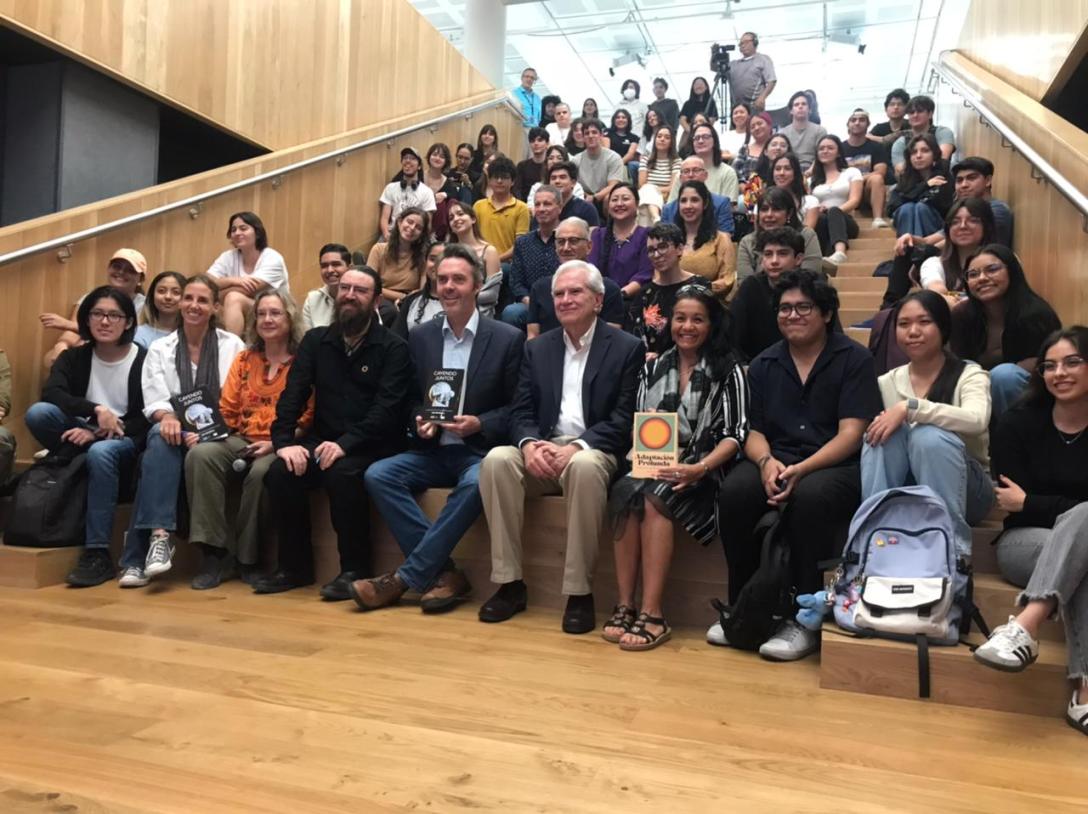
Transcript of speech given at the Monterrey Book Festival (Feria Internacional del Libro Monterrey), Mexico, 6th October 2024, to launch Cayendo Juntos, the Spanish edition of Breaking Together.

I am pleased to have reached you here in Monterrey just before the close of this remarkable event – one of the largest book fairs in the world. It is probably best that I was kept back until the final day, so that I wouldn’t spoil the mood of your previous days here. Because what I am going to talk about is not very fun. In fact, it is so heavy that I don’t talk about it much in public. But coming to Mexico felt important to me. That’s because I believe that Latin America, more generally, can play a significant role in softening the collapse of modern societies around the world. Three different areas of wisdom and struggle from this region offer signposts for how our human race might cope with the consequences of having overshot planetary limits and poisoned our living home. Those traditions are liberation theology, anti-imperialism, and indigenous cultures. So I’m honoured to be invited to offer my own ideas into your rich mix of intellectual traditions in Latin America.

For over 30 years this event has showcased a breadth of ideas in the Spanish language. Both fiction and non-fiction. I believe that is still a valid distinction, is it not? I know some people do wonder. I saw a sign in a bookshop that they had moved their apocalyptic fiction books into their current affairs section. Maybe one day they’ll move their current affairs books into the section for apocalyptic fiction.  

Continue reading “The Freedom in Truth – launching ‘Cayendo Juntos’”

The Francophone World in an Era of Collapse

If modern societies are breaking down, is there a political movement ready to soften the collapse and begin anew? Or do we need new ideas and organisations for collective action? Might a local focus be the only meaningful approach as industrial consumer systems decline? Or is this a period that calls for greater international solidarity with those suffering the most? I think the conversations and initiatives in the Francophone world will provide us many insights on these questions, for a number of reasons, which I’ll come to in a moment. That’s why I will celebrate the release of the free ebook version of S’effondrer Ensemble, with a gathering in Grenoble, France on October 30th. I will be joined by some members of the translation team and other special guests who are leading in the field of climate adaptation. If you can make it to Minimistan for 6pm, it will be a chance to meet others who are taking this topic seriously (just come, you don’t need to register). 

Continue reading “The Francophone World in an Era of Collapse”

Collapsis – a public health emergency of international concern

There is now significant evidence of an ongoing breakdown of industrial consumer societies, worldwide, due to hitting natural limits and internal contradictions. As this is a painful realisation, many experts avoid saying it publicly, while the mainstream media have been ignoring it. Nevertheless, opinion polls reveal that most people know something is seriously wrong, as we have been experiencing years of disruption, degradation and decline. Consequently, a new epidemic is taking hold, which offers a distraction from the worry and pain. As this ‘Collapsis’ may soon become a ‘public health emergency of international concern’, here I’ll describe what is currently known about it 😉 

Collapsis is the novel psychological condition of believing illogical ideas to explain the unfolding breakdown of modern societies. Collapsis spreads like an infection, leading to disorientation and counterproductive responses, which might then accelerate the unfolding actual collapse of modern societies. There are already many variants of Collapsis, which will be superseded by new ones, due to the susceptibility of human hosts and the economic drivers behind spreading infection. In this blog I list fifteen variants I am already aware of.

Continue reading “Collapsis – a public health emergency of international concern”

Goodbye Academia

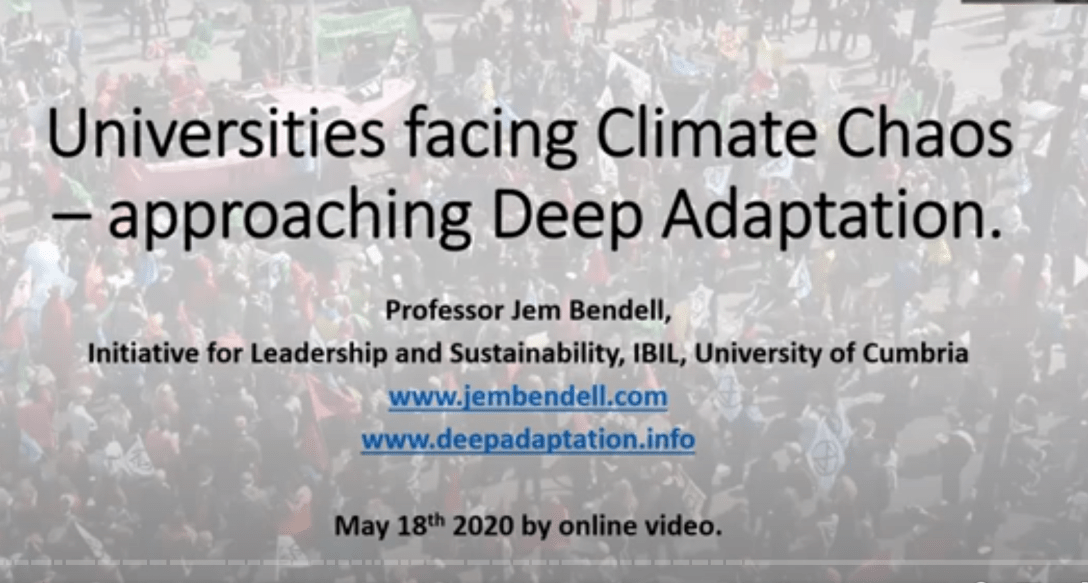
A year ago I took (very) early retirement from academia, and was given the title Emeritus Professor upon leaving. Looking back, I am grateful for the academic freedom I enjoyed at the University of Cumbria. Although there were exacting demands for generating income through MA and MBA courses, the University had a tradition of critical inquiry, interdisciplinarity and experiential learning. Without that freedom I could not have developed my understanding in a range of fields to be able to write the book Breaking Together – and to teach leadership the way I do today. I had always been a polymath and read philosophy about ways of knowing. I was fascinated by the pros and cons of the ways that different academic disciplines constructed their focus, forms of evidence and criteria for conclusions. Therefore, I developed a form of ‘critical interdisciplinary research analysis’, where one interrogates research from different disciplines with a prime focus on real world salience and an awareness of there being limiting assumptions within any field of inquiry. Unfortunately, academia militates against this approach by incentivising career researchers to specialise. Meanwhile, many non-scientists defer to the claims from institutionalised specialists and their peak bodies. That is an understandable reaction, although pretty lazy when coming from scholars and public commentators on our environmental predicament. As the reality with climate change appears to be far worse than what was predicted, some of that deference will reduce, along with the hostility towards better analyses. If you are interested in this matter, please see (or listen to) Chapter 7 of Breaking Together

Continue reading “Goodbye Academia”

Crazy Cat Lad Makes Music Video

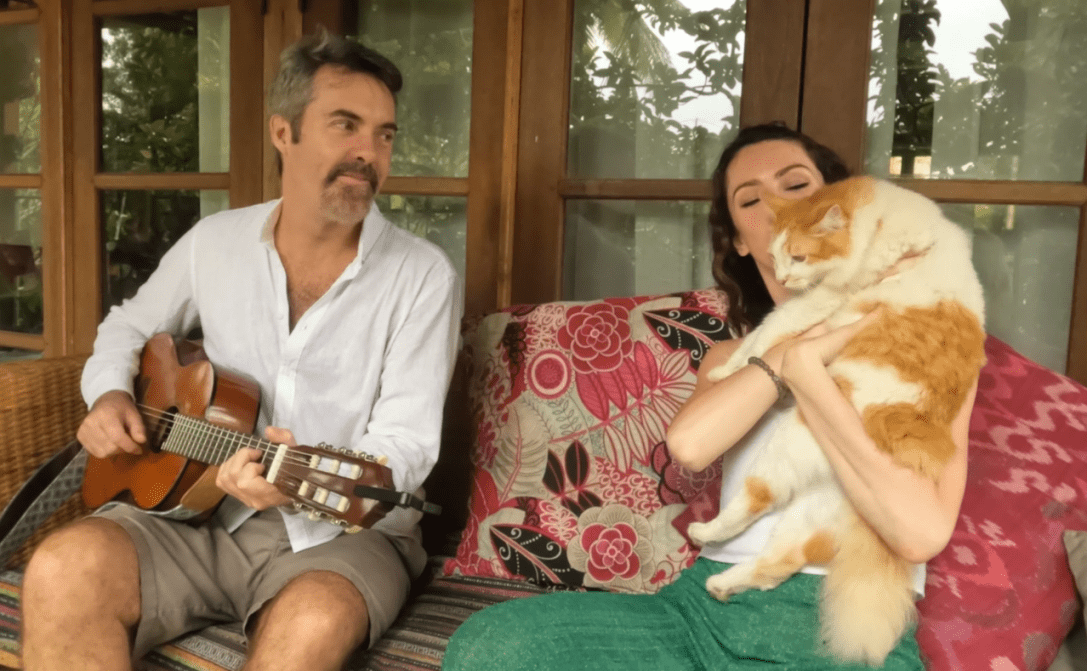
I have often talked about a ‘tyranny of positivity’ within contemporary environmentalism, whereby we are told that optimism is a moral and practical imperative. That typically comes with the ‘fake green fairytale’ of planetary salvation through electrification. That has been attractive to many environmental professionals (my past self included) as it offers possibility of feeling earnest and earning an income, despite it being a biophysical nonsense. When senior environmental leaders demonise more realistic assessments and associated despair, their ‘moodsplaining’ is promoting deference to power. Instead, for many people, feelings of despair have aided our radicalisation. That’s why an acceptance that modern societies are breaking down due to ecological degradation, amongst other factors, has been transforming people’s lives so we become more socially engaged, not less: becoming ‘doomsters’, as I term us in Breaking Together. More recently, I have wondered if there is a second tyranny in contemporary environmentalism, at least in the Western countries I have most experience of. It is a tyranny of piety.

Continue reading “Crazy Cat Lad Makes Music Video”

Meditating beyond craving salvation

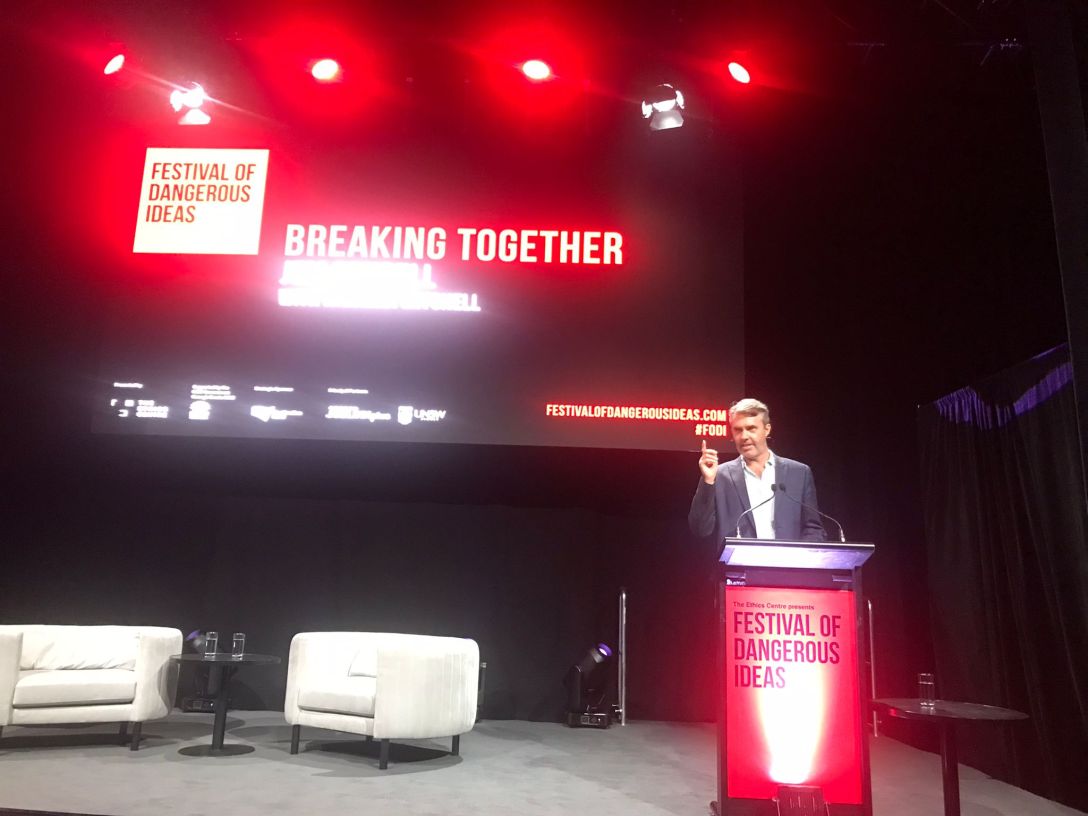
Last week, over dinner, the British comedian and author David Baddiel asked me whether my new life of farming, music and meditation means I am effectively hiding away from the difficulties of the world. We were both guests of the Festival of Dangerous Ideas, in Sydney. I accepted the invite as it’s a major cultural festival in one of the nearest English-speaking cities to where I live in Bali. David’s question reminded me of how I used to think about meditation and people focusing on their mindfulness. I wondered if they were running away from reality, and trying to be happy by disengaging. I was letting the fact that isolationism is the motive for some people to imply the motive for everyone who is into meditation. I explained to David that I could not have done my work over the last few years if I had not benefited from Buddhist philosophy and practice. It helped me to better notice and slow down my reactions to incoming information so that I didn’t reactively adopt views that might quell any difficult emotions or distract me from them. That meant I could notice the delusions arising from craving for material, psychological and spiritual salvation, both for myself and others. It meant I could look into the abyss for longer and explore what good might be done in our new context. It also helped my resolve to keep working on this topic despite a backlash and recurring feelings of defeat. Maybe I didn’t say it as eloquently as that after a couple glasses of red, but I think he got my gist. And it reminded me of my gratitude for what I’ve been exposed to over the last few years.

Continue reading “Meditating beyond craving salvation”

The Nine Lies of the Fake Green Fairytale

Essay shared to coincide with my speech at the 2024 Festival of Dangerous Ideas.

Self-deception is rife within the environmental profession and movement. Some denial or disavowal is not surprising, due to how upsetting it is to focus on an unfolding tragedy. But our vulnerability to self-deception has been hijacked by the self interests of the rich and powerful, to spin a ‘fake green fairytale’. Their story distracts us from the truth of the damage done, that to come, and what our options might be. Indeed, their fairytale prevents us from rebelling to try to make this a fairer disaster, or a more gentle and just collapse of the societies we live in. Averting wider rebellion might be why the fairytale receives loads of funding for books, awards, feature articles and documentaries, as well as videos for popular YouTube channels. That’s why, like me, you might not have realised for years that it is a fairytale. In this essay I will explain the nine lies that comprise this ‘fake green fairytale’ before explaining how much damage is being done to both people and planet from the dominance of this story within contemporary environmentalism.

Continue reading “The Nine Lies of the Fake Green Fairytale”

We Still Care – Doomster Characteristics

I made a mistake in my book Breaking Together, when I included a box on ‘doomster characteristics’. That was in Chapter 12, where I was explaining many people accept that societal collapse is occurring, or coming soon, and are integrating that into how they live positively. One of the curators of the postdoom collective, Karen Perry, pointed out to me that my box was describing benefits of being a ‘doomster’ rather than their common characteristics. That got me thinking. I realized that there are some ways of being that many collapse-accepting people exhibit, which I think are important to recognize and cherish at this time. So, I wrote it up.

Why does that matter? Might it be more intellectual blather from a guy who can’t stop writing? Well, I will come back to that 😉 But I think this discussion matters because of the importance of perceived identities in public discussion. Those professionals who oppose us waking up to our predicament have been misrepresenting our motivations and characteristics for years in ways that turn people away from exploring more. Therefore, it is useful to be clearer about what our motivations are and explain what we see as some common characteristics. As a conversation starter, I will list five of them below.

Continue reading “We Still Care – Doomster Characteristics”

Staying Curious During Collapse

On this day 6 years ago, I released through my university the ‘Deep Adaptation’ (DA) paper on climate chaos. Since then, I’ve been experiencing a range of emotions that arise from my view of the situation and the reactions of other people to that – and learning how to be OK with that. I’ve also been experimenting with ways of living differently as my old sense of self broke apart. These two themes were the focus of a new documentary about my life that was shown on Dutch TV a few weeks ago. The filmmakers made it beautiful and so I recommend watching below on YouTube or Odysee.

The emotional side of researching, communicating, and educating on collapse has been colourful and, at times, draining. I made and lost friends. I gained allies and enemies. I lost and gained a way of life. I wonder whether I could have learned anywhere near as much about psychology and spirituality without the emotional roller-coaster of becoming public about collapse risk and readiness. 6 years after the release of the DA paper, I want to share some reflections on the conflictual side of me coming out as a ‘doomster’.  

Continue reading “Staying Curious During Collapse”