Will Swiss Economic Ideology Harm Global Health and Humanitarian Efforts?

The Swiss franc has increased 30% against the US dollar and 20% against the Euro since last year. The pain felt by Swiss businesses is being well documented. But less well documented is the effect of this currency imbalance on international efforts to promote health, peace, human rights, and humanitarian action. Switzerland is home to many international organisations, including United Nations agencies and international charities. Many have their assets and grants denominated in US dollars or currencies other than the Swiss franc, yet their fixed costs of buildings and staff are in the extremely overvalued Swiss francs. Consequently their budgets are being ravaged by the currency imbalance, leading to mass redundancies and the cutting of various programmes, at key organisations for world affairs, such as the World Health Organisation to the International Labour Organisation. Those with seniority in such organisation are more able to hold on to their jobs, so the harder-working and far less well-paid staff are often the first ones to be shown the door. Although there need to be efficiencies found in international organisations, a sinking-ship mentality is not the way to achieve it.

The current efforts to reduce the value of the Swiss franc, by the Swiss National Bank, are reported by the Financial Times to have completely failed. Their tactics have been to increase the volume of Swiss francs, and slash interest rates. Yet as the international financial markets are spooked and want to buy Swiss francs, banks are simply buying up the excess francs. Not only is this causing a problem for Swiss businesses, it is creating a massive future risk for the Swiss economy when one day people decide they don’t need to hold so many francs. In addition, in efforts to keep the Swiss franc down, the government’s debt is spiralling. That will be compounded by recent commitments to spend billions in bail outs to suffering businesses. Such bail outs will be open for mishandling and corruption and propping up inefficient companies – especially if they are spent quickly enough to have any effect. But worse, these bail outs are like a sticking plaster for a haemorrhaging wound, as systemic solutions are required. If we compare prices across the border, the Swiss franc might even be 100% overvalued already, and the Western monetary crisis is only beginning its latest phase. This is no momentary problem. Imagination beyond old ideologies is required for systemic solutions.

The answer is so simple. The Swiss government could impose a currency transactions tax on any purchase of Swiss francs or assets/instruments denominated in Swiss francs. This transaction tax would reduce the demand for Swiss francs, and generate revenues for the Swiss government. These new revenues could be used to pay down the wholly unnecessary new Swiss government debt, and finance a new emergency international cooperation fund. That fund could issue core-budget grants to Swiss-based non profit organisations and international agencies for them to maintain or increase their employment of non-senior staff. In terms of the UN, this would mean staff below P-3 level. Such staff spend a greater percentage of their wages on local businesses than more senior staff, who invest it abroad, or drive over the border to get cheaper goods, services and property in the Eurozone. Targetted action like this would maintain a key element of the Swiss economy and society, and its contribution to the world.

The arguments against a currency transactions tax have always been vacuous, ideologically driven and about protecting short term profits. Its not workable? Tell that to countries like Brazil who have had a transaction tax for years. It will dent confidence in the economy? Well what do we mean by economy? The current market for the franc? That needs denting! The longer term prospects for the economy require effective denting right now. Given that leading Eurozone nations want to impose a similar tax in future, this is a great opportunity for Switzerland to lead the way. There are strong business arguments for a currency transactions tax, due to the effect on cooling volatility, and strong government reasons, by making up for falling tax revenues. We documented these issues in a report for the Swiss charity Bread for All, yet we found bankers and top government officials wedded to an unthinking belief in no new policy innovations to harness financial markets for the productive economy, public finances or common good.

Why is it such a crisis when the world wants to own your national currency? It should not have to be a crisis, indeed it could be a major opportunity for the Swiss people and the wider world who benefit from its role as a home for agencies of international cooperation. The only thing stopping this being an opportunity is the ideological blinkers of top bankers and politicians who are currently exhibiting zero creativity in transforming this situation from crisis to opportunity. Impose a transaction tax, to release Swiss business from the high franc, pay down the government debt, and fund a more dynamic international cooperation community. If such effective action isn’t taken, some citizens may start asking if the private ownership of 45% of the national bank by private banks like UBS in some way compromises its ability to take action in the public interest. And if such action isnt taken, we will see once again how economic ideologies in certain circles can harm the lives of poor and vulnerable people many thousands of miles away.

Professor Jem Bendell: http://www.twitter.com/jembendell

Towards Rio 2012

In May 2012 Rio De Janeiro hosts a major UN conference, that marks the 20th anniversary of the first Earth Summit. In 1992 the Rio Earth Summit was the largest ever held, and helped spread around the globe the idea of ‘sustainable development’ as a common goal integrating environmental protection and poverty reduction. It also saw the UN and its member states calling on business and civil society to join in meeting the challenge, thereby encouraging more corporate responsibility and integrated approaches from nongovernmental organisations. Having discovered “sustainable development” in 1988 on the back of the Brundtland report, and just about to start a Geography degree at Cambridge Uni, I followed the Rio Earth Summit and was hopeful that it marked the beginning of a major change. I responded to the call, by working on and developing partnerships between businesses and NGOs in the following years. By 1995 I was helping develop market demand for wood certified under the Forest Stewardship Council system, and by 1996 developed an organisational concept for the Marine Stewardship Council, for WWF. In 1997 I then co-wrote a book about these novel ways of implementing the call from Rio.

Since then the field of innovation on responsible enteprise and finance for sustainable developed has grown and grown, and with that my workload, as an activist, analyst, and advisor. The FSC and MSC are now both massive organisations influencing the sustainability of forests and fisheries worldwide.

However, twenty years on, the statistics on environment and development are not particularly encouraging; consider the rising rates of deforestation, carbon emission, malnutrition and forced migration. Why? Partly because the focus on sustainable development was sidelined by a primary focus on trade liberalisation in the 1990s, on geopolitics and security in the 2000s, and because of an over-riding focus on increasing economic growth rates throughout. One reason for the lack of focus in 1992 on economic root causes of social and environmental problems was the exuberance and hopes after the end of the Cold War: discussing flaws of capitalism was seen as unhelpful and not hopeful. One reason for the focus on what non state actors can do, and thus not government, was the dominant influence of Western nations, who were embracing a laissez faire approach to state governance at that time.

Twenty years later the lack of major global progress towards sustainable development, towards true integration of environmental and developmental priorities, should make us question this lack of attention to economic systems and government roles.

In the last twenty years we have seen non state actors experiment in many new ways to advance the sustainable development agenda, with partnerships and voluntary standards emerging to promote responsible enterprise and finance. Its been exciting and exhausting. However, despite our enthusiasm, these experiments have also reached some limits of what they can achieve in promoting wider change. Leaders in business and civil society are therefore calling for government to become involved to help mainstream the innovations in sustainable development governance. If Rio 1992 was about governments calling non state actors to act, Rio 2012 may be about non state actors calling on governments to act in support of their innovations.

It is a call that may be heard, because today there are non Western nations with more recent experience of strong government leadership that have greater influence in the intergovernmental arena. In addition, twenty years on we should be able to show more maturity in exploring how systemic flaws in a our economic systems could be changed to reduce pressures for poor social or environmental outcomes.

A debate is beginning to be had in both business and civil society circles about the type of economic system we need for a more fair and sustainable world. Although often rudimentary, and often misunderstanding what capitalism is, these debates show there is growing willingness to tackle issues at the depth and scale that matches their signficance to our planet and our humanity. If it was practical not to discuss capitalism in 1992, given the shortcomings of our progress towards global sustainable development since then, it would not be practical to avoid discussing it today. Consequently we will see an agenda for innovating collaborative economic governance for sustainable development emerge over the coming years. Rio 2012 could be a useful moment in helping to globalise that conversation. However, if it becomes a huge draw on our time and attention without getting to the root causes of our enduring social and environmental problems, it could be worse than useless.

For those of us who have worked hard heeding the original call of Rio, we would do well now to organise to influence people’s awareness of what we have learned through success and failure over the twenty years.

With that in mind, I have begun reflecting on those lessons, and on how they could be communicated and learned in ways that could influence the agendas of organisations that can implement change. Because, we must not lose sight of how such summits are not in themselves implementing mechanisms.. connections have to be made from the insights and hopes of such summits to the real institutions of national and international governance.

Therefore, here are some initial ideas on what we could do:

– clarify the lessons from the last 20 years and the accuracy of the narrative I have just described above

– communicate these insights and narrative to global civil society through networks such as the stakeholder forum for the Rio 2012 summit, and get buy in

-communicate these insights and narrative to business networks active on sustainable development, such as the WBCSD, which was born by the last Earth Summit, and the World Economic Forum, which subsequently saw the light and embraced the goal.. and get their buy in

– begin deliberations and research and a devise a plan of technical assistance for a collaborative economic goverance agenda that would seek to mainstream the last 20 years of innovations in sustainable development practice and sustainable development governance

-communicate these insights, narrative and the technical advice about how to implement a collaborative economic governance agenda to mainstream sustainable development innovations, to the various parts of the UN system that are involved in Rio 2012

– engage the Brazilian government, NGO and business communities on this agenda, as given Brazil’s emergence they will play a far greater role in shaping the agenda, messaging and outcomes of the summit than in 1992

– create powerful communications products, such as TV documentaries, popular books, and celebrity campaigns and concerts that sing from this hymn sheet, rather than a dumbed down and expedient narrative, as we have seen at past summits

– remind everyone that the impact of this summit will be in the way it influences other institutions such as WTO, IMF, WB, UNCTAD, UNDP, ECOSOC and so on, and that unless the connections are made to these agents of economic governance, the summit will be a global mirage of hope in a desert of statis and despair

If you agree, and can actually do something about them, please get in touch. Given my existing commitments to other work, my only plans for engaging in this process are some work Im doing for UNCTAD. However, I will find time to discuss other ideas if you have plans to act.

Ann, you said that war was right to stop torture. Now you know the amount of torture and death it caused, what have you learned?

Open Letter to Ann Clwyd MP, from Dr Jem Bendell, October 25th 2010.

Dear Ann,

My name is Jem Bendell and we met in 1996 during the time when a couple of my friends were among the British hostages being held in West Papua and you offered to help. You kindly worked to get a letter written to the OPM rebel leaders from Klaus Hensch, then President of the European Parliament. The letter seems to have played a role in helping organise a release, although the release failed when the OPM leader Kelly Kwalik changed his mind during his speech. You may recall the British hostages got out, as they fled, later, when the kidnappers starting killing the Indonesian hostages, two of whom died. Thank you for your efforts back then. I remember you from then as a principled MP.

I was always surprised and disappointed at your stance on the invasion of Iraq. I was working as a consultant at the UN in 2003. I organised the writing and UN staff signing of a letter sent to all non permanent members of the UN Security Council to remind them of the principles of the UN Charter. We were concerned the UN might endorse an invasion, as that would have set a new precedent in international law, suggesting that a state with power and prejudice could launch an attack because it felt threatened. In the letter we simply reminded them of the UN Charter, which international civil servants at the UN are meant to uphold, rather than focusing on specific issues they were deliberating. The UN hierarchy did not like our efforts – security paid us a visit. Fortunately a few brave non permanent Security Council members did not cave in to the bribes and phone taps, and the resolution to authorise an invasion was not passed. This meant that PM Blair could no longer say the UN would back the coalition forces as implementing the will of the ‘international community’. It might also help in him being prosecuted as a war criminal one day, and thus serving as a warning to Western leaders in future. However, it did not stop the war, which appeared inevitable to everyone, including the millions of protestors who did not believe it when politicians said war was not inevitable. Never has there been a bigger display of the general public believing their leaders to be liars than that anti war march before the invasion.

There were few moral voices in favour of the War. You stood up and called for war to end torture. “See men shredded, then say you don’t back war” read the headline of your article in the Sunday Times, calling for an invasion. http://www.timesonline.co.uk/tol/comment/thunderer/article1120757.ece

I was wondering whether over the years you have rethought your views on how one deals with oppressive regimes and dictators. The latest leaks show that terrible abuses have been widespread since the invasion. For instance see the Guardian stories showing the level of abuse, and the official policy of the US Army to ignore it. This is aside from more than 60000 civilian deaths, documented by the US Army in the leaked information. In 2003 you talked of men being shredded by Saddam Hussein being a justification for war. So many more people have been shredded by bullets since, as well as tortured, due to the war. The depravity of killers is not the primary issue that should influence our judgement, rather the extent of the human rights abuses, the extent of the killings, and what responses will work, not make things worse. (http://www.guardian.co.uk/world/2010/oct/22/iraq-detainee-abuse-torture-saddam)

This level of violence was predicted by the anti War movement in 2003, whose analysts said it would be a long fight, with sectarian violence, and the likelihood of invading forces reestablishing a despotic government or militia in order to keep some control. They also said it would stoke hatred and trigger terrorism against the West. It appears the anti War movement had the smartest military intelligence; or perhaps they were simply not being willfully ignorant due to political and professional pressure in 2003?

When faced with evidence of human rights abuses in Iraq, you told the Chilcot inquiry earlier this year that “it is disappointing but understandable” and explained that it takes time after wars to achieve security. You didn’t express such patience about dealing with torture and death under Saddam Hussein. You told the inquiry you have made representations to the Iraqi government to uphold human rights as “one of the main reasons for going in there, to get rid of the kind of tyranny and cruelty that was going on in that country. I don’t want to see it perpetuated.” It appears from recent leaked documents from Wikileaks that you had little impact in that regard.

Some make statements such as “it was right to get rid of Saddam”, which is meaningless as it could justify any level of destruction in pursuit of that aim (would we nuke a whole country to get rid of one man? No, and so in isolation it is a nonsensical justification). Some make statements such as “its important to focus on the future” as if the future wont include other situations where we face dictators, human rights abuses, and opportunistic politicians seeking to take countries to war, and so we need to learn our lessons.

Do you now see that to deal with dictators and despotic regimes you need effective sanctions that take away the ability of a regime’s elite members of society to move or bank abroad? That those and only those sanctions are the ones that work, and we need more progress to ensure all governments, including offshore financial centres, participate in such sanctions in future, and where there are tough trade sanctions against countries who do not participate in such efforts against dictators? And that, conversely, we need to engage more with the people living under dictatorships, giving them visas for tourism, study, business etc, and funding them to study abroad, etc, as part of the process of creating a lasting change?

Ann, you said that war was right to stop torture. Now you know the amount of torture and death it has caused, what have you learned?

A lot of people died in a War that you helped to justify. You have been largely quiet in public about revelations about abuses in Iraq since the invasion. It would be a good time to say something new.

I will post this letter to my blog, and will post your reply if you permit. (http://www.jembendell.com)

Thanks, Jem
Dr. Jem Bendell

Why the MDGs are an Own Goal for Development

This week the world’s leaders meet in New York to discuss progress on the Millennium Development Goals (MDGs), which were agreed ten years ago as time-bound targets for achievable reductions in poverty. The spin masters of global policy have already been busy framing this milestone in the media. But aside from the spin, the reality is very different and poses significantly different implications for the future of cooperation for poverty reduction everywhere, North and South. Working on the real causes of poverty might not win a round of applause at a charity night, but is the only moral and practical answer to the evidence mounting up before us.

Commenting on progress on the MDGs in the New York Times on Saturday, the Columbia University economist Jeffrey Sachs wrote that “a great deal has been achieved” and how “cynicism has been replaced by hope, born of experience, commitment and breakthroughs.”[1] He bases that on piecing together a few examples of success, mostly on communicable disease. It is relieving that the rates of infection of HIV/AIDS have declined in Africa, but it is wrong to imply this gets anywhere near meeting the MDG 6 on disease reduction, which includes halting its spread and achieving universal treatment.[2]

The United Nations now acknowledges that only two of the many targets might actually be met: cutting in half the number of people who lack safe drinking water and halving the number of people who live on $1.25 or less daily.[3] The first of these is not cause for celebration if we remember that much of this advance in clean water access comes from wells that are likely to run dry in the near future due to climate change and intensive agriculture. The second of these targets is largely meaningless, when one realises that China accounts for the majority of the increase, and thus exchange rates explain a significant part of the progress, while the cost of meeting basic needs have been increasing worldwide.

One of the goals is for universal primary education, yet according to research by the Global Campaign for Education, 48% of children in sub-Saharan Africa still do not complete primary education.[4] Another of the goals is halving world hunger. With global food prices peaking in the summer of 2008, and climbing rapidly again, over one billion people were undernourished in 2009, an all-time high.[5] 925 million people across the world are still classed as hungry.[6] A child dies every six seconds due to hunger related diseases. Despite this shocking daily disaster, the proportion of the world’s hungry has gone down by only half a percentage point since 2000 – from 14 to 13.5 percent.[7]

As halving world hunger is the target, that would mean 14% having reduced to 11.6% by now. I make that 130,185,186 people who are hungry this very day, as living examples of us missing the target. It is a massive missing of a target that was not meant as a pie-in-sky ideal, such as ending poverty, but as a practical one of halving hunger. If this was a match, the goal is so far off, we are still trying to work the ball out of own penalty area. To move forward the poor need more than the cult of ‘positive thinking’ from people who want to keep the MDG show on the road so as to keep the focus on charity not real change, and receive more fame and funds for their projects as a result.

Poverty is an interconnected reality and challenge, and so even hitting the targets can still miss the point. The education commissioner of Nigeria’s Kwara state has revealed that nearly 20,000 of the state’s teachers were made to sit tests in English and Maths that were designed for 9- and 10-year-olds, but only 7 of the teachers reached the minimum attainment level.[8] As targets are usually about quantities of input, not qualitative outcomes, then situations like that in Nigeria can arise. In addition, a focus on just one issue can ignore the interconnected nature of poverty. For instance, some HIV antiretroviral medications require a minimum caloric intake to work. The government of Zambia has had trouble containing the spread of HIV after expanding the production and distribution of antiretrovirals; they realised the problem was that children were not eating enough.[9]

Likewise a focus on just one issue can lead to other important concerns being sidestepped or made worse. Amnesty International has found that a focus on meeting the MDGs has led to matters of accountability and rights being sidelined at times.[10]

The reason progress is so slow is known to many international development experts. They just don’t share it much in press releases, as it doesn’t help generate funding. The simplest and most important insight here is that, on a large scale, the poor are not helped by targeting them in particular. Instead, poverty is reduced by helping enterprises generate decent work that create not only the products and services but also the wages for people to buy them. Therefore the creation of decent work opportunities with fair wages is key to all poverty reduction and social development, no matter how the poverty is then manifested.[11]

The percentage of corporate revenues that are paid out as wages has been going down worldwide for decades.[12] This happens as a result of the balance of power between government, business and workforces shifting with economic globalisation. Consequently workers have less in their pockets to buy the products and services that generate the jobs, that employ the workers. To get out of this situation, workers in some countries have been going into debt, speculating on property, or releasing equity from their homes. It is a situation that has led to financial volatility and concerns about financial collapse. In other parts of the world, and for the poor, there is not the same escape through debt and mortgaging assets. Meanwhile their employers have continued to receive a small share of the revenues of the value chains they trade in, with the profits accruing to the top of the chain, such as the famous brands, retailers, related professional services and in turn the financial services sector. This squeezes the sum available to workers and entrepreneurs in poorer countries, as well as limiting the potential tax revenues of such countries. The percentage of corporate profits that are taxed has also been decreasing around the world, therefore meaning governments have less to invest in social services and promoting enterprise.

The key to achieving development is the promotion of enterprise, with the ability of entrepreneurs in lower income countries to receive a larger share of income from their value chains, the ability of their workers to receive a larger share of the generated revenues, and the ability of governments to generate taxes and use them efficiently and accountably. Some within the international development community have been making this analysis clear, but they are drowned out by those who seek to keep the focus on a simpler message of charity, positivity, and coming together for another push towards meeting targets with new donations, often to their own organisations. The alternative would be to work on matters of economic governance and challenge existing power relations in societies and economies – not such an easy sell to large donors, or individual supporters watching the latest disaster appeal on TV. Deluded and self-serving people in the development profession prefer to see the people who criticise the MDGs as negative or cynical, and so dismiss the reality of the situation they describe. As a result, as I found in a study for the UN last year, the funding of economic justice campaigning is limited, and so the relationships with between Western NGOs and civil society in the global South are not often sufficient for them to have a legitimate and effective voice in policy making.[13]

Many of the issues the MDGs focus on are the symptoms and not the causes of poverty. The cause of poverty is generally a lack of decent work in a thriving enterprise economy governed by an state that is held accountable for its regulation and provision of services. A superficial focus on the symptoms not causes of poverty has been promoted in recent years by the new billionaire philanthropists, engaged in charismatic charity. Huge donors like Bill Gates focus mostly on the surface of problems, as that is what is visible. The visibility of a public problem is important as it makes it more understandable to people without insight into how problems arise, and visible problems can be explained in ways that generate public support and congratulation. The experts that the non expert philanthropists rely on are those who have made themselves acceptable to elites in the business and government, thereby perpetuating a superficial agenda. “Take the huge investments in global health, micro-credit and environmental services that Bill Gates and others are making,” says Michael Edwards who has authored a book on the topic. “The available evidence from these investments so far suggests that it is perfectly possible to use the market to extend access to useful goods and services, but far harder to have any substantial impact on social transformation. The reason is pretty obvious: systemic change involves social movements, politics and the state, which these experiments generally ignore.” He laments that the rise of the “philanthrocapitalists” is undermining the power of independent civil society to frame and act on systemic causes of social problems.[14]

As we look back on the last 10 years of action and inaction on international development it is now clear that the MDGs have scored an own goal for the development community by keeping systemic issues off the agenda. At best the MDGs acted as a defence mechanism in difficult times, maintaining interest in poverty when the international community became engulfed in the anti-terrorism agenda and the related US-led wars.

As I witness business, UN, governments and NGOs coming together this week to call for a another push to meet the MDGs, I am left wondering what will help unravel this great delusion. Where will the movement to embrace a serious sustainable development agenda come from? Will we have to wait another 5 years for a more honest stock take? Five years is a lot of 6 seconds. Over 26 million more children will have died from hunger and related illnesses.

In my last book I described the emergence of a movement mentality within people in the corporate responsibility, social enterprise and responsible investment space, where professionals are pushing forward transformative agendas from within their commercial organisations.[15] Yet I wonder whether the contradictions between short term profit and long term value generation may mean that an authentic development agenda will be difficult to place at the heart of corporate strategy. In reflecting on this I recall that 15 years ago a BP executive said that if Greenpeace did not exist he would have had to invent it. Chris Marsden was explaining about how he needed the external spotlight to make his case from within the company. We could debate whether it was an effective spotlight, given the BP record, but at least there was some pressure. It seems we need a development NGO that can apply pressure like Greenpeace has done on the environment, and encourage investors and companies to engage seriously with development issues. In the early Noughties the ‘anti-globalisation’ movement applied pressure to governments and international organisations without there being one central organisation, but its visibility has waned in recent years as the usefulness of street protest was questioned and attention moved to celebrity events like Live 8 and Live Earth. There seems to be a gap in the NGO market for a direct action development group, and so perhaps a financier could invent one. I hear of some friends of friends with a half a million from their banker bonuses now wondering what the meaning of their life really is.

If you know someone like that, send them this link.

[the references for this blog are in the pdf copy –Download PDF of ‘Own Goal’

On my company website I talk about the implications for corporate and investor strategy… Lifeworth Consulting

The Future of the UN Global Compact – New York Inspirations

Empire State of Mind
Empire State of Mind, sung at UNGC summit

The UN Global Compact is a UN initiative that invites companies to sign up to voluntarily being more socially and environmentally responsible, and making a positive contribution to sustainable development. As Ive worked in corporate responsibility and partnerships for 15 years and with the UN on and off for about 13 years, this initiative is something Ive followed from the start. Recently I went to their Leaders Summit in New York. My highlight was the Alicia Keys number at the end of the conference, sung by a woman from a Harlem group that performs to raise funds for social work. That made me realise maybe Im a bit “conferenced out” and need to go to some more concerts! For 4 days, going back and forth to Times Square I couldnt stop singing “Concrete jungle where dreams are made of, there’s nothing you cant do, now your in New York….. etc… lets hear it for New York, New York”, so it was a fine finale.

I did a video message at the conference. Shame they didnt edit the chat in the middle about whether I had said things in the way they wanted!

The Empire State of Mind song also got me thinking about we might do do with this initiative if we thought anything possible, so I reflected and wrote up some ideas on the future of the UN Global Compact, available at:
http://www.lifeworth.com/consult/2010/08/from-global-compact-to-global-impact/

Alica’s great tune..

Photo: UN Global Compact/Michael Dames

The UN and Fashion – its a new trend

My work in the last few years on sustainable luxury seemed to some to be a bit of a break with my more development and international policy focus, albeit on corporate responsibility. I sought to promote sustainable luxury for a range of reasons, but one was to leverage high end brands to help make sustainability sexy in urban middle class Asia as fast as possible. NGOs can’t do that. Gucci could. Well, it seems the wave of eco cool is sweeping China’s youth, even if not their Copehagen delegation.

This new work led me in new and unusual directions, even stepping out on a cat walk, at an eco fashion show in Hong Kong run by EcoChic Fashions, in October 08. But as I still lived in Geneva and was working on finishing a couple of projects with UNRISD and UNSSC, the UN was still in my mind. Earlier that year, by Lac Leman, Louise Barber of the UNOG had told me that 2009 was to be the international year of natural fibres (yes, really, it was), and 2010 the international year of biodiversity. So, I mused, why not hold an eco fashion show at the UN, to promote these ideas, and encourage industry engagement? And, of course, have the fun of seeing a cat walk in the middle of the UN. I connected her, Eduardo Escobedo at UNCTAD, and Christina Dean at Green2Greener, and with their dedicated colleagues, the event is now upon us.  And.. you can even attend! If you register. See below.

Perhaps international cooperation could become the new fashion?! It may not seem like that after COP15, but in light of that intergovernmental impasse, the more innovative ways the UN can catalyse change the better!

Redefining Sustainability in the International Agenda: Inspiring Greater Engagement in Biodiversity Issues

January 20–21, 2010

Room XIX – Palais des Nations, UN

Geneva, Switzerland

UNCTAD and Green2greener invite you  to come and join the more than 500 prominent figures from government, international organizations, and industry as they meet in Geneva on 20-21 January to call for action against the rapid loss of the world’s biodiversity.

This timely seminar will provide a collaborative platform to discuss the need to redefine sustainability. Through the viewpoint of the fashion and luxury industries, participants will gain a unique insight into the role that governments, businesses, and consumers can play in supporting biodiversity conservation and the sustainable use of natural resources.

Through interactive panel discussions and in-depth case studies, the 1.5 day seminar will cover issues such as

·         Redefining Sustainability: Why Biodiversity and Why Now?

·         How to Implement a Successful Sustainability Strategy

·         Educating and Engaging Consumers in Biodiversity Issues

·         The Rise of the Ethical Consumer and Eco-Fashion in the Mass Market

·         Luxury Brands as Sustainable Role Models

·         Environmental Traceability, Accountability and Certification

·         The Role of the Creative Industries in Developing Economies

·         The Role of Multi-Stakeholder Partnerships

·         Paving the road towards the CBD COP 10 and the revision of the International Biodiversity Targets.

Confirmed participants include representatives from business, international organizations, government, media and NGOs such as:

·            Ahmed Djoghlaf, Executive Secretary, Convention on Biological Diversity (CBD)

·            Willen Wijnstekers, Secretary-General, Convention on International Trade of Endangered Species (CITES)

·            Dermot Rowan, Managing Director, Orla Kiely

·            Burak Cakmak, Director CSR, Gucci Group

·            Giulia Di Tommaso, Director of Legal Policy and International Relations, Unilever

·            Jean-Fraçois Fournon, Global Creative Director, Saatchi & Saatchi Simko

·            Hans Steisslinger, Head R&D Natural Cosmetics, Weleda Group AG

·            Peter Ingwersen, Founder, Noir

·            Tamsin Blanchard, Style Director, The Telegraph Magazine

·            Sarah Ratty, Founder and CEO, Ciel

·            Alphadi, President & Founder, Festival International de la Mode Africaine

·            Jean-Luc Ansel, Director General, Cosmetic Valley

·            Isabel Berz, Director Fashion School, Istituto Europea di Design Madrid

·            Kate Dillon, Model and M.P.A. in international development

·            Tamsin LeJeune, Founder, Ethical Fashion Forum

·            Erin O’Conner, Model

·            Summer Rayne Oaks, Model and Sustainability Strategist, SRO

and many others….

This must-attend event has been co-organised by United Nations Conference on Trade and Development and Hong Kong charity Green2greener as part of the 2010 International Year of Biodiversity.

All activities will take place in Room XIX in the Palais des Nations (E-Building, third floor).

Pre-registration for the seminar is essential.

For further information, please contact Eduardo Escobedo at +41 22 917 5607 or by email eduardo.escobedo@unctad.org or visit http://www.unctad.org

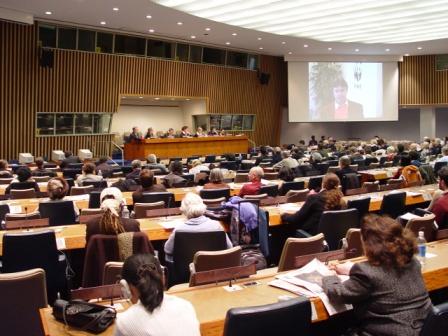
If I can Make it There (by video), I’ll make it Anywhere…

I’ve never been to New York. I even lived in America, but never made it to the 2nd largest financial centre in the world (London rules). So an invitation to launch my new UN report at the UN HQ was great. Kinda. I had just been in the pub with a colleague from WWF talking about climate change and his concerns about flying. It’s the fastest growing form of carbon pollution, and by making it far easier to whiz around great distances it means we maintain personal and work relations over greater distances… and so lock ourselves into a new pattern of pollution. Argh! I couldn’t go and launch my book on ‘NGO accountability’ and in the process add more crap into the atmosphere… I’m working with WWF, for God’s sake.

UN Launch

Already at +0.6 degrees, human-caused Climate Change is causing water and food shortages, increased storm damage, and river bank erosion, leading to millions more refugees. Hundreds of thousands of plants and animals are now under threat of extinction. Scientists say we have to keep climate change below 2 degrees otherwise it will go beyond our control. That will require a halving of global carbon emissions in the next 2 decades, which means that people like us (presuming you are in the consumer class) have to cut our emissions by over 2 thirds right now.

Yes, that’s unlikely. Especially when much of our emissions come from products from companies whose actions we don’t directly control. Which means our current form of civilisation is unlikely to see out this century. So why bother? Two reasons. First, we have to try, and if we slow the pace of damage the suffering will be less. Second, because I want us to be worth saving. There are various sides to the human character, we are all saints and sinners in different ways at different times. I have a hope that the loving, caring, thoughtful side of human character is our defining one. Climate change is a symptom of us losing touch with who we are, as part of nature, and results from the desire to consume stuff, as if more stuff makes us who we are. With this view, the means for combating climate change also become the ends.

This is not to say there are difficult balances to be struck. Some blithely say “my work to save the world offsets my emissions”. In some cases they may be right…. but whether someone’s policy or advocacy work stops tonnes of carbon being tipped into the air is impossible to judge, by them or anyone else. And the time and effort to work it out would be a wasteful exercise. To make the right decisions about this people need to understand the challenge, and be working on this for the right reasons. No flight is essential. But there are also other ways to reduce your own carbon emissions such as not running a car or keeping your heating down. Ultimately, personal lifestyle change is not the whole solution. I could fall under a bus and reduce my emissions to zero, but that wouldn’t change climate change one bit. We need major changes from industry and government to meet the challenge. But living more lightly and consciously on this planet is consistent with a demand for systemic change from business and government, not a replacement for it.

It’s for this interest in the way to live that I worked on NGO accountability. I think debates about accountability could help NGO staff to connect with a common purpose in promoting collective benefit. It’s time for NGOs to begin describing themselves not in terms of what they are not (such as non-governmental and not-for-profit), but in terms of what they are commonly for. There’s many ways to describe this common ethic, which is about expressing oneself in ways that help rather than hinder others’ expression, and the basis for all of Life’s expression – our planet. I also hope that by engaging in questions of accountability, NGOs will become clearer about issues of power, given how unaccountable power in society underlies many social and environmental problems that NGOs address.

To get a grip of accountability, we need to be clear on the type and means. There is bad type of accountability. “I was just following orders” they say in war crimes trials. But there is a good form of accountability to the intended beneficiaries of our work, and others we affect in helping them, if they have less power than those beneficiaries. In my dossier I call this ‘democratic accountability’, which is a situation where people affected by decisions or indecisions can affect them. An organisation can either promote or hinder democratic accountability by i) helping hold powerful organisations to account to those they affect ii) so long as when doing this they are accountable to affected 3rd parties with less power iii) so long as those 3rd parties are accountable in the same way. Once that bigger picture is established of the type of accountability needed, then we have to focus on the means. Too much has been done in this field that is about binding us up with paper and reports, or creating new hierarchies of reporting to people who don’t know how to be agents of downwards accountability. Instead, effective accountability processes need to encourage people to connect with their sense of purpose, be reminded of it, encouraged to explore it and what it means, to be clear on the WHY not just what and how. So I’m pleased at WWF a colleague of mine has launched a project on what the organisations beliefs are. That’s more important than additional form filling.

Last week I had lunch with someone from an international environmental organisation comprised of NGOs and governments, and she said they only just had video conferencing installed – and she didn’t even know where it was. As I walked out through their car park full of 4x4s, I thought if organisational accountability is seen in terms of paper, not people, and doesn’t encourage us to be more authentic and reflective in our work, then it will hinder us in meeting the challenges we face.

Thanks Elisa and NGLS for making it possible for me to walk the talk. As ol blue eyes almost sang… New York, New York, If I can make it there (by video), I’ll make it anywhere…

The UN webcast of the launch is at: http://webcast.un.org/ramgen/specialevents/se070119.rm

The report is at: http://www.un-ngls.org/site/article.php3?id_article=202

The UN did their own press release, edited version follows:

As NGOs Multiply, Study Urges More Public Scrutiny, by Thalif Deen

UNITED NATIONS, Jan 22 (IPS) – Just after the coastal regions of South and Southeast Asia were devastated by a disastrous tsunami in December 2004, hundreds of non-governmental organisations (NGOs) descended on Thailand, Indonesia, Sri Lanka and the Maldives armed with relief supplies — and good intentions.

The massive humanitarian effort, according to a new study, was “testimony to the skills and power of many NGOs.”

“But it also heightened concerns about opportunities for the misuse and abuse of humanitarian funds,” says the 102-page report, titled “Debating NGO Accountability”, released here.

Within months, says the study, there were complaints in Sri Lanka about corruption in aid distribution, and the lack of strong political will on the part of the government to address the challenge. A series of about 30 articles in U.S. newspapers also raised the issue of ethical failures — including “sky-high salaries of top executives and expenses for offices, travel and perks” — while disputing the motives of some of the so-called humanitarian missions. “They highlighted conflicts of interest, failures to adhere to an organisation’s mission, questionable fundraising practices, and a lack of transparency,” says Dr. Jem Bendell, author of the study, which was commissioned by the U.N. NGO Liaison Service (NGLS).

Tony Hill, coordinator of NGLS, points out that the heads of 11 leading human rights, environmental and social development international organisations publicly endorsed the first global accountability charter in June last year — perhaps as a result of the increasing number of scandals involving charitable organisations. The organisations that signed the Charter included ActionAid International, Oxfam International, Amnesty International, CIVICUS World Alliance for Citizen Participation, Transparency International and Save the Children Alliance….

However, Bendell, an associate professor at Griffith University Business School in Australia and director of the consulting firm Lifeworth, argues that “accountability” in itself is not simply a good thing, as it so often assumed. Rather, he says, it must be clear that groups must be accountable specifically to those that are affected by their decisions and actions. It is this concept of “democratic accountability” that lies at the heart of the study, and will allow NGOs to continue to develop as effective and important actors in the international arena, notes Bendell, who is currently advising the World Wildlife Fund (WWF), the world’s largest environmental organisation, on strategic development…

Asked if all international NGOs should sign the charter, Bendell told IPS: “Yes, it would be great for every major international NGO to sign the Accountability Charter.” He said the charter provides a basis for NGOs to come to a greater awareness of their common purpose in promoting public benefit, not private profit. “We need innovative approaches to be shared amongst charter signers, to find out the least bureaucratic and most meaningful mechanisms for promoting coherence with the human rights and democratic principles it states,” he added.

Yet these NGOs can only be as effective as their donors allow, he pointed out. So the study “emphasises the importance of the accountability of donors to those they identify as their intended beneficiaries.” He also said that too much money is spent on pet causes and political meddling, and not at all responsive to the needs of people affected by the giving. “And too much of these funds are generated from investments in companies and financial products with damaging impacts on society.”…

Asked about government regulation of NGOs, Bendell said that charity law and tax law are key mechanisms that governments use to regulate NGOs. “We would benefit from more sharing between governments on the best practices in these regulations to promote vibrant civil societies, with NGOs that are accountable to their intended beneficiaries and broad principles of human rights,” he added. (END/2007)

Colourful Cuba (cos your gray ain’t my grey)

I sometimes chat with my flatmate about what it was like growing up in the Communist East. We joke about how grey it was. In my books and films it was grey… the buildings, people, all shades of dull depressed and repressed grey. She tells me that books about the West that she read in East Germany showed the West as… also grey! “OK, so it was so grey in the East, that even our pictures of the West were grey!”.

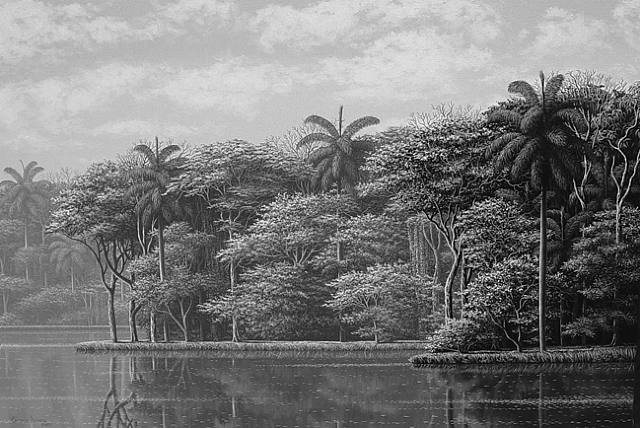
Was an absence of neon lights and bright paints and colourful advertising actually grey? Its amazing how urban our thinking is… nothing is as colourful as nature. Walking through the UN today I saw paintings from an exhibition sponsored by Cuba. The artist from this communist country, Luis Antonio Espinosa Fruto, chose to paint all his pictures in… grey. But hey, they are bright, brilliant, beautiful images. They are all paintings of the natural environment in Cuba (continues below…).

artwork_images_424056915_238119_luis-antonio-espinosa-fruto.jpg

Cuban nature is mentioned in the depths of a report published by WWF earlier this week. The Living Planet Report tells a shocking story of what we are doing to ourselves and our planet… as Frank Dixon said at a talk on Monday, “the science is telling us we are like the meteor that hit the Yucatan and wiped out the dinosaurs, we are the new great exterminator”. We really are behaving on this planet like we have another one to go to.

On page 19, in a section comparing the amount of resources each country is gobbling up in comparison to the social development they have acheived, as indicated by the UN’s Human Development Index, shows that only one country has achieved a level of social development and environmental protection that can be considered “sustainable development”. That country? Grey-painted communist Cuba. The journos seem to have missed that one in their coverage of the report.

This state of affairs should make us ask some serious questions about current forms of economy and capitalism… are they helping us get what we really want? Is the world any more colourful for its shining lights and gaudy adverts, if these help melt the glaciers, dry up the lands, and degrade nature? Is it any more colourful when people run the rat race to souless material excess while others are malnourished and oppressed?

I guess one reason Cuba comes out on top is because the HDI statistics dont place decisive weightings on certain political freedoms. Cuba probably comes out on top environmentally because of the US embargo has encouraged local production of foods for local consumption. Organic market gardening isnt a lifestyle choice for the middle classes wanting some more meaning to their lives, but a basic necessity for many Cubans. Whats the policy conclusion? That everyone needs to be embargoed by the US?

Open borders only work when you’ve got a fair game going on, with ground rules that mean you dont trade away the environment or people as mere ‘externalities’ that can be disregarded. The evidence from the Living Planet Report is more an indictment of the West than it is praise for Cuba. But, well done Cuba for reminding us that our brains are the only grey matter in nature, and its our choice to make them vitally brilliant or deadly dull.