Free the toddlers, save the world, n let me write in peace

Its what’s great about modern cities. Wifi! Its all over the place here in Singapore. Which means I get to sit in this cafe and work. Freedom from my office.. and I’m so dedicated to my vocation that I don’t get distracted by my surroundings.

Except by screaming toddlers at the table next to me. And now I’m further distracted by how irate I’ve become about it. Surely I should care more for kids?! Ah.. I realise I do, and I’m still annoyed. Because why are they here hurting my ears?! Its a stylish cafe, for people to read in. Last night I was sat in lovely bar in the middle of the botanical gardens to finishing writing my next book. Surrounded by shrieking kids. A bar, in the evening, toddlers screaming.

I do care – why aren’t they outside playing, or in a play group? Toddlers are meant to kick and scream, to run around shrieking at the joy of their wobbly legs careering them around, and the full-on colour, texture and noise of their surroundings.

Now it hits me. This is the country of coast to coast apartments and shops. The ultra modern city, the vision of the urban dream made real. Because this year the human race has become, officially, an urban species. In 1800 only about 3 percent of people lived in towns, but almost exactly around now, according to the UN, the majority of us live in cities. And the largest share of that – in Asia.

So this is now distracting enough for me to blog about it.

As a child I was able to play in the fields nearby, or just mess about in my garden, or the neighbours gardens. Its the simplest of joys, the most basic of needs. And its now being denied to millions, nay, billions of children. So I feel a bit melancholic, as I look at these kids next to me. If they’re lucky they might have a balcony at home. Or a parent who will take them to one of the few parks in this city state. Perhaps the supremely manicured botanical gardens, the massive walk-though plant pot that I escape to most days. But if mum doesn’t like the heat, she might take you to the air con shopping mall instead, and therefore, to a cafe like this one when your little feet get bored of shopping. God I hated walking around shops as a kid.

This isn’t nostalgia. I’m feeling some sadness and fear. Because without that connection with nature, or just a back garden, what are today’s urban toddlers missing out on? As their synapses are formed, along with their sense of reality and their place within it, where will the natural world be in their future consciousness? Will they be most relaxed under neon lights, and feel they are what they buy?

I just saw a tragic parent child pantomime play out. A toddler gets excited at the table, laughs and smiles, the parent laughs back and so the kid jumps up and down and shrieks, and then the parent looks a bit guilty and shushes the child. And then the whole thing happens again. That must be one of the quickest ways to raise a scitzo child. If I was one of them, Id surely go berserk. When I was 3 years old, I was here only 3 days, and was “the naughtiest you ever were” as I discovered the joys of the switches of huge electric curtains and long corridors to run down, in the Mandarin Oriental.

Things are made worse by the family dislocation that’s going on due to migrant labour.. many of the young families here are expats and don’t have extended family to help out.

One great thing today was seeing thousands of Philippinos in the botanical gardens, in huge groups, with loads of kids who zoomed around on the grass, as kids do, running towards, nothing much, shrieking about, whatever, then turning around and charging back to where they were. Perfect. Now their parents just have to set a good example by picking up their litter…

The lack of nature in kids lives is something that a mate of mine here is doing something about, through his art show on Nickelodeon. Its working, as he is now officially the most famous Norwegian TV star.. which surprised most adults living in Norway who read that fact. But not to the crowds of thousands he speaks to when doing publicity gigs around Asia… thousands kids who want to draw animals! So lets hope that’s nature not nurture. Although we could do more to help kids connect with their environment, if our urban species is going to have enough natural consciousness to know how to survive this century. www.earthtree.com.sg/

From bailouts to a better capitalism

What do you think about the current financial crisis? Im focusing on this topic in the next issue of the Journal of Corporate Citizenship, so would welcome your thoughts…

A bailout of any banks using public funds should only occur in return for those banks agreeing to act more explicitly in the public interest in concrete ways.

Thus, participating banks must have to agree to:

a) ensure no reduction of banking facilities provided to the general public in the next year and seek to reach more unbanked from disadvantaged communities
b) suspend all potential bonuses for the current year, and roll these into a new bonus system based on performance over 4 years, which must not total more than an equivalent of double a salary during that period
c) within one year complete and publish a carbon audit on all investments and loans, and a plan to reduce the carbon profile of investments and loans through shifting their portfolio or engaging the management of those investments or debtors
d) provide an equity stake for the government to ensure that if toxic assets do not recover their value that the government has some share of the banks other assets
e) pay more tax in the country they are headquartered if their global profits increase, no matter where those profits are booked
f) sign up to the UN Principle on Responsible Investment (UNPRI) to learn how to be a more socially progressive financial institution.

Then, in the longer run, we need to plan and facilitate a slow transition to a more balanced global financial system, one that: curbs all speculation; limits shortselling and derivatives; moves back from fair value accounting to a more concrete assessment of assets; deals with the problem that all money enters the economy as debt which necessitates unsustainable rates of economic growth and bubbles; creates new duties of responsibility on bearers of private property rights (both financial and non financial); does not let a financial institution become so large that it can either manipulate the system or threaten the system if it gets into trouble; achieves more tax harmonisation across national jurisdictions.

The Future of Corporate Responsibility Research

Many people around the world are working on the social and environmental performance of business and financial institutions. A lot is being researched and written about it. Where is it all headed? What and where do we need to focus on in future, and what are the emerging knowledge needs?

I prepared at short paper on this topic for the UN Principles for Responsible Management Education working group on research. It incorporated findings from a survey of subscribers to my company’s CSR Jobs mailing list (www.lifeworth.com).

That paper, entitled “Broader and Deeper – the future of CSR Research” is downloadable from Lifeworth’s homepage, along with the survey results. (Visit http://www.lifeworth.com and click Future CSR Research Paper, or survey).

The paper concludes that the future of research on the social and environmental dimensions of business and finance will be both broader and deeper:
a) It will be geographically broader as the global shift in economic, political and eventually cultural power means that large emerging nations become important not only in terms of their domestic practices but their impacts around the world.
b) It will be intellectually broader, as practitioners demand greater relevance to complex decision making on societal dimensions of business and interorganisational relations from research by universities.
c) It will be organisationally deeper as integration of societal issues into all business functions, from marketing to accounting, becomes essential for risk management,  innovation and competitiveness.
d) It will be personally deeper, as more professionals will need to exist on the “bleeding edge” of innovation to drive forward organisational change, and to deal with ever greater complexity as business takes on more societal responsibilities.

I welcome comments and ideas.

Questions to Christians

Over the years I have sometimes discussed religion, faith and spirituality with people at parties. I was asked to follow up with someone on this recently, and rather than providing explanations and references, in the first place I am writing down the questions I normally put to someone of faith. I pose these questions to explore with them the depth of their spiritual inquiry.

  • How can you be happy going to heaven knowing others have gone to hell?

  • Might your assumption or yearning for yourself to have an independent existence after death, worthy of being called or experienced as “you”, be a projection of ego consciousness, showing a fixation on your separate identity?

  • Given that you are not meant to worship material idols, why do you worship the bible, or sentences in it, when it is made of human invented things called “words” referring to human invented things called “concepts”

  • In a world of billions of people with their own histories cultures and belief systems, how can you believe you know the one right way, based on divine revelation to one group of people at one moment in time, without being racist or accepting that your God is racist?

  • Given that archaeological evidence from the past 100 years have highlighted how key elements of the biblical story, such as a ‘virgin’ birth, the numbers of disciplines, and some key Jesus teachings, were actually popular myths prior to the supposed lifetime of Jesus, how can you not wish to explore the historical and cultural origins and inventions of your religion?

  • Given the role of the roman empire in influencing what was chosen to be in the bible or be excluded, around 300 AD, shouldn’t you explore not only what was left out of the bible but also what the interests of the romans were in challenging existing spiritualities across europe at that time?

  • Given that those pre Christian European spiritualities, like many other non-Abrahamic spiritualities around the world, did not see a separation between the natural and spiritual realms, might that separation have been functional to forms of organisation and control that enabled those societies using Christianity to conquer more peoples and lands?

  • What might have been lost to our sense of self, community and world, due to that new understanding of natural-spiritual separation, which might be at the root of some of our problems today?

  • Why does your personal sense of joy and peace when you decide that doubts about your religion are mere tests of your faith, and that god transcends human understanding, validate your views and subsequent actions?

When I have some time in a week or two Ill write up the way the discussions normally go, and then the references I can recommend to help people follow up on the issues raised. Usually the questions do require a lot of explanation of the history of spiritualities, the development of religion, and Western notions of concepts and words.. and then alternatives that are as enriching, empowering and socially positive, as a feeling of being loved by “God”.

These are Financial Times for Sustainable Luxury

I just participated in a panel with Marco Bevolo from Philips Design and Timothy Han from the company that bares his name. We discussed whether luxury can be sustainable at the Net Impact conference in Europe. Marco and Timothy captivated the audience with their enthusiasm for how high end design can inspire new levels of product and service sustainability and responsibility. Marco’s book will be interesting (www.futurehighend.com). If you havent seen Timothy Hans products yet, then have a look at http://www.timothyhan.com

The day after the Financial Times quoted us both on the question of sustainable luxury. It links to the professional network I launched on this issue, www.authenticluxury.net

So, we are getting there. Next stop is a talk the International Luxury Business Association next week, and a keynote at the IHT luxury conference in India.

Targets now vogue, for responsible enterprise

I just launched the Lifeworth Annual Review at the League of Corporate Foundations in Manila. An interested and interesting group, who are beginning to explore the environmental dimension of their work, although basic issues of poverty and governance remain. Photo below.. looking a bit worse for wear having been up at 2am overseeing the upload of the website at http://www.lifeworth.com/2007review/default.htm

imgp0656.jpgimgp0653.jpg

This year the reviews are also available in print (see http://stores.lulu.com/lifeworth). Story follows below.
“Continuous Improvement not Enough, Targets now in Vogue for Corporate Responsibility, says Lifeworth review.”

14th February, 2008, Lifeworth, Geneva, Switzerland.

A wave of corporate announcements of environmental targets swept the world during 2007, says a review of the year published by a corporate responsibility consultancy.

Awareness of climate change drove this agenda, with many companies announcing specific targets as part of their membership of initiatives like The Climate Group, the Carbon Disclosure Project, or the WWF Climate Savers initiative. Reckitt Benckister, Cisco and Proctor and Gamble are praised in the review for adopting broader targets.

“Continuous improvement is no longer enough, with time-bound targets now in vogue for corporate responsibility” says report co-author Jem Bendell, a Director of Lifeworth, which publishes the annual reviews. “Targets express an awareness of the scale and urgency of an issue and a willingness to engage it. Although investing in new management processes are key, making a commitment to a performance target helps add the substance,” he added.

This, the seventh annual review, reports on a survey of corporate responsibility professionals which suggests progress is occuring, but not fast enough to meet the international community’s goals on either climate change or world poverty. The poll of Lifeworth’s 4000 newsletter subscribers found they thought that by about 2028 approximately 57% of global economic activity would be environmentally sustainable. If that rate continues then overall performance would be 78% by 2050. This means the corporate responsibility community, as represented by Lifeworth’s subscribers, think current rates of progress would create a sustainable economy by around 2070. The Intergovernmental Panel on Climate Change (IPCC) has stated the world needs to see over 50% reductions by 2050, and the latest science suggests an 80% cut by then to remain under a critical threshold of 2 degrees warming. That would mean at least a 20% reduction in the next 10 years, and given growing emissions from industrialization in the global South, possibly even double that reduction in industrialized countries to offset it. The review argues that a slower rate of change appears to be futile, and so achieving a sustainable economy by 2070 will not actually be possible.

The world community has also made a commitment to eliminate world poverty by 2025. To do so would require economic activity to be socially responsible. Professionals estimate that on current trends only about 50% of economic activity will be socially responsible by then. It will only be about 75% by 2050.

“The message from the Lifeworth Annual Review is that although CSR efforts are delivering some progress, it may not deliver the sustainable global economy in time and we need to explore ways of enabling faster and deeper change,” explained Professor Michael Powell, Dean of Griffith Business School, which supports the publication. “A global step change in progress towards a sustainable world economy is required, and this will involve more targets from companies on their social and environmental performance, as well as more collaboration on how to shift entire sectors and market systems so they reward firms in meeting those targets” explained Dr. Bendell.

The implication is“we need to speed up the dissemination of new ideas, make them more readily available and easily accessible” says Professor David Grayson, of Cranfield School of Management. “The Lifeworth Annual Review is one practical way of doing this. I am delighted that the new Doughty Centre for Corporate Responsibility has helped make this happen this year.”

The concept of a ‘global step change’ is proposed by the review, to both describe the leap in progress required and the importance of promoting sustainable consumption. The Review suggests that if everyone lived like Europeans, ecological footprint calculations suggest we would need three planets to support us, and that if everyone lived like the average Asian we would also need more than one planet. Indian middle classes now have a higher per capita consumption of carbon than the average Briton. The review, titled “The Global Step Change,” concludes it would be physically impossible for all the world’s poor to achieve higher wellbeing in ways as resource-intensive as the new middle classes in Asia and elsewhere. “Humanity’s challenge is to find ways to improve human wellbeing within the limits of the Earth’s resources; to stop living as if we have another planet to go to” explains Jem Bendell. For this, Professor Grayson adds, “we need a new mindset for Corporate Sustainability to stimulate innovation and create radically new business models.”

Professor Powell, said “The review shows that more and more executives are realizing the need to gear up their efforts on sustainable business, and governments also increasingly recognize the need for hard targets. Beating climate change requires a step change in commitment and action. As the first Australian business school to adopt the United Nations Principles for Responsible Management Education, Griffith Business School is committed to educating business professionals to understand the critical nature of this challenge.”

The review warns that the adoption of specific targets by companies is only the beginning. “We should remember that targets themselves are not the mechanisms of change. It appears that many countries will miss their Kyoto targets, and the first Millennium Development Goals on primary school education have already been missed” explains Dr Bendell. “The solution may be for wider coalitions of groups to apply themselves to the factors that shape our economy. To explore ways of collaborating to shift whole markets.”

To coincide with the publication of the review, Lifeworth is launching an online directory of corporate targets for social and environmental performance: http://www.responsibleenterprise.com

Lifeworth’s predictions for 2008 and beyond:
* Many more companies will announce time-bound environmental performance targets
* Some companies will announce time-bound social performance targets
* Some Asian-based multinationals will announce targets
* More Private Financial Institutions and NGOs will encourage time-bound targets from companies
* More networks and partnerships between companies and their stakeholders will focus on how to shape the market drivers that reward meeting such targets, including public policy, financial systems and consumer awareness.

The review is launched by Jem Bendell, at the League of Corporate Foundations in Manila, Philippines, on February 14th 2008, and by the co-sponsor Professor David Grayson, in a series of lectures and speeches from February 13th to 15th in Brussels and in Copenhagen, at the Belgium Business and Society Conference and the Copenhagen Business School.

This seventh annual review from Lifeworth incorporates quarterly reviews from the Journal of Corporate Citizenship, published by Greenleaf, and is sponsored by Doughty Centre for Corporate Responsibility, Cranfield School of Management, UK and Griffith Business School, Australia. All the annual reviews are available for ordering in hardcopy from Lifeworth (http://stores.lulu.com/lifeworth), as well as being free to download or browse online at http://www.lifeworth.com

For press enquiries, contact lead author Jem Bendell at +44(0)2071936102, or jb at lifeworth.com


Shopping is not complete without LIFE

“What are you made of?” From London to Little India, Rome to Orchard Road, we are asked that question by stars of sport and screen as they peer from billboards and magazines. The watch company TAG Heuer invites us to feel that wearing their brand provides the answer: you are made of something strong, successful, and beautiful. Look up and you can see that George Clooney now chooses Omega, along with Actresses Ivy Lee and Kym Ng, or that Scarlett Johannson wears Chopard, amongst the various fashion choices of the rich and famous. Luxury brands sell status. They are usually the highest-priced and highest-quality item in any product or service category and provide the consumer with an elite experience or sense of prestige. Watches, jewelery, high-specification interiors, high fashion, exclusive resorts and restaurants are considered luxury items, although luxury is increasingly understood in a personal way, as an enjoyable and rare experience for a particular individual.

Many of us feel worth it – so much so that the luxury business is worth about 150 billion dollars per annum. Working closely with global celebrities and spending billions on advertising, iconic brands like Chanel, Dior, Prada and Cartier have become a global language of luxury logos, influencing what people admire and aspire to worldwide. As old ways of marking social status in Asia are declining, so a new social order defined by luxury brands is taking hold, argues Radha Chadha, author of ‘The Cult of the Luxury Brand’. In today’s Asia you are what you wear, she quips. Consequently Asia is a focus for significant sales growth. Already in Tokyo, 94% of women in their 20s own a Louis Vuitton bag. Hong Kong hosts more Gucci and Hermès stores than New York or Paris, while China’s luxury market is growing so fast that in six years it will become the world’s largest. Singapore has long been a thriving market for high-end brands, due to its level of development, international airport, and consumer culture. As former Prime Minister Goh Chok Tong once remarked, for Singaporeans, “life is not complete without shopping.” Explaining the meaning of shopping in the Lion City, sociologist Chua Beng Huat writes that young professionals’ “deprivation from car-ownership, contextually the ultimate success symbol, has made their bodies the locus of consumption. Clothes and other body accessories have elevated status as expressions of ‘success’.”

… to read the rest of the article visit the new platform for Singapore’s emerging sustainability community: EcoSing

A shortened version of this article appeared in Singapore’s main tabloid, Today, on Thursday 17th January.

The full article will also appear in XL Magazine, February 2008

Ill be giving a talk on luxury at the Singapore Compact on 23rd January. More information on that is available here.

No (Luxury) Logo

When I saw a video of designer Tom Ford saying last week that he doesn’t have a logo in his menswear collection, it reminded me of Naomi Klein’s book No Logo. That might seem like a weird connection to make between an ex Gucci luxury designer and a famed anti-capitalist. In that book Klein wasn’t criticising the power of marketing and brands so much as the exploitative economic system they so effectively hide. Marketing is communication, and involves finding out what peoples needs are. And brands? We have used symbols since we walked upright. If brand marketing can promote awareness of the realities of production and trade then thats a good thing, because it’s our consumption habits that are chewing up people and planet and have to change. Its just got to be done authentically. That was one of the ideas behind the luxury industry project I worked on during 07 for WWF-UK. They spend the most on advertising and are the most aspirational brands… so if they could be the most sustainably and responsibly produced, traded, distributed, advertised and used, conscious consumption might spread further and faster. What follows is the press release put out by my company today on the reaction to the report so far…

Media Response to WWF-UK Report on Luxury Brands Could Be Tipping Point for the Industry.

(Media Update, Thursday 6th December 2007, Lifeworth, Geneva, Switzerland)
Last week over fifty newspapers and magazines from Britain, Brazil, Australia, New Zealand, Italy and Switzerland reported on the corporate responsibility of the world’s largest holding companies of luxury brands. For the first time they had been ranked on their ethical performance in the report Deeper Luxury: Quality and Style When the World Matters, which was published by environmental group WWF-UK. The news went ‘viral’ through trade journals and blogs on fashion, jewelry, and celebrities.
The report “could herald a huge change in the way global luxury brands operate,” states Fashion UK.(1) “The luxury goods industry looks like it’s having its own Nike moment,” suggests UN corporate reporting expert Dr Anthony Miller, referring to the mid-90’s criticism of labour practices in Nike’s supply chain that made the company invest heavily in its corporate responsibility programme. Within days, Just-Style.com reported that “PPR Group commits to improving sustainability” as a result of the publication.(2)
Leading industry executives speaking at the International Herald Tribune (IHT) conference on luxury, in Moscow, on the day of the report’s launch, portrayed a growing awareness of the importance of ethical performance. Laurence Graff, chairman of Graff Diamonds, and Yves Carcelle, chairman and chief executive of Louis Vuitton, spoke positively of their company’s responsibilities. However, in Conde Nast Porfolio.com, Lauren Goldstein Crowe contrasted “the words v. the reality,” citing the WWF-UK report as an opportunity for needed leadership on this agenda (3). Not surprising then that IHT had earlier refused an offer to launch the report at their conference. The newspaper did not feature the report, with the international business coverage being scooped by Vanessa Friedman at the Financial Times.(4)
“Press coverage has focused on the ranking, and on what these companies are failing to do right for the environment,” noted WWF-UK’s Anthony Kleanthous in The Guardian. “However, the main thrust of the report looks to a future in which the very definition of luxury deepens to include not only technical and aesthetic quality, but also environmental and social responsibility,” says the co-author of the report.(5) The longest chapter in the report focuses on the business reasons why that new approach to luxury is commercially viable. “We examined key commercial challenges facing the industry and found that greater depth and authenticity is a strategic response to many of them,” explains Dr. Jem Bendell of Lifeworth Consulting, the responsible enterprise consultancy contracted by WWF-UK to manage the research project and co-write the report.

“Modern technology means that what’s on the catwalk today can be copied and in the shops tomorrow, so brands need to offer something deeper than purely appearance. The same goes for counterfeiting.” says Bendell. “Sales growth in societies with high social inequality means that luxury brands face a crisis of legitimacy and a regulatory backlash, so their products will need to benefit the local economy with good jobs. The increasingly youthful profile of luxury consumers means luxury brands need to find ways to build in value to casual fashion items, without making them non-casual, with sustainability and ethics an obvious approach,” he explains. “The increasing availability of luxury items means that brands must find new ways of maintaining their cachet, rather than relying on the memory they were once scarce and exclusive. Deeper luxury is the strategic answer to all these challenges.”
Also an Associate Professor of at Griffith Business School in Australia, Dr. Bendell stresses the need for a paradigm shift in corporate strategy: “Consumer awareness should no longer be assumed as the only commercial driver for ethical excellence. Though counter-intuitive to traditional corporate strategists, this shift in thinking is fundamental to the contemporary business environment of global communications, where successful brands are behaving more like social movements.”

Tom Ford, the former Gucci top designer said on the eve of the report’s publication that “we need to replace hollow with deep.”(3) Ford’s business instinct rather than telepathy is key, according to Bendell. “There’s no one better than Tom Ford for spotting trends in consumer mood. The report details a variety of strategic commercial imperatives for deeper luxury. If executives don’t get it, that could be because they’ve had it so good for so long and have become complacent.”

At the IHT conference Tom Ford explained his emphasis on depth means that his own clothing label does not carry – a label. “In the report we explain that ‘no logo luxury’ is a growing trend that responds to consumers’ desire for authenticity as well as responding to the availability of counterfeits,” says Dr Bendell. If luxury is having its ‘Nike moment’, then “executives could do well to hire expert advice on the stages of corporate response to social challenges over the past 10 years, to learn from the experience of others,” says Sao-Paulo based sustainable enterprise advisor Roland Widmer. “Lifeworth is working with research and consulting partners to offer solutions to those executives in the luxury industry who really believe in achieving social and environmental excellence as part of the identity of luxury brands” says Dr Bendell.

And what of the reaction? “Some executives might be stung by the coverage, and some environmentalists confused,” notes Lala Rimando of the Authentic Luxury Network. “But WWF-UK should be applauded for sticking its neck out by publishing this report” says the Manila-based business journalist and consultant. “The scale of the environmental challenge is so great and pressing, and the reach of NGOs into Asian societies currently so limited, that if the brands that affluent Asians love can excel in sustainability, then awareness of sustainable living may grow in emerging economies fast enough to offer a chance of curbing global consumption and pollution within environmental limits.”
Lifeworth has launched the Authentic Luxury Network to bring together executives, designers, analysts and entrepreneurs who want to lead the creation of more sustainable and ethical luxury (http://www.authenticluxury.net). The company has also launched a site for people to keep up to date with celebrity reaction to the report and its proposal of a Star Charter for responsible brand endorsement (http://www.starcharter.net).

Dr Jem Bendell will be presenting his analysis on the future of luxury at seminars in Singapore (in January 08), Manila (February 08), Brisbane Gold Coast (April 08), Dubai and Geneva (May 08). To be invited email luxury(at)lifeworth.com. In addition, a few places are available at a CSR Geneva dinner on sustainable luxury on December 10th 2007 (email tiago.pintopereira(at)gmail.com).
To download the report: http://www.wwf.org.uk/deeperluxury

To contact Lifeworth Consulting: http://www.lifeworth.com

1) http://www.ft.com/cms/s/0/dbe49fbc-9dda-11dc-9f68-0000779fd2ac.html

2) http://www.just-style.com/article.aspx?id=99314

3) http://www.portfolio.com/views/blogs/fashion-inc/2007/11/29/luxury-and-ethics-the-words-v-the-reality

4) http://www.ft.com/cms/s/0/dbe49fbc-9dda-11dc-9f68-0000779fd2ac.html

5) http://commentisfree.guardian.co.uk/anthony_kleanthous/2007/12/brand_awareness.html
Press coverage of the report includes:
FT Online

http://www.ft.com/cms/s/0/dbe49fbc-9dda-11dc-9f68-0000779fd2ac.html

Tribune de Geneve

http://www.tdg.ch/pages/home/tribune_de_geneve/english_corner/news/news_detail/(contenu)/165120

Reuters

http://uk.reuters.com/article/domesticNews/idUKL2864063820071129

The Telegraph

http://www.telegraph.co.uk/earth/main.jhtml?xml=/earth/2007/11/29/eabrands129.xml

Gyva Lithuania

Gyva Lithuania”

Land of water and wood,

of witches and whiteness,

ancients and patience.

Flat lands of high hopes,

dreams and screams,

in creation.

The raw heart of Europe,

Gyva Lithuania.

Jem Bendell, Vilnius, August 22nd, 2007

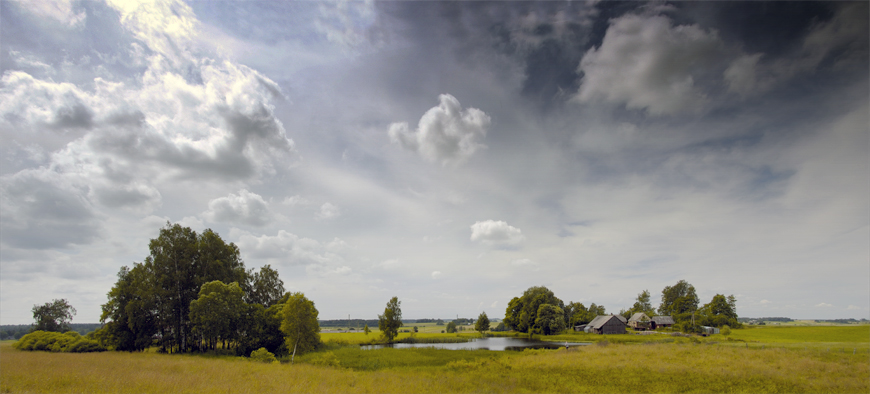
lithuaniaAuthors notes: After a week in Lithuania, part business, part pleasure, part personal exploration, I wanted to capture the earthiness of the country. It has some unusual characteristics, explained to me by my host. Its language is very ancient and incorporates a lot of Sanscrit, it escaped some of the early Christian conquests so has some pockets of pagan thinking, and it only recently opened to capitalism so there is a mixture of local trade and international connection. It seems not many people know about the place, or can get there, as it’s not an ethnically diverse country. It had to wait a long time for independence, and there is a greater sense of calm about the pace of change than in some other parts of central and eastern Europe. People are thinking a lot about the potential for the future… it seems an optimistic country, but there are pains in the birth of their new society… problems with a whole generation working abroad, and a lack of social protections at home. Lithuanians point out they are the geographic centre of Europe, if we consider Europe stretching up to the Ural mountains. Perhaps the rest of Europe might learn something from this fresh, raw, heart of a continent that is only beginning to recognise its true size and diversity. Some Lithuanians I met have this implicit understanding of Lithuanians’ role in the region. One weekend I was chatting with a two ladies about what their future environmental lifestyle business would do, possibly starting with an organic shop, and we brainstormed on names. I suggested words related to life. We settled on “Gyva”, which means “alive”. I looked it up… it is derived from the Sanskrit word which is sometimes spelt “Jiva”, as used today in India, that describes the eternal life in living things. So it will be gyva… when its launched… I’ll check in to www.gyva.lt every so often to see how they are getting on. Gyva sounds a bit like viva, so i used it that way in “gyva Lithuania”. And I call Lithuania a land of water not because of the rain, which gives the country its name, but because of the lakes… there are so many small and medium sized lakes dotted amidst the many pine forests; a fisherman’s paradise. All these things are in the tiny poem. My favourite Lithuanian talked about treating words like essential oils: getting as much in to as little. That’s why i like poetry. (or it could be im too lazy to write long poems… hmm)…

The photo is from: http://www.flickr.com/photos/44561568@N00/779299523/

BBC Airbus-ting

moz-screenshot-71.jpg

Most days I look at the BBC website. This week I found theyve started carrying advertising. But not any old advertising… no less than adverts saying that flying Airbus is the greener thing to do. See the screen shot below at the foot of this posting. The inaugural flight was from Singapore to Sydney. I didnt know you could drive. Perhaps Toyota brought out an amphibious Lexus while I wasnt looking, complete with storage tanks for weeks at sea.

So I sent their Global advertising person the following email:

Dear Phu,

I would welcome your advice, as the contact on the BBC website for global advertising.

Do you check the scientific credibility and clarity of the claims made by advertisers on your website?

If so, what is your evidence for the claims from Airbus, regarding comparison of flying a full aircraft with driving a car (perhaps single occupancy car)? This is disingenuous because people do not drive from Singapore to Sydney, for example, and flying makes such travel much more possible, and thus increases people’s potential carbon emissions. A comparison with a ship or train would be the only useful comparison for such long distances. The science of these claims was previously challenged in a refereed academic journal in 2002 (Journal of Corporate Citizenship: see http://www.jembendell.com/lw2002/spring4.html)

I would also welcome information on how promoting flying through advertising on your website as viewed by people outside the UK is compatible with:
a) the specific text and general spirit of the BBC Charter.
b) the role of the BBC world service in promoting British international interests, which the Foreign and Commonwealth Office is clear now includes global action on carbon emissions
c) a coherence between editorial and advertising, given the current climate change programming on BBC World.

I copy this to colleagues who are interested, as well as Simon Derry at BBC Trust and Kevin Marsh of the BBC college, who presented this summer at a UN event on media responsibilities.

Although I realise you must be getting many questions on this matter at this time I would welcome an answer that is specific to the issues I raise. Please note I will be posting this email and your reply on my personal and company blogs, and including it in my column in the academic journal I mention above.

Regards,
Dr Jem Bendell
Director, Lifeworth
Associate Professor, Griffith Business School
Visiting Fellow, UN Research Institute for Social Development
www.lifeworth.com / www.jembendell.com
jem@lifeworth.com / +44 (0)2078707594
moz-screenshot-71.jpg