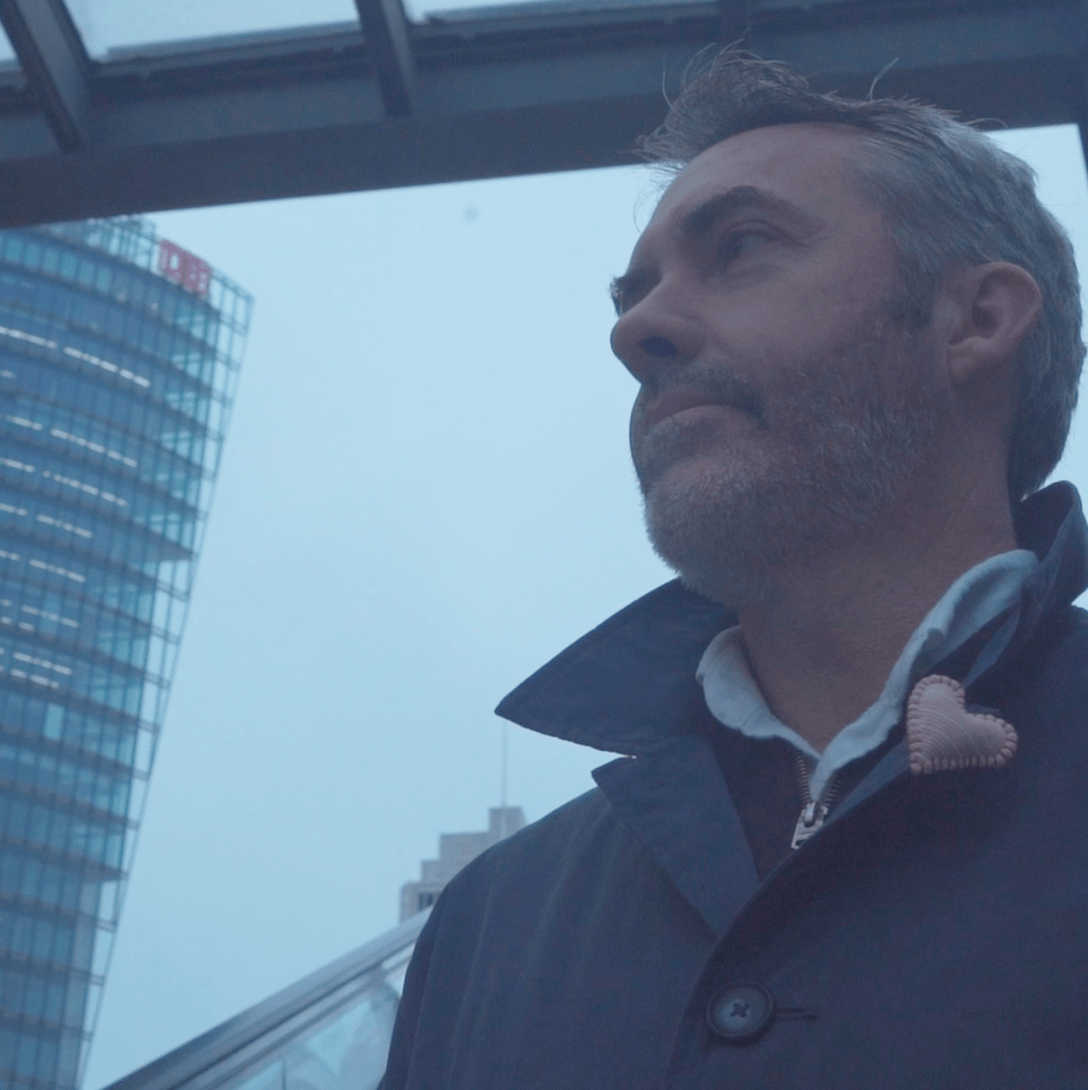
Sacred Fevers – Always One (Om Mani Padme Hum)

Sometimes fevers have been a psychological medicine for me. They force me to stop, which eventually makes me reflect on life. But that’s not the only impact. The delirium from a raised body temperature and cytokines involves an altered state of consciousness. Feelings can bubble up and new perspectives appear. Without my fevers, I might not have taken some of the ‘sharp turns’ of direction in my life. That doesn’t mean I welcome illness, for myself or anyone else. But I now recognise that when we get sick we can welcome potential insights from an altered state of consciousness, as a silver lining to what is otherwise a worrying, painful and boring experience. Why people like me need something as dramatic as a high fever to discover new meanings and directions in life is an interesting question. More on that later. But first I want to share with you a few stories of fevers, which led to me writing my latest song: Always One (Om Mani Padme Hum).

My last high fever happened a few days after I had been bitten by a dog. I had been saying goodbye to the head of the Buddhist Temple, and his dog seemed friendly until I responded with a pat on his head (the dog’s). I doused the wound in iodine, bound it, and said goodbye, leaving with a question in my mind about whether they should keep the dog away from the guests. It was an odd way to end a meditation retreat – a reminder of the random ups and downs of life. Later that day I waited with apprehension for a reply to my whatsapp to the Temple office. “Yes, the dog has been vaccinated for rabies” came the reply. When home, I began searching what the disease risks might be and looking up when I’d last had vaccinations for tetanus and rabies. I discovered I was a couple of years past the time when boosters are recommended. I then discovered the good news that tetanus isn’t as bad as I’d thought, whereas rabies is worse – once you have a fever you will certainly die within weeks. Fortunately, there were no signs of infection at the wound site, and I felt fine, so I decided to do nothing; a decision which I’d wonder about later.

Continue reading “Sacred Fevers – Always One (Om Mani Padme Hum)”

Meditating beyond craving salvation

Last week, over dinner, the British comedian and author David Baddiel asked me whether my new life of farming, music and meditation means I am effectively hiding away from the difficulties of the world. We were both guests of the Festival of Dangerous Ideas, in Sydney. I accepted the invite as it’s a major cultural festival in one of the nearest English-speaking cities to where I live in Bali. David’s question reminded me of how I used to think about meditation and people focusing on their mindfulness. I wondered if they were running away from reality, and trying to be happy by disengaging. I was letting the fact that isolationism is the motive for some people to imply the motive for everyone who is into meditation. I explained to David that I could not have done my work over the last few years if I had not benefited from Buddhist philosophy and practice. It helped me to better notice and slow down my reactions to incoming information so that I didn’t reactively adopt views that might quell any difficult emotions or distract me from them. That meant I could notice the delusions arising from craving for material, psychological and spiritual salvation, both for myself and others. It meant I could look into the abyss for longer and explore what good might be done in our new context. It also helped my resolve to keep working on this topic despite a backlash and recurring feelings of defeat. Maybe I didn’t say it as eloquently as that after a couple glasses of red, but I think he got my gist. And it reminded me of my gratitude for what I’ve been exposed to over the last few years.

Continue reading “Meditating beyond craving salvation”

Stubborn optimism in an era of collapse

The weak but well-funded arguments for techno-optimism in the face of climate chaos have kept on coming. The latest were a series of articles in mainstream press about a book that claims renewable energy will sustain societies while stabilising the global climate. Brazilian researcher Claudia Gasparovic, offered a rapid debunking of the book’s arguments, in a post on LinkedIn. Similar arguments were put to the book’s author by journalist Rachel Donald for Mongabay. The weakness of techno-optimism on climate change was something I explored in my book Breaking Together. If you read Chapter 3, you will know that the idea modern societies can maintain current consumption patterns by switching to entirely renewable energy is one founded upon blindness to material dimensions of energy generation and storage. If you read Chapter 4, you will know that energy and carbon dioxide are two issues within a far broader problem of the ecological overshoot by modern societies. If you read Chapter 5, you will know that the momentum of change in our oceans and atmosphere, coupled with the dramatic loss of cooling aerosols and cloud-seeding forest cover, means we are already within a scary situation with climate. 

Continue reading “Stubborn optimism in an era of collapse”