Holding Space for Strong Emotions

“I wanted to punch the guy, but when I realised I couldn’t do that, I just switched off.”

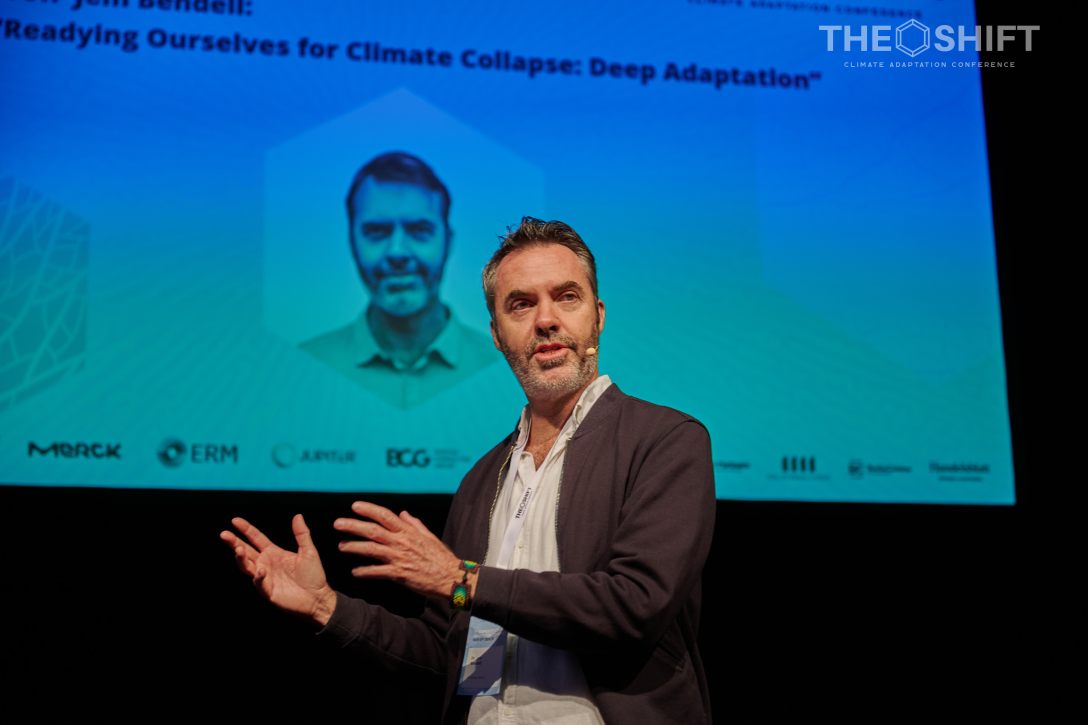
This was certainly a new kind of response to giving a speech. I’d just left the stage at a conference on adaptation to climate change, and was surrounded by people wanting to exchange a few words and contact details. “You really stimulated the audience, as we hoped you would,” one of the organisers said, smiling as he told me of the guy who liked my views so much that he wanted me to connect with his knuckles.

I’d already heard enthusiastic praise from another organiser, so I reacted to the negative feedback in dismissive fashion. “Anger is a way of responding to difficult information, situations and emotions. It gets us out of fear,” is more or less what I said. I continued with my mini lecture by saying “Fight or freeze are two normal responses to fear. It’s why I talked about the benefit of getting better with allowing, witnessing and working through difficult emotions. It’s also why we must recognise so much of our conversation in professional circles is to avoid conflict and emotional difficulty, using convenient narratives, that stop us from facing reality.” This all tripped off my tongue because being intellectual and slightly combative is my go-to response when under threat. However, I’m writing this essay because I was on the cusp of noticing that go-to response, and chose a different way to engage when experiencing conflict. If you also navigate strong emotions about the state of our world, I hope the following thoughts may be of use.

Continue reading “Holding Space for Strong Emotions”

A life changed by collapse (mine)

For much of my adult life I’ve lived outside the UK, my country of birth. Therefore, I’ve been curious about the dynamics of social change occurring in different contexts, including the environmental movement and profession. That is why I wrote my book with an eye on how it might be useful to the environmental movement in parts of the Majority World, and therefore I look forward to learning from the responses after recently launching the Spanish and French editions, with a focus on how they may be received in Latin America and Francophone Africa. It also meant I was pleased to read recently that one of Indonesia’s leading environmental commentators, Jalal, is reading my latest work, and contextualising it with my previous decades working in corporate sustainability. I gave it attention, as Indonesia is the country I have chosen as home for the last few years, and where I’ve invested into a social enterprise for collaborative resilience in the face of collapse – Bekandze Farm School. His essay reviewing my intellectual journey was one of the best I’ve read, and so I had it translated into English, to share with you here. I don’t expect or ask you, or anyone, to change direction in the way I have done, but to allow an awareness of collapse to transform your own priorities, as and when you ready – as there is not one right response. But there are some benefits! If you are interested in exploring your own path with peers, then please consider our online course (next one starts late January).

Continue reading “A life changed by collapse (mine)”

The Politics of Collapse: uncommon conversations for unprecedented times

“Are you leaving just before the election in case there is trouble?”

I was asked this a couple of times in San Francisco, during the week before the US election. That told me of the anxiety that some people were feeling in the run up to the vote. Nearly every time my conversations turned to politics, I heard people express their incomprehension about others supporting a candidate that they do not. I did not hear merely a concern about different priorities. Rather, I heard the belief that other people are stupid or bad. The anti-Trump voters focused on the bad things about him and ignored the real grievances that were motivating people to vote Republican. The pro-Trump voters focused on the bad things that the current US administration has done and ignored the real concerns about the former President. In both directions there appeared to be a belief that they had superior information, intelligence and ethics. When I noted that people are demonising those they disagree with, in ways that ignore real concerns, everyone I chatted with agreed that such negativity towards fellow citizens is not helpful, and that the political situation in the USA is depressing. That got me thinking about how more of us need to be if we are to develop new forms of politics suited to an era of societal disruption and collapse.

Continue reading “The Politics of Collapse: uncommon conversations for unprecedented times”

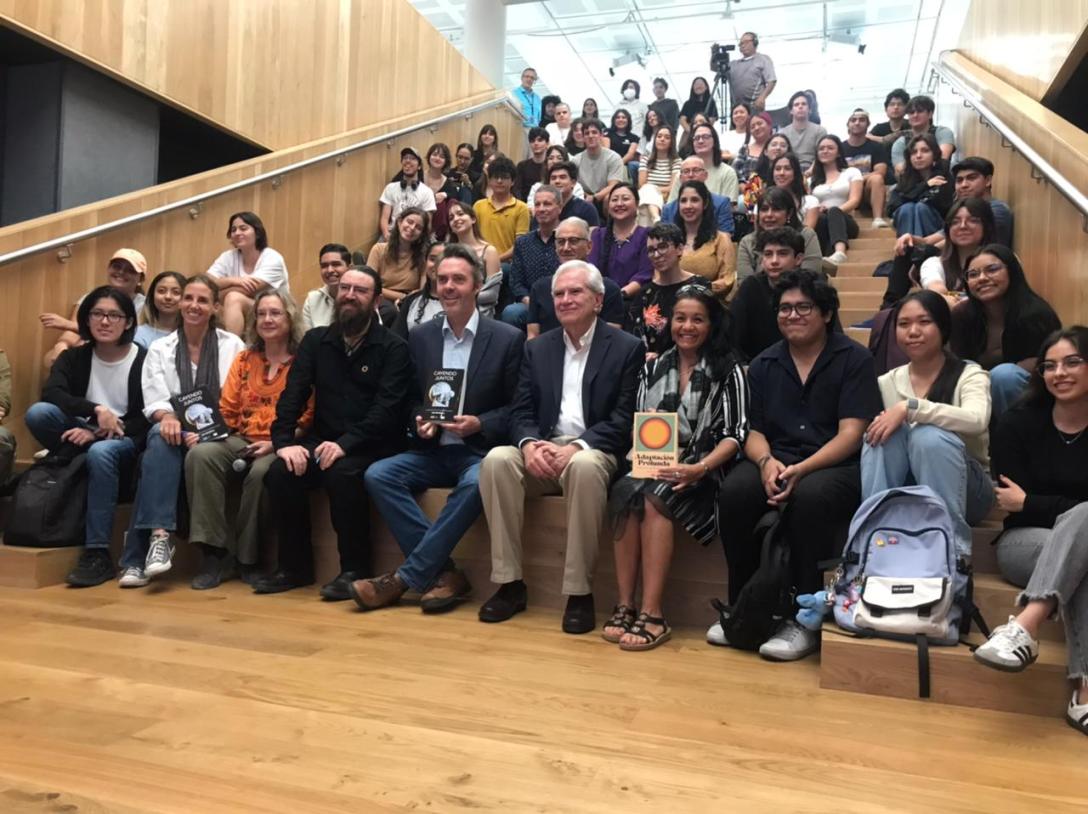
The Freedom in Truth – launching ‘Cayendo Juntos’

Transcript of speech given at the Monterrey Book Festival (Feria Internacional del Libro Monterrey), Mexico, 6th October 2024, to launch Cayendo Juntos, the Spanish edition of Breaking Together.

I am pleased to have reached you here in Monterrey just before the close of this remarkable event – one of the largest book fairs in the world. It is probably best that I was kept back until the final day, so that I wouldn’t spoil the mood of your previous days here. Because what I am going to talk about is not very fun. In fact, it is so heavy that I don’t talk about it much in public. But coming to Mexico felt important to me. That’s because I believe that Latin America, more generally, can play a significant role in softening the collapse of modern societies around the world. Three different areas of wisdom and struggle from this region offer signposts for how our human race might cope with the consequences of having overshot planetary limits and poisoned our living home. Those traditions are liberation theology, anti-imperialism, and indigenous cultures. So I’m honoured to be invited to offer my own ideas into your rich mix of intellectual traditions in Latin America.

For over 30 years this event has showcased a breadth of ideas in the Spanish language. Both fiction and non-fiction. I believe that is still a valid distinction, is it not? I know some people do wonder. I saw a sign in a bookshop that they had moved their apocalyptic fiction books into their current affairs section. Maybe one day they’ll move their current affairs books into the section for apocalyptic fiction.  

Continue reading “The Freedom in Truth – launching ‘Cayendo Juntos’”

The Francophone World in an Era of Collapse

If modern societies are breaking down, is there a political movement ready to soften the collapse and begin anew? Or do we need new ideas and organisations for collective action? Might a local focus be the only meaningful approach as industrial consumer systems decline? Or is this a period that calls for greater international solidarity with those suffering the most? I think the conversations and initiatives in the Francophone world will provide us many insights on these questions, for a number of reasons, which I’ll come to in a moment. That’s why I will celebrate the release of the free ebook version of S’effondrer Ensemble, with a gathering in Grenoble, France on October 30th. I will be joined by some members of the translation team and other special guests who are leading in the field of climate adaptation. If you can make it to Minimistan for 6pm, it will be a chance to meet others who are taking this topic seriously (just come, you don’t need to register). 

Continue reading “The Francophone World in an Era of Collapse”

The Nine Lies of the Fake Green Fairytale

Essay shared to coincide with my speech at the 2024 Festival of Dangerous Ideas.

Self-deception is rife within the environmental profession and movement. Some denial or disavowal is not surprising, due to how upsetting it is to focus on an unfolding tragedy. But our vulnerability to self-deception has been hijacked by the self interests of the rich and powerful, to spin a ‘fake green fairytale’. Their story distracts us from the truth of the damage done, that to come, and what our options might be. Indeed, their fairytale prevents us from rebelling to try to make this a fairer disaster, or a more gentle and just collapse of the societies we live in. Averting wider rebellion might be why the fairytale receives loads of funding for books, awards, feature articles and documentaries, as well as videos for popular YouTube channels. That’s why, like me, you might not have realised for years that it is a fairytale. In this essay I will explain the nine lies that comprise this ‘fake green fairytale’ before explaining how much damage is being done to both people and planet from the dominance of this story within contemporary environmentalism.

Continue reading “The Nine Lies of the Fake Green Fairytale”

S’effondrer ensemble – Breaking Together in French

Publié par Good Works de l’Institut Schumacher, S’effondrer ensemble: Vers l’écoliberté écrit par Jem Bendell,  est désormais disponible. Yes, the French version of ‘Breaking Together’ is now available, published by Good Works, of The Schumacher Institute. 

Initialement sur Amazon, il sera disponible sur d’autres plateformes et dans les librairies d’ici novembre, et sera disponible en tant qu’epub gratuit au début de 2025. Je présenterai le livre fin octobre à Grenoble et/ou Genève. Initially, on Amazon, it will be available on other platforms and from book shops by November, and will be available as a free epub in early 2025. I will give a talk about it in Grenoble and/or Geneva in late October

N’hésitez pas à partager ce blog avec vos amies et collègues francophones. Please share this blog with your French speaking friends and colleagues. 

Je suis reconnaissant à une équipe de traducteurs dévouée, ainsi que les dons d’argent et’de temps  qui ont rendu ce livre possible. Plus d’information sur leur contribution suivent le résumé du livre. I am grateful to a dedicated translation team, as well as donations of time and money to make this book possible. Further information on their effort follows the book description:

Continue reading “S’effondrer ensemble – Breaking Together in French”

We Still Care – Doomster Characteristics

I made a mistake in my book Breaking Together, when I included a box on ‘doomster characteristics’. That was in Chapter 12, where I was explaining many people accept that societal collapse is occurring, or coming soon, and are integrating that into how they live positively. One of the curators of the postdoom collective, Karen Perry, pointed out to me that my box was describing benefits of being a ‘doomster’ rather than their common characteristics. That got me thinking. I realized that there are some ways of being that many collapse-accepting people exhibit, which I think are important to recognize and cherish at this time. So, I wrote it up.

Why does that matter? Might it be more intellectual blather from a guy who can’t stop writing? Well, I will come back to that 😉 But I think this discussion matters because of the importance of perceived identities in public discussion. Those professionals who oppose us waking up to our predicament have been misrepresenting our motivations and characteristics for years in ways that turn people away from exploring more. Therefore, it is useful to be clearer about what our motivations are and explain what we see as some common characteristics. As a conversation starter, I will list five of them below.

Continue reading “We Still Care – Doomster Characteristics”

Staying Curious During Collapse

On this day 6 years ago, I released through my university the ‘Deep Adaptation’ (DA) paper on climate chaos. Since then, I’ve been experiencing a range of emotions that arise from my view of the situation and the reactions of other people to that – and learning how to be OK with that. I’ve also been experimenting with ways of living differently as my old sense of self broke apart. These two themes were the focus of a new documentary about my life that was shown on Dutch TV a few weeks ago. The filmmakers made it beautiful and so I recommend watching below on YouTube or Odysee.

The emotional side of researching, communicating, and educating on collapse has been colourful and, at times, draining. I made and lost friends. I gained allies and enemies. I lost and gained a way of life. I wonder whether I could have learned anywhere near as much about psychology and spirituality without the emotional roller-coaster of becoming public about collapse risk and readiness. 6 years after the release of the DA paper, I want to share some reflections on the conflictual side of me coming out as a ‘doomster’.  

Continue reading “Staying Curious During Collapse”