[a version of this post went to 5k subs of my biannual bulletin]
What are you going to talk about over the coming holiday period? There is a lot of sad stuff going on in the world, which seems impossible to either influence or ignore. There is the temptation to utter platitudes about peace on Earth, or hoping it will be better next year. But you are reading these words. So we both know you are made of sterner stuff than that. How about trying a different tack entirely? Something like: “It appears to me that all this terrible news is part of a pattern. Modern societies are crumbing and the elites are causing more damage as they try to hold on to their power. These are aspects of societal collapse, and we need to start accepting it, so we can discuss what to do about it. It looks like we need to change our hopes and plans for the future.” Yes, the time has come for you to be a ‘party pooper’ …but at least one with purpose.
For a few years I didn’t want to poop any parties. I felt apprehensive about promoting my views on collapse, as I knew how emotionally unsettling it can be to realise the tragic and dangerous situation we are all facing. Instead, I thought people who were already aware of the situation would benefit by hearing from people who were responding to their collapse anticipation, or acceptance, in positive ways – and so I hosted 30+ guests in the Deep Adaptation Q&As. Over the years, my reticence to speak out has changed. That is because, although societal collapse is still taboo in mainstream media and politics, a huge proportion of the general public already experience how normal life is unravelling and that the ecological situation is unavoidably frightening. I want to help more people make sense of this situation and consider their options. As the initiative ‘Just Collapse’ often repeats, it is time to talk about societal collapse. That is why this year I released the book Breaking Together and began to #TalkCollapse in a variety of podcasts and some interviews in mainstream media. In this post, I’ll sum up some of that audio and video from the past year. It will give you a number of options of what to share with people you talk about collapse with in the coming weeks, months, and beyond.
What have I got to say that’s relevant or different? I believe my book moves the agenda forward in a few ways. It lays out evidence for the conclusion that the creeping collapse of modern societies began a few years ago, argues that the way we have been manipulated led to this tragedy, and identifies both positive and negative ways that we can respond. In my interviews I tried to convey those messages. For years I ‘bit my tongue’ on my political views on the ecological tragedy, and instead focused on how to help people find their own way of integrating collapse awareness. However, the rise of deceitful nostalgia politics, ecomodernism, and conspiracy porn, means that discussion of a solidarity-based politics for an era of collapse must be as much a part of the agenda as personal psychological coping or local resilience. That’s why a lot of my interviews went beyond the earlier conversations about Deep Adaptation, where I tended to focus on the psychological aspects of the agenda. I hope you find one amongst the following that is of interest.
Douglas Rushkoff is an American best-selling author on trends in media and culture. He has always been a proponent of ‘open source’ approaches to software and life in general. He also wrote about his meetings with billionaires some years ago, as they tried to prepare for “the event” of societal collapse in rather defensive ways. In our interview, we discussed a range of themes in the book. He was particularly interested in my thoughts, findings, and views, on how it is not human nature that caused the current tragedy, but the manipulation of modern humans by an expansionist monetary system. I explain this in Chapters 9, 10 and 11 of the book, which provide the political framework for an ‘ecolibertarian’ response (not to be confused with rightwing libertarianism). I also took the chance to ask him about his latest insights on how the elites might be preparing for collapse.
Daniel Pinchbeck is another New Yorker who has a large following amongst tech-savvy cultural creatives. In our interview, I found myself wanting to talk more about his interests in esoterica and psychedelics but he wanted me to discuss the evidentiary basis for concluding the creeping collapse of societies had already begun. This was because he recognises what a massive shift in perceptions and future choices arises from a confidence in such an outlook. I had previously offered a summary of how I see the state of climate science and the climate itself, for a presentation and interview with the MEER Project. I accepted their invitation, as I had worked with them during 2022 to alert more of the world’s climate profession to the threat from ending aerosol dimming before it would really kick in (which it did in 2023). Our speeches at COP27 in Egypt were ignored, as the climate profession doesn’t exist to address reality fully, without fear or favour, but to maintain delusional confidence, funding, salaries and prestige (probably partly a result of collective trauma, as I explained at the ‘Climate and Consciousness’ summit).
Subscribe / Support / Study / Essays / Covid
The ‘Buddha At The Gas Pump’ series of interviews has been going for many years, with many hundreds of guests talking about aspects of their spiritual inquiry or experiences. One of the topics we discussed was whether the unfolding collapse of modern societies is a rite of passage for humanity to emerge into a new age with higher consciousness. I explained, as I do in my book, that I see these times as an invitation, not an initiation. Some people will respond in ways that involve ego transcendence, and others will respond in ways that involve ego affirmation. There is work to be done to try and influence that, to both reduce harm and enable the potential for more joy. I explained that believing a better world will emerge after a societal collapse might be a means of numbing or sidestepping the pain of the predicament, misguiding how we show up as kindly as possible in the process of disruption and decline.
At the Ubud Readers and Writers Festival, I told a couple hundred people about the downplaying of climate reality by the environmental profession. I was pleased to see the young Indonesians in the room were most positive about what I was saying. An audience member grabbed some video clips of my comments, and another wrote a substantial article about it for Changing Times. After that speech, there was a 90 minute Q&A, where I answered questions about the book. Aside from my launch speech in Glastonbury, and my interview for Low Impact, the Q&A in Ubud is the best exploration of the ideas I convey in Breaking Together. My host for that Q&A was Tom Doig, an Australian academic specialising in non-fiction writing. He saw something significant enough in the book, for its genre, to write a long form essay in The Conversation. Perhaps due to the ravages of extreme weather in Australia over the last few years, there is a growing engagement with the ideas of Deep Adaptation. It’s why I am teaching a course in Brisbane on ‘Leading Through Collapse’ in a few months (join us?), as well as giving a free public lecture at Griffith University on March 7th 2024.
In an interview for the podcast by Novara Media, I expanded on the political implications of recognising material progress is ending, and that we need a solidarity-based politics for this new era of collapse. That was an impressive platforming of this topic by an independent British media outfit that sometimes promotes the idea that full automation could produce luxury living for the proletariat. We dug a bit deeper into the topic of solidarity, and questions of privilege, in an interview for Gaia Education, an organisation focused on helping people to live in eco-communities.
I don’t like combative public debates on these topics, and leave that to people with more talent for such. However, sometimes when a fellow panellist moodsplains an audience that we should all stay positive about technology, business and leadership, I can’t stay quiet, as happened during my talk on ‘creativity beyond hope’ for an event in Amsterdam. I’m more inclined to try and find areas of agreement, and so when I appeared on ‘Humanity Rising‘, suddenly we were discussing the recent US government moves to release more evidence of the existence of Unidentified Anomalous Phenomena (UAPs, aka UFOs). Off the cuff, I shared my belief that Life of some kind exists elsewhere in the Universe and there is evidence some of it has visited Planet Earth for a long time, but the implications of that are not inevitable. Some people might use such awareness to stoke a new arms race, or might reverse-engineer weapons rather than useful technologies. I also recognise the potential for yet another ‘we will be saved’ narrative to emerge that avoids facing the ecological predicament and associated pain.
If you don’t have time to listen to me for an hour in one of the videos I’ve just mentioned, then you now have the option of asking JemBot about the book’s arguments. In what seems to be a world first, one journalist decided to interview both myself and the AI chatbot that’s based on my book, and provide both answers. You might want to check it out and decide whether my chatbot sounds smarter than me… it certainly sounds more ‘Sir Humphrey’ than I do. With my brother, we had fun with it, asking questions such as: What should I buy for my family for Christmas? What are the pros and cons of an AI chatbot answering questions for Jem? I recommend inviting people to ask it questions, as a ‘doomer humour’ party game to help you talk about collapse with relatives during the holidays (as it’s not the easiest topic and humour can help).
Although there have been a range of favourable book reviews, which I listed in a previous post, this topic is still hidden in both mainstream media and by the algorithms of social media. Most journalists still quote as ultimate authorities the climate scientists whose anti-alarmist and anti-doomist opinions are being proven wrong by the weather and ocean data in 2023. When some of these ideas break through into the mainstream, such as the feature on me in GQ Magazine, then Facebook ‘visibility filters’ it, probably on the basis of ‘factchecks’ by BigTech funded NGOs that have been shown as incorrect by the world’s top climatologists. If the ideas in Breaking Together for a solidarity-based, anti-imperialist, and freedom-loving response to societal collapse receive mainstream attention, then it is likely another round of cancelling efforts will commence. Fortunately I don’t lead anything, let alone something that could be labelled a cult, plus I’ve been mostly asexual for a few years, and my scientifically-evidenced views on Covid are all vindicated by the data and science coming to light now. In addition, the range of commentators on collapse readiness and response is far wider than it was when I stuck my neck out in 2018, so further attacks on me would do little to thwart this broader conversation.
As mainstream media and social media further their tyrannical grip on public awareness and conversation, the organic spread of ideas about collapse response is the way ahead. I’m pleased private donors and volunteers are translating Breaking Together into Spanish, French, Chinese, and Hungarian (with epub versions to be freely available). To nudge the conversation forward around the world, in 2024 I am undertaking an international book tour (to Australia, Mexico, USA, Belgium, Hungary). The two day event in Budapest on April 19-20th 2024 will provide an opportunity for people across Europe to gather and discuss where we are at with Deep Adaptation five years since the movement took off. Before that, I’m pleased the event in Havelange, Belgium on 15th March involves Satish Kumar and Pablo Servigne (contact hello@thesprouts.co to receive an invite). For the other locations, please sign up to the relevant list to be informed as information becomes available.
For reasons of lifestyle and carbon footprint, this will be my last and only international book tour. I worked out that the pollution will be about 0.0000157% of the Pentagon’s annual CO2e emissions (excluding major increases since 2018 due to wars they support but don’t fight, such as in Ukraine and Palestine). I still believe it’s OK to fly, economy only, if we are attempting to make a significant difference and are sufficiently self-critical to question whether we are deluding ourselves about that! If you can’t make it to any of the events, then I recommend joining one of the online course I teach twice a year – next up in January and September. Meanwhile, to offset, we plan to plant 50 trees on our farm, encourage its soil carbon content, and keep complaining about war and the monetary drivers of war.
I can’t end this review of some of my audiovisual outputs this year without a mention of the late great Reverend Dowd, who passed away suddenly in October. He helped many people learn of my ideas by releasing 39 audio narrations. In addition, Michael’s audio narrations provided me with an additional means of learning about the wider field of collapse. He is the only person I know to have stated publicly that he was sorry for not sticking by me in public when I was criticised for my warnings about the corporate-dominated, authoritarian and ineffective responses to Covid-19. He made amends by audio recording one of my essays on what to learn from the Covid situation. A brave, bold, positive, humble, intelligent and good-hearted man who made a unique contribution to humanity at this unprecedented time. Soon before he died, Michael connected me with Karen Perry, and for nearly 2 hours we dived deep into her ideas on the benefits of collapse acceptance, rather than just awareness. She is part of the team continuing the Reverend’s communication on a postdoom perspective.
When people close to us die, or even our pets, it is a reminder of the miracle of life. Grief was a significant aspect of my year. It has made me all-the-more incredulous at how much unnecessary suffering and death is being caused around the world. I have felt deep sadness both at the horrible loss of life and the hateful lies involved in so many conflicts. I recently decided to stop arguing with people on social media (e.g. on Israel/Palestine), or via private correspondence, and instead make donations to Combatants for Peace (CFP) and Medical Aid for Palestinians (MAP). The former is a bi-national organisation of Israelis and Palestinians who, despite the intractable narrative of separation, hate, fear and vengeance, continue to engage in a joint struggle to end the occupation of the West Bank and the siege of Gaza. The latter works for the health and dignity of Palestinians living under occupation and as refugees. I was introduced to both by former IDF soldier Ben Yeger (see his TEDx), who provided training on conflict resolution for Deep Adaptation Forum facilitators.
Through meditating on grief during one of the retreats I co-organised, I realised that the final ingredient of grief is to re-focus on who and what is still alive with more presence and compassion. Which is why I continue my efforts to make our Bekandze Farm School in Indonesia, where I live, a successful catalyst of regeneration and resilience. So if you have any money left over from a donation to CFP or MAP, or those extra presents for anyone whose party you pooped by talking collapse, then we would welcome your support. It would help us to develop our facilities and roll out training for local smallholders.
Whatever your faith, or none, and whatever your views on current affairs, I hope you have a good break, with some fun (with or without JemBot!) and meaningful conversations about what’s important to you and your loved ones, as you consider the years ahead in new ways.
Warmly, Jem
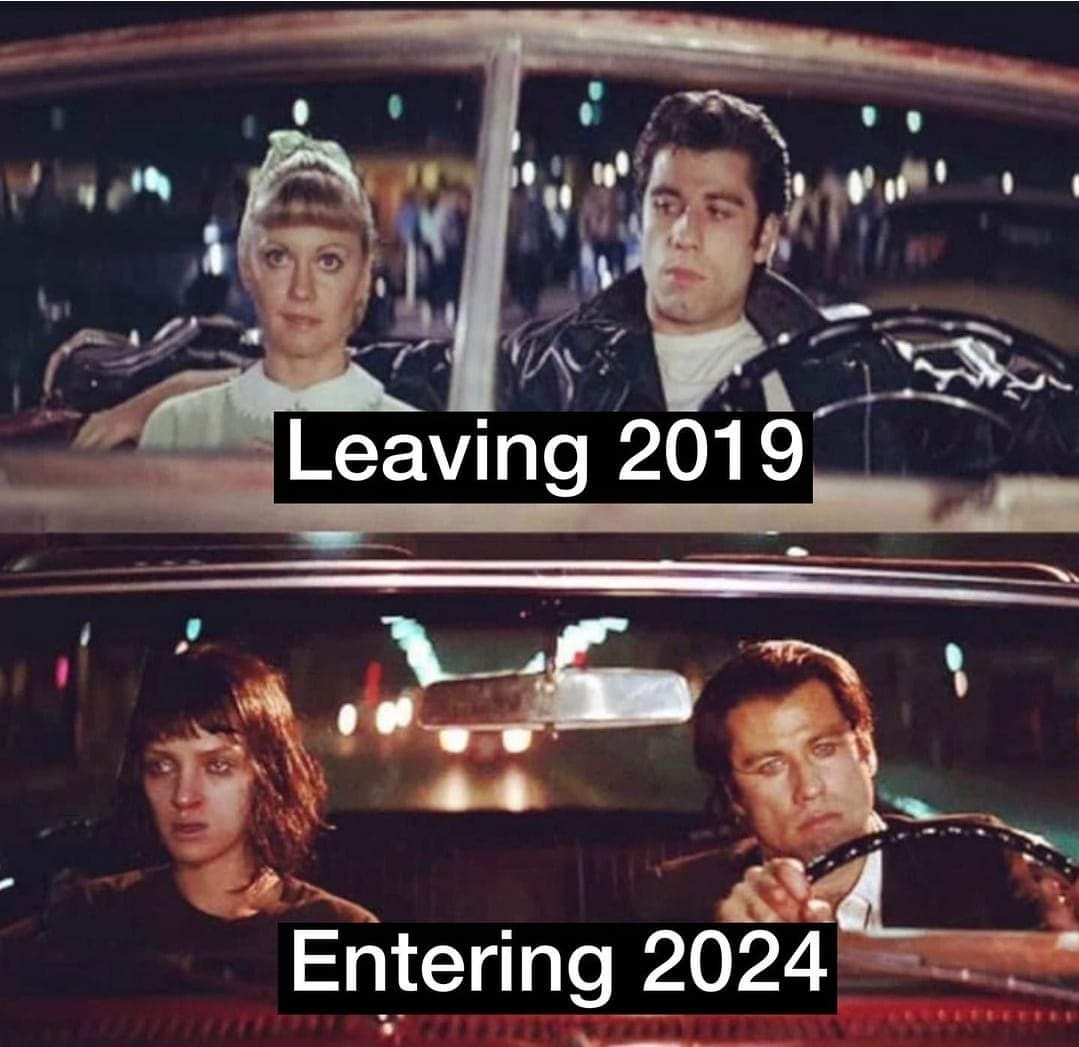
Here’s some doomer humour to end the year:
Donate to keep Jem writing / Read his book Breaking Together / Ask JemBot a question / Read Jem’s key ideas on collapse / Subscribe to this blog / Study with Jem / Browse his latest posts / Read the Scholars’ Warning / Visit the Deep Adaptation Forum / Receive Jem’s Biannual Bulletin / Receive the Deep Adaptation Review / Watch some of Jem’s talks / Find Emotional Support / Jem’s actual views on Covid
Discover more from Prof Jem Bendell
Subscribe to get the latest posts sent to your email.
