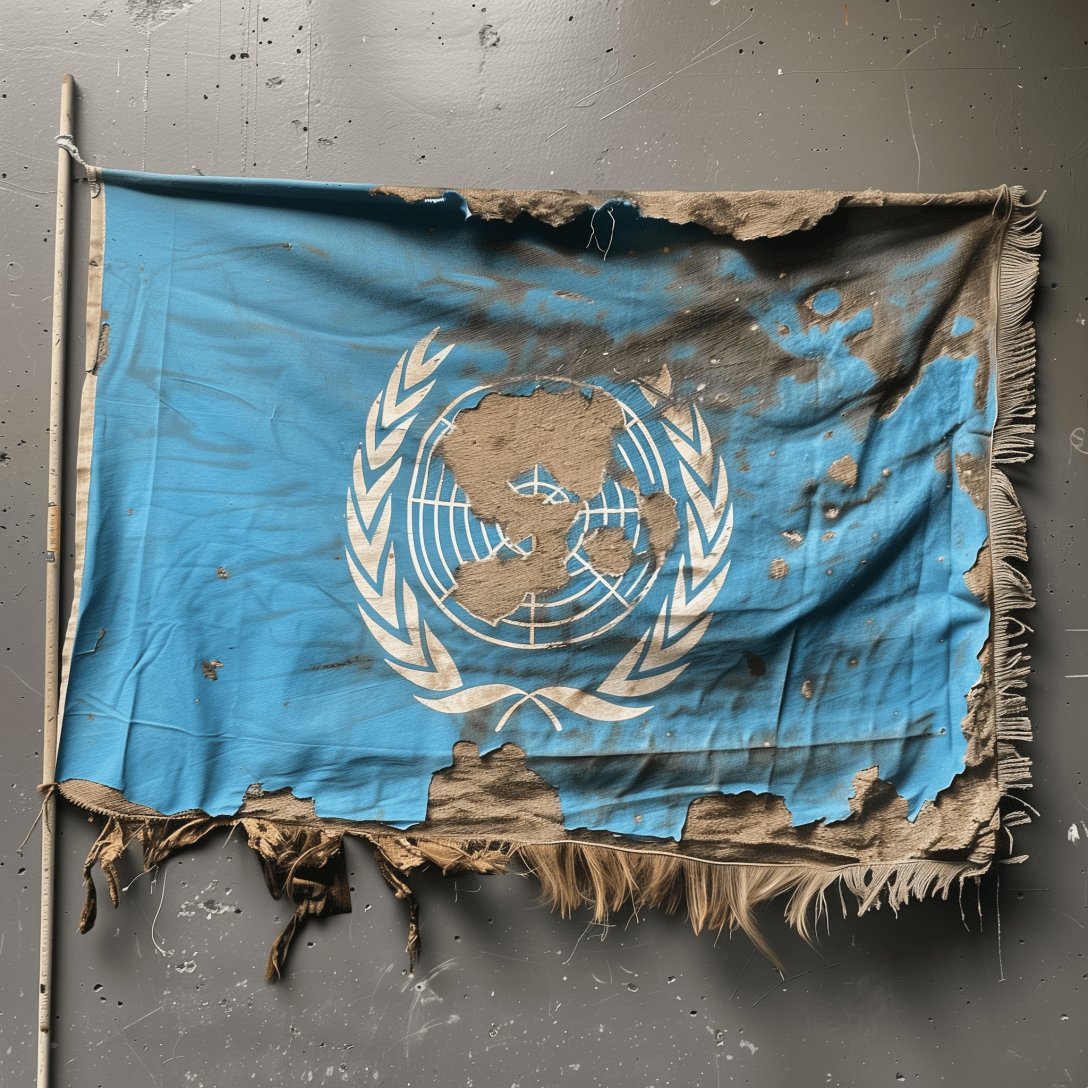
If we conclude that current difficulties are aspects of an unfolding collapse of societies around the world, what might we want to see from officials in the United Nations system?
That was a question posed to me recently by an initiative which recognizes something of the scale of the challenges faced and wants to communicate that to professionals involved in international affairs. They include not only international civil servants, but also governmental officials in foreign relations, international development and environmental issues.
Having worked in the UN system in various research roles, as well as with international NGOs, I recognize the conclusion that because we have global problems, we need globally coordinated action. Since the 1990s, I wrote a lot of published papers with that in mind, including some reports for the United Nations. But years later, I now see the hope people have in the UN system in contrast to the reality of its ineffectiveness and the growing suspicion that parts of it, such as the WHO, have been hijacked by a global managerial elite (who have bad ideas on most things). I have come to see that although many international civil servants do important work on the ground in some countries, many of them in the headquarters are involved in a deadly charade, where their status, income, and emotional stability lead them to lie to themselves and to the public about our planetary predicament, its causes and what to do about it. This is exemplified by their continued lie that ‘sustainable development’ is possible, despite years of data now proving the critiques from decades ago that it was capitalist-friendly ideological tosh. For one year I discussed and corresponded with various professionals in the field of sustainable development about why they continue the charade and heard what I described as their ‘deadly sins of denial’ in an article for Brave New Europe.
Subscribe / Support / Study / Essays
If people don’t accept that they themselves are part of the wholescale failure, there won’t be introspection, so there will be more repetition of unhelpful patterns. The problem is, most people don’t understand their patterns, and they can think that people who point them out are just being impolite and unprofessional. Therefore, when I was asked by the nice people at the ‘Council for the Human Future’ to provide a page of thoughts on what to ask from professionals in the international system, part of me feels like sod ‘em, they are highly paid cowardly liars who might even do more harm than good. But another part of me feels like it is worth offering my analysis with the rather modest aim of potentially reaching a few contrarians. After all, there aren’t many other options for international dialogue. Not everyone can wake up to the reality of unfolding collapse and quit their job to ‘go wild’, and there are many ways to remain in one’s job and help soften the crash, as I explored in a previous essay. It is this hope which also keeps me engaged teaching leaders from various walks of life who are taking collapse seriously. Our next online course starts in September. My one pager follows below.
—
Submission to the ‘Roundtable on the Human Future’ (2024), by Professor Jem Bendell, Co-Founder of ‘The Scholars’ Warning on Societal Disruption and Collapse’, with nearly 700 signatories from over 50 countries. www.ScholarsWarning.net
Multiple domains of pain are being experienced, to varying degrees, around the world, due an underlying driver of expansionist monetary systems which have captured economies, cultures & governance – for decades. These painful domains include habitat & species extinction, natural resource exhaustion, pervasive toxicity, climate chaos, hyper-militarism, food insecurity, relative overpopulation, chronic and infectious disease, ungoverned technologies, plus widespread delusion & denial. These domains not only invite our simultaneous attention. The fact they are experienced globally & have not been curbed despite decades of scholarship, activism, dialogue & policy innovation, demonstrates they have common causes. One cause is the ‘source code’ for modern societies, which is the expansionist monetary system, involving private banks issuing nearly all money as debts to themselves. That directly & indirectly incentivises, manipulates & coerces institutions & people to behave in more acquisitive, consumptive, defensive & short-termist ways. Although deeper causes can be supposed, doing so can be a way of avoiding actionable yet politically difficult ideas for addressing the monetary driver of the current unravelling & breakdown of societies around the world.
That political difficulty leads members of the managerial class who work on matters of public concern to avoid monetary critique & instead return to the failed tropes of i) raising awareness, ii) convening elite collaboration, and iii) magically preventing collapse:
- Raising awareness of multiple domains of pain doesn’t raise awareness of common causes: it leads to counterproductively profligate state funding of corporations and draconian policies.
- Convening elite collaboration accentuates the illegitimate and ill-informed agendas of corporate and bureaucratic officials. That distracts the public from causes and generates a backlash to collective action on common dilemmas.
- Calling for action to prevent collapse requires ignoring or downplaying the last 8 years of data, which indicates modern societies worldwide are already at various stages of fracture & there is a momentum in their trajectories. Such downplaying both avoids a verdict upon current institutions & occludes discussion of what can help communities when life is further disrupted.
Moving beyond these failed triple tropes opens a new conversation: how might well-intentioned members of a bureaucratic class do less harm in general & in their efforts on the domains of pain described above? But psychology, culture and institutional incentives militate against such an agenda. The topic generates difficult emotions, yet professionals have learned that to feel confident is good and that can be aided with categories and maps. For instance, inventing a name for our current tragedy by referring to geological eras enables academics to make it a topic for pontificating and professional advancement. More finance & opportunities for exposure arise for any framings & narratives that don’t challenge incumbent power. The combination of these dynamics means that the analyses that dominate will serve the professional power of the relatively tiny minority with the finance to engage in discussions about such public concerns. Within that context, officials in governments and intergovernmental agencies are unlikely to engage fully in the reality of an era of societal disruption & collapse, and if they do, they will not find much support. That is why the extent of lying about ‘sustainable development’ was called out by hundreds of scholars in a public letter to the UN system in 2022. Therefore, what can such officials try to do?
- Stop lying and admit failure, including one’s involvement in the production of that failure;
- Explore how to promote localised coping mechanisms and what blocks local initiative;
- Resist ongoing lies about the predicament, the half measures that only profit capitalists, and emerging proto-authoritarian narratives and initiatives
- Support more participation in policy dialogues by people not aligned to any incumbent power.
Evidence for, and elaboration of, this analysis is provided in the book Breaking Together (2023).
Interested? Share your reflections in the Deep Adaptation Leadership group on LinkedIn.
Donate to keep Jem writing / Read his book Breaking Together / Ask JemBot a question / Read Jem’s key ideas on collapse / Subscribe to this blog / Study with Jem / Browse his latest posts / Read the Scholars’ Warning / Visit the Deep Adaptation Forum / Receive Jem’s Biannual Bulletin / Receive the Deep Adaptation Review / Watch some of Jem’s talks / Find Emotional Support / Jem’s actual views on Covid
Discover more from Prof Jem Bendell
Subscribe to get the latest posts sent to your email.
