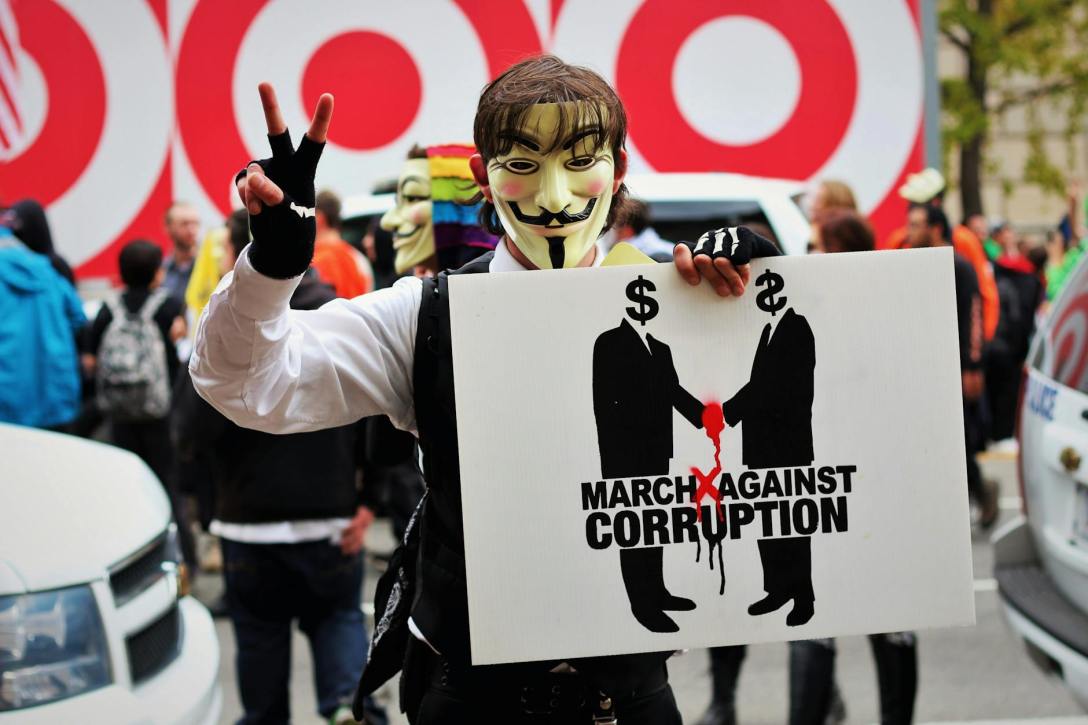
Sometimes people object to any discussions of politics, pandemics, wars, racism, or gender, in Deep Adaptation fora. The ‘little’ matters of ecological destruction and the collapse of societies are stressful enough, even before airing any of our disagreements about politics or current affairs. Consequently, some people wish for a place where such topics are avoided, so the discussion is limited to how to help each other emotionally and practically. Some groups in the Deep Adaptation movement even make it explicit that politics should not be discussed. However, I’ve said for a few years that I think that such a position is no longer tenable, with the issue now being how such conversations can be well held, so they advance understanding rather than discord. That is simply because collapse has been shaped by politics and will be made better or worse by politics in future. Additionally, contentious social issues involving inequality, gender, race, neurodivergence, health and human rights, amongst others, don’t become irrelevant just because societies are fracturing. In fact, for many people such matters can become more important, as they wish to maintain their values and reduce suffering as situations become more difficult. I’ve wondered over the years if we don’t try to apply the ethos of Deep Adaptation to matters of policy and power then how robust is our commitment to that ethos?
My book Breaking Together offered a political philosophy for this new era of disruption and collapse. To aid conversation, and to coincide with the 2025 Davos summit, we released the free audio of Chapter 13 of Breaking Together, called “Freedom from Fake Green Globalists“. In it, I explain how elites joining the environmental cause have distorted the focus to one of ‘ecomodernism’, where technology, enterprise, leadership and mass conformism will, they claim, save the day. I explain the utility of resisting the schemes and scams of elites in the face of the climate crisis, as part of restoring a people’s environmentalism. When writing it, I didn’t expect people to agree with me just because they agree with my outlook on industrial consumer societies. Instead, I hoped to invite discussion of the political aspects of collapse. To have that discussion, as collapse-aware people, we need to be able to discuss our disagreements on social and political issues, even if that involves some awkwardness at times. Here are six reasons why I think that.
First, societal collapse can be made better or worse by the behaviour of powerful institutions, whether private or public.
Second, that power is becoming more concentrated and unaccountable, both nationally and globally.
Third, the symptoms and moments of societal disruption and collapse will trigger ‘elite panic’ and counterproductive responses. Indeed they have done so already.
Fourth, powerful institutions, public and private, increasingly mislead the general public. This is done by funding institutions which distort public understanding of social issues and by bigtech manipulating the visibility of the views of our peers, so that good dialogue on salient issues is being undermined.
I will take a moment to highlight the aspect of that distortion which involves the self-serving corporate engineering of polarisation on various topics. That is because it has been particularly insidious within ‘progressive’ communities, and led to censorship and groupthink. It involves those of us who care about being anti-prejudiced being cajoled into thinking that a particular view is racist, sexist, transphobic, or ableist, rather than one of many valid opinions on complex topics. For instance, do you think that pharmaceutical industry funding of autism organisations has nothing to do with those organisations’ criticism that any research into environmentally-related pathogenesis of autistic spectrum disorders is, de facto, ableist and insulting to neurodiverse people? Conversely, many leading scientists and support groups think there can be research into various potential causal factors, without that denigrating the neurodiverse. Do you think that companies, and their associated foundations, that provide support to organisations on infectious and non communicable disease have no eye on their own interests? You don’t need to have worked for decades in the field of ‘corporate social responsibility’, as I did, to know that corporations shape civil society through their philanthropy.
A fifth reason for making space for discussion of contentious issues is that the processes I have just described are leading to widely-held misunderstandings amongst the public on policy issues, oppressive policies from governments, and large-scale backlashes with false analyses that are unthreatening to incumbent power. Cumulatively, that marginalises a socially just environmentalism for this era of disruption and collapse.
A sixth reason is that in the context I have described, it is consistent for anyone committed to truth, human rights, accountability, and compassion, to risk opprobrium from persons known and unknown, by speaking our truth, while also seeking to develop our Critical Wisdom and that in others (Chapter 8 of Breaking Together). That can be a complement to any other changes we might be making in our lives.
I mention opprobrium because speaking up can generate an unpleasant backlash, where one is maligned in various ways. In my case, my objection to the Covid-19 orthodoxy led to me being called arrogant, a far right promoter, a narcissist, something rhyming with spanker, a spreader of lethal disinformation, and suchlike. Some of that even made it into magazines (here’s my actual views on Covid). Surprisingly, some of that abuse even comes from groups claiming to want a better collapse. Some people follow these character attacks rather than check the evidence behind the accusation. That means they don’t see how baseless bullying can mislead us and shame people into silence.
Because I regard this degradation of public dialogue an aspect and accelerator of societal collapse (Chapter 7 in Breaking Together), I won’t stop sharing my views at times. I hope some of you, my readers, will also uphold the quality of public dialogue, no matter how futile it might seem at times.
I am pleased some Deep Adaptation communities do not exclude discussion of politics and contentious social issues. They recognise that such matters as instances of societal disruption. They also recognise that many social issues have been unhelpfully polarised into moral binaries, so the Deep Adaptation ethos provides an opportunity for more respectful and curious conversations about them. Taking that approach adds to a really tough job, done voluntarily by moderators, as they seek to guide people away from any negative comments on character or nasty generalisations. It is why I am so impressed and grateful to the volunteers for their ongoing service to the various communities in the Deep Adaptation movement. For they are helping people avoid adding to the pain as things fall further apart, and, in many cases, helping them discover new meaning and resolve.
You can find various Deep Adaptation communities online and in person, via www.deepadaptation.info, or this list of initiatives, or searching online, or in Facebook, for a group near you.
Donate to keep Jem writing / Read his book Breaking Together / Read Jem’s key ideas on collapse / Subscribe to this blog / Browse his latest posts / Read the Scholars’ Warning / Visit the Deep Adaptation Forum / Receive Jem’s Biannual Bulletin / Receive the Deep Adaptation Review / Watch some of Jem’s talks / Find Emotional Support / Jem’s actual views on Covid
Discover more from Prof Jem Bendell
Subscribe to get the latest posts sent to your email.
