No Rogan on a Dead Planet – and other essays

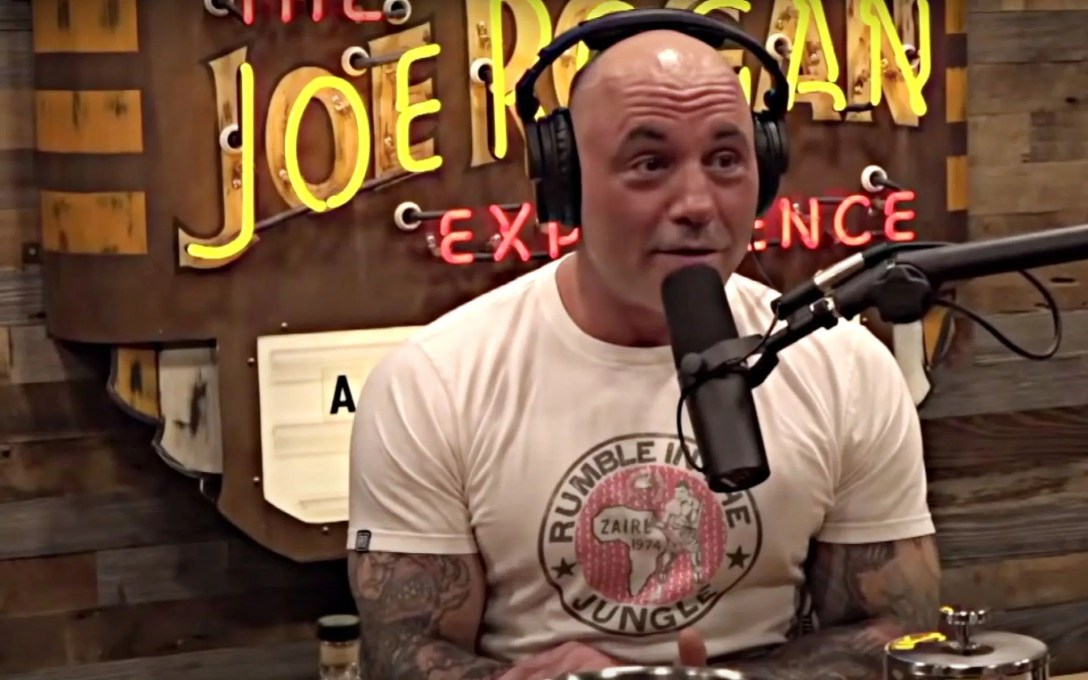
Both mainstream media and the newly powerful alternative media aren’t incentivised to present the realities of either climate chaos or societal collapse. We see the consequences of that in the poor quality of discussion around the wildfires in Los Angeles. Examples included the unchallenged dismissal of climate change on an episode of Joe Rogan, which reaches tens of millions of people. More extreme than that were widespread conspiracy theories of am evil cabal with (not-yet-available) weapons choosing to destroy neighbourhoods. It can be easier for onlookers to imagine evil people than face a painful predicament that will eventually engulf them as well. Which is why such nonsense gains an audience, even amongst otherwise intelligent people. There are real consequences from this, as the agendas of both climate adaptation and deep adaptation are sidelined from conversation – so the opportunity to reduce harm in future is foregone for many. What to do about it is the topic of an essay I penned last week – “No Rogan on a Dead Planet.” I explain that the importance of free speech means that all of us, and our governments, should encourage more self regulation from content providers and platforms, and then systematise that with international standards. That means podcasters need to accept that with their increasing influence comes greater responsibility and opportunity to lead the sector. To my knowledge, this is a different angle to the current debate about government and BigTech censorship versus an entirely hands-off approach.  

That essay was the latest in a series with the -zine Brave New Europe over the last 3 years. Below I list my previous essays with summaries – all on climate and the environment. 

Continue reading “No Rogan on a Dead Planet – and other essays”

Should Deep Adaptation spaces be discussing contentious social issues that are (arguably) not directly related to collapse? 

Sometimes people object to any discussions of politics, pandemics, wars, racism, or gender, in Deep Adaptation fora. The ‘little’ matters of ecological destruction and the collapse of societies are stressful enough, even before airing any of our disagreements about politics or current affairs. Consequently, some people wish for a place where such topics are avoided, so the discussion is limited to how to help each other emotionally and practically. Some groups in the Deep Adaptation movement even make it explicit that politics should not be discussed. However, I’ve said for a few years that I think that such a position is no longer tenable, with the issue now being how such conversations can be well held, so they advance understanding rather than discord. That is simply because collapse has been shaped by politics and will be made better or worse by politics in future. Additionally, contentious social issues involving inequality, gender, race, neurodivergence, health and human rights, amongst others, don’t become irrelevant just because societies are fracturing. In fact, for many people such matters can become more important, as they wish to maintain their values and reduce suffering as situations become more difficult. I’ve wondered over the years if we don’t try to apply the ethos of Deep Adaptation to matters of policy and power then how robust is our commitment to that ethos

Continue reading “Should Deep Adaptation spaces be discussing contentious social issues that are (arguably) not directly related to collapse? “

Busting Assumptions on Aliens and the Fate of Life on Earth

Since 2017, there has been more official disclosure of government records and reports of UFOs. It’s still a taboo subject in much of the news media, so the level of public discussion is limited, and being concerned with their reputation, most scholars have kept quiet about it. I was made to comment on this topic, out of the blue, when I was interviewed for Ubiquity University. I had been invited to talk about societal collapse risk and readiness, but the host Jim Garrison had just heard important news from Washington DC about official investigations into Unidentified Anomalous Phenomena (UAPs). I fumbled my way through an answer, as someone who has always been agnostic on their existence or not. However, since then, I’ve read reports, seen the military videos, heard eye-witness testimony from senior officials, and realise that the UFO phenomenon, that’s now called UAPs, does indeed exist. I have also begun to hear people who are deeply concerned about our ecological predicament now wondering if aliens could help us. If this is the first time you hear about that, you might think it nuts – such is the stigma. But I’m increasingly asked for a view on the matter. So to avoid repeating myself in correspondence, here is a blog!

Dipping my toe in this field I have noticed a lot of entrepreneurial writers, entertainers, mediums, new age spiritualists, on the one hand, and military personnel on the other. That means it is a field where there are wild claims, illogical inferences, staged performances, and defensive mindsets. But there are also people who have braved ridicule, or risked their careers, to engage publicly about this topic. Just because there have been charlatans, and will be more to come, does not mean smart people should ignore the matter altogether.

Continue reading “Busting Assumptions on Aliens and the Fate of Life on Earth”

Christianity and Hope – when the Pope does hopium, what do the mystics do?

For anyone who has grown up in a Christian country, the past week can be a time for reflection on values and purpose. It can be a moment where we find calm away from the rush of our normal lives and re-assess. Any religious festival can provide us with that opportunity, if we are open to that. On religious occasions like Christmas and Easter, people exposed to Western media will read or hear about what The Pope says about the world. So that’s why I heard the Pope’s new message on hope in difficult times. My discomfort about his message meant I shared some thoughts on social media, which generated feedback and dialogue. Rather than repeating myself in comments on those threads, I thought I’d write a post about ‘Christianity and Hope’ on my blog… so here goes.

The Pope’s message seemed to be asking us all to have hope in a better tomorrow. But he went much further than that, when claiming that hope for a materially better situation in the world is a requirement and concomitant with being loving towards others. He wrote:

“Those who love, even if they find themselves in uncertain situations, always view the world with a gentle gaze of hope.”

Continue reading “Christianity and Hope – when the Pope does hopium, what do the mystics do?”

Have you ever seen a relaxing X/Twitter thread?

Have you ever seen a relaxing X/Twitter thread? No, me neither. I hardly ever write them. And when I do, it’s usually about bad news. But I recently tried to transmute some upset into celebration… here is the text of that x/twitter thread. 1/29

A surprise to end the year was @JustCollapse founders Tristan and Kate posting across social media that I am a “far right promoter”. Unfortunately, they didn’t yet reply to my emails about their misunderstandings. But I realised I could take that as an invitation to publicly celebrate my decades of Leftiness 🙂 You might not admire that, but it’s a big part of who I am, so here begins an indulgent Lefty thread! 2/29

A highlight was in 2017, co-writing with Jeremy Corbyn and Marc Lopatin the first speech Corbyn gave about why he sought to become Prime Minister. Biographer Alex Nunns thought his best ever. It was part of a 6 week General Election campaign that gained about 20 points in the polls.  Watch here:  https://youtu.be/P0Cr8CVkdMs 3/29

Continue reading “Have you ever seen a relaxing X/Twitter thread?”

Some reasonable essays on collapse

In my annual personal update (not the Deep Adaptation Review), I included a summary of the essays I wrote in 2024. I thought it useful also to post these to my blog. I group the essays by topics of: integrating collapse awareness into your working life, the broad trends in Deep Adaptation, the political implications of collapse awareness, making sense of the latest climate data and science, plus personal reflections on motivations in this age of consequences. Next year I will be writing less, as I focus more on the organic farm school (please help!) and music (new single: Aspirations). I hope that both my book and these essays will support your own life choices. For more support, consider joining our online short course. Thx, Jem

Integrating collapse awareness into your working life

The essay Keeping your job at the end of the world (as we know it) addresses the conundrum facing many people who are questioning everything due to collapse anticipation, but can’t quit their job, for financial or other reasons. Written to coincide with a speech at Griffith Business School, where he was an Adjunct Professor, Jem Bendell discusses ideas rarely, if ever, heard in professional contexts. That is because he not only mentions people who have chosen to “keep serving (reveal and recommit in post)” or “repurpose your job (refocus in post)” but also those who de-prioritise their employer’s interests. This includes “quit quietly (retire in post)” and even to “sabotage non-violently (rebel in post).”

Continue reading “Some reasonable essays on collapse”

Holding Space for Strong Emotions

“I wanted to punch the guy, but when I realised I couldn’t do that, I just switched off.”

This was certainly a new kind of response to giving a speech. I’d just left the stage at a conference on adaptation to climate change, and was surrounded by people wanting to exchange a few words and contact details. “You really stimulated the audience, as we hoped you would,” one of the organisers said, smiling as he told me of the guy who liked my views so much that he wanted me to connect with his knuckles.

I’d already heard enthusiastic praise from another organiser, so I reacted to the negative feedback in dismissive fashion. “Anger is a way of responding to difficult information, situations and emotions. It gets us out of fear,” is more or less what I said. I continued with my mini lecture by saying “Fight or freeze are two normal responses to fear. It’s why I talked about the benefit of getting better with allowing, witnessing and working through difficult emotions. It’s also why we must recognise so much of our conversation in professional circles is to avoid conflict and emotional difficulty, using convenient narratives, that stop us from facing reality.” This all tripped off my tongue because being intellectual and slightly combative is my go-to response when under threat. However, I’m writing this essay because I was on the cusp of noticing that go-to response, and chose a different way to engage when experiencing conflict. If you also navigate strong emotions about the state of our world, I hope the following thoughts may be of use.

Continue reading “Holding Space for Strong Emotions”

A life changed by collapse (mine)

For much of my adult life I’ve lived outside the UK, my country of birth. Therefore, I’ve been curious about the dynamics of social change occurring in different contexts, including the environmental movement and profession. That is why I wrote my book with an eye on how it might be useful to the environmental movement in parts of the Majority World, and therefore I look forward to learning from the responses after recently launching the Spanish and French editions, with a focus on how they may be received in Latin America and Francophone Africa. It also meant I was pleased to read recently that one of Indonesia’s leading environmental commentators, Jalal, is reading my latest work, and contextualising it with my previous decades working in corporate sustainability. I gave it attention, as Indonesia is the country I have chosen as home for the last few years, and where I’ve invested into a social enterprise for collaborative resilience in the face of collapse – Bekandze Farm School. His essay reviewing my intellectual journey was one of the best I’ve read, and so I had it translated into English, to share with you here. I don’t expect or ask you, or anyone, to change direction in the way I have done, but to allow an awareness of collapse to transform your own priorities, as and when you ready – as there is not one right response. But there are some benefits! If you are interested in exploring your own path with peers, then please consider our online course (next one starts late January).

Continue reading “A life changed by collapse (mine)”

The Politics of Collapse: uncommon conversations for unprecedented times

“Are you leaving just before the election in case there is trouble?”

I was asked this a couple of times in San Francisco, during the week before the US election. That told me of the anxiety that some people were feeling in the run up to the vote. Nearly every time my conversations turned to politics, I heard people express their incomprehension about others supporting a candidate that they do not. I did not hear merely a concern about different priorities. Rather, I heard the belief that other people are stupid or bad. The anti-Trump voters focused on the bad things about him and ignored the real grievances that were motivating people to vote Republican. The pro-Trump voters focused on the bad things that the current US administration has done and ignored the real concerns about the former President. In both directions there appeared to be a belief that they had superior information, intelligence and ethics. When I noted that people are demonising those they disagree with, in ways that ignore real concerns, everyone I chatted with agreed that such negativity towards fellow citizens is not helpful, and that the political situation in the USA is depressing. That got me thinking about how more of us need to be if we are to develop new forms of politics suited to an era of societal disruption and collapse.

Continue reading “The Politics of Collapse: uncommon conversations for unprecedented times”

Not Sweating on Others Waking Up – thoughts after a Temazcal

The analysis and message of Breaking Together has been resonating with some people who work closely with indigenous leaders across Latin America. That is one reason we published it in Spanish as Cayendo Juntos. Due to their work with indigenous elders, my hosts organised a Temazcal, or spiritual sweat lodge, for my birthday. It was led by Don Alvaro, a cofounder of the Elders of Teotihuacan. That’s the area where he and his ancestors have lived, which is famous for its Aztec Pyramids. My experience that day helped me to realise I still have a long way to go in ‘letting go’ of attachment to the impact of my efforts, and the importance of such letting go for my future in this era of collapse.

Don Alvaro’s comments before we entered the sweat lodge may have been influenced by the fact it was October 12th, the day when Columbus first stepped foot in the Americas in 1492. Some call it ‘Invasion Day’. Don Alvaro explained some of the basic ideas of his culture that have been suppressed in the 500 years since then. Such as the obvious fact that we are part of nature and not in charge of it. Plus, the reality that the natural world is itself sacred, rather than just parts of it, or those aspects that we imagine to be separate from nature. 

Continue reading “Not Sweating on Others Waking Up – thoughts after a Temazcal”