What the farmers say

In my experience, it is rare to hear farmers from the Global South discussing their challenges and aspirations, and what might be useful support to receive from successful restaurateurs and resort owners. That’s why I’m delighted to release a short film that brings you the voices of organic and regenerative farmers in dialogue with others in the food business sector in Bali, Indonesia. 

After 2 years of operation as a demonstration farm, school, and event space for organic and regenerative agriculture, at Bekandze Farm we hosted a meeting of organic farmers, distributors, NGOs and food retailers. The participants discussed why organic farming is such a small part of agriculture in Bali, despite the opportunities provided by the environment and the visitor economy. After discussing the challenges, we explored potential solutions for scaling organic farming on the island, and more widely in Indonesia. Achieving that would help all the people on the island, as it would increase their food security by decreasing dependence on agrochemicals. In that sense, organic and regenerative methods of farming are also methods of collapse preparedness, or practical Deep Adaptation. 

Continue reading “What the farmers say”
Why Isn’t Organic the Norm in Bali?

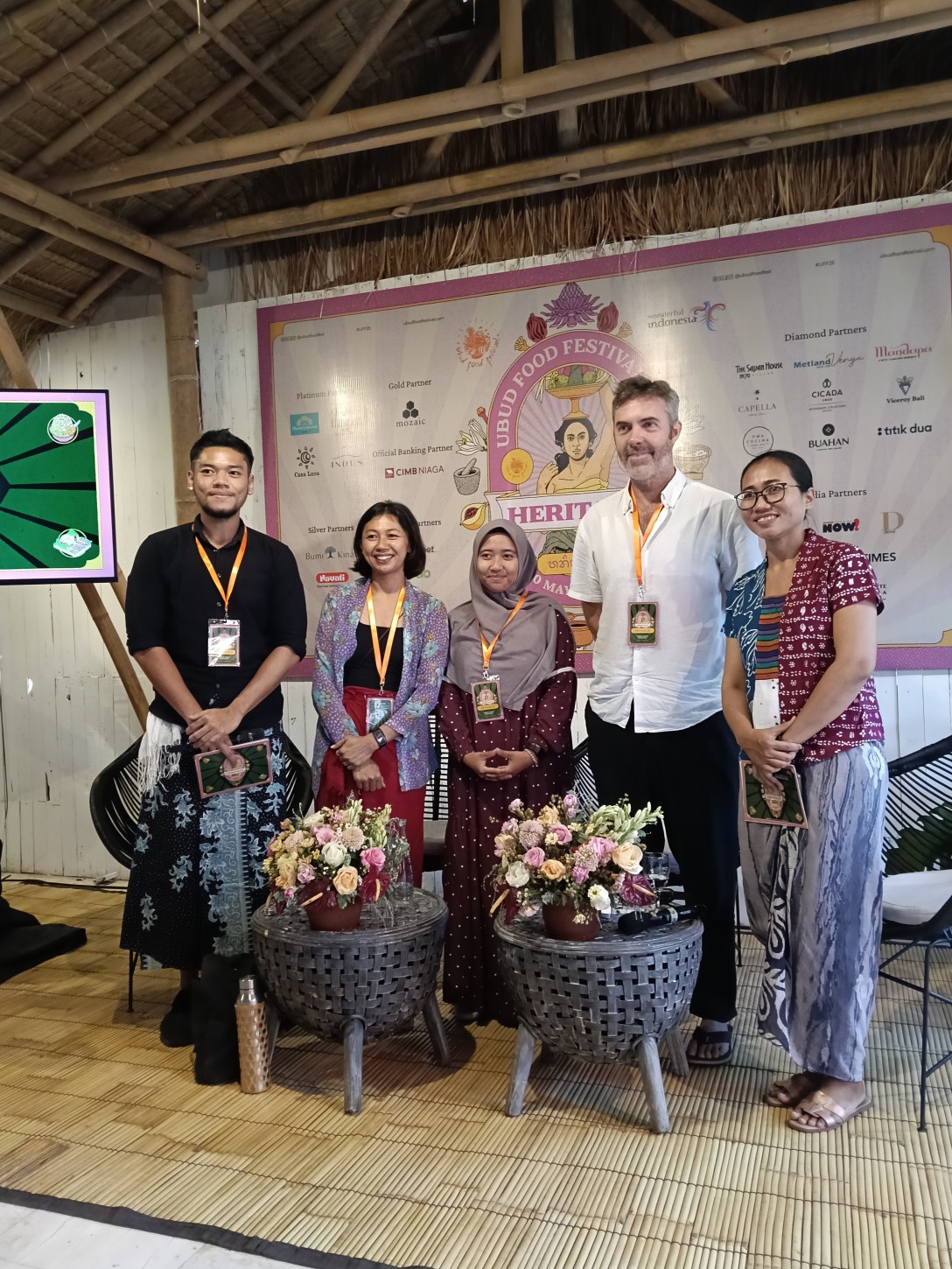
The Ubud Food Festival concluded yesterday here in Bali, Indonesia. I spoke at an event on how to work better with nature to achieve greater food security. I was invited due to my co-founding of an organic farm school, and was pleased to attend as we encourage collaboration amongst restaurants to scale up organic farming. Our crowdfund to help with that is still a few thousand short of the necessary target. In preparation for the event, I drafted some notes on what I’d say. They follow below. If you can support us, please take a moment to contribute. Thx, Jem

It’s a pleasure to be here with you in Ubud — a town that’s become an international symbol of nature-based spirituality, conscious living, and the pursuit of wellness. 

Let me start with a question: How many of you would prefer to eat organic food, that’s food grown without any chemicals? And now — how many of you know that you always eat organic food here in Bali?

Continue reading “Why Isn’t Organic the Norm in Bali?”

Essentials of Life and Death – part 6 of a #RealGreenRevolution

This is the 6th in a 7-part essay on the type of policy innovations that would respond to the truth of the environmental predicament and, also, why most environmental professionals ignore such ideas to promote limited and limiting ideas instead. These ideas on a #RealGreenRevolution provide a contrast to current agendas, with the aim of encouraging a global environmental movement as a rights-based political force.  In this part of the essay, I focus on some sensitive issues about life and death, which have become even more polarised due to pandemic policy responses.

To receive each part of the essay, subscribe to my blog, using the box on the right (or right at the bottom of this post). To engage with other people who are responding to these ideas, either visit the Deep Adaptation Leadership group on LinkedIn (where I will check in) or the Deep Adaptation group on Facebook, or by following the hashtag #RealGreenRevolution on twitter. A list of previous parts of this essay is available.

Agricultural Transformation

The impacts of current levels of climate change on agriculture are already scary. The modelling of what could happen when we pass 1.5 degrees global ambient warming is much scarier. Our civilisation is based on grains, which feed us humans about 80 percent of our calories, either directly or via animal feed. With 1.5 degrees warming the risk becomes high for prolonged droughts or unseasonal frosts harming the production in multiple major grain exporting regions around the world in the same year. Therefore, our agricultural and food systems need urgent diversification in ways that do not increase, but reduce carbon emissions.

Continue reading “Essentials of Life and Death – part 6 of a #RealGreenRevolution”