“I wanted to punch the guy, but when I realised I couldn’t do that, I just switched off.”
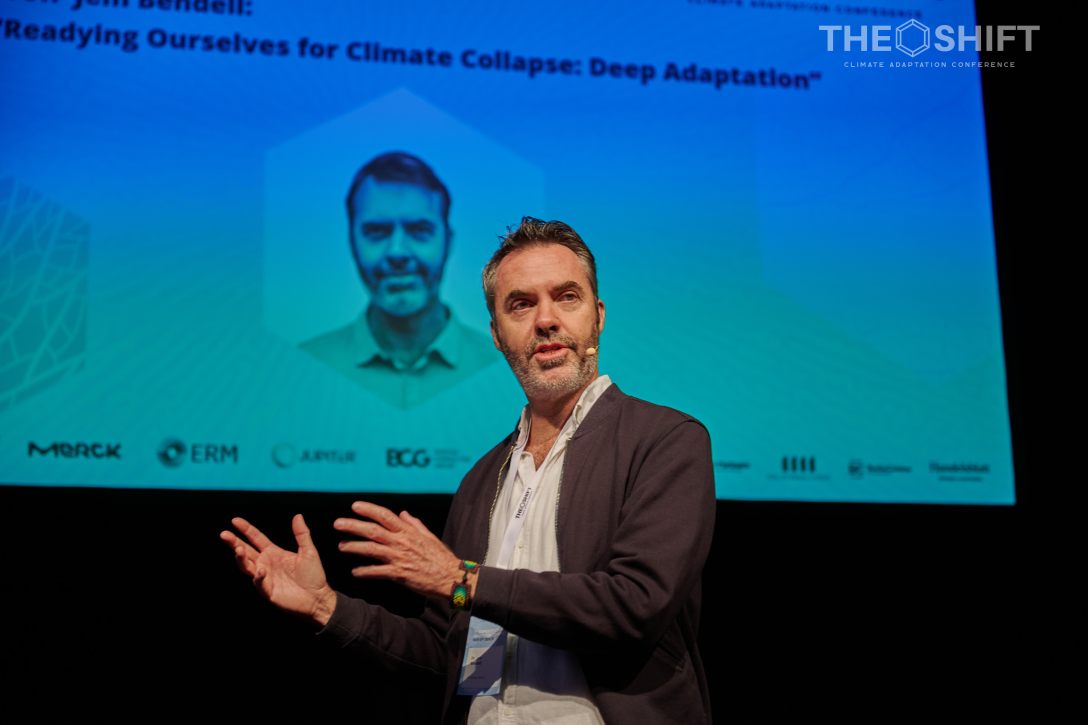
This was certainly a new kind of response to giving a speech. I’d just left the stage at a conference on adaptation to climate change, and was surrounded by people wanting to exchange a few words and contact details. “You really stimulated the audience, as we hoped you would,” one of the organisers said, smiling as he told me of the guy who liked my views so much that he wanted me to connect with his knuckles.
I’d already heard enthusiastic praise from another organiser, so I reacted to the negative feedback in dismissive fashion. “Anger is a way of responding to difficult information, situations and emotions. It gets us out of fear,” is more or less what I said. I continued with my mini lecture by saying “Fight or freeze are two normal responses to fear. It’s why I talked about the benefit of getting better with allowing, witnessing and working through difficult emotions. It’s also why we must recognise so much of our conversation in professional circles is to avoid conflict and emotional difficulty, using convenient narratives, that stop us from facing reality.” This all tripped off my tongue because being intellectual and slightly combative is my go-to response when under threat. However, I’m writing this essay because I was on the cusp of noticing that go-to response, and chose a different way to engage when experiencing conflict. If you also navigate strong emotions about the state of our world, I hope the following thoughts may be of use.
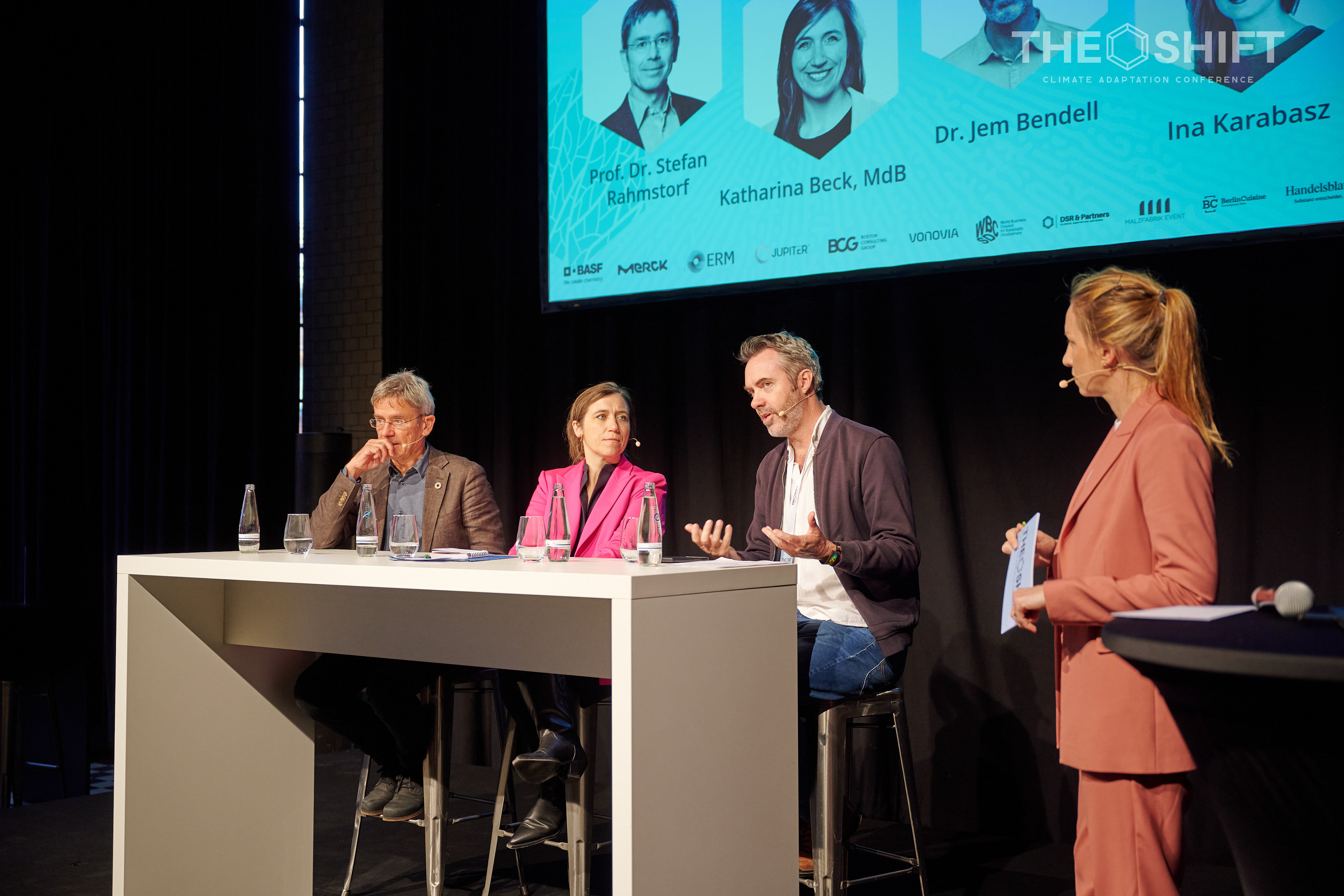
The conference was full of corporate sustainability professionals, in Berlin. Our focus was how to adapt to climate change. Giving a keynote talk made sense to me as the final stop in my tour to promote my book Breaking Together. It would mean re-engaging the profession I quit so publicly in 2018 with the release of the Deep Adaptation paper. There might be some kind of completion and closure, I thought. But as the conference drew near, I became a little nervous about what I’d say and how I’d be received. That’s because my personal assessment is that much of the corporate sustainability field has become a careerist sham, and so its approach to adaptation is likely to be superficial and self-serving. Nevertheless, I know there is good work to be done in organisations to try to slow and soften the breakdown of societies. I’d even written a couple of essays on that (here and here). To generate engagement on that topic, I would need to make the case that societal collapse is a plausible way of seeing the situation and that much of the corporate sustainability profession is perpetuating a ‘fake green fairytale’ of a technologically enabled and managed transition to a sustainable global economy. A key issue is therefore the extent to which professionals are prepared to think and act critically, and so I decided to focus on that.
“In my period of despair about the climate science, I realised something about my previous 23 years in corporate sustainability,” I explained from the stage. I’d decided to speak without notes and offer insights from my own life. “I realised that I had deep and subtle attachments to approval, safety and a sense of personal progress. I realised these were subtle addictions that restricted my ability to see reality. Instead, I had wanted to see the world in a way that suited my choices in life.” I shared these reflections, so that I might invite others to question their subtle motivations and whether they might choose to be more courageous and radical in their assessment of what to do next. Punching presenters was not the radical courage I had in mind.
Subscribe / Support / Study / Essays
Later that day I was to be interviewed for a documentary about the creative journey of collapse anticipators. Post-lockdowns, I had become less comfortable with intensive social interaction, so I knew it would help me to walk outside and return to the conference in a few hours. And so I ended up back at my hotel, and sitting on the end of the bed, I decided to meditate for a few minutes to re-centre myself for the interview.
Immediately I noticed agitation. My mind kept chattering about a recurring theme: being under threat, and being angry about it. Suddenly I was recapping all the verbal and written punches thrown at me by sustainability professionals over the past 5 years. I was remembering people who had organised misleading and defamatory articles about me and my research. Then, during what’s called a meditative ‘body scan’, I noticed this agitation involved a tension in my chest. Observing the sensation, I realised that my body felt under threat. I put my right hand to my chest and made a mental note that “The intellectual me is combative but ‘little Jem’ is scared. My body is experiencing fear and that’s something to be sensitive and kind towards.” I remembered what some of my wise friends had told me about the importance of being aware of our feelings and sensations in the moment, to take time to notice and care for our emotional bodies, and so avoid acting out of habit. That’s especially important as the habitual ways we respond to difficult emotions are shaped by our culture and perpetuate it. Instead, by slowing down our behaviours we can create more opportunities for how we wish to feel and act.
As I walked back to the conference, I thought that if I engage people who might disagree with me from my heroic story of being involved in intellectual combat, then I’m upholding an expectation of that way of being, which marginalises those not willing or able to engage in such ways. I also realised the irony of me having felt good about the feedback from Daniel, one of the organisers. It had made me feel approval, safety and a sense of personal progress – just those things I was warning about as distorting our attention to reality and potential action.
The short meditation had calmed my bodily stress. With that calm and a new sense of kindness towards myself and the others involved, I immediately saw things from a larger perspective. Perhaps the guy didn’t really want to hit me, so I was not at risk. But the man was clearly feeling some pain to say what he did. And his reaction to then switch off was a form of emotional numbing. He might not be unusual in that audience, or within his profession. Strong emotional reactions are normal to such a harrowing topic as climate chaos and our apparently futile responses. We need time and space to process those emotions. In my own case, my insight on the drama around my talk was only possible after I’d made that time and space, by exiting the situation and meditating.
Arriving back at the conference, I thought that if event organisers want to bring the truth of the climate situation to an audience and not offer the sedative of technosalvation, then there needs to be attention to holding the space for emotional processing and pointing to further support post-event. That was when I remembered how I’d always given attention to this matter until 2023. In the past, I asked any organisers to host small groups for the sharing of emotions after my talk. My request was that they would be invited to focus simply on sharing feelings, and not try to reassure or ‘fix’ each other, or move immediately into ideas for actions. Moreover, this was what we advised anyone speaking about collapse risk should ask of their hosts. Within the Deep Adaptation Forum we created an advocates network, where we offered peer mentoring and emotional support for the people who were bringing this difficult message to audiences.
Why had I ditched this concern? Had I become numb to the topic after years of research? Partly. But another reason I’d changed my approach, is also the reason I wrote Breaking Together. I had concluded that most people are experiencing societal disruption and decline – either in their own lives, or around them, or both. The data shows it, as do the opinion surveys. In addition, this malaise is being poorly framed by opportunist alternative media, who want to blame this or that group that then fits their ideology or self-promotion (aka “collapsis”). So I’d assumed I don’t need to give such attention to emotional impact.
I was wrong. In a world where the mass media says the future can be fine despite setbacks, and where our payments still go through and cars still run, news of the creeping collapse of modern societies is still a shocking revelation to many people.
After these reflections, I wanted to chat with Thomas, the organiser who had told me about the aggressive reaction to my talk. After messaging him, we sat in the loft of the huge warehouse where the conference was taking place. I explained what I discovered from my meditation and reflection on events earlier in the day. “I also have a meditation practice and know how it helps me see things differently” he said. We were off to a good start. So I decided to ask for more information on what was happening after my speech. “I’m curious about why you told me of that physical threat,” I asked. Thomas joined me in the exploration. “Well, I was excited that we had generated a range of emotions. It is what we had wanted. I didn’t dwell on the actual emotions he was feeling or how you might feel” he explained. “I can see I was a little carried away with the excitement”. I understood, as that had happened to me as well. I explained that I think strong emotions are natural about this topic and I’d forgotten the importance of planning how to hold space for such emotions so they don’t become either threats, alienation or inner repression. That means not just providing time for conversation, but also being clear that confusion and upset are normal on this topic.
As we discussed this, I realised that a significant impediment to welcoming all emotions with curiosity is an aspect of the culture of the professional class: the culture of confidence and conviviality. Generally, any professional conference invites participants to feel confident, positive and unified. Any emotional disturbance, such as a feeling of worry or anger, is only meant to stir people towards a resolution that is confident, positive and unified. Instead, the hosts need to invite uncertainty, emotional depth and differences of opinion. The hosts then need to incorporate into the programme some facilitated processes for that. The second dominant behaviour in professional circles, and therefore conferences, is a superficial form of conviviality. It can be wrong to assume that such conviviality is anything to do with actual kindness between people. Rather, it might even be a form of aggression towards our emotionally-embodied selves. That can be revealed when someone breaks the codes, as I did during my keynote. How to design gatherings in ways that invite people to be truly kind to themselves and each other, rather than superficially convivial, is a big task. Creating space for the co-creation of meeting agendas is one tool, amongst many. Another is how we can be encouraged to be curious about each other’s experience in the moment of meeting, rather than just their job and potential usefulness to us. I’ll say some more on that before finishing.
If we aim to be our kinder selves during societal disruption and collapse, then we are committing to an ongoing inquiry about what that might involve in any situation. When we witness someone feeling anger, or hear them verbalising it, that can be our invitation to ask them if they are willing to share more about what they are feeling and what might be within or beneath that. That is not easy, especially if we are not feeling well-resourced at that moment. But if we can, it is important, as it is these micro-moments that oppressive cultural systems are maintained or transformed. The scholars who have analysed authoritarian societies tell us that they rely less on the guns of the authorities than the ongoing policing of each other by those people who feel threatened by anyone who appears to not have given up their intellectual and emotional freedom in order to conform. I realise that is quite a complicated sentence. To put it another way, if you have decided to cope with your confusion and anxiety by stopping thinking for yourself and deferring to authority, then anyone who doesn’t live like that is accidentally reminding you that you might be a stupid coward. With this in mind, we can each choose to be neither bystanders to, nor conduits of, aggressions towards people who question authority, or break taboos in the way they choose to live their lives.
I have noticed in the last few years how awakening to societal collapse can free people from their past deference to the codes of professional corporate and bureaucratic life. We can be released from our previous ways of seeking approval, safety and personal progress. That is precisely why we are maligned in many irrational ways by some of the elites in the fields of environment and climatology.
As we enter deeper into this age of consequences, there will be more people awakening in this way, and more people responding with anger and authoritarian personality behaviours (as I explored in a paper in a psychotherapy journal). Therefore, we have work to do, to try to help people return to compassion, curiosity and respect. I feel blessed to have met and worked with people who get these ideas and have gone deeper with them than myself. My experience in Berlin helped me feel reinvigorated about the way we teach our course ‘Leading Through Collapse.’ It also helped me realise the wisdom of my co-facilitator and some participants who have recommended we increase the space for somatic noticing and emotional expression during the course. So I apologise to my recent students and co-facilitators for forgetting the central importance of this aspect of our necessary work. And I apologise to my Berlin audience, and the organisers, for not maintaining my past attention to how people can be supported when they experience difficult emotions about our predicament.
After sharing these reflections with the organisers of the conference, they plan for next year to have dedicated opportunities for introspection on internal responses to difficult information, as well as critical reflection on whether assumptions about ‘professionalism’ might limit our engagement. I look forward to how dialogues will evolve in the months and years ahead – for there is huge work to be done helping organisations soften disruptions and breakdowns. Personally, I hope I will be doing less grand stuff at my organic farm school. I just need to make the finances work, so I don’t need to go back on stage!
Please visit the Deep Adaptation Leadership group on LinkedIn to discuss the issues raised here.
Donate to keep Jem writing / Read his book Breaking Together / Ask JemBot a question / Read Jem’s key ideas on collapse / Subscribe to this blog / Study with Jem / Browse his latest posts / Read the Scholars’ Warning / Visit the Deep Adaptation Forum / Receive Jem’s Biannual Bulletin / Receive the Deep Adaptation Review / Watch some of Jem’s talks / Find Emotional Support / Jem’s actual views on Covid
Discover more from Prof Jem Bendell
Subscribe to get the latest posts sent to your email.

[…] respond well in this age of climate consequences. I was reminded of that when the organisers of the conference I spoke at in Berlin told me that a couple of climatologists had refused to participate on a panel with me. That is a […]