After my essay on September 5th on the need for a pan-ecological understanding of climate change and how to respond to it, I received a range of feedback and questions. “Does it change your anticipation of collapse,” was one question. Ahead of next week’s Metacrisis Meeting on this topic, in this blog I am sharing my provisional answers. An 800-word summary of my essay on the topic can be found below the following FAQ.
The renowned Professor Bill Rees, who popularised the concept of ecological footprint, welcomed the climate dogmas essay as follows:
“Most climate science sees climate as mainly a physical system with scant attention to systems ecology… Your essay goes a step beyond, to see the climate as a biophysical phenomenon, as a product of the interactions among the physical drivers— atmospheric gases, the solar flux, etc. — and biological processes both marine and terrestrial. I.e., it forces recognition that the climate system cannot be understood in isolation from the biosphere. To acknowledge and fully understand the role of the oceans (e.g., dimethyl sulfide), forest cover, soils production, evapotranspiration, etc. and their effects on atmospheric gases (hydrological cycle), albedo, heat balance , etc. would be a massive leap forward for climate science. I suspect, as your article implies, it would go a long way toward revealing why (more or less in the words of top US climate scientist Gavin Schmidt) present climate models cannot explain what’s actually been happening for the past decade or so… I agree completely that what you are calling a ‘pan-ecological paradigm’ would “recognise that the pervasiveness and complexity of living systems” and that related bio-processes “are salient to any natural phenomena” including the climate systems.
As a sociologist and transdisciplinary research analyst, rather than a climatologist or ecologist, I am grateful for such feedback, and hope it encourages you to read the essay and look at the sources and references I link to from it.
JOIN THE METACRISIS MEETINGS INITIATIVE TO DISCUSS THIS TOPIC
You must be subscribed by end of October 2nd, as the final zoom registration links will go out on October 3rd (2025) for the October 6th gathering. For meetings that are free-of-charge, consider the DA Forum.
Now to the FAQs, with answers from Jem Bendell…
Does your realisation of the significance of the role of forest cover and ocean health in maintaining the world’s climate, change your focus on adaptation to abrupt climate change and societal collapse?
Yes. It doesn’t negate any of the Deep Adaptation agenda but it adds an additional and urgent focus on restoring ocean health and large forests. However, I have no evidence for humanity being likely to respond collectively, urgently, at such scale. Nevertheless, we are obligated to try. The wider processes of ecological overshoot, and how that is fracturing the foundations of modern industrial consumer societies, as well as the global corporate capture and distortion of policy agendas, are all continuing.
Does a recognition of biohydrology in shaping climate mean that we can have more hope for avoiding near term human extinction?
Not hope, no. Unfortunately there is an increasing possibility of human extinction due to the rapid pace of climate change, the likely higher earth system sensitivity to carbon dioxide in the long term, the persistently growing carbon emissions, the various amplifying feedbacks, and the threat of massive methane release from the ocean floor. However, there is more opportunity for human action to have a potentially positive impact in curbing global heating. It doesn’t mean that will happen or if it does that we will succeed. Nevertheless, we are obligated to try. We have a wider agenda, not a safer situation.
Does this mean we can stop worrying about carbon emissions, and maybe even start flying again?
No. Carbon emissions are an amplifier of global heating, and current levels and ongoing emissions point towards long term heating that is too fast for ecosystems to adapt. Anything less than systemic responses, that are also fair and spread the burden, will be counterproductive. That’s the problem with focusing on personal carbon footprints. People can reduce ecological footprints as one way of showing both our concern and what’s possible, but not because it adds up to, or replaces, systemic change.
You say we need more research to confirm aspects of biohydrological contributions to climate change. Why?
There is uncertainty about the significance of the ‘biotic pump’ aspect of cloud seeding by forests, as well as the size of forests required for significant cloud seeding to impact more than reductions in albedo/reflectivity and higher water vapour from trees. There are many complex dynamics, such as when the clouds appear and disappear (day and night), and how widespread the seeding effect is. Traditionally that has meant these factors are discarded in calculations, which is what a pan-ecological paradigm would reject.
Should we all start planting trees?
Not quite. We might want some easy answers, to feel agentic and have some hope, but sadly, everyone planting trees does not appear to be the implication from this analysis. That’s because forests need to be of a certain size to generate the biohydrological processes that seed clouds regionally and globally. Instead, we can all become ecological activists, responding to the greatest threats to our last remaining large forests, such as the poor regulation and ongoing financing of logging, mining, cattle ranching, and plantation agriculture. We can support the reforestation of areas around degraded forests. We can campaign for changes to the way we treat our oceans, and for public funded experiments for safe ways to restore ocean health. If planting some trees helps us communicate our demands for large-scale forest protection and restoration, great, but if it distracts us from that, not great.
Should we look again at geo-engineering?
Yes, we have wrecked the oceans and we need to try various methods to help restore their cloud seeding role. Commercial and political factors will distort attention to that, so it requires a massive social movement to prioritise methods that are safe, accountable, effective, and cost efficient. The same people, institutions and incentives that caused the crisis are now distorting our response and driving a backlash. Some leaders in civil society need to eat some humble pie and help build a global social movement for ecological restoration.
What do you say to the people who claim the pan-ecological view on restoring ocean health and large forests is more ideological than scientific?
That view arises from either the unacknowledged or proudly fundamentalist ideology of reductionism and determinism in the natural sciences and engineering today. Our world is not mechanical, and so our understanding of the world that models it mechanically is inherently limited, despite being exceptionally useful in many circumstances. I believe I have seen both confirmation bias and over-generalisations from people critiquing the importance of biohydrology for global climate, as well as from those promoting it. Whereas I agree we need more research that will include more experimental data, we can’t limit our understanding of what’s most salient because we are prioritising a mechanical worldview in our scientific inquiry. Just because biohydrology is important does not undermine other initiatives such as MEER’s efforts at localised cooling through the artificial ground-level reflection of the sun.
What do you say to the people who experienced despair and changed their lives because of the carbon-centric analysis in your 2018 Deep Adaptation paper?
Despair was a sane response before, and is a sane response today. But also sane, and healthy, is integrating and moving through and beyond our despair, into a way of experiencing life that is more grateful and caring precisely because we know it is fragile and impermanent. The discovery of the importance of biohydrology to climate is neither entirely good nor bad news, because we don’t know how much momentum there already is in the climate system or how much human response will occur. If the last two years of crazy temperature rises were to only be explained by carbon dioxide levels, then it would appear to be ‘game over’ for the human race However, because a significant part of that heating might be due to the degrading of under-reported biohydrological cycles, it is ‘game on’ for the human race. Which doesn’t mean we win. One powerful realisation for many people who responded deeply to the Deep Adaptation analysis and agenda is that we act because it feels right to try to soften the collapse and save more of the natural world, without attachment to those outcomes. I was never enthusiastic about responses to collapse acceptance that turn away from the wider world to live quietly in privilege. Focusing locally, and in the present, is important, but we are socially and politically whether we like it or not, through our shopping, working, savings and taxes. We can all do a bit about that.
Why aren’t climatologists saying what you’re saying?
Many are. Many have been saying parts of it for over 10 years, as I cited in my essay on climate dogmas. The fact I didn’t hear from them enough is because they were drowned out by the battle against climate sceptics, as well as the development of institutional self interest in climatology, climate policy, and climate activism.
How is this realisation changing your life?
I am not sure. I moved to Indonesia as part of my process of quitting my job as Professor, to explore other ways of living and contributing. I thought I was retreating from the climate fight. But now I realise that countries like this one, with massive forests, and enormous coastlines, are crucial to the future of humanity and life on Earth. Restoring forest cover and ocean health is the new frontline in the climate fight. So it’s a bit ‘back to the future’ as I recall my first passion and job in 1995 in the Forest Unit of the World Wide Fund for Nature.
What can I do?
I share some ideas on what we can do, at the end of my essay on Climate Dogmas. Sharing a short summary of that essay, below, with people you know, via email, not social media, and asking for feedback on it, could be powerful. It is a tragic irony that the next COP summit on climate will be in Brazil and yet saving the Amazon will not be as important to delegates as digging it up to use the metals under its trees. We should feel obliged to make some noise about that, so people might at least have the opportunity to wake up from their carbon centrism. In addition, we need a well made documentary on this topic. It would need a minimum of 30K. If you know a philanthropist or foundation who could fund that, please let me know and I’ll alert a couple of professional documentary makers.
Final comments?
I’m sure there will be many more issues and questions arising as myself and others learn more about a pan-ecological view of climate change, how to promote it, and how to avoid misunderstandings. On October 6th, we will be discussing that with Rob de Laet in Metacrisis Meeting. Scroll to the end of this post to see how to join us. You must be subscribed by October 2nd, as the final zoom registration links will go out on October 3rd (2025).
Thx, Jem
—
HERE IS BACKGROUND READING FOR OUR METACRISIS MEETING ON 6TH OCTOBER!
Edited 800-word AI Summary of The Dangers of Climate Dogma
Professor Jem Bendell argues that we are already living through a man-made climate emergency, but one that cannot be explained solely by carbon dioxide and related feedbacks. The recent pace of global heating, faster than expected and beyond mainstream climate projections, is more consistent with a drop in the Earth’s reflectivity due to declining cloud cover. Probably, this decline arises primarily from ecological degradation—especially the loss of large forests and the damage to ocean health—reducing their natural cloud seeding processes. By clinging to a narrow, carbon-centric dogma, mainstream climatology risks being as misleading as outright climate denial.
Climate science at a crossroads
Observed temperatures have risen beyond the timelines set out by the IPCC, with global averages in 2025 already over 1.5°C above pre-industrial levels—decades ahead of projections. Although factor additional to carbon gases, such as volcanic eruptions, El Niño ocean cycles, shipping fuel changes, and solar variability play a role, the persistence of elevated heat suggests other drivers. Some scientists propose refinements to climate models, but Bendell calls for a broader paradigm shift: one that integrates ecological processes like cloud seeding by forests and ocean phytoplankton into the heart of climatology.
Biohydrology and climate regulation
Large forests influence cooling by releasing pollen and bacteria that seed clouds. Forest systems such as the Amazon may even function as “biotic pumps,” drawing in moisture and modulating regional winds to add to the cloud seeding process. Oceans, too, regulate climate through phytoplankton, which emit dimethyl sulfide that becomes cloud condensation nuclei. Healthy oceans and coral reefs are particularly important in generating reflective cloud cover over the planet’s most sun-absorbing surfaces – the oceans. Yet both forests and oceans have been degraded: deforestation, acidification, microplastics, and disrupted nutrient cycling are reducing natural cloud formation, thereby diminishing Earth’s albedo.
Bendell stresses that focusing on biohydrological processes does not mean dismissing the warming effect of CO2 or methane. Greenhouse gases amplify climate forcing, but the speed of current changes may be better explained by disrupted biohydrological cycles. A more “pan-ecological” paradigm would place these processes at the centre of climate research, activism, and policy, rather than deprioritising them due to complexity or a desire for a simple message.
The two dogmas of climate discourse
Bendell identifies two “dangerous dogmas” that dominate climate debate and policy:
- The “climate-scam” dogma – The belief that climate change is natural or exaggerated, often promoted by fossil fuel interests. This position dismisses the need for urgent action and legitimises continued extraction and burning.
- The “carbon-centrism” dogma – The conviction that current climate change is solely or primarily driven by CO2 emissions. This view dominates mainstream climatology and policy, supported by the low-carbon energy industry. It leads to narrow solutions focused on emissions reduction, sometimes at the expense of ecosystems (e.g., Amazon deforestation for “green” minerals).
These dogmas align with two competing industry sectors: fossil fuels on one side, lower-carbon energy markets on the other. Both generate massive flows of capital, research funding, and media narratives that shape what is considered legitimate science. Fossil fuel corporations sponsor scepticism and delay, while the lower-carbon energy sector drives a carbon-only framework. Together they create tribalism, suppress alternative perspectives, and marginalise ecological understandings of climate.
Why it matters
The complexity of ecological interactions makes them harder to model and incorporate into neat predictive frameworks. Institutional and occupational habits and protections encourage the maintaining of a narrow focus. Emotional and identity investments in established paradigms also reinforce resistance to change.
This dogmatism has grave consequences. First, it excludes the possibility of mobilising large-scale ecological restoration of forests and oceans as a near-term lever to slow heating. Second, it fosters destructive and fake “green” transitions that sacrifice ecosystems. Third, it risks enshrining carbon-centrism into international law, as seen in the ICC’s recognition of the IPCC as the sole authority on climate (unless IPCC changes direction). And fourth, it may push scientists toward authoritarian measures like mass surveillance and poverty-inducing carbon restrictions, rather than ecological repair.
Toward a pan-ecological paradigm
Bendell proposes a shift toward what he calls a pan-ecological paradigm, in which living systems are regarded as integral drivers of climate and never sidelined in research or policy. Such a paradigm would emphasise restoring biohydrological cycles as much as reducing emissions. Much more research needs to be done to increase confidence on the dynamics involved, but practical strategies could include:
- On land: forest conservation, reforestation, afforestation, agroforestry, and assisted migration of tree species.
- At sea: ocean restoration via pollution reduction, wave-driven pumps to restore nutrient cycling, and iron fertilisation to boost phytoplankton growth.
If done immediately and at scale, these interventions could, in theory, slow heating enough to buy humanity decades to reduce fossil fuel dependency more gradually, cushioning the risks to agriculture and livelihoods.
Breaking free from dogma
Bendell suggests that escaping dogma will not come from mainstream institutions, which are captured by corporate and professional incentives. Instead, he calls on four groups to catalyse change: young scientists willing to explore neglected ideas, climate activists open to revising their carbon-centric focus, spiritual communities that cultivate openness to paradigm shifts, and conservation NGOs that can reclaim their role by emphasising forests and oceans.
Conclusion: possibility amid collapse
Bendell remains a “doomster,” seeing systemic collapse as underway due to the entrenched exploitation of people and planet. Yet, by embracing a pan-ecological perspective, he feels more hopeful: humanity could still mitigate the pace of climate chaos and avert hundreds of millions of premature deaths. The future is uncertain, but clinging to carbon-centrism ensures failure. A science and politics that acknowledge biohydrological processes may open space for renewed possibility, even in dark times.
JOIN THE METACRISIS MEETINGS INITIATIVE TO DISCUSS THIS TOPIC
You must be subscribed by October 2nd, as the final zoom registration links will go out on October 3rd (2025). For meetings that are free-of-charge, consider the DA Forum.
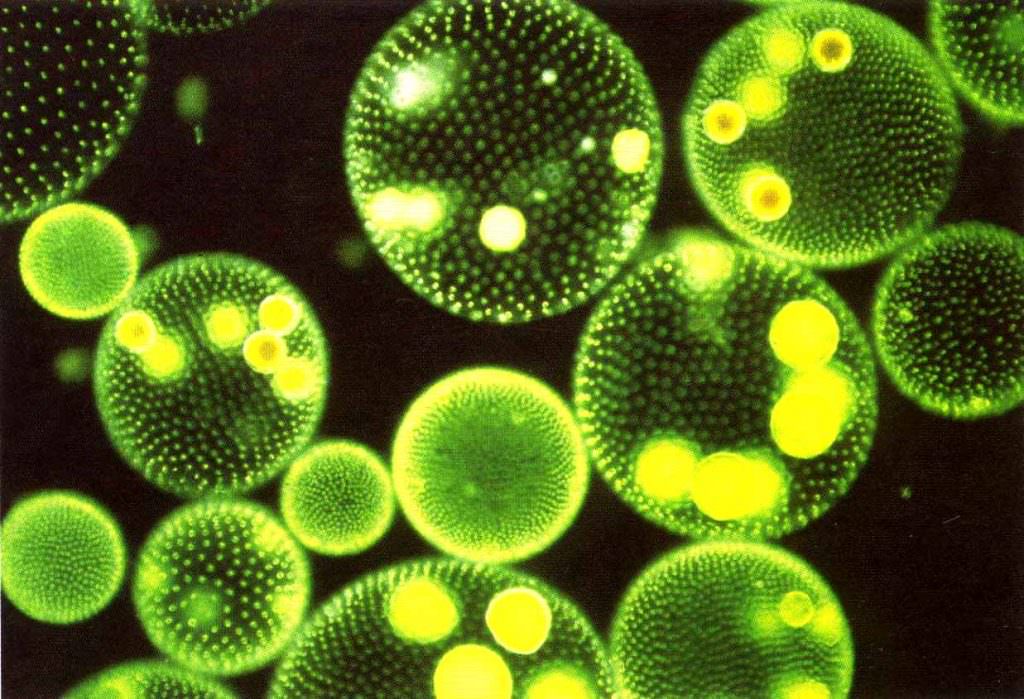
Image sourced from: https://www.marine-phytoplankton.com.au/wp-content/uploads/2017/05/mp-pic-for-blog-1024×699.jpg
Discover more from Prof Jem Bendell
Subscribe to get the latest posts sent to your email.


[…] to reduce and draw down. Nor does it mean we face a safer situation. Instead, it means we have a wider agenda to work on, and with […]