Asia Pacific CSR Partnerships

Engaging stakeholders for responsible enterprise and finance in the Asia Pacific

Call for Papers for a special issue of the journal Business Strategy and the Environment.

Edited by Jem Bendell, Juliet Roper and Eva Collins. Deadlines: 19th June 2009 1st November 2009

The formation of strategic alliances between companies for mutual commercial benefit is a widely used approach by contemporary business. The development of such alliances with non-commercial organisations, such as government agencies and voluntary associations, to deliver social and environmental outcomes, is a more recent phenomenon. In the past decade such cross-sectoral strategic alliances have become a key mechanism for pursuing corporate sustainability and responsibility. By bringing together their respective competencies and resources for the greater good, people in governments, business, civil society and multilateral agencies have sought innovative ways to respond to many contemporary sustainable development challenges: climate change; human security; the prevention and treatment of major diseases; ethics, governance and responsible investment; entrepreneurship and employment; pension and superannuation funds management; and, sustainable financing for development. Globally, the appetite for such strategic alliances and stakeholder engagement appears strong. Over 90% of corporate executives responding to a World Economic Forum survey felt that in future “partnerships between business, government, and civil society would play either a major role or some role in addressing key development challenges.” This interest is parralleled by an expanding literature on inter-organisational relations in management, organisation and international development studies, among other disciplines.

Although closer stakeholder engagement and new strategic alliances may hold considerable potential for promoting sustainable development, participants from the different sectors recognise that there are considerable inherent risks. Non-Governmental Organisations (NGOs) and UN agencies are concerned that participation in consultations and alliances with business could threaten their integrity and independence. Businesses fear that too much time and money spent on stakeholder dialogue and alliances with not-for-profit organisations might divert them from their ultimate aim of producing goods and services as profit making enterprises in order to benefit their owners and workers. Governments often raise important questions about the legitimacy, governance, and accountability of cross-sector alliances, particularly those that exclude or undermine public sector interests. As strategic alliances have become more widely used mechanisms for policy development and implementation, these questions about their effectiveness and accountability become more important. In the Asia Pacific region (Asia, Australasia and the Pacific) the nature of societal challenges, the level of business interest in corporate responsibility, the capacity of civil society, and existence of good governance, vary greatly. The relevance and risks of cross-sectoral strategic alliances for sustainable development therefore also vary. This special issue of the journal Business Strategy and the Environment aims to bring together perspectives on the nature of stakeholder engagement and strategic alliances in the Asia Pacific region, to add to the international debate and practice of alliances for sustainable development, while also ensuring that insights are relevant to the specific contexts of practitioners, policy makers and educators in the Asia Pacific.

Call for Contributions:

We invite interdisciplinary papers on the topic of “Engaging stakeholders for responsible enterprise and finance in the Asia Pacific”. Interdisciplinary papers that tailor their research questions and analysis to the needs of identifiable user groups, whether in business, government or civil society will be particularly welcome. In particular, we invite papers that explore any of the following issues: The nature and impact of strategic alliances and stakeholder engagement on responsible investment, financing and sustainable development across the Asia Pacific region. The characteristics of sustainable strategic alliances (e.g., aims, structure, decision-making, financing, communication) and how they influence performance. The strengths/weaknesses, and costs/benefits, of various types of strategic alliances and stakeholder engagement and how their performance could be improved. The role of government and public policy in shaping business involvement in strategic alliances with the private sector and civil society across Asia Pacific. The personal competencies required for effective inception, management and scaling of strategic alliances and stakeholder engagement. The likely future of strategic alliances and stakeholder engagement in the Asia Pacific region, given current trends in the economy, politics, ecology and technology. The environmental, social and governance challenges and opportunities facing corporations and how their responses provide contexts for sustainable development and stakeholder engagement. Case studies relevant to the conference theme. Critical perspectives on the relevance or performance of cross-sectoral collaborations. Pedagogical and or curriculum initiatives surrounding teaching of strategic alliances in the area of sustainability

Submission procedures:

Abstracts (2-3 pages to a maximum of 1,000 words) can be submitted either for consideration for the special issue alone, or for a conference on this issue and also the journal. The conference is organised by the Asia Pacific Academy of Business in Society (APABIS), in November 2009. For consideration for the conference and the journal, submit your abstracts to Chris Auld c.auld@griffith.edu.au by 19 June 2009. All abstracts submitted for the conference will be reviewed and authors notified of acceptance by 13 July 2009. Abstracts for consideration for the journal and not the conference can be submitted until November 1st 2009. These should be sent to jb at lifeworth.com Authors will be notified by November 27th whether they are invited to provide full papers for consideration. Papers presented at the conference are more likely to be successful, due to the potential for greater feedback. Please visit http://www.apabis.org for further details on the APABIS conference.

Globalising Trusteeship

Jem At Jallian Wala Bagh in April 2009
Jem Bendell visiting Jallian Wala Bagh in April 2009

On April 13th, ninety years ago, a British General ordered the firing on people peacefully protesting the repression of India. Mohandas K Gandhi was so moved by the massacre in Amritsar that he called for a special week to be observed every year – a Satyagraha Week. “Satya” means truth, “Graha” means both ‘involved in’ and ‘global’. Gandhi used satyagraha to describe a non-violent way of life, that does not participate in oppression wherever it occurs, and challenges it in non-violent ways. It became synonymous with India’s liberation movement.

Due to the work of Varsha Das and her colleagues at the Gandhi National Museum I was reminded of Gandhi’s teachings, and began re-reading what he said and did about life, politics and economics. As you probably are yourself, I was familiar with his famous phrases including that “we must be the change we want to see in the world’. But as I read on, I realised his views are very relevant to the current global economic crisis and the work I do on sustainable enterprise and finance.

The recent G20 failed to launch a deep reconsideration of the global economy, and some of its precepts, such as current concepts of property and a consumption-led economy. I suppose the pressures on the leaders for more-of-the-same were immense. But it has become clear that is up to us to begin a broader dialogue. Gandhi called for the Satyagraha Week to be one of fearless yet convivial dialogue about the truth of society and to redouble our efforts to live by that truth. Reading that affirmed some of the work I did this past year, with the Global Finance Initiative. After consultations with finance professionals and stakeholders in dozens of countries we concluded with a recommendation that dialogues on changes in financial systems are required that are:

  • Foundational, addressing profound questions about the purpose of the financial system and the principles that direct its actions;
  • Comprehensive, encompassing the connections between accounting systems, currencies, regulatory systems, economic structures and all parts of the financial system;
  • Inclusive, with processes reaching beyond traditional insiders, to engage responsible investors, multi-stakeholder groups working on finance issues, asset owners, labor, NGOs and critical academics, and be truly global;
  • Systemic, connecting financial stability to the real economy, social equity, and environmental sustainability.

This dialogue could be part of a global truth-seeking — a ‘Global Satyagraha’. Beyond his views on dialogue and truth-seeking, MK Gandhi’s views are relevant to the future of the global economy and our work on responsible enterprise and finance in at least four ways: economic equality, appropriate technology, self-reliance, and trusteeship.

Challenging both the caste system and negativity between religions, he promoted the equality of all peoples, which meant non discrimination in employment and economic affairs. He also believed that technology could be good if did needed work, but bad if it put people out of work. This philosophy led him to spend many hours working on the spinning wheel, a technology that was appropriate to the economic level of villagers across India at the time. Another important aspect of the spinning wheel was how it generated self-reliance. Gandhi spoke of ‘swadeshi’ or economic self-sufficiency, as the only way that India would achieve self-determination. He called on his country-people not to pay into the system of empire by buying foreign clothes. In our current context the implication here is not simply that we produce for ourselves, but that we seek to become independent of systems of exploitation for our own livelihoods and lifestyles.

Jem Bendell at site of MK Gandhi assasination, March 2009

These aspects of Gandhian economics are well documented and discussed. Like many business folk the world-over, many Indian executives do not see the relevance of these approaches to modern business, viewing them as anachronistic. Yet, in a resource-constrained and climate-threatened world, where hyper-inequality fuels violence, the need for principles and practices of equality, appropriateness and self-reliance to pervade business is clear.

What stunned me was the resonance of his views on ‘trusteeship’ with the latest thinking within the corporate responsibility movement. More of us have come to understand that we need to redesign the systems of corporate governance and finance in order to create more sustainable and responsible economies, and that business executives can and should engage in public policy debates to promote that redesign. In my latest book, I develop the concept of “capital democracy” to describe an economic system that responds to this understanding. I write:

Corporate Responsibility Movement, Bendell et al, March 2009

“In a democratic society, property rights should only exist because people collectively decide to uphold them; they are not inalienable but are upheld by society as a matter of choice. Therefore, if society confers us the right of property, then we have obligations to that society. Today property rights have become so divorced from this democratic control that they are undermining other human rights. A reawakening to a basic principle is required: there can be no property right without property duties, or obligations. From such a principle, it should not be left up to the powerful to decide if they are responsible or not, or if they are carrying out their obligations or not. Instead, the focus shifts to the governance of capital by those who are affected by it” (Bendell, et al, 2009, Pg 33 to 34).

The Mahatma’s view of trusteeship is the same, but elegant in its simplicity. It arises from an understanding that everything is owned by everyone, and wealth is owned by those who generate it. Thus the one who controls an asset is not an owner but a trustee, being given control of that asset by society. Gandhi wrote “I am inviting those people who consider themselves as owners today to act as trustees, i.e., owners, not in their own right, but owners in the right of those whom they have exploited.” In the Harijan paper his views on trusteeship of property were later documented to clarify “It does not recognize any right of private ownership of property except so far as it may be permitted by society for its own welfare” and “under State-regulated trusteeship, an individual will not be free to hold or use his wealth for selfish satisfaction or in disregard of the interests of society.” He also wrote that “for the present owners of wealth… they will be allowed to retain the stewardship of their possessions and to use their talent, to increase the wealth, not for their own sakes, but for the sake of the nation and, therefore, without exploitation.” All those years ago the Mahatma was proposing an economic system that many people are only beginning to conceive of today. If you have my book, I apologise for my prior ignorance of Gandhi’s trusteeship concept. If you don’t have it under your trusteeship yet, hey, it’s still worth reading!

Sangeeta Das of the Gandhi Smriti Museum revealed to me how some Indian industrialists supported many of Gandhi’s ideas and applied some to their own business. Upon reading the views of some current Indian business leaders I see the concepts of equality and trusteeship have informed their voluntary corporate responsibility efforts. However, I am left with a sense that the concept of trusteeship has much untapped potential as an economic system, codified into public policy and regulation. The current crisis demonstrates the need to globalise trusteeship, or capital democracy, as an approach that can be debated and interpreted into new principles and policies for economics, finance and enterprise. In addition it is clear that concepts of appropriate technology and self-reliance have much more to offer both to corporate strategy and public policy than currently the case. I wonder whether Indian business leaders could play a role in bringing this insight to the world.

The life of Gandhi is important not only for his views on economic systems but also on how to bring them into being. In my book I argue that the global challenges we face mean those of us who work to make business better must start thinking and planning like a movement. “The corporate responsibility movement is a loosely organised but sustained effort by individuals both inside and outside the private sector, who seek to use or change specific corporate practices, whole corporations, or entire systems of corporate activity, in accordance with their personal commitment to public goals and the expectations of wider society.” (Bendell, et al 2009, pg 24). As a movement leader, we could learn from Gandhi’s mastery of symbolic communication combined with personal authenticity, his embrace of both dialogue and direct action, his respect for people no matter the differences, and his demonstration that we must ourselves disengage with systems that uphold a lie. More of us can mobilise our networks and knowledge for transformative ends. And if it means changing our lives to be less economically dependent on the status quo, then that’s what we must do.

The recent violence from authorities against protesters and bystanders (and the truth) at the G20 is yet another reminder of the need to learn how to engage in a transformative non-violent movement that provides people diverse ways to participate while sucking energy out of violent systems. On the 90th anniversary of the hundreds who died in Jallianwala Bagh, we can remember how their memory inspired millions in the pursuit of truth and freedom.

I will be discussing some of these ideas in a webinar, online, and seminar in Geneva, called: “The Corporate Responsibility Movement: Where are we going and why?” Seminar: Thursday May 14, from 12.30 to 14.00 Swiss time, Uni Mail, 40 bd du Pont d’Arve, Geneva, room MR 150 (ground floor, opposite the cafeteria). Register: csr@unige.ch.  Webinar: Tuesday May 19, from 16:30 to 18:00 UK time, organised by CSR International. Venue is “online”. Register: clemence@csrinternational.org http://www.csrinternational.org/?p=273

The Corporate Responsibility Movement, Jem Bendell et al. March 2009 ISBN 978-1-906093-18-1
http://www.greenleaf-publishing.com/productdetail.kmod?productid=2767

Thx to Suzy, Satjiv, Inderpreet, Nandita, Varsha and Sangeeta for unwittingly guiding my serendipitous journey in India.

Naked in Davos

Davos kicks off again this week, with its head Klaus Schwab saying he wants to help shape the new rules for global finance, with the World Economic Forum (WEF) playing a similar role to the Bretton Woods meetings at the end of World War II. Given that his organisation praised and promoted the very actors whose greed and pride combined to ruin so many people’s lives, some might ask “does he have no shame?” Before the Forum can play a useful role in convening dialogue to generate any useful insights into what we need to do internationally in face of the crisis, its management could benefit from some ancient truths about how we understand our world.

“We see things as we are, not as they are” it says in The Talmud. If I am someone who wants to benefit from society’s resources and respect, and therefore associate with the people, organisations and ideas ‘in power’, how will I see “things”? Will I see them in a way that accepts, even praises, the status quo, and scoff at ideas which seem to challenge power? Most likely.

Since the beginning of recorded history there have always been people willing to sell their intellectual prowess to those in power. “The exceptions seem so rare that they are talked about for centuries afterwards. The most famous being Socrates. More typical are those who come up with reasons that the status quo is the appropriate organization of society and that those in power are the perfect persons to be running things” explains Robert Feinmann.(1) Until the 18th Century religious leaders played a key role in providing justifications for power, such as the “divine right of kings”. Their influence waned with the Age of Enlightenment and modern science. “What is needed is a “scientific” rationale for the organization of society” says Feinmann. “This role has now been taken over by economists. Using statistics and mathematical theories they have been able to produce whatever justification was desired by those employing them. Proof of their intellectual dishonesty is easily found. For every economist who can “prove” the effectiveness of, say, trickle down economics there is another who can demonstrate that such policies are a complete failure,” he notes.

In the field of academia called “business studies” this approach is often taken to the extreme, as an academic’s concept finds its validity in being adopted by a famous CEO. As a result business academics have often been seen as the intellectual rentboys of corporate elites. The alternative should not be a retreat to the libraries, but to be clear about the type of business and business person a business school seeks to inform. For the difference between a management guru and a management geek is not only the style of communication and the reach of their ideas, but also how they see a wider context and serve a higher purpose.

Organisers of the World Economic Forum like to think it is the leading intellectual forum on the world of business. It is the leading forum in terms of size and power, but intellectually? As the financial system has unraveled, their minor mea culpas mixed with “told you so” (due to passing mentions of house price bubbles in their reports) have been particularly revealing. In interviews with Bloomberg, leading staff at the WEF said “chief executive officers who gathered in Davos, Switzerland, over the last five years didn’t listen to warnings from their peers. Davos organizers also say they failed to play tough with the financial-industry bosses, opting to accept their funding and let them turn Davos into a rave-up for Wall Street excesses.” (2). Leaders of the Forum have been putting their failure down to excess, rather than principle. “We let it get out of control, and attention was taken away from the speed and complexity of how the world’s challenges built up,” said Schwab. If not so much money had been taken from Wall Street speakers at Davos, would the WEF really have been much smarter? Hardly. The lesson for us must be that an institution that pays its bills by convening the world’s largest companies to entertain them at high-powered meetings will be beset by systemic sycophancy.

Some Forum staff complained that delegates did not seriously listen to helpful sessions on emerging bubbles. But what do they expect when you are in the Alps and Angelina Jolie might be at the bar? The hubris of some involved in the Forum is that they are an emerging power in global governance as significant as the UN. Yet, despite any good intentions, would it not be a fascist planet if the world’s largest corporations would be able to set the agenda for policies across the world?

A Davos delegate for seven years warned finance bosses “about global risk and the abusive nature of their actions, but they had no incentive to change.” The World Bank Director of Governance and Anti-Corruption, Daniel Kaufmann continued “why should they have listened to us? I see it with my 10- year-old daughter, who scolds me because I don’t put the garbage in the correct bin. Let’s not delude ourselves. It’s impossible to teach old dogs and investment bankers new tricks unless you change the incentive structure.” (2)

This story implies that if one is truly committed to improving the state of the world then one must reach out beyond the old dogs and fat cats. More than that you must seek to be accountable to others. Perhaps if the WEF had listened to the protesters outside the luxury hotels, rather than only their handpicked NGO leaders, might they have developed a better sense of the state of the world? Mamy WEF staff mistakenly thought such protests were about specific social and environmental concerns, which they could then effectively incorporate into the agenda with some new initiatives. A bit of glam philanthropy to warm hearts in the Alps. Other staff realised that the criticisms were of an economic kind, particularly as the counter World Social Forum developed. However, their disagreement is not merely on economic theories of how to encourage social development, but on the legitimacy of WEF delegates to decide for others.

The ambitions of this year’s Forum suggests that message has not sunk in. To seek to shape the future of global finance, and thus the global economy, and hence the lives of all peoples on Earth,  in their current elitist and unaccountable form, will cause concern from across civil society. The World Economic Forum might soon find that not only were they some of the highest praisers of the Emperor’s new clothes: they were those clothes. If the Forum wishes to become more than an insubstantial adornment to power, and play a positive role in the future of the world, the organisers  must recognise the role of power and pride in shaping what we are able to truly “know” and embrace greater accountability and diversity. Otherwise, if the delegates remain intellectually naked in Davos, our world may catch their cold.

If interested in NGO accountability, check out my UN report on the topic at:

Click to access NGO_Accountability.pdf

If interested in a concept for a new form of democratic capitalism, check out my new book at:
http://www.greenleaf-publishing.com/productdetail.kmod?productid=2767

Refs
(1) http://robertdfeinman.com/society/whores.html
(2) Copetas. A. Craig, `Out of Control’ CEOs Spurned Davos Warnings on Risk, Oct. 24, Bloomberg.

Issues Arising for Corporate Responsibility due to International Developments

Stepping back from the day to day, we should at times ask what is happening in the world of corporate responsibility and corporate sustainability, as a field of interest, and to the voluntary pursuit of responsible or sustainable behaviour by business people? To answer that we can try to consider what is happening in the worlds of business and society more broadly.

In 2008 we are experiencing the same megatrends that have made this area of interest more important in the last 15 years: continuing challenges with our environment, increasing inequalities, persistent poverty and injustices, and a continuing situation where economic globalisation has given some corporations more power in relation to governments and communities, but where people also have new opportunities to connect and to pursue business for social purposes. But this year three developments are becoming clearer that are particularly interesting for how the field of corporate responsibility (CR) may develop:

  • The Financial Crisis
  • The “Rise of the Rest”
  • Rising environmental awareness across the South

Implications of the financial crisis

The stock market is crashing around the world, exchange rates are volatile, and credit is expensive or unavailable, there is recession in the West, and a slowing rate growth in the rest of the world. Therefore people are beginning to ask the following questions:

  • Is CSR recession proof? Meaning: is the voluntary pursuit of responsible business going to suffer when budgets are squeezed. Is CSR a choice? Articles in blogs and magazines are asking about that.
  • Has most responsible business activity been irrelevant, beside the point, not focused on the basic issues of governance and economic systems? This was asked in 2001 after Enron collapse, and is being asked again, this time also in terms of the work on socially responsible finance and investment.
  • Will people demand deep reform of the financial system, and therefore perhaps the wider economic system? The questions about executive pay are now mainstream. Litigation is beginning. People are becoming aware of the licence to print money that is given to banks and thus their shareholders and employees that is enshrined in a monetary system based on the issuing of debt by private banks.
  • Will values change? As people question the unrestrained pursuit of financial self interest, and as people fall on hard times, will people think again about themselves and their neighbours?
  • Will neoliberal ideology around deregulation and market approaches be fractured and new ideas emerge about managing capitalism and if so how will voluntary corporate responsibility efforts relate to that?

Implications of the “Rise of the Rest”

The current financial crisis is hitting the whole world, but it originates in the late industrial countries we call “the West” and is having a greater impact on both their financial systems and real economies, while also undermining the basis of the West’s levels of power and consumption in recent decades – cheap credit. Many nations in the Middle East and Asia have huge reserves and are now investing this through Sovereign Wealth Funds. The fundamentals of many Asian economies remain strong. The growing role of non-Western companies around the world, in influencing the lives of workers, communities and their environments, is shaping the future landscape of corporate responsibility challenges and initiatives. Therefore some people are beginning to ask the following questions, albeit not the mainstream CSR practitioners, most of whom are yet to awaken to the implications of these shifts:

  • Will non-Western companies experience the same pressures for adopting voluntary corporate responsibility as Western companies have in recent years?
  • Will investors and consumers in non-Western countries become aware of what is done throughout the value chains of the products and services they benefit from, will they care, and will they be able to express that in behavioural change?
  • Will managers in non-Western companies see it more as government’s role to manage social and environmental issues, not a part of their own work as globally responsible business leaders?
  • Will voluntary corporate responsibility continue to be seen as a Western import by many non Western business leaders, and thus seen as doing whats required by Western consumers rather than emerging from your own community’s values? If so, what might happen if the West becomes less important to their businesses?
  • Will the Sovereign Wealth Funds compound problems with disengaged bottom-line focused share ownership, rather than active responsible investment, due to political pressure not to engage with the management of the companies they invest in?
  • Will new initiatives emerge from the rest of the world that are persuing values through the private sector in ways that might affect the lives of workers and communities in the West and how will the West react to that, especially if the values are culturally specific?
  • Will the rhetorical power of universal principles relating to human rights and dignity that are enshrined in conventions of the United Nations become less authorative if that organisation is increasingly challenged as an anachronism of the World War II settlement? How might moral power on the global scene evolve?
  • As Western philanthropy wanes, due to the stock market crash, and Eastern and Southern philanthropy grows, what are the implications for civil society organisations, everywhere, and at the international level? In turn, what are the implications for the way civil society shapes the field of corporate responsibility? Will different agendas begin to be favoured over others by the new philanthropy? How could the new philanthropists of Asia be encouraged to learn from the history of efforts at social change and play a useful social purpose, internationally?

Rising environmental awareness in Asia and ‘South’

Many people working on corporate responsibility have assumed that the drivers for voluntary responsible business are higher in the UK and Northern Europe than Southern or Eastern Europe, and higher than in North America, and in turn higher than in the rest of the world. This is largely put down to the levels of consumers and investor awareness, free media, and sizeable middle classes with disposable incomes, and thus with a level of discretion in their consumption and employment, as well as a reasonable level of philanthropy to support a civil society. People in the West and in the rest of the world have often articulated aspects of that view, to say that contemporary voluntary responsibility is a Western originated phenomenon. This seemed intuitive, but the evidence to back up this view was not systematically gathered. In 2008 some market research agencies, including WPP and IFOP did global studies on environmental awareness and consumer behaviour, and found that levels of concern about the environment are actually higher in parts of Asia, particularly in China, than in parts of Europe or in the USA. They also found higher levels of concern about the environment in Asia, when purchasing products. This is a major finding, and raises a number of questions, which are not being asked yet because not many people know about this data and are operating on the basis of a false assumption of a lack of interest in environmental issues:

  • Is evidence of green consumer awareness across Asia and the South the product of poor research, rather than a real situation?
  • If it is real, is this a new phenomenon and why is it happening?
  • If it is real, does it stem from similar values to environmental consumer concern in the West, or from something else?
  • Is this a widespread phenomenon and an early sign of a turning away from the major commercialisation of cultures in Asia and the rest of the world in the past decades?
  • Could the pace of eco-modernisation in Asia be faster than in the West due to the stronger role of government in society?
  • Are companies ready to provide the necessary environmentally preferable alternatives to help this awareness become behavioural change?
  • Will the institutions to watch out for and punish greenwash be put in place fast enough to enable this new awareness to lead to effective behavioural change, rather than mistaken understandings and eventual disenchantment due to corporate greenwash?
  • Could this wave of awareness lead to a wave of eco-innovation in Asia that could help solve some of the worlds resource and energy challenges, and how could that be supported?

In 2008 I have spent many months in Asia, meeting with people in the marketing and financial sectors, as well as the broader corporate responsibility arena, and the budding philanthropy sector, to develop some insights into these underlying trends that I believe will shape the future of business in society.

Some of the questions relating to the financial crisis I discuss in my new book “The Corporate Responsibility Movement” and in the forthcoming issue 31 of the Journal of Corporate Citizenship. In The Lifeworth Annual Review of 2008, to be published in late January, we will discuss all of these issues in further detail. In advance of that I’d welcome any thoughts on these issues…

I’m also looking forward to discussing these issues at the first Global Social Innovation Forum in Singapore in November. If you are interested in going, request an invite by mentioning my name to Erin Frey <erinfrey@socialinnovationpark.org>

The Future of Corporate Responsibility Research

Many people around the world are working on the social and environmental performance of business and financial institutions. A lot is being researched and written about it. Where is it all headed? What and where do we need to focus on in future, and what are the emerging knowledge needs?

I prepared at short paper on this topic for the UN Principles for Responsible Management Education working group on research. It incorporated findings from a survey of subscribers to my company’s CSR Jobs mailing list (www.lifeworth.com).

That paper, entitled “Broader and Deeper – the future of CSR Research” is downloadable from Lifeworth’s homepage, along with the survey results. (Visit http://www.lifeworth.com and click Future CSR Research Paper, or survey).

The paper concludes that the future of research on the social and environmental dimensions of business and finance will be both broader and deeper:
a) It will be geographically broader as the global shift in economic, political and eventually cultural power means that large emerging nations become important not only in terms of their domestic practices but their impacts around the world.
b) It will be intellectually broader, as practitioners demand greater relevance to complex decision making on societal dimensions of business and interorganisational relations from research by universities.
c) It will be organisationally deeper as integration of societal issues into all business functions, from marketing to accounting, becomes essential for risk management,  innovation and competitiveness.
d) It will be personally deeper, as more professionals will need to exist on the “bleeding edge” of innovation to drive forward organisational change, and to deal with ever greater complexity as business takes on more societal responsibilities.

I welcome comments and ideas.

Targets now vogue, for responsible enterprise

I just launched the Lifeworth Annual Review at the League of Corporate Foundations in Manila. An interested and interesting group, who are beginning to explore the environmental dimension of their work, although basic issues of poverty and governance remain. Photo below.. looking a bit worse for wear having been up at 2am overseeing the upload of the website at http://www.lifeworth.com/2007review/default.htm

imgp0656.jpgimgp0653.jpg

This year the reviews are also available in print (see http://stores.lulu.com/lifeworth). Story follows below.
“Continuous Improvement not Enough, Targets now in Vogue for Corporate Responsibility, says Lifeworth review.”

14th February, 2008, Lifeworth, Geneva, Switzerland.

A wave of corporate announcements of environmental targets swept the world during 2007, says a review of the year published by a corporate responsibility consultancy.

Awareness of climate change drove this agenda, with many companies announcing specific targets as part of their membership of initiatives like The Climate Group, the Carbon Disclosure Project, or the WWF Climate Savers initiative. Reckitt Benckister, Cisco and Proctor and Gamble are praised in the review for adopting broader targets.

“Continuous improvement is no longer enough, with time-bound targets now in vogue for corporate responsibility” says report co-author Jem Bendell, a Director of Lifeworth, which publishes the annual reviews. “Targets express an awareness of the scale and urgency of an issue and a willingness to engage it. Although investing in new management processes are key, making a commitment to a performance target helps add the substance,” he added.

This, the seventh annual review, reports on a survey of corporate responsibility professionals which suggests progress is occuring, but not fast enough to meet the international community’s goals on either climate change or world poverty. The poll of Lifeworth’s 4000 newsletter subscribers found they thought that by about 2028 approximately 57% of global economic activity would be environmentally sustainable. If that rate continues then overall performance would be 78% by 2050. This means the corporate responsibility community, as represented by Lifeworth’s subscribers, think current rates of progress would create a sustainable economy by around 2070. The Intergovernmental Panel on Climate Change (IPCC) has stated the world needs to see over 50% reductions by 2050, and the latest science suggests an 80% cut by then to remain under a critical threshold of 2 degrees warming. That would mean at least a 20% reduction in the next 10 years, and given growing emissions from industrialization in the global South, possibly even double that reduction in industrialized countries to offset it. The review argues that a slower rate of change appears to be futile, and so achieving a sustainable economy by 2070 will not actually be possible.

The world community has also made a commitment to eliminate world poverty by 2025. To do so would require economic activity to be socially responsible. Professionals estimate that on current trends only about 50% of economic activity will be socially responsible by then. It will only be about 75% by 2050.

“The message from the Lifeworth Annual Review is that although CSR efforts are delivering some progress, it may not deliver the sustainable global economy in time and we need to explore ways of enabling faster and deeper change,” explained Professor Michael Powell, Dean of Griffith Business School, which supports the publication. “A global step change in progress towards a sustainable world economy is required, and this will involve more targets from companies on their social and environmental performance, as well as more collaboration on how to shift entire sectors and market systems so they reward firms in meeting those targets” explained Dr. Bendell.

The implication is“we need to speed up the dissemination of new ideas, make them more readily available and easily accessible” says Professor David Grayson, of Cranfield School of Management. “The Lifeworth Annual Review is one practical way of doing this. I am delighted that the new Doughty Centre for Corporate Responsibility has helped make this happen this year.”

The concept of a ‘global step change’ is proposed by the review, to both describe the leap in progress required and the importance of promoting sustainable consumption. The Review suggests that if everyone lived like Europeans, ecological footprint calculations suggest we would need three planets to support us, and that if everyone lived like the average Asian we would also need more than one planet. Indian middle classes now have a higher per capita consumption of carbon than the average Briton. The review, titled “The Global Step Change,” concludes it would be physically impossible for all the world’s poor to achieve higher wellbeing in ways as resource-intensive as the new middle classes in Asia and elsewhere. “Humanity’s challenge is to find ways to improve human wellbeing within the limits of the Earth’s resources; to stop living as if we have another planet to go to” explains Jem Bendell. For this, Professor Grayson adds, “we need a new mindset for Corporate Sustainability to stimulate innovation and create radically new business models.”

Professor Powell, said “The review shows that more and more executives are realizing the need to gear up their efforts on sustainable business, and governments also increasingly recognize the need for hard targets. Beating climate change requires a step change in commitment and action. As the first Australian business school to adopt the United Nations Principles for Responsible Management Education, Griffith Business School is committed to educating business professionals to understand the critical nature of this challenge.”

The review warns that the adoption of specific targets by companies is only the beginning. “We should remember that targets themselves are not the mechanisms of change. It appears that many countries will miss their Kyoto targets, and the first Millennium Development Goals on primary school education have already been missed” explains Dr Bendell. “The solution may be for wider coalitions of groups to apply themselves to the factors that shape our economy. To explore ways of collaborating to shift whole markets.”

To coincide with the publication of the review, Lifeworth is launching an online directory of corporate targets for social and environmental performance: http://www.responsibleenterprise.com

Lifeworth’s predictions for 2008 and beyond:
* Many more companies will announce time-bound environmental performance targets
* Some companies will announce time-bound social performance targets
* Some Asian-based multinationals will announce targets
* More Private Financial Institutions and NGOs will encourage time-bound targets from companies
* More networks and partnerships between companies and their stakeholders will focus on how to shape the market drivers that reward meeting such targets, including public policy, financial systems and consumer awareness.

The review is launched by Jem Bendell, at the League of Corporate Foundations in Manila, Philippines, on February 14th 2008, and by the co-sponsor Professor David Grayson, in a series of lectures and speeches from February 13th to 15th in Brussels and in Copenhagen, at the Belgium Business and Society Conference and the Copenhagen Business School.

This seventh annual review from Lifeworth incorporates quarterly reviews from the Journal of Corporate Citizenship, published by Greenleaf, and is sponsored by Doughty Centre for Corporate Responsibility, Cranfield School of Management, UK and Griffith Business School, Australia. All the annual reviews are available for ordering in hardcopy from Lifeworth (http://stores.lulu.com/lifeworth), as well as being free to download or browse online at http://www.lifeworth.com

For press enquiries, contact lead author Jem Bendell at +44(0)2071936102, or jb at lifeworth.com


Opinion about Business will reach a ‘Tipping Point’ Worldwide

Hi Blog subscribers, Im sending you a sneak preview of what Lifeworth are publishing on wednesday…

LW Logo B&W

Interest in ‘Moral Markets’ Significant, says Review of Global Business Trends.

People’s deepest assumptions about both business and work could be changing in cities around the world, with major implications for future competitiveness. A more subtle shift than the widely reported growth in entrepreneurialism across Asia, it is nonetheless significant. It is a shift towards moral markets. This is the suggestion from Lifeworth’s 6th Annual Review of Corporate Responsibility, published today.

In the foreword, Professor Michael Powell explains how “the dominant paradigm for business success is changing to recognize the absolute necessity of social and environmental sustainability in tandem with financial viability.” Dean and Pro Vice Chancellor of Griffith Business School, Professor Powell is leading the Australian university’s effort to play a leading role in this new approach to business in the Asia Pacific region.

The Review argues this shift is partly the result of changes in technology and industry that are leading to greater ‘work-life blending’ which erode barriers between what we aspire to in our lives, who we work for and what we work towards. It is also the result of growing awareness of the scale, urgency and depth of the challenge posed by climate change. “Last year views on Climate Change ‘tipped’ in much of the Western world,” explains lead author of the review, Dr Jem Bendell. “It used to be a nerdy issue of scientific interest and environmental concern. Now it is a personal issue, of political interest and humanitarian concern.”

The Review, entitled ‘Tipping Frames’, introduces a strategic model for people working on social change, which combines the concept of a ‘Tipping Point’, involving the rapid dissemination of ideas, with that of ‘Cognitive Frames’, involving the assumptions and ideas triggered by key words and terms. Other frames identified as on the verge of tipping concern finance and international development.

A plethora of initiatives such as The Marathon Club, Enhanced Analytics Initiative (EAI) and UN Principles for Responsible Investment (UNPRI) are reshaping what finance professionals understand as material and relevant to their fiduciary duty. Also important is the emergence of a positive connotation to the environmental challenge of consumption. As the social and environmental impacts of economic growth intensify, new visions of sustainable development may be emerging in China and India. As Rajesh Sehgal, Senior Law & Policy Officer at WWF-India explains in the Review, “Indian companies can become leading exporters of and investors in sustainable goods and services, whilst emerging as key actors in promoting a proactive international sustainable development agenda.” Whether this will lead to a tipping point in the way Asian nations generally view and pursue ‘development’ is currently unknown. A counter process of reframing has been underway for sometime, with the shift to individualism and materialism most clearly illustrated in 2006 by the economic boom in Vietnam, which is chronicled in the Review.

Therefore Dr Bendell argues that “although important, the trend towards moral markets is not the dominant one in many parts of the world, such as the rapidly emerging countries. If we want to end poverty and protect the planet we must make it the decisive trend. Although we can’t legislate for personal morals, we can legislate to create market frameworks, enabling conditions and incentives that support moral behaviour.”

Bendell suggests business leaders should both track and become involved in progressive changes in cognitive frames, for strategic reasons. “Changes in basic assumptions about the nature and purpose of business and work will have major knock on effects for the behaviour of consumers, staff, investors and regulators.” Consequently he calls for more research and analysis of these assumptions in societies around the world.

The Lifeworth Review “illustrates well how many assumptions and values in society are shifting as the scale and urgency of the challenges we face finally sinks in,” concludes Professor Powell.

Publisher information:

Incorporating trends analysis from the leading academic journal in its field, ‘The Journal of Corporate Citizenship’ the Review is sponsored by Griffith Business School and the International Centre for Corporate Social Responsibility at the University of Nottingham. It is published by the professional services firm Lifeworth, in association with Greenleaf Publishing, both of whom specialise in organisational responsibility, accountability and sustainability.

‘Tipping Frames: The Lifeworth Review of 2006’ can be downloaded for free at www.lifeworth.net from March 28th 2007.
The ideas in the introduction are in development… what do you think of the model?

If I can Make it There (by video), I’ll make it Anywhere…

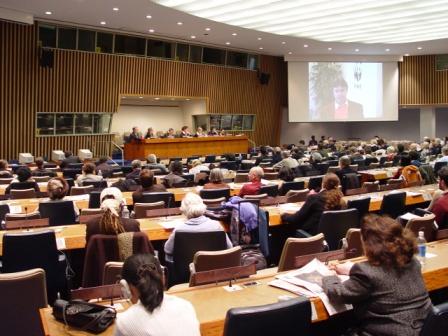
I’ve never been to New York. I even lived in America, but never made it to the 2nd largest financial centre in the world (London rules). So an invitation to launch my new UN report at the UN HQ was great. Kinda. I had just been in the pub with a colleague from WWF talking about climate change and his concerns about flying. It’s the fastest growing form of carbon pollution, and by making it far easier to whiz around great distances it means we maintain personal and work relations over greater distances… and so lock ourselves into a new pattern of pollution. Argh! I couldn’t go and launch my book on ‘NGO accountability’ and in the process add more crap into the atmosphere… I’m working with WWF, for God’s sake.

UN Launch

Already at +0.6 degrees, human-caused Climate Change is causing water and food shortages, increased storm damage, and river bank erosion, leading to millions more refugees. Hundreds of thousands of plants and animals are now under threat of extinction. Scientists say we have to keep climate change below 2 degrees otherwise it will go beyond our control. That will require a halving of global carbon emissions in the next 2 decades, which means that people like us (presuming you are in the consumer class) have to cut our emissions by over 2 thirds right now.

Yes, that’s unlikely. Especially when much of our emissions come from products from companies whose actions we don’t directly control. Which means our current form of civilisation is unlikely to see out this century. So why bother? Two reasons. First, we have to try, and if we slow the pace of damage the suffering will be less. Second, because I want us to be worth saving. There are various sides to the human character, we are all saints and sinners in different ways at different times. I have a hope that the loving, caring, thoughtful side of human character is our defining one. Climate change is a symptom of us losing touch with who we are, as part of nature, and results from the desire to consume stuff, as if more stuff makes us who we are. With this view, the means for combating climate change also become the ends.

This is not to say there are difficult balances to be struck. Some blithely say “my work to save the world offsets my emissions”. In some cases they may be right…. but whether someone’s policy or advocacy work stops tonnes of carbon being tipped into the air is impossible to judge, by them or anyone else. And the time and effort to work it out would be a wasteful exercise. To make the right decisions about this people need to understand the challenge, and be working on this for the right reasons. No flight is essential. But there are also other ways to reduce your own carbon emissions such as not running a car or keeping your heating down. Ultimately, personal lifestyle change is not the whole solution. I could fall under a bus and reduce my emissions to zero, but that wouldn’t change climate change one bit. We need major changes from industry and government to meet the challenge. But living more lightly and consciously on this planet is consistent with a demand for systemic change from business and government, not a replacement for it.

It’s for this interest in the way to live that I worked on NGO accountability. I think debates about accountability could help NGO staff to connect with a common purpose in promoting collective benefit. It’s time for NGOs to begin describing themselves not in terms of what they are not (such as non-governmental and not-for-profit), but in terms of what they are commonly for. There’s many ways to describe this common ethic, which is about expressing oneself in ways that help rather than hinder others’ expression, and the basis for all of Life’s expression – our planet. I also hope that by engaging in questions of accountability, NGOs will become clearer about issues of power, given how unaccountable power in society underlies many social and environmental problems that NGOs address.

To get a grip of accountability, we need to be clear on the type and means. There is bad type of accountability. “I was just following orders” they say in war crimes trials. But there is a good form of accountability to the intended beneficiaries of our work, and others we affect in helping them, if they have less power than those beneficiaries. In my dossier I call this ‘democratic accountability’, which is a situation where people affected by decisions or indecisions can affect them. An organisation can either promote or hinder democratic accountability by i) helping hold powerful organisations to account to those they affect ii) so long as when doing this they are accountable to affected 3rd parties with less power iii) so long as those 3rd parties are accountable in the same way. Once that bigger picture is established of the type of accountability needed, then we have to focus on the means. Too much has been done in this field that is about binding us up with paper and reports, or creating new hierarchies of reporting to people who don’t know how to be agents of downwards accountability. Instead, effective accountability processes need to encourage people to connect with their sense of purpose, be reminded of it, encouraged to explore it and what it means, to be clear on the WHY not just what and how. So I’m pleased at WWF a colleague of mine has launched a project on what the organisations beliefs are. That’s more important than additional form filling.

Last week I had lunch with someone from an international environmental organisation comprised of NGOs and governments, and she said they only just had video conferencing installed – and she didn’t even know where it was. As I walked out through their car park full of 4x4s, I thought if organisational accountability is seen in terms of paper, not people, and doesn’t encourage us to be more authentic and reflective in our work, then it will hinder us in meeting the challenges we face.

Thanks Elisa and NGLS for making it possible for me to walk the talk. As ol blue eyes almost sang… New York, New York, If I can make it there (by video), I’ll make it anywhere…

The UN webcast of the launch is at: http://webcast.un.org/ramgen/specialevents/se070119.rm

The report is at: http://www.un-ngls.org/site/article.php3?id_article=202

The UN did their own press release, edited version follows:

As NGOs Multiply, Study Urges More Public Scrutiny, by Thalif Deen

UNITED NATIONS, Jan 22 (IPS) – Just after the coastal regions of South and Southeast Asia were devastated by a disastrous tsunami in December 2004, hundreds of non-governmental organisations (NGOs) descended on Thailand, Indonesia, Sri Lanka and the Maldives armed with relief supplies — and good intentions.

The massive humanitarian effort, according to a new study, was “testimony to the skills and power of many NGOs.”

“But it also heightened concerns about opportunities for the misuse and abuse of humanitarian funds,” says the 102-page report, titled “Debating NGO Accountability”, released here.

Within months, says the study, there were complaints in Sri Lanka about corruption in aid distribution, and the lack of strong political will on the part of the government to address the challenge. A series of about 30 articles in U.S. newspapers also raised the issue of ethical failures — including “sky-high salaries of top executives and expenses for offices, travel and perks” — while disputing the motives of some of the so-called humanitarian missions. “They highlighted conflicts of interest, failures to adhere to an organisation’s mission, questionable fundraising practices, and a lack of transparency,” says Dr. Jem Bendell, author of the study, which was commissioned by the U.N. NGO Liaison Service (NGLS).

Tony Hill, coordinator of NGLS, points out that the heads of 11 leading human rights, environmental and social development international organisations publicly endorsed the first global accountability charter in June last year — perhaps as a result of the increasing number of scandals involving charitable organisations. The organisations that signed the Charter included ActionAid International, Oxfam International, Amnesty International, CIVICUS World Alliance for Citizen Participation, Transparency International and Save the Children Alliance….

However, Bendell, an associate professor at Griffith University Business School in Australia and director of the consulting firm Lifeworth, argues that “accountability” in itself is not simply a good thing, as it so often assumed. Rather, he says, it must be clear that groups must be accountable specifically to those that are affected by their decisions and actions. It is this concept of “democratic accountability” that lies at the heart of the study, and will allow NGOs to continue to develop as effective and important actors in the international arena, notes Bendell, who is currently advising the World Wildlife Fund (WWF), the world’s largest environmental organisation, on strategic development…

Asked if all international NGOs should sign the charter, Bendell told IPS: “Yes, it would be great for every major international NGO to sign the Accountability Charter.” He said the charter provides a basis for NGOs to come to a greater awareness of their common purpose in promoting public benefit, not private profit. “We need innovative approaches to be shared amongst charter signers, to find out the least bureaucratic and most meaningful mechanisms for promoting coherence with the human rights and democratic principles it states,” he added.

Yet these NGOs can only be as effective as their donors allow, he pointed out. So the study “emphasises the importance of the accountability of donors to those they identify as their intended beneficiaries.” He also said that too much money is spent on pet causes and political meddling, and not at all responsive to the needs of people affected by the giving. “And too much of these funds are generated from investments in companies and financial products with damaging impacts on society.”…

Asked about government regulation of NGOs, Bendell said that charity law and tax law are key mechanisms that governments use to regulate NGOs. “We would benefit from more sharing between governments on the best practices in these regulations to promote vibrant civil societies, with NGOs that are accountable to their intended beneficiaries and broad principles of human rights,” he added. (END/2007)

Down to the bottom dollar

In the next couple of months I’ll be adding some material from the past 3 years of pre-blog-life that’s still relevant (or so I think). The following features me in the Sydney Morning Herald squaring up to strategy guru CKP … kinda.

Pub: Sydney Morning Herald

Pubdate: Wednesday 27th of April 2005

Edition: First

Down to the bottom dollar, by Wendy Frew  

As big companies look for ways to sell to developing countries, Wendy Frew asks if they’re doing right by the poor.

NEELAMMA, from the town of Kuppam in south-east India, is one of the
US computer giant Hewlett-Packard’s least lucrative customers. But she has become one of its most valuable customers in terms of public relations. The 27-year-old rents a digital camera and printer from the company at market rates, and makes a living charging about 90 cents to take pictures of fellow villagers.

Although Neelamma is from one of the poorest regions in the world, she is presented as the future of Hewlett-Packard’s revenue growth. “Neelamma joined the HP Village Photographer program in
India, using a solar-powered HP camera and printer to record events in her rural community and take photos for a government program,” its promotional material says. “She has expanded her work, ultimately doubling her family’s income.”

Neelamma and 4 billion people like her are the target of a Hewlett-Packard division called “Emerging Market Solutions”, which recognises developing regions “as one of the most significant business growth opportunities of the 21st century”. The 10 biggest of these emerging-market countries spent nearly $US77 billion ($99billion) on computer equipment in 2003. IT sales growth averages 12 per cent in these economies, compared to 5 per cent in developed countries.

Elsewhere in India, entrepreneurial villagers can rent a Hewlett-Packard “Digital Rural Theatre”, with a video projector, DVD player and speakers, to show movies in local neighbourhoods. Poor communities can also buy cheap wireless computers that use “cantennas” – antennas made of discarded tin cans – to cut costs.

Other multinational companies are following suit. Hindustan Lever, the Indian subsidiary of the world’s largest whitegoods maker, the Dutch giant Unilever, distributes soaps and detergents to villages across the country. The soaps are the same as those marketed to wealthier communities, but are sold in small packages to save costs. Sales representatives drive trucks around the villages, spruiking the products over a microphone.

In Brazil, the whitegoods retailer Casas Bahia provides credit to consumers with low and unpredictable incomes. In
Mexico, Cemex, one of the world’s biggest cement suppliers, has set up a scheme to help the poor save and invest so they can afford to buy the materials to extend their homes.

Is the Western world stooping to a new low in exploiting poorer countries? Or are these enlightened multinational companies figuring out how to help kick-start undeveloped economies and make a buck at the same time? Leading the debate is the US academic and business consultant C.K. Prahalad, whose new book, The Fortune at the Bottom of the Pyramid: Eradicating Poverty Through Profits, promotes the idea that companies can make money and help create jobs in developing countries by doing business with the poor.

Prahalad’s views carry weight because he is considered a member of the elite business academia, alongside gurus such as Michael Porter and Gary Hamel. His ideas, which centre on the buying power of the poor, have been described as visionary by some in business and political circles, and were on the agenda at several World Economic Forum seminars.

However, sceptics in aid and development circles describe his thesis as simplistic and possibly environmentally unsustainable. But even critics agree his work has started a fresh debate about how to tackle world poverty.

The Indian-born academic, who works from the Stephen M. Ross School of Business at the University of Michigan, says the developed world should stop thinking about the poor “as victims or as a burden, and start recognising them as resilient and creative entrepreneurs and value-conscious consumers”.

“Four billion poor can be the engine of the next round of global trade and prosperity,” Prahalad says. “It can be a source of innovations … Market development at the bottom of the pyramid will also create millions of new entrepreneurs at the grassroots level – from women working as distributors and entrepreneurs to village-level micro enterprises.”

Prahalad defines the bottom of the period as the 4 to 5 billion people in the world who live on less than $US2 a day. Instead of assuming their plight can be alleviated only through aid, businesses should consider them as worthwhile customers. He says the challenge is in finding ways of profitably selling to this group using a combination of high-technology solutions, private enterprise and co-operation between business, government and non-government organisations.

To succeed, business has to rethink how to produce, package and distribute goods to the poor, who have volatile earnings and little disposable income. For example, Prahalad says, in the case of consumer goods such as shampoo, the poor are unlikely to be able to afford a standard-sized bottle but will buy a one-wash sachet on an irregular basis.

In many countries, the poor are paying up to 30 per cent more for basic necessities because of poor distribution networks, fragmented markets and corruption. The rural poor are particularly disadvantaged because of their distance from markets and the lack of affordable transport to those markets.

It is also near-impossible for them to borrow money except at extortionate interest rates from local money lenders.

Prahalad concedes the biggest risk to his vision is convincing the business world to change its attitude to the poor. “To approach this market, we have to fundamentally challenge our existing cost assumptions. That means the existing way of going to market is not sacrosanct. That creates some doubt about whether this is possible because we don’t have economic models on how we can create the same features and functionality [for products sold in undeveloped markets]. But once you cross that, the solutions are more obvious than people think.”

Success in marketing to the poor will also depend on approaching them as valuable consumers. “The [bottom-of-the-pyramid] consumers get products and services at an affordable price, but, more important, they get recognition, respect, and fair treatment,” writes Prahalad in his book. “Building self-esteem and entrepreneurial drive at the bottom of the pyramid is probably the most enduring contribution that the private sector can make.”

Statements such as these have attracted the sharpest criticism from development experts. Atul Wad, a sustainable-business consultant, says Prahalad’s argument that the corporate world needs to go beyond corporate philanthropy is compelling. However, many of the world’s poor suffer not just from a lack of money but from everything from the HIV/AIDS epidemic to civil wars and natural disasters.

“These people are not even close to being active participants in any marketplace … selling shampoo to them is not the solution,” he wrote in an article on the website SustainableBusiness.com.

“Though the collective purchasing power of the poor is enormous, buying decisions are still individual. By rampant marketing, a rural household may well end up spending its small disposable income on inappropriate products … It is morally reprehensible to see people as purely consumers for shampoo and beer.”

Dr Jem Bendell, a consultant to the United Nations and professor of management at the University of Nottingham’s International Centre for Corporate Social Responsibility, says Prahalad’s focus on the poor as consumers overlooks the damage multinational companies could do to employment in poor communities if they do not manufacture locally. Selling goods in much smaller serves also increases the amount of packaging, which puts pressure on environments. “It’s good Prahalad has opened up the door [to such discussions], but we need more work on it.”

He says Prahalad risks joining those academics whose main contribution to debate is presenting complicated ideas in a sexy, simplistic package, but that may not help solve long-term problems. “You need a much more critical examination of how corporations can help the poor but still make money.”

The chief executive of Opportunity International Australia, Paul Peters, agrees there is money to be made from poorer markets if products are well-priced. “If you go into any slum, the people there buy products at many times the cost that you and I pay here … there are just so many more middlemen in the process. If you just look at the sheer number of people … there is a lot of money being transacted.”

However, Peters, whose group aims to create jobs and stimulate business by providing micro-finance to the poor, says businesses face several challenges: finding the right models for the markets they target, and finding local staff with the appropriate skills and a commitment to serving the poor.

It is not enough to inject cash into the top of an economy. “Coke can put a bottling plant anywhere. The question is, does the economic benefit of that just sit with the shareholders? Unless you are doing things that will get to the bottom of the market or create wealth at the bottom [it won’t make much of a difference],” he says.

Prahalad contends his book was not meant as a solution to all the ills facing the world’s poor. “What I am suggesting is that leaving people in abject poverty without giving them a sense of hope and opportunity creates all kinds of disturbances,” he says.

“[The book] provides a fresh perspective to the biggest development challenge we have faced in the past 50 years: subsidies, foreign aid, philanthropy and corporate social responsibility can only take us so far.

“We have tried it but the sustainable solution that seems to work is when business gets involved and creates markets.”