The Russian invasion is shocking, terrible and worrying. In addition, the years of destabilizing of Ukraine by USA and Russia, and the ensuing civil war, has also been really bad. According to many analysts, who know more than I do about the politics involved, those past actions made this new war highly likely. But the new level of aggression from Russia is unnecessary and illegitimate. Like many people, I am feeling dismayed that people continue to kill each other for what appears to be a desire for power or expressing pride. Also, like many people, I fear how this situation could escalate. Hopefully the killing can be stopped, and political settlements reached very soon.
Like many of my friends, I look upon the suffering and dramas of the world and feel not only dismayed but also powerlessness. That sense of powerlessness can drive us towards an argument with whomever is within reach, particularly online. Such arguments might give a momentary release from our pain of being powerless. But such arguments do not necessarily achieve anything. Worse, they can shut down the space for lateral thinking and generative dialogue on how to reduce harm, avoid escalation and seek justice.
So, what should we do when wars break out? I am a member of a few networks of people who I have noticed consider themselves morally agentic individuals, many of whom have senior roles in their societies. I have seen a lot of messages in the last few days about what leaders should do, or what each of us can do. Most of these ideas look like either leading to escalation or being completely ineffectual. In contrast, right now, my honest view is that I have no idea what to do. Condemning the violence is obvious. Like many, I condemn the violence before the Russian invasion and from the Russian invasion. That part is easy for onlookers. But it does not have much impact. So, I find myself in a situation of wanting to learn more about why, how and what next, before deciding what might be useful to say or do.
With that reticence in mind, I have been surprised to see various people call for the militaries of the West to directly engage Russia. It is obvious where that could lead. Part of my own process of reflection is to consider the wider forces involved, in order to discern what situations might develop, so that I can avoid contributing to a worsening of a situation. That means I interpret current events with some understanding of the wider geopolitical tensions and strategies. For instance, some countries are on record in their geopolitical strategy documents that they want to prevent Europe from becoming a global superpower. However, destroying the continent in war would be a heinous way of doing that. It could be easy enough to make European nations struggle more for the gas that fuels its industry and fertilizes its agriculture. Knowing there could be hidden motives and machinations, I think that for all the people of Europe, Ukraine and Russia, we need to maintain ways of having calm conversations about what might de-escalate the situation and return Ukraine to peace and good governance.
That is why it is concerning to witness attempts to demonize anyone in the West who wants to discuss more broadly how this war came to be, or what a de-escalation might involve. The tactic of some journalists is to make it seem shameful to participate in a broader conversation, and for anyone who does that to be subjects of our disgust. Why do some journalists do that? They know that most people fear being shamed in public, and that anyone we are disgusted by, is never listened to. Therefore, the aim of shaming the possibilities for broader discussion on a war is so we all follow the narrative of the powerful in our respective countries: whatever that narrative is now or might become in future. So, when we see shaming tactics used, it reveals what agenda the shamers are working in service of: zero dialogue and maximum conformity. I believe that by reducing policy scrutiny and accountability in that way is unhelpful for the goal of peace and justice at any time, including wartime.
In direct opposition to that kind of shutting down of dialogue, I want to participate in open-minded discussions about what might be happening and what might happen. That is not to welcome any conspiracy stories. Indeed, belief in conspiracy stories that a group of people have a secret agenda that is driving everything is another way of dealing with the emotions of feeling upset and powerless – by blaming an imaginary all powerful evil entity. Instead, I want to offer a hypothetical scenario to stimulate your own reflection.
The scenario draws from two phenomena I have heard are happening ‘under the radar’ and which could become decisive. First, private money has started flowing into Ukraine to buy arms to fight the Russian army. Second, various non-state actors (businesses and others) are acting to try to take Russia off the internet. There are arguments for and against each action. But what might happen next? Here are my guesses at possible futures.
- The cyber-reaction by non-state actors to the Russian invasion partly succeeds, so that Russians are taken offline.
- The Russian government retaliates via cyber-attacks on the nonstate actors that worked to take it offline, as well as the financial donors to the Ukraine military.
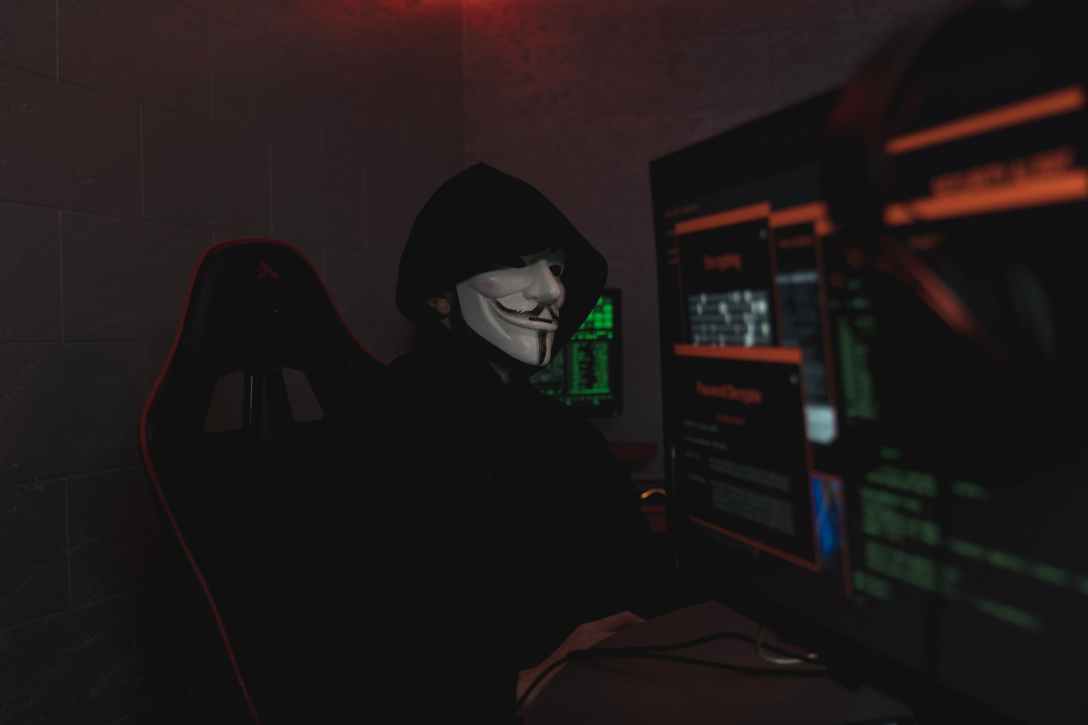
- Suddenly various internet services around the world are disrupted. Your webmail doesn’t work and emails bounce. Your messenger services don’t work. Your financial transactions don’t go through.
- The world’s media announces this is a Russian cyberwar on the whole world. While there might be some truth in that characterisation, Russia responds that these are ‘false flag’ cyber-attacks, used as a psychological war by the West against its own people. Some alternative media in the West agrees.
- The mass media in the West establishes the narrative that the West is now in a new perpetual state of cyberwar with Russia.
- BigTech responds to the cyber-security crisis by requiring all users of their services to prove who we are, with government issued identification. In many countries that requirement is mandated by law.
- Additionally, governments pass laws that any provider of internet services is now required to ban any users that are deemed either supportive of extremism or rogue states. The algorithms start hiding, suspending and deleting lots of people online.
- To not become victims of such algorithmic sanction, people sign up to services that help prove that we are not a person of concern. These systems involve various ongoing checks on our beliefs and behaviours.
- The war comes to an end with the powerful now having more control over our lives and what we are allowed argue about…
Why do I share this hypothetical scenario? Because any kind of disruptive event can be used to further the agenda of the powerful, and there is an important agenda to be aware of, that is not a conspiracy, but the natural progression of global capitalism. That is a trajectory of societies towards what Greek economist Yanis Varoufakis has called ‘technofeudalism’ where we all become the serfs of global technology corporations. To labour a point – recognising that horrors like wars can be used by elites to further the slide into technofeudalism does not mean there is a conspiracy. It would not mean that BigTech somehow provoked Vladimir Putin directly, or via US foreign policy. That is the way conspiracy theorists can undermine serious dialogue towards understanding how capitalist interests are always lurking to take advantage of disaster, or fears or disasters – from war, to health, to climate and beyond.
To have any chance of addressing the disruptions, rather than becoming victims of the elites’ use of such disruptions for their own strategic aims, we in the general public must maintain our capacity for open dialogue. Sadly, we have seen that a lot of people just engage online to feel part of a morally superior mob. Indeed, some people may be trying to make us engage in that way precisely to enforce conformity with the dominant narratives, as I described earlier.
So back to the question of what should I do? Whether on the conflict in Ukraine, or on the way that capitalists take advantage of disasters to further their power? After taking the time to reflect as I wrote this blog, I came up with the following ideas.
- Perceive. Let’s seek to notice how various ideas that we are hearing are inviting us to feel about ‘categories’ of people. Let’s notice if we are feeling disgusted or angry as a result of such information, and try neither to conclude nor communicate from such emotions. Instead, let’s ask for more about the potential implications of what is being said. That can be done publicly, in all kinds of ways. For instance, as usual, I wrote a blog mainly to be able to share with people I know, so that I can have better conversations about this situation. You might decide to engage journalists or politicians about it. Sometimes you will be called names, threatened or maligned in some other way. Don’t worry too much about that as many people will recognise such tactics for what they are, and it will give you are chance to point out such tactics as a toxic ploy (yep, I speak from experience).
- Protest. I was involved in anti-war demonstrations in the past, particularly in 2003. It did not stop the war. But it demonstrated that there was not such widespread public support for it. People in Russia are rightly protesting against the war. People in Europe may also start protesting against any escalation from the West. It is important that the media in any country is not allowed to get away with telling just one story about public opinion. Once you start protesting against a war, you might want to continue supporting efforts to stop all wars. For instance, the horrors in the Yemen cast a shadow on any of our expressions of concern for people in the world.
- Prepare. Not only could wars trigger a cyber-crash, but the onward march of techno-feudalism, under the cover of cyber security, could also compromise our basic freedoms. Either the direct effects of war, or the impacts of a cyber-crash, could trigger socio-economic hardship or breakdown. It is wise to try to become a little more resilient to such disruptions. That does not just mean having a couple months of food in the cupboard. It means not having everything you depend upon on the internet, and not having everything you eat or enjoy dependent on global supply chains. It means knowing neighbours better to be able to share heat, light, and food, if necessary, and a sense of camaraderie when you might be feeling anxious. That is a long-term project, connected to trends that are, in some places, called Transition Towns and Deep Adaptation. There is no harm in transforming your anxieties into doing something practical and local right now. And I am not just talking about people in Europe; cyber-attacks could affect everyone connected to modern consumer societies.
- Pray. Whether religious or just aware of fields of consciousness, you might believe in the power of prayer. Since I took up meditation, I have not prayed for a while. So today I will pray again. What kind of divine consciousness I will pray to – and how – is something I will have to experiment with.
I am sure there will be many other things to do that I have not thought of. But it is OK not to know. To pause. To not let the fear open us up to any manipulation or jingoism. So I am interested to know what you are thinking and feeling, and am opening comments below for a few days. I will do some gardening on them if there are any comments or insinuations about character (mine or any others), as my hope is for something better than that.
Stay loving, stay free 😉
Jem
PS: If you are feeling such anxiety that you feel like you might not cope, then apart from seeking immediate support, I recommend this guide from psychologist Dr. Aimee Maxwell. It is something also offered as a backup for participants in the Freedom To Care support circles and has been widely recommended.








You must be logged in to post a comment.