Our Humanity Dictates that the Collapse of Other Societies Matters to Us – including Palestine

Update on July 31st 2025:

After publication of this essay, there were a couple of months of what I considered unsatisfactory responses from various persons in senior volunteer roles in the DA Forum, who complained about my public criticism. However, by July, there was a widening of focus to include addressing matters of online group moderator capacity, diversity and accountability. Conversations are ongoing to improve systems. In addition, the original post that was blocked by moderators of the DA FB group has subsequently been accepted here.

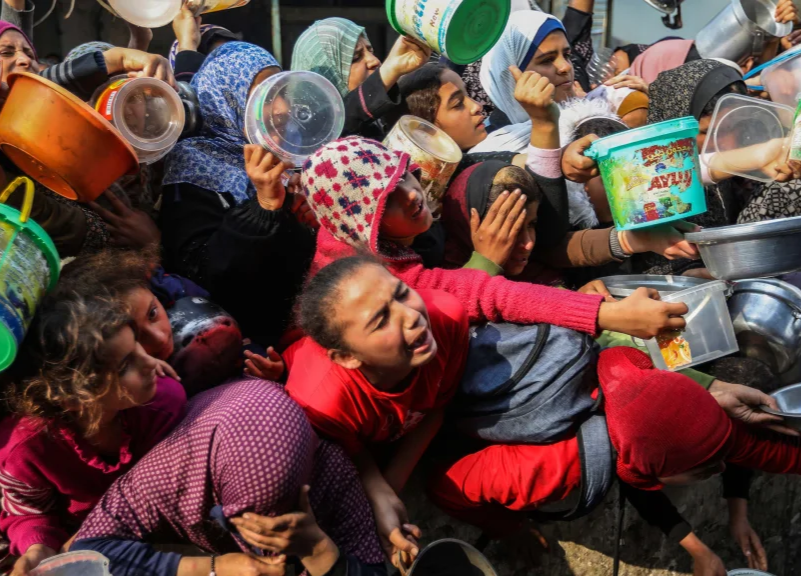
It is painful to think that many of the children pictured above are now starving to death, and the world has watched, without a way to intervene until too late for so many. 

For over a year some people have been saying “one day everyone will have always been against this”. They recognised that many people only move with the herd, as defined by legacy media and cultural bias, and such complacency provides abusers with the time to do great harm. In a metacrisis with societal disruption and collapse, we would benefit from more people with greater ‘critical wisdom’ as I explain in in Chapter 8 of Breaking Together. We can also ask people to learn from their mistaken compliance and complacency, to avoid repeating it.

Many of us are lucky that societal collapse is still only a concept. It can be our way of understanding the increasing difficulties we experience, or the increasing damage to the natural world, or can describe a future breakdown of basic services in our societies. However, for some people the collapse of basic systems for living has been happening for a long time. Moreover, some people are experiencing the daily risk of being killed, the pain of hunger, grieving loved ones, and coping with trauma from regular bombing and displacement. A military-induced collapse of society is one that could be stopped, unlike the wider collapse that unfolds due to environmental and other factors. Therefore any such volitional collapse is something we could try to prevent, or reverse. It is something that calls for our attention and action. That is especially so if our taxes are funding part of it or our financial savings are benefiting from it. 

What I have just written seems self-evident. It should not need explaining. Therefore, it is heartbreaking that a few people who made the reduction of harm from societal collapse a major theme in their lives have been blocking people with a similar perspective from discussing how we might help people in need, with no transparency about that censorship, which means we develop a mistaken impression of the response of our fellow man. I am writing about it here because I think that with your help this situation can change, and with it, both systems and cultural dynamics will improve in the Deep Adaptation communities and movement. 

Continue reading “Our Humanity Dictates that the Collapse of Other Societies Matters to Us – including Palestine”

What did you do in the genocide Daddy?

Jewish voice for peace, April 15th

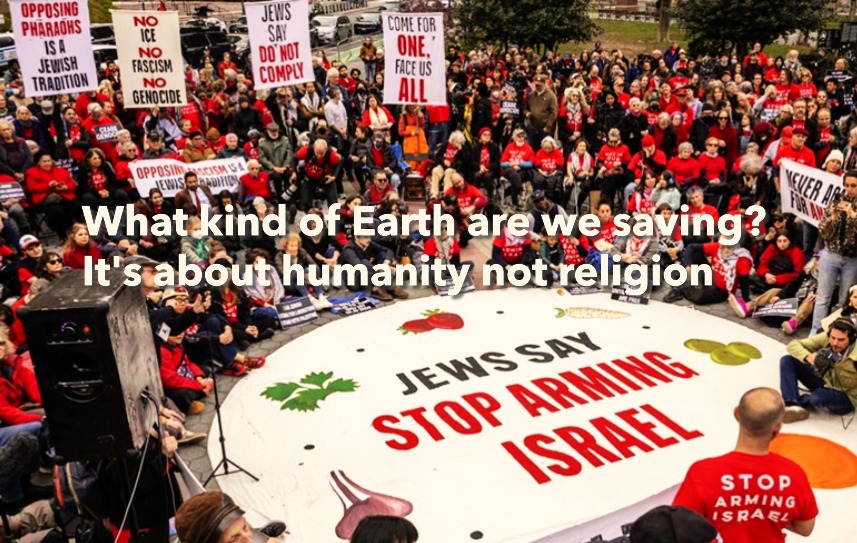
Why should we talk about Gaza and genocide on Earth Day? Partly because we should be talking about it everyday. Partly because the same mix of forces that are destroying the planet are destroying life and land in Gaza. Partly because the mainstream environmental sector won’t be talking about it, as they lie that all we need is more technology, hope and charismatic leadership to save the world. My friend and colleague in the field of collapse readiness, Matthew Slater has marched with the Palestinian flag nearly everyday for the last 18 months. We discussed what he has learned and what more can be done, which resulted in the following guest essay. Please read and then share with individuals by email, not on social media, where such content is likely buried by algorithms.

Thx, Jem

What did you do in the genocide, Daddy?

by Matthew Slater [listen to an audio of this essay]

I find it difficult talking about Palestine.

What is happening is so much more than a regional conflict or an antiterrorist operation. So much more even, than the alleged genocide that is picking up pace. Before I put my case, it will help some readers who rely on mainstream media if I lay out some facts. I will limit myself to 10!

Continue reading “What did you do in the genocide Daddy?”

Is Trump preparing for global collapse? (even if he doesn’t realise it)

CONFIDENTIAL MEMO
From: Strategic Futures Group
To: National Policy Council
Subject: Strategic Ambiguity in Collapse-Contingency Policy Implementation
Date: April 1st, 2025

Summary:
This memo outlines the rationale for maintaining strict narrative control over the United States’ long-range policy measures that align with systemic collapse-preparedness. The intention is not to deny the biophysical limits or geopolitical volatility threatening global stability, but to emphasize the existential need for public and international secrecy regarding the real purpose behind current U.S. policy directions.

Background:
The global economic system is exhibiting clear signs of overshoot: accelerating climate disruption, energy and mineral scarcity, fragile supply chains, sovereign debt stress, and demographic imbalance. These align with the framework of systemic decline outlined in analyses such as Breaking Together and internal scenario planning (e.g., NSC Deep Shock, DHS Cascadia). While the public narrative continues to project resilience and normalcy, the policy portfolio increasingly reflects quiet adaptation to the prospect of multipolar collapse and biospheric contraction.

Continue reading “Is Trump preparing for global collapse? (even if he doesn’t realise it)”

How People Get Ready – building the commons in working-class communities is key to collapse preparation.

The one talk that I’m scheduled to give in the UK this year is at the Festival of Commoning in Stroud. My reason for that is my support of what Michel Bauwens describes as cosmolocalism [0] in the face of collapse, and what I term the ‘Great Reclamation’ of our power. It is best explained and illustrated by one of the organisers of the Festival, Dave Darby, in a guest article…

“All civilisations collapse in the end. The Roman Empire is long gone, along with the ancient Greeks, Egyptians and Sumerians. Will the global civilisation of corporate capitalism buck the trend? Of course not, but how long does it have left? In such a complex system, it is impossible to predict when there will be a sudden shift, but there is good evidence that the process of breakdown has already begun. Damage to soils, water tables, forests, the oceans and climate is occurring alongside economic and political upheaval. No longer is this a theoretical matter about the distant future, but something we should be preparing for today. But how? 

Continue reading “How People Get Ready – building the commons in working-class communities is key to collapse preparation.”

Gatecrashing Quantum Physics

When ChatGPT first launched there was a panic in some parts of academia about how it could be used to write essays, and academic papers, and therefore con the processes of assessment. At the time I proposed some ways of addressing that, by inviting more attention to personal experiences in the process of sensemaking and evaluation [0]. As AI has improved, I became aware it could break down the barriers of intellectual disciplines to newcomers. In addition, it could help bridge and even integrate different schools of thought, which are often separated by their respective jargons. So today I played with it on a topic I had a casual interest in over 20 years ago – quantum physics. Back then I read about the ‘double slits’ experiment, where photons of light are directed at a barrier with two slits with a detector screen behind. Instead of two bands of light, an interference pattern appears on the screen, as if the photons had travelled together as a wave. However, when observed midway by a detector, those photons cumulatively create two bands of light, not an interference pattern. It was theorised as demonstrating quantum superposition and the observer effect in collapsing possibilities into physical reality. At the time I thought that superposition could be temporal not just spatial, but did not find anyone writing about that. Perhaps my hunch was because I’d recently read Hagen’s ‘Buddhism Plain and Simple’ [1], and was reflecting on how a fundamental unity of existence must involve time as well as space. But I had just started working at the UN and wasn’t going to deviate from my vocation on the environment, so dropped my interest. Last week I was reminded of the topic when I read there are new explanations about how time does not operate in a unidirectional past-present-future manner at the quantum scale [2]. I don’t know any practising theoretical physicists at the moment, so an AI chatbot helped me have a bit of fun in revisiting my idea about the temporal superposition of photons. The full chat follows below [3]. It was interesting how I needed to accept some of the suggestions but not others in order to progress the initial idea. It was also a salutary reminder that, after I concluded the chat, I used ‘old fashioned’ web search and found a discussion of temporal superposition theory last year [4], with similarities that had been overlooked by the AI. That is a reminder of the need for discernment during an AI chat and cross-referencing with other information. Ultimately, there is a need for experts in the field to check whether there are any major oversights or misunderstandings. Therefore, a word of warning: I am not a physicist, so take these ideas with a bucket of salt. I’ll leave the comments open, in case there’s a quantum physicist seeing this post. If you aren’t bothered with this topic, skip it, as more normal stuff comes from me soon. In any case, you could take this as an inspiration to scratch your own intellectual itch, gatecrash a discipline, and autodidact your way into new areas of knowledge!

Continue reading “Gatecrashing Quantum Physics”

“Water is Love”: restoring an ecological approach to climate change and beyond.

Skeena Rathor was a founder-member of the campaign group Extinction Rebellion, which changed the conversation on climate change in 2019. The group called for carbon neutrality in Britain by 2025. So the growing global emissions and worsening climate has been generating some reflection amongst activists. I invited Skeena to share her experiences and why she is now focusing on the importance of water. In the following essay, she shows how we can experience nature and climate as part of us, and vice versa, so we meet the challenges of social and ecological breakdown in a more holistic way. We publish on World Water Day to encourage attention to a wonderful new documentary on this theme: Water Is Love. Over to Skeena…

Water is more than just H2O. For times immemorial, many Indigenous and other wisdom traditions have regarded water as a living, spiritual entity, as a medium connecting the physical world with the spiritual, and as an essential force that sustains all life. For example, the Akan people of West Africa see it as a divine energy, the Māori view rivers and lakes as living entities with spiritual significance and the Lakota tradition reveres water as “the first consciousness bestowed upon Mother Earth” (Tiokasin Ghosthorse).

Continue reading ““Water is Love”: restoring an ecological approach to climate change and beyond.”

It’s The Empire, Stupid: Trump, Tariffs, the Dollar, Big Tech, EU Regs and CBDCs

Behind the headlines that are naively pro- or anti- Trump, there is a not-so-hidden agenda from the US government to remove any threat to continued US hegemony via its dominance of monetary systems. This is occurring in a context where the oil-backed dollar will not have the same power in decades to come. That means attempts are underway to secure future financial control in our digital era, where a handful of large companies have immense power. With this imperial agenda in mind, it is possible to predict future policy moves and consider how we wish to respond in our own lives and work.

To begin with, it is important to recognise the economic context we live within. The world is experiencing a new variant of capitalism, where a handful of international corporations control digital territory. In this internet age, it means they increasingly control our means of communication, trade and financial transaction. Some people think this is better described as ‘techno-feudalism’, rather than a more virulent form of monopolistic international capitalism. That term encourages us to recognise our subtle enslavement to corporations, and their executives, who increasingly influence our perceptions and behaviours.

Continue reading “It’s The Empire, Stupid: Trump, Tariffs, the Dollar, Big Tech, EU Regs and CBDCs”

Global Justice Starts at Home

I invited Malika Virah-Sawmy to share her reflections on the changes in approaches to international solidarity at a time of rising poverty and political disquiet in Western nations, as well as the degradation of the global environment. I met Malika through working on Deep Adaptation, and she served for a time as a holding group member of the DA Forum. I hope you find her perspective important for your own efforts.

Witnessing the political saga in many Western countries over the past year gives the impression of deep political upheaval. As inflation persists and family budgets become increasingly strained, frustration is manifesting in various ways. Elites are promoting narratives that shift attention away from exploitative economic systems. That means migrants like myself, refugees, and even bureaucrats are blamed – but never the rich. It leaves me wondering what politics will rise after people wake up to this false dawn promised by the xenophobes and anti-bureaucrats. Because it can’t take that long for people to realise their pay hasn’t increased and their bills haven’t decreased as a result of backing the opportunist politicians. At that point, the path might be open for more meaningful engagement with the difficulties in this era of ‘permacrisis’. If you are not satisfied with the ideas from your political leaders and pundits, then I’d like to offer an outside perspective. It is a view that might not only help citizens in the West, but also help people in less wealthy regions of the world.

Continue reading “Global Justice Starts at Home”

Indigenous Wisdom for an Era of Collapse

[NB: two places have become available on the last online course Leading Through Collapse that I’ll teach, starting Mar 17th – apply before 3rd Mar]

I’m noticing increasing Western engagement with Indigenous teachings and elders. One reason might be that as people wake up to societal collapse, they reconsider deep assumptions in their culture, and are open to learn more from the wisdoms of Indigenous cultures. That seems like a great thing, but, like anything, there are both benefits and pitfalls. It’s something I’ve mused on for a while, so I’d like to share a few thoughts with you.  

For decades, some strands of the Western environmental movement cited the wisdom of Indigenous cultures, from Aboriginal Australians to Native Americans, and many places in between. Then, like me, they largely failed to integrate such wisdom into life choices and professional or political activity. Even the environmentalists who work in solidarity with Indigenous peoples have tended to bring their own assumptions and interests which then distort the teachings, insights and ways of being in the world. That is not only due to modernist ideologies of progress, hope, and happy endings, but also from the distortions that can come from privilege. Let’s face it, the middle classes and elites tend to be the ones in the West who make time to learn from Indigenous cultures. The theories of social change favoured by the privileged anywhere tend to be that education, awareness and reform are what matters. That makes organising to resist and reclaim power to meet basic needs and aspirations in more independent and self-reliant ways a secondary concern, if at all. I know of that strategic preference because my past career was shaped by it. Without these filters, I wonder what more we could learn from listening to, and experiencing with, those people who live with a different cosmology, and who experience life differently to our urban commercial norms.

Continue reading “Indigenous Wisdom for an Era of Collapse”

Sacred Fevers – Always One (Om Mani Padme Hum)

Sometimes fevers have been a psychological medicine for me. They force me to stop, which eventually makes me reflect on life. But that’s not the only impact. The delirium from a raised body temperature and cytokines involves an altered state of consciousness. Feelings can bubble up and new perspectives appear. Without my fevers, I might not have taken some of the ‘sharp turns’ of direction in my life. That doesn’t mean I welcome illness, for myself or anyone else. But I now recognise that when we get sick we can welcome potential insights from an altered state of consciousness, as a silver lining to what is otherwise a worrying, painful and boring experience. Why people like me need something as dramatic as a high fever to discover new meanings and directions in life is an interesting question. More on that later. But first I want to share with you a few stories of fevers, which led to me writing my latest song: Always One (Om Mani Padme Hum).

My last high fever happened a few days after I had been bitten by a dog. I had been saying goodbye to the head of the Buddhist Temple, and his dog seemed friendly until I responded with a pat on his head (the dog’s). I doused the wound in iodine, bound it, and said goodbye, leaving with a question in my mind about whether they should keep the dog away from the guests. It was an odd way to end a meditation retreat – a reminder of the random ups and downs of life. Later that day I waited with apprehension for a reply to my whatsapp to the Temple office. “Yes, the dog has been vaccinated for rabies” came the reply. When home, I began searching what the disease risks might be and looking up when I’d last had vaccinations for tetanus and rabies. I discovered I was a couple of years past the time when boosters are recommended. I then discovered the good news that tetanus isn’t as bad as I’d thought, whereas rabies is worse – once you have a fever you will certainly die within weeks. Fortunately, there were no signs of infection at the wound site, and I felt fine, so I decided to do nothing; a decision which I’d wonder about later.

Continue reading “Sacred Fevers – Always One (Om Mani Padme Hum)”