The following notes are my end-of-year reflections, which I sent to people who subscribed to receive that from me. I think they may be useful for prompting your own reflections, ahead of the next Metacrisis Meeting, so am posting them here as well. Wishing you bright times in the year ahead, no matter the darker stuff that surrounds . Thx! Jem
When I look back on a year I don’t just consider what I experienced, contributed and accomplished. I always wonder what I have learned, and how I want to apply that in future. I had that in mind recently when I was interviewed by the e-zine Grist. One of their journalists is aware that the creeping collapse of societies has become a more credible framing amongst both experts and members of the public. She was interested in what can happen from such an awareness. So she asked how that awareness has shaped me over the years, and what’s been changing. I realised my own journey might help you with your own reflections, so I wrote them up for this personal newsletter that I send out twice a year…
Becoming collapse-aware doesn’t mean the process of collapse suddenly concludes around us. Like me, most of you reading these words are fortunate enough not to be living in destitution. We live in the society as we find it, with our identities, assets, skills, networks, responsibilities and desires — which have built up over time within that society. So with collapse awareness, or even collapse acceptance, there are many types of response.
Sometimes the pain of observing the news, or anxieties as our situations worsen, or just the heaviness of knowing the wider suffering to come, can stifle our ability to feel joy and aspire to what’s wonderful. That isn’t always the case, as collapse acceptance can be very liberating. But even people who have fully integrated their conclusions into their lives, becoming ‘doomsters’, can feel low at times. I think there are some similarities in our romantic lives. Understandably, hurt can close us down, rather than open us up. As the new year beckons, with time off, so the change in the calendar can become a moment for us to reflect on how we might aspire to live. We don’t need to cling to any aspirations, and we don’t need to turn them into expectations. But we can decide that we don’t want to shelter ourselves from potential disappointments. Instead, we can aspire to an equanimity where we can allow excitement and aspiration to flow, unattached to outcome, and undaunted by the certainty that everything we love will disappear one day. I write these lines to remind me of this truth, as much as to share with you.
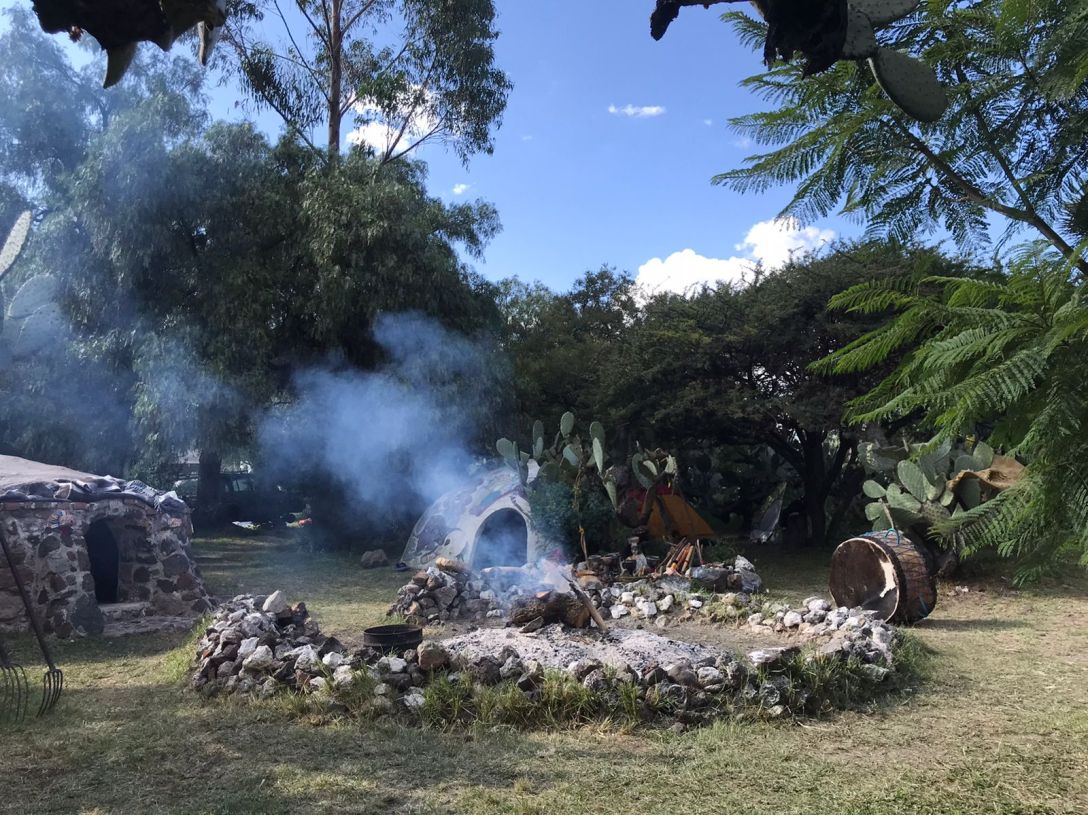
The analysis and message of Breaking Together has been resonating with some people who work closely with indigenous leaders across Latin America. That is one reason we published it in Spanish as Cayendo Juntos. Due to their work with indigenous elders, my hosts organised a Temazcal, or spiritual sweat lodge, for my birthday. It was led by Don Alvaro, a cofounder of the Elders of Teotihuacan. That’s the area where he and his ancestors have lived, which is famous for its Aztec Pyramids. My experience that day helped me to realise I still have a long way to go in ‘letting go’ of attachment to the impact of my efforts, and the importance of such letting go for my future in this era of collapse.
Don Alvaro’s comments before we entered the sweat lodge may have been influenced by the fact it was October 12th, the day when Columbus first stepped foot in the Americas in 1492. Some call it ‘Invasion Day’. Don Alvaro explained some of the basic ideas of his culture that have been suppressed in the 500 years since then. Such as the obvious fact that we are part of nature and not in charge of it. Plus, the reality that the natural world is itself sacred, rather than just parts of it, or those aspects that we imagine to be separate from nature.
In recent Q&As, I have been asked how I sustain myself in these times. To understand my reply, you would need to understand my outlook on the future. I think a process of the collapse of modern societies has begun, and that catastrophic loss of life will occur on all populated continents in the years to come. If I live another twenty years, I would be witnessing that disaster unfolding. That is the context for my choices over the past five years.
I think I can’t plan to realistically avoid societal collapse myself but can try to avoid some of the early pain. That involves choices about where and how to live (moving to Indonesia). I also want to help soften the crash in the area I intend to live (through an organic farm school and other projects). I no longer believe I can contribute much to systemic changes that would reduce harm at scale (which was the motivation of my previous career). But I don’t want to give up on that entirely, due both to my sense of responsibility, as well as my relevant skills, experience, professional status, and network (so I wrote a book, and still blog and teach). Aside from these matters of personal security and contribution to society, I have felt a strong desire to live more lovingly and creatively than I did in the past, which has led to me becoming a musician and meditation retreat leader.
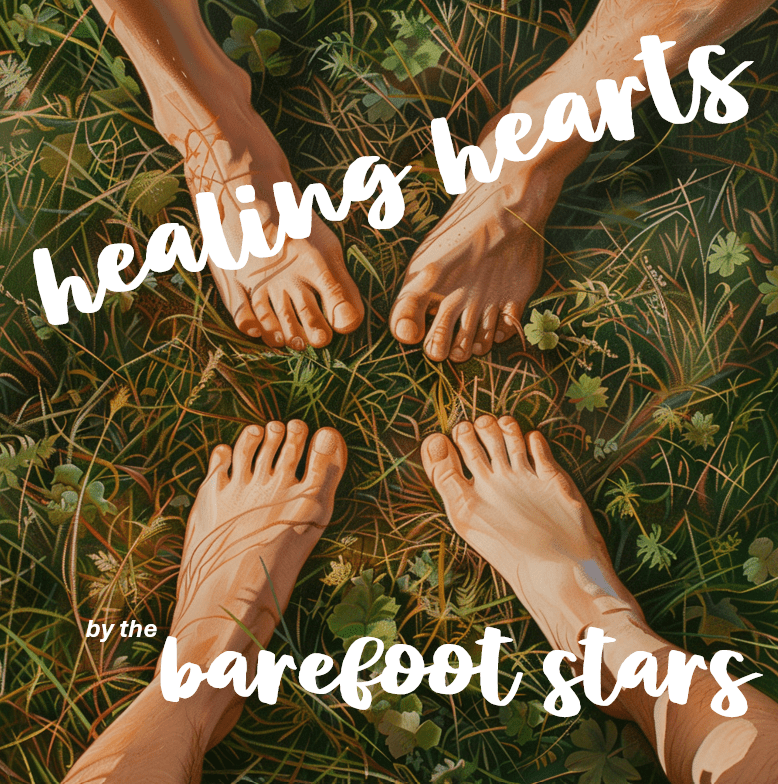
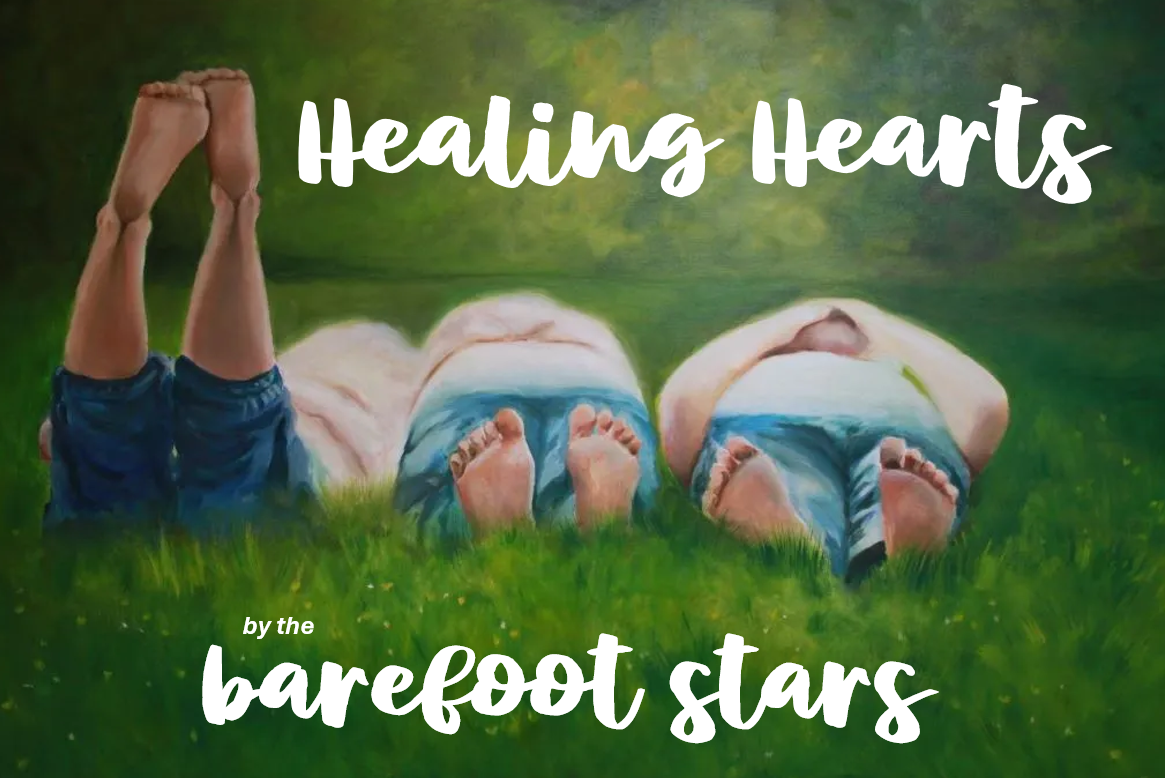
My new single is out now on all major platforms. “Healing Hearts” was written after months of experiencing grief, and the lovingness that can arise when anticipating, experiencing and recovering from a great loss.
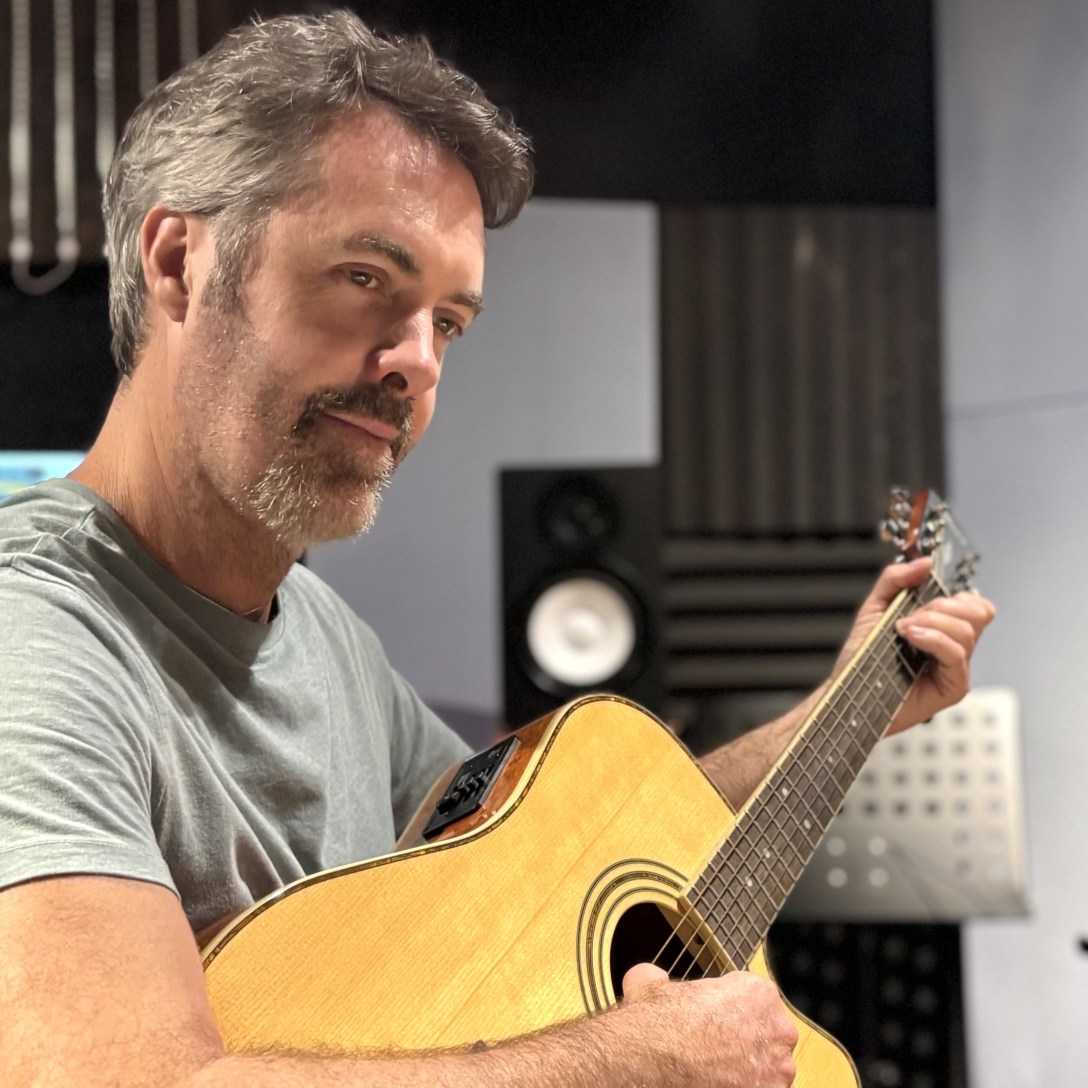
The single is the first release from the British folk group I formed while living in South East Asia. At one point, I noticed that every step of the creative process was barefoot: I had written the song at the beach, first performed a version at a cacao ceremony, and then once in the studio everyone was barefoot. That’s normal in Bali, but, nevertheless, means we are Barefoot Stars!
The recording features Vasudev playing guitar and mandolin, with myself, Mia and Hara singing, and Adam on bass. He and I produced and mixed the track.
If you like the song, then please share in social media, play it at gatherings, and consider a donation to the Bekandze Farm crowdfund (which ends next week)!
The lyrics and chords follow below.
Healing Hearts by the Barefoot Stars
Let’s (C)hold each other (Am)gently Each other (Em)gently In our (C)hearts Let’s (C)hold each other (Am)gently Each other (Em)gently As we (Am)part As this (Dm)song… is not the (G)last And new (Dm)love… grows in what’s (G)past Becoming (Dm)whole… is made of (G)parts So what (Dm)ends… is the (G)start Of Healing (C)hearts Of Healing (G)hearts Of Healing (Am)hearts Of Healing (F)hearts Of Healing (C)hearts Of Healing (G)hearts Of Healing (Am)hearts Of Healing (F)hearts
I know that when I’m anxious I’m not the wisest or kindest version of myself. Because that is the same for most of us, collapse-anticipators fear how people might make difficult situations a lot worse by delusional or aggressive responses. There are multiple ways of trying to help ourselves think and act more kindly and wisely in future. One way of psychologically preparing ourselves that has stood out for me recently is an examination of our deep stories – about who we are and our role in life. Once we notice such stories, we can choose whether we want to continue living by them or not. One way of discovering such stories is to re-examine our childhoods. I decided to share with you my recent process on that, and what I discovered. That’s partly as an encouragement for you to do the same, and partly for my own benefit of healing through normalising something by sharing it. If such reflection is not new to you, then perhaps this essay will encourage you to try again, as new things can be found depending on our current mind-states and exposure to different philosophies.
I recently hosted documentary film makers at a meditation retreat in a Buddhist temple, here in Bali. They are exploring what can happen when people perceive it’s too late to avert the collapse of modern societies. So they were asking questions about how I became the person I am. It’s the kind of reflection on formative experiences that I ask the participants in my leadership courses to do. But personally, I’d not reflected for a while. As Buddhism includes an understanding of the role of suffering in life, being at the temple meant that I reflected on that. So I dived into my past suffering and how it might have shaped me.
After a two year research project, with an interdisciplinary team, the conclusions I came to on the state of the world, and our near future, are not that relaxing. They will be available in the book Breaking Together, out in May. One of the chapters is already available, preprint, as the matter of food security seems so urgent. [subscribe to this blog to get a link to the full book when it’s out]
That context means I am especially happy to have launched a demonstration organic farm, using an approach called syntropic agroforestry. It does not mean I will definitely escape the impacts of agricultural disruptions and the socio-political ramifications. But it means that at least I am doing something about it that will benefit both people and planet.
As I’ve been writing so much for the forthcoming book, I’d rather garden than write about it, so I asked chatGPT to tell you all about the approach we are taking. The prompt was “Write a summary of many reasons (environmental and social) why syntropic agroforestry is a good idea. Explain why it is helpful to educate and support farmers in Indonesia to do syntropic agroforestry.” ChatGPT responded:
… I think 2 years in the land of Beatrix Potter is rubbing off on me.
—
A boy, walking alone on a felltop stops to look at a sheep. It stares back.
Boy: You seem calm. Are you happy?
Sheep: What’s happy?
Boy: Oh… it means lots of things.
Sheep: So “happy” is a concept?
Boy: Er, sort of. It’s an idea about a bunch of feelings.
Sheep: So you want to know if I’m experiencing the idea of “happy”?
Boy: Not quite, I guess I was asking about the feelings. Are you in pain?
Sheep: No
Boy: Are you comfortable with your life?
Sheep: I’ve a bit of an itch.
Boy: No, I mean comfortable with what you do! Are you doing enough stuff?
Sheep: Is “enough” another idea?
Boy: Yes. But are you worried about death?
Sheep: I know it happens but I don’t know when. What’s there to worry about?
Boy: I think we worry about death a bit as we don’t know what the purpose of life is.
Sheep: Is “purpose” another of your ideas?
Boy: Yes
Sheep: Is worrying an idea too?
Boy: It’s more like a feeling.
Sheep: What’s the feeling?
Boy: A feeling of going round and round in circles with my ideas, and this then tensing the muscles in my chest.
Sheep: So you create a purpose-idea to experience a happy-idea that is difficult because you have created a worry-idea and end up tensing your muscles?
Boy: Sort of
Sheep: So why do you focus on that happy-idea if it tenses you up?
Boy: Maybe because it’s what grown-ups do. But are you saying you don’t think?
Sheep: Baa! Animals think too. Didn’t you notice? But I don’t create ideas. I appreciate stuff I like, and avoid experiences I don’t like. Just look at the sunset!
Boy: Yes, it’s nice. But isn’t that a bit selfish?
Sheep: There you go again with another idea! “Selfish!” My positive feeling from looking at the sunset is the Universe’s experience as well as mine. I’m enjoying the universe enjoying me enjoying the sunset. Wjy else would it have made it so beautiful to us?
Boy: So are all our ideas and concepts bad?
Sheep: No, your ability to create concepts and ideas has given you your technology and culture. I wouldn’t be here otherwise. Neither would so many of you! Your ideas of geometry and building mean I have a nice warm barn for the winter, if I’m still here.
Boy: OK, I get it. Some ideas are useful and some are not. It’s what they do to us, and what we do with them, that matters.
Sheep: Nice. Will you experience a happy-idea when you eat me?
Next year the University of Cumbria launches the Institute for Leadership and Sustainability. As Director of the new Institute, I am currently welcoming inquiries about potential PhD research. We will accept six PhD students, whether full time in residence (typically 3 years), full time away (typically 4 years) or part time (residence or away (typically 5 years). There is one opportunity for receiving a bursary to cover fees. The Institute is based in the heart of the beautiful Lake District in the UK, in the village of Ambleside, with Campuses also in Lancaster and Carlisle.
The Institute has a specific research focus, about which it welcomes proposals. This is in the field of “transition”. All our work on leadership and sustainability seeks to enable personal and collective transitions to living in harmony with each-other and the planet. Leadership that makes a positive difference to communities and environments is the only leadership worth practising or learning. To us, sustainability means that everyone thrives in harmony with the biosphere and future generations. That does not mean maintaining or spreading a particular way of life, but a transition from behaviours and systems that are destructive, towards those that restore the environment and support individual rights, wellbeing, and community. It implies a systemic shift; large numbers of persons and organisations acting in a significantly different way. A transition to sustainability involves promoting ecological integrity, collective wellbeing, real democracy, human rights, support for diversity, economic fairness, community resilience, a culture of peace, compassion and inquiry, and the appreciation of beauty.
Studies of positive transformations suggest this shift will require interacting cultural, economic, technological, behavioural, political and institutional developments at multiple levels. Leaders during social transformations appear to have transcended a concern for self, yet sufficiently sustained their wellbeing, and empowered others. Therefore our work seeks to connect the systemic and the personal, and mobilise insights from diverse schools of thought on how transformations occur. Consequently, our research focuses on actionable knowledge, action research, combining diverse disciplines, linking local with global, and learning from old and new teachings that arise from diverse cultural settings. With us, you will not gain a straight-jacketed PhD in management, or politics, or sociology, but produce insight that is highly relevant and interdisciplinary.
Within the framework of transition, we are particularly interested in three areas.
Transformative Leadership: how to encourage the attributes and competencies that enable someone to participate in social transformation; how organisational and societal transformations occur; how to encourage personal transformations and wellbeing through learning experiences.
Innovative Resourcing and Exchange: innovative ways for people and organisations to share, swap, rent, or exchange, with or without official money; sharing economy, collaborative consumption, complementary currency; implications for business development, international development, and policy; implications for donors and foundations, including more catalytic and transformative philanthropy.
Scaling-Up Transitions: approaches that hold potential for the scale of change required by current global challenges; public policies for scaling social innovations; transformative cross-sectoral alliances; disruptive innovations in existing markets and industries.
If your research interests relate to this, please read on about our approach, to consider whether to submit an initial inquiry.
At the Institute we will combine what is normally expected for PhDs, with our own particular emphasis on purpose-led inter-disciplinary actionable research. Many people are unaware of what researching for a PhD involves, and mistake it for the writing of a thesis/book, or the winning of a credential. The thesis and the credential are the results, but the PhD process is about becoming a reflective and skilled researcher and communicator of research. Therefore PhD research with the Institute will involve the supervisor helping the doctoral candidate with most of the following elements:
developing and applying professionally ones sense of social purpose and without a completely fixed view. Specifically, we are interested in inquiries in personal and collective transition to fair and sustainable societies (broadly defined)
learning how to research (how to turn ideas, beliefs or doubts into inquiries with suitable research; which means learning about ontologies, epistemologies, methodologies, methods)
learning how to assess existing intellectual disciplines for the way they can both inform and restrict inquiry on the chosen topic; some sociology plus at least one other social science discipline are expected (relevant subjects include management, design, international development etc)
unlearning some existing assumptions in ways that help one to become critically reflective yet action-oriented in all aspects of life and work
learning how to analyse primary “data” of forms relevant to one’s chosen inquiry and to develop findings that are relevant to broader contexts (data can include lived experience; but then one needs to learn how to analyse ones experience, not just re-tell or re-articulate it)
learning how to identify findings that both contribute to existing fields of knowledge, but also a particular field of practice (i.e. to seek both academic and non-academic relevance for ones work)
learning how to communicate findings in ways that reach people in academia and beyond, including presenting findings in ways that can inform education (such as online or in-person lectures)
Proposals need to reflect some of this journey, and a thesis will need to demonstrate these outcomes were pursued and somewhat achieved. Myself and my co-supervisors will help doctoral candidates along this journey: you don’t have to have everything mapped out already, but be open to this depth of inquiry. Information on what I do is on the University website.
Still interested? Then please send me some information about yourself and your idea in the following format, by December 17th 2012.
Your Idea: Tell me in half a page what your area of research is, what your overall research question might be, why it is relevant to leadership or sustainability or transition, what existing research you have done on it, what stakeholders you have engaged about your research idea, and what existing theories/disciplines (if any) you think are relevant to it. If you have a provisional research question, then include it.
Your Motivation: Tell me in half a page why you want to explore this, in terms of your personal and professional development. Also explain how you will fund, or seek to fund, yourself, and what format you would go for (full time, full time away, part-time)
Please attach a one page CV and a sample of existing writing, ideally already published.
That is 2 pages in total (1 on research and 1 on CV), and a piece of writing.
Provide a skype ID or google talk ID so that we can interact more easily (my skype: jembendell).
I will contact you within one month of you submitting your information, potentially to discuss further your ideas and help you prepare a full proposal to the University.
Please note that information on our Institute is not yet available online – by joining the Institute you will help to shape our emerging programmes.
Sincerely
Dr Jem Bendell
Professor of Sustainability Leadership
Director, Institute for Leadership and Sustainability
University of Cumbria, UK
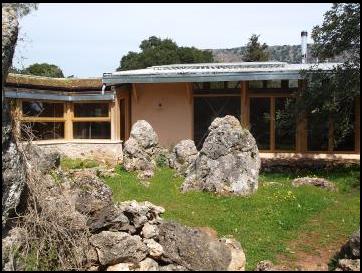
An important milestone arrives in October – my 40th. I’ll be in Crete, where friends in the field of sustainability have created a unique place for experiential learning about sustainable enterprise and living. Lovely people doing great things across Europe will come together for the ‘end of summit’ party, and my birthday, in true Cretan style with lots of tasty local food with far too much wine and raki accompanied by raucous Cretan music and dancing!
Would you like to join us in a stunning state of the art eco-building in an ancient Cretan olive grove with 2000m snow capped mountain backdrop? I would be chuffed if you did.
Outside the Academy
My birthday, Friday 12th October, will be the final day of the Inaugural Summit of the European Sustainability Academy (ESA). So, if you are interested in sustainability or social change, then you would enjoy arriving earlier in the week for some of the courses and events. And especially if you are inquisitive about wellness practices, such as Yoga or Qi Gong, which will occur at various times that week. Then on Saturday 13th October there is an organised tour of local eco-enterprises and a boat trip.
Nearby Almyrida
The party will be happening at Liberta Villas, 2km from ESA in the village of Palaloni. I’m promised its an exquisite location with a stunning 2600m mountain backdrop. ESA is on the edge of the village of Drapanos. Liberta has some accommodation, as do the two villages, and there is still more at the nearby beach town of Almyrida (email Sharon for info: Sharon.Jackson at eurosustainability.org).
Liberta Villas
I hear that in Greece right now there is an exciting air of change and thirst for new ideas and innovations. On the 10th I will co-lead a seminar with Matthew Slater of CommunityForge.net on creating and participating in alternative exchange systems and community currencies. We will be joined by Greeks who are pioneering these solutions to the current crisis. On the 11th I will support my Lifeworth colleague Ian Doyle in leading the now-famous ‘Giving Voice to Values’ training, which helps us to understand our values and express them in difficult situations. On the morning of the 12th there will be a ‘sustainability leadership’ round-table involving some Young Global Leaders of the World Economic Forum. Then Eva Voutsaki, from Crete, will guide us through a process of developing autobiographic narratives for clarifying our personal goals, and Ed Gillespie, from Futerra, will helps us explore the importance of authenticity in our communications. Greek pioneers of sustainable enterprise and lifestyles will also be attending during the second week of the summit (which starts Oct 8th).
Inside ESA
The programme will be uploaded and updated soon at www.EuroSustainability.org. The nearest airport is Chania, and Heraklion is an hour and a half away: www.whichbudget.com and www.skyscanner.net are places to find out routes. At least one guest is coming by ferry and trains. See http://www.loco2.com/ or ask me for info on overland/sea transport (as you could travel with other sustainability adventurers).
ESA opening
There’s no cost for attendance on the 12th or for the party. No presents either, please. Just support something local if you want to (we’ll come up with ideas). If you want to come earlier in the week for some of the events, which makes total sense, or even the full 2 week sustainability summit (what a treat!), then please email Sharon Jackson about details and fees: Sharon.Jackson at eurosustainability.org As the academy building isnt huge, and transport is cheaper if booked earlier, you should go for it now!
I do hope you can come and help me celebrate in a meaningful way.
The address:
European Sustainability Academy
Jackson A.S, Drapanos, 73008 Vamos, Chania. http://www.EuroSustainability.org
Inaugural Sustainability Summit
2nd October – 14th October 2012






You must be logged in to post a comment.