Let’s not become attached to collapse

There are moments when life confronts us with such undeniable pain that our hearts split open. For many people I know, that moment came with the realisation that our civilization is unravelling – that the seas are rising, the forests are dying, and the systems built to sustain our comfort are breaking. In that shock, there can be a strange grace. For a time, we awaken from the trance of consumption, routine and ambition. We see more clearly the suffering of the Earth and of each other. That often inspires compassion, and a yearning to live differently. It is a process I’ve often described in my past writings. It is why I encourage people to talk about societal collapse more openly, including our desires to reduce harm. Which is why, when I founded the Deep Adaptation Forum in 2019, I proposed that its ethos would be to “embody and enable loving responses to our predicament, so that we reduce suffering while saving more of society and the natural world.” Over the years I have witnessed people of all races, creeds, and economic classes, find their own ways to pursue that noble goal. It’s something I celebrate in the newly released video of Chapter 12 from my book. However, I have had to accept that something quite different can happen when we awaken to collapse, which might suppress presence, service and creativity. I wonder if that happened in me and others who participate in communities formed around an awareness or acceptance of collapse. If you are in such a community, I hope the following reflections on not becoming attached to narratives about collapse will be useful. 

Continue reading “Let’s not become attached to collapse”

Heartfullness: The Way of Contemplation

In a time of metacrisis, disruption and collapse, many of us yearn for deeper spiritual meaning but aren’t attracted to institutional religion. We also sense that growing recognition of humanity’s predicament could prompt a spiritual awakening, at least for some. This means many of us aren’t sure where to turn to find either advice or community, or to invite others together for that. That has been my situation. Personally, I have benefitted from Buddhist and Daoist philosophy and practice, nature-based Indigenous wisdom, and mystic strands of Christianity, as I shared in a ‘Buddha At The Gas Pump’ interview and now integrate into my music. I now want to go deeper and further with others. In the New Year, we launch the Metacrisis Mentors programme, where we will draw upon a variety of wisdom traditions to explore, in challenging times: what is mine to do and how am I to be? 

In January, we will announce more about the programme, which will be open to all members of the Metacrisis Meetings initiative. One of the key texts will be Heartfullness: The Way of Contemplation by Reverend Stephen G. Wright. A former palliative nurse, academic, and ordained inter-faith minister, Dr. Wright has cultivated decades of wisdom at the intersection of caregiving, contemplation, and mystical inquiry. His voice is deeply rooted in the lived experience of guiding seekers and spiritual nomads — those who feel estranged from dogma but still feel the call of the sacred.

Continue reading “Heartfullness: The Way of Contemplation”

Christianity and Hope – when the Pope does hopium, what do the mystics do?

For anyone who has grown up in a Christian country, the past week can be a time for reflection on values and purpose. It can be a moment where we find calm away from the rush of our normal lives and re-assess. Any religious festival can provide us with that opportunity, if we are open to that. On religious occasions like Christmas and Easter, people exposed to Western media will read or hear about what The Pope says about the world. So that’s why I heard the Pope’s new message on hope in difficult times. My discomfort about his message meant I shared some thoughts on social media, which generated feedback and dialogue. Rather than repeating myself in comments on those threads, I thought I’d write a post about ‘Christianity and Hope’ on my blog… so here goes.

The Pope’s message seemed to be asking us all to have hope in a better tomorrow. But he went much further than that, when claiming that hope for a materially better situation in the world is a requirement and concomitant with being loving towards others. He wrote:

“Those who love, even if they find themselves in uncertain situations, always view the world with a gentle gaze of hope.”

Continue reading “Christianity and Hope – when the Pope does hopium, what do the mystics do?”

Not Sweating on Others Waking Up – thoughts after a Temazcal

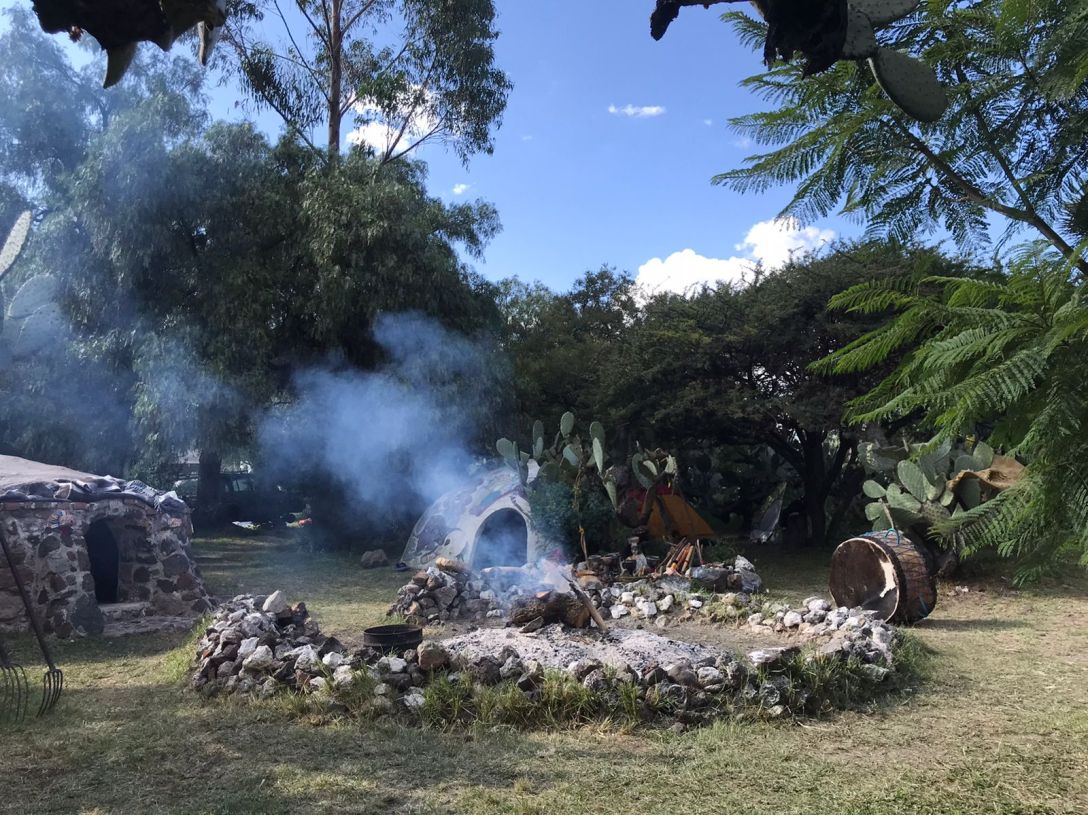
The analysis and message of Breaking Together has been resonating with some people who work closely with indigenous leaders across Latin America. That is one reason we published it in Spanish as Cayendo Juntos. Due to their work with indigenous elders, my hosts organised a Temazcal, or spiritual sweat lodge, for my birthday. It was led by Don Alvaro, a cofounder of the Elders of Teotihuacan. That’s the area where he and his ancestors have lived, which is famous for its Aztec Pyramids. My experience that day helped me to realise I still have a long way to go in ‘letting go’ of attachment to the impact of my efforts, and the importance of such letting go for my future in this era of collapse.

Don Alvaro’s comments before we entered the sweat lodge may have been influenced by the fact it was October 12th, the day when Columbus first stepped foot in the Americas in 1492. Some call it ‘Invasion Day’. Don Alvaro explained some of the basic ideas of his culture that have been suppressed in the 500 years since then. Such as the obvious fact that we are part of nature and not in charge of it. Plus, the reality that the natural world is itself sacred, rather than just parts of it, or those aspects that we imagine to be separate from nature. 

Continue reading “Not Sweating on Others Waking Up – thoughts after a Temazcal”

Dancing for Peace in an Era of Collapse

There are many ways of living with ‘collapse acceptance’. My own approach doesn’t represent the best one. To acknowledge the diversity, and help us all learn from that, once in a while I ask a colleague or friend to share some thoughts on how they are responding. Katie Carr was a founding member of the Deep Adaptation Forum and teaches the ‘Leading Through Collapse’ course with me (online twice a year and for one time only in the States this October). I asked her to share why a dance camp is one of her most restorative activities of the year. I hope it inspires. Thx, Jem

By Katie Carr

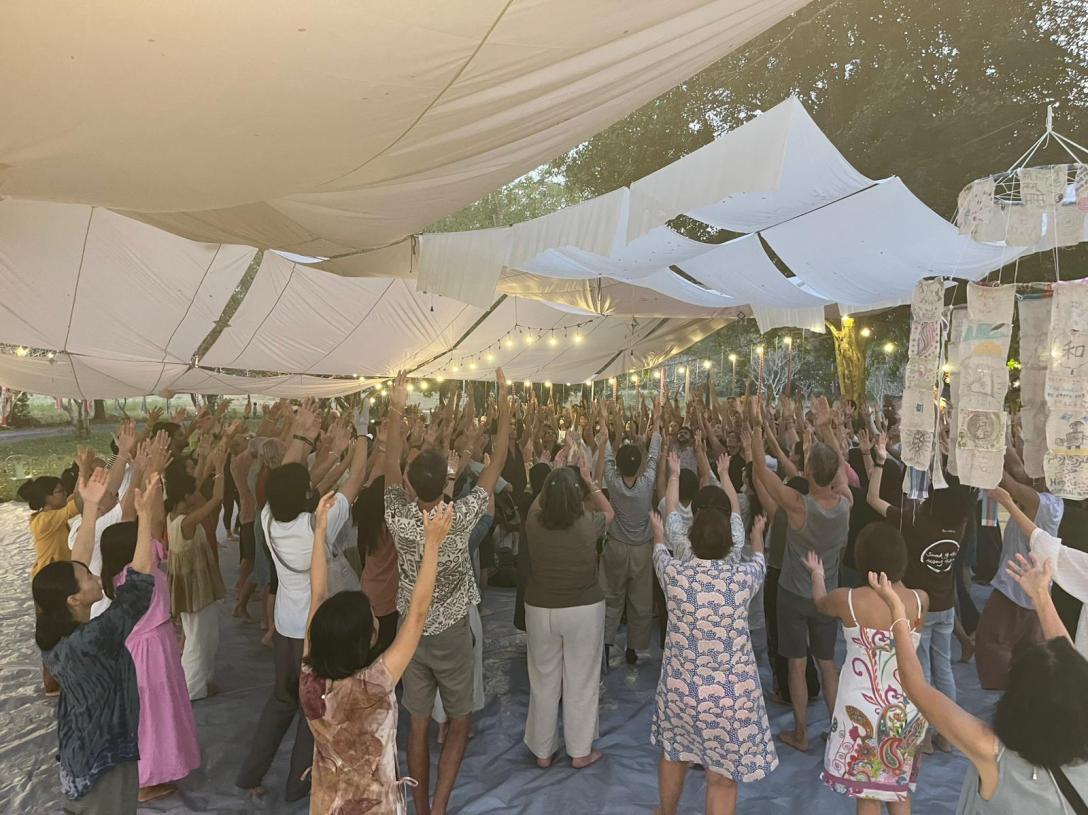
I recently returned from rural Oxfordshire in the UK, where I joined around 300 people from across the country to dance in a circle while chanting songs and mantras from many different spiritual traditions. Sacred Arts Camp is an annual week-long community event, where we camp in small circles, sharing cooking, care, and connection. Every time I attend, I am reminded of the importance of this kind of embodied and joyful ritual, especially as the world and our day-to-day lives seem to become more precarious. I also remember how much my heart longs for the experience of community and belonging that are so difficult to imagine, let alone co-create, in the midst of industrialised consumer societies.

Continue reading “Dancing for Peace in an Era of Collapse”

Stubborn optimism in an era of collapse

The weak but well-funded arguments for techno-optimism in the face of climate chaos have kept on coming. The latest were a series of articles in mainstream press about a book that claims renewable energy will sustain societies while stabilising the global climate. Brazilian researcher Claudia Gasparovic, offered a rapid debunking of the book’s arguments, in a post on LinkedIn. Similar arguments were put to the book’s author by journalist Rachel Donald for Mongabay. The weakness of techno-optimism on climate change was something I explored in my book Breaking Together. If you read Chapter 3, you will know that the idea modern societies can maintain current consumption patterns by switching to entirely renewable energy is one founded upon blindness to material dimensions of energy generation and storage. If you read Chapter 4, you will know that energy and carbon dioxide are two issues within a far broader problem of the ecological overshoot by modern societies. If you read Chapter 5, you will know that the momentum of change in our oceans and atmosphere, coupled with the dramatic loss of cooling aerosols and cloud-seeding forest cover, means we are already within a scary situation with climate. 

Continue reading “Stubborn optimism in an era of collapse”

Towards a 5th R in the Deep Adaptation Framework?

In the last few years a few people have suggested additional “Rs” for the 4 questions that comprise the Deep Adaptation framework for reflection and dialogue within an expectation or situation of societal disruption and collapse. As the idea of DA is used with groups around the world, various new ideas on what it means and what personal and group practices are relevant are emerging. One new R that I learned about recently is “Reverence.” That is what Reverend Lauren Van Ham adds to the framework as she uses it for the past couple of years with seminarians and faith-based communities. In my recent Q&A I asked her what a question might be that relates to Reverence, as I think DA involves inquiry, rather than simple answers. That is because societies and people are diverse, and an environmental breakdown affects all of it and, ultimately, everyone, thereby making generalised recommendations somewhat problematic!

Continue reading “Towards a 5th R in the Deep Adaptation Framework?”

Reverend Stephen G Wright on Spirituality and #DeepAdaptation

Reverend Stephen G Wright is Spiritual Director and trustee for the Sacred Space Foundation and the the founder of the St. Kentigern School for Contemplatives. Recently he was elected as a member of the Holding Group of the Deep Adaptation Forum.

In this #DeepAdaptation Q&A hosted by Katie Carr, Reverend Wright explores spirituality and the role of the mystic-contemplative in deep adaptation. It includes “the spiritual life as a fierce de-addiction programme”, “Learning to keep your heart open in hell” (#RamDass), and Peggy Lee’s “Is That All There is?”

Continue reading “Reverend Stephen G Wright on Spirituality and #DeepAdaptation”

Forgiving the destructive tendency in everyone as climate chaos grows

Face half in shadow

One of the questions I suggested we use for exploring our responses to the predicament of disastrous climate change was:

“With what and whom can we make peace with to lessen suffering?”

I called this the fourth R of reconciliation within the Deep Adaptation framework.

Part of this “making peace” and reconciling is forgiveness.

The human race has destroyed so much life on Earth and will continue to do so. Some cultures and countries have collectively been far more destructive than others and will continue to be for some time. Some companies are more destructive than others, as are some individuals. And they may continue to be so for some time.

Anger at this situation is understandable. More than that, such anger is a sign we are awake to the situation and that we care.

But then what do we do with that anger? Continue reading “Forgiving the destructive tendency in everyone as climate chaos grows”

Climate Reflections at 397ppm

I recently wrote a piece for the Guardian entitled “Is sustainable business still possible?” Why ask such a question? Wouldn’t it be disheartening to think it’s too late to avert massive disruption? Well, I don’t think so – after the initial shock and mourning, a new type of commitment can emerge. Not everyone reacts in that way, but I think it’s important to face up to what the science is telling us and then explore the implications, rather than continuing old patterns.

Some might think I’m exaggerating. So here is a quick recap.

Carbon concentrations in the atmosphere have stayed between 180 (ice ages) and 300 (inter glacials) parts per million (ppm) for 800,000 years, possibly up to 20,000,000 years. Now it gone from 325 to 397 ppm in my lifetime. It’s increasing at 2.7 ppm a year.

The average global surface temperature is now about 0.8C above that in 1900. Current projections are a 4 degree rise by 2100; i.e. in the lifetime of babies being born today.

Global warming affects the hydrosphere (water, ice), lithosphere (the land), and atmosphere. The relationship between them is complex, but the hydrosphere has been acting as a buffer, with seas soaking up most of the excess energy trapped by the current 397ppm of CO2.

Heating is speeding up beyond the worst past projections. For instance, NASA in 2007 said that we could lose Arctic summer sea ice by 2030. Now some projections are it will be gone by 2015.

The warming of the Arctic affects those areas most efficient in feeding the world through their exports.

Sea levels have been rising by over 3 mm a year since 1993. The most fertile farmland is low-lying and much will be swamped by sea rise of a meter.

CO2 at 397ppm is probably a death sentence for billions of people, and possibly for civilisation as we know it.

Significant action now will reduce the damage. Yet we don’t have significant action. Our systems for acting together have been failing us, ever since 1987 when the UN General Assembly first recognised climate change as a major problem. Media, politics, economics, monetary systems, intergovernmental processes, religions… We need to ask why, and that doesn’t mean asking who to blame, but delving deeper into causes, and learning more about rapid change processes.

Although significant action now will reduce the damage, it won’t stop massive disruption. So, we need to consider how to help future generations get through the disruption, through the suffering. What kind of ancestors are we? Will we be despised for our stupidity and selfishness? Perhaps. But can some of us help shape ways of life, values, ideas, systems, etc, that might help?

We intend to explore some of these ideas at the Institute for Leadership and Sustainability. Which is why our launch in May at the RGS is called “Adventures in Sustainability”

Some of the speakers recently appeared on Sea Change Radio: http://www.cchange.net/2013/03/26/sustainability-adventurers/