The Mirage of Climate Action at the Summit in Brazil

In this era of societal disruption and metacrisis, international climate summits provide us a Shakespearean display of the human craving for credible myths to avoid daunting truths. Four lanes of greed carve through one of the remaining lungs and heat-shields of our planet — and this month it speeds 50,000 souls towards reassuring each other that they are noble, not needy, and well-informed, not foolish. Earlier this year, the summit secretariat rushed to tell everyone that this new highway through the Amazon Rainforest would have been built anyway. They’d probably heard how new roads cause – and then enable – deforestation. The Brazilian government responded with some more commitments on rainforest protection. That’s promising, but they still give permits to dig up the Amazon for the metals under the trees. The mirage shimmering above the asphalt, seen by delegates as they approach the city of Belem, is a symbol for what passes as scientific curiosity, environmental care, and responsible leadership on the world stage in 2025. 

Ahead of the latest tropical junket, I spoke with the Climate Emergency Forum about what the climate has been telling us through the crazy temperature readings over the last two years. The changes can’t be explained through carbon gases alone. There are various contributing factors — and an important one is that human activity has badly disrupted the biohydrological processes where large forests and oceans naturally seed clouds. I explained the need for a paradigm shift in climatology and related activism and policy, and mentioned my recent essay on the topic, where I summarise the evidence. As many people have followed my analysis on the topic since 2018, I thought it important to summarise my latest understanding — beyond ‘carbon-centrism’.

Continue reading “The Mirage of Climate Action at the Summit in Brazil”

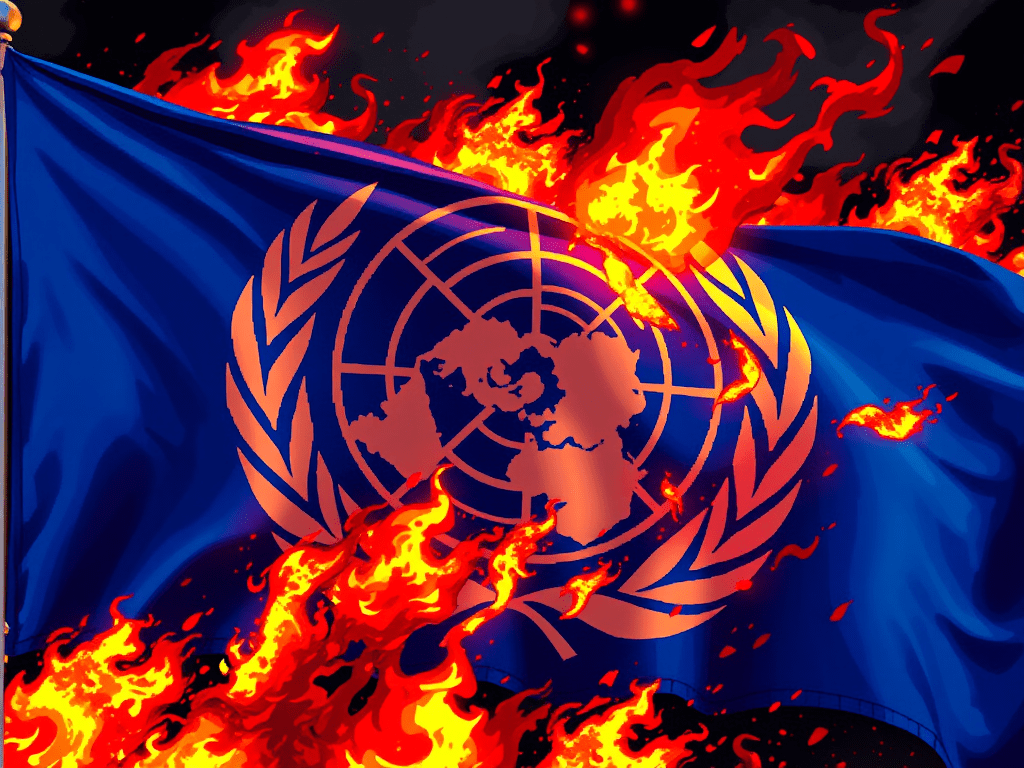
A new role for the UN in an age of collapse

Not long ago, I sat across from a UN civil servant at a quiet café in Geneva. She had worked for over two decades in the UN system, from humanitarian relief to climate diplomacy. As she stirred her coffee, she confessed: “I feel disappointed, bewildered. Sometimes I wonder if anything we do makes a difference anymore. Her voice was tired, but not bitter—more like someone watching a dam crack and realising she only had her teaspoon to stem the flood.

She is not alone. In conversations across UN agencies, I’ve been hearing similar expressions of despair. As institutions strain under the weight of cascading crises—climate chaos, ecosystem breakdown, spiralling inequality, violent conflict, and the abandonment of international law—many international civil servants find themselves in a moral and professional no-man’s land. They are loyal to the ideals of the UN, yet unable to reconcile those ideals with what they now see daily: the world is not just “failing to meet the SDGs“—it is unraveling.

Continue reading “A new role for the UN in an age of collapse”

Systems are Breaking – and That’s Our Opportunity

A few months ago, I reconnected with a friend who I had worked with in initiative on ‘the sharing economy’. At the time, we were both ‘Young Global Leaders’ (YGLs) with the World Economic Forum. It was 2013, and we had volunteered our time to bring attention to how new technologies could be used to help everyone have a good life with less ecological impact. Personally, we were imagining a future of peer-to-peer resource sharing, community-based production, and cooperative ownership. Meeting up after years, we laughed that our work had oddly contributed to the World Economic Forum publishing the line that became infamous as a globalist’s dystopian injunction: “You will own nothing and be happy.”

Although we laughed, it was with a sense of ‘doomer humour’. My friend’s tone had shifted from a decade ago. She felt disappointment and defeat. “All we did,” she told me, “was write a love letter to the next wave of monopolists.” Her disillusionment was not unique. Many working in alternative economics—whether cooperatives, commons networks, or solidarity enterprises—feel similarly deflated. Despite huge efforts to get governments around the world to adopt policies to promote the ‘Social and Solidarity Economy’, the tide has been in the opposite direction. Monopoly capitalism has grown stronger, tightening its grip through unrestrained mergers and acquisitions, extractive digital platforms, and ‘techbro’ political interference. Now the big tech companies don’t compete in a free market, as they own the markets and can operate similarly to feudal lords. It’s why the Greek economist Yanis Varoufakis labels this era ‘technofeudalism’.

It’s easy to feel like we failed. But that pain—of giving so much for so little change—is not a reflection of personal failure. It’s a sign of deeper structural shifts….

You can read more of this article that I wrote for Shareable, on the new, yet old, agenda for the Social and Solidarity Economy, or join myself and like minds discussing this during a ‘metacrisis meeting.

Join the Metacrisis Meetings initiative to chat with like-minded folks…

We meet once a month (and soon, more often than that)

What the farmers say

In my experience, it is rare to hear farmers from the Global South discussing their challenges and aspirations, and what might be useful support to receive from successful restaurateurs and resort owners. That’s why I’m delighted to release a short film that brings you the voices of organic and regenerative farmers in dialogue with others in the food business sector in Bali, Indonesia. 

After 2 years of operation as a demonstration farm, school, and event space for organic and regenerative agriculture, at Bekandze Farm we hosted a meeting of organic farmers, distributors, NGOs and food retailers. The participants discussed why organic farming is such a small part of agriculture in Bali, despite the opportunities provided by the environment and the visitor economy. After discussing the challenges, we explored potential solutions for scaling organic farming on the island, and more widely in Indonesia. Achieving that would help all the people on the island, as it would increase their food security by decreasing dependence on agrochemicals. In that sense, organic and regenerative methods of farming are also methods of collapse preparedness, or practical Deep Adaptation. 

Continue reading “What the farmers say”

Why Isn’t Organic the Norm in Bali?

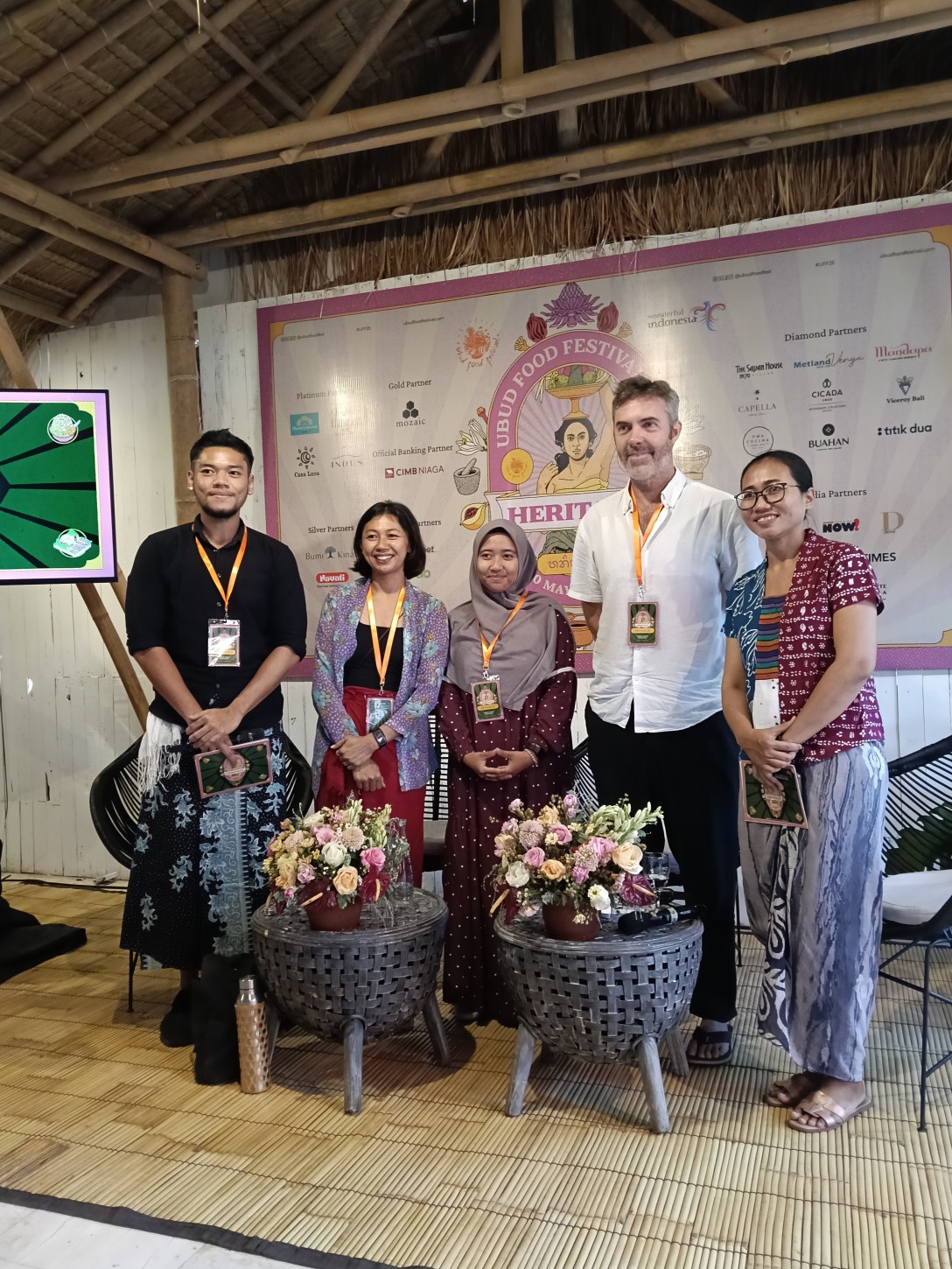
The Ubud Food Festival concluded yesterday here in Bali, Indonesia. I spoke at an event on how to work better with nature to achieve greater food security. I was invited due to my co-founding of an organic farm school, and was pleased to attend as we encourage collaboration amongst restaurants to scale up organic farming. Our crowdfund to help with that is still a few thousand short of the necessary target. In preparation for the event, I drafted some notes on what I’d say. They follow below. If you can support us, please take a moment to contribute. Thx, Jem

It’s a pleasure to be here with you in Ubud — a town that’s become an international symbol of nature-based spirituality, conscious living, and the pursuit of wellness. 

Let me start with a question: How many of you would prefer to eat organic food, that’s food grown without any chemicals? And now — how many of you know that you always eat organic food here in Bali?

Continue reading “Why Isn’t Organic the Norm in Bali?”

How People Get Ready – building the commons in working-class communities is key to collapse preparation.

The one talk that I’m scheduled to give in the UK this year is at the Festival of Commoning in Stroud. My reason for that is my support of what Michel Bauwens describes as cosmolocalism [0] in the face of collapse, and what I term the ‘Great Reclamation’ of our power. It is best explained and illustrated by one of the organisers of the Festival, Dave Darby, in a guest article…

“All civilisations collapse in the end. The Roman Empire is long gone, along with the ancient Greeks, Egyptians and Sumerians. Will the global civilisation of corporate capitalism buck the trend? Of course not, but how long does it have left? In such a complex system, it is impossible to predict when there will be a sudden shift, but there is good evidence that the process of breakdown has already begun. Damage to soils, water tables, forests, the oceans and climate is occurring alongside economic and political upheaval. No longer is this a theoretical matter about the distant future, but something we should be preparing for today. But how? 

Continue reading “How People Get Ready – building the commons in working-class communities is key to collapse preparation.”

Global Justice Starts at Home

I invited Malika Virah-Sawmy to share her reflections on the changes in approaches to international solidarity at a time of rising poverty and political disquiet in Western nations, as well as the degradation of the global environment. I met Malika through working on Deep Adaptation, and she served for a time as a holding group member of the DA Forum. I hope you find her perspective important for your own efforts.

Witnessing the political saga in many Western countries over the past year gives the impression of deep political upheaval. As inflation persists and family budgets become increasingly strained, frustration is manifesting in various ways. Elites are promoting narratives that shift attention away from exploitative economic systems. That means migrants like myself, refugees, and even bureaucrats are blamed – but never the rich. It leaves me wondering what politics will rise after people wake up to this false dawn promised by the xenophobes and anti-bureaucrats. Because it can’t take that long for people to realise their pay hasn’t increased and their bills haven’t decreased as a result of backing the opportunist politicians. At that point, the path might be open for more meaningful engagement with the difficulties in this era of ‘permacrisis’. If you are not satisfied with the ideas from your political leaders and pundits, then I’d like to offer an outside perspective. It is a view that might not only help citizens in the West, but also help people in less wealthy regions of the world.

Continue reading “Global Justice Starts at Home”

Indigenous Wisdom for an Era of Collapse

[NB: two places have become available on the last online course Leading Through Collapse that I’ll teach, starting Mar 17th – apply before 3rd Mar]

I’m noticing increasing Western engagement with Indigenous teachings and elders. One reason might be that as people wake up to societal collapse, they reconsider deep assumptions in their culture, and are open to learn more from the wisdoms of Indigenous cultures. That seems like a great thing, but, like anything, there are both benefits and pitfalls. It’s something I’ve mused on for a while, so I’d like to share a few thoughts with you.  

For decades, some strands of the Western environmental movement cited the wisdom of Indigenous cultures, from Aboriginal Australians to Native Americans, and many places in between. Then, like me, they largely failed to integrate such wisdom into life choices and professional or political activity. Even the environmentalists who work in solidarity with Indigenous peoples have tended to bring their own assumptions and interests which then distort the teachings, insights and ways of being in the world. That is not only due to modernist ideologies of progress, hope, and happy endings, but also from the distortions that can come from privilege. Let’s face it, the middle classes and elites tend to be the ones in the West who make time to learn from Indigenous cultures. The theories of social change favoured by the privileged anywhere tend to be that education, awareness and reform are what matters. That makes organising to resist and reclaim power to meet basic needs and aspirations in more independent and self-reliant ways a secondary concern, if at all. I know of that strategic preference because my past career was shaped by it. Without these filters, I wonder what more we could learn from listening to, and experiencing with, those people who live with a different cosmology, and who experience life differently to our urban commercial norms.

Continue reading “Indigenous Wisdom for an Era of Collapse”

Some reasonable essays on collapse

In my annual personal update (not the Deep Adaptation Review), I included a summary of the essays I wrote in 2024. I thought it useful also to post these to my blog. I group the essays by topics of: integrating collapse awareness into your working life, the broad trends in Deep Adaptation, the political implications of collapse awareness, making sense of the latest climate data and science, plus personal reflections on motivations in this age of consequences. Next year I will be writing less, as I focus more on the organic farm school (please help!) and music (new single: Aspirations). I hope that both my book and these essays will support your own life choices. For more support, consider joining our online short course. Thx, Jem

Integrating collapse awareness into your working life

The essay Keeping your job at the end of the world (as we know it) addresses the conundrum facing many people who are questioning everything due to collapse anticipation, but can’t quit their job, for financial or other reasons. Written to coincide with a speech at Griffith Business School, where he was an Adjunct Professor, Jem Bendell discusses ideas rarely, if ever, heard in professional contexts. That is because he not only mentions people who have chosen to “keep serving (reveal and recommit in post)” or “repurpose your job (refocus in post)” but also those who de-prioritise their employer’s interests. This includes “quit quietly (retire in post)” and even to “sabotage non-violently (rebel in post).”

Continue reading “Some reasonable essays on collapse”

Collapse-relevant publications in 2024

The Deep Adaptation Review is an independently produced look back at the year on the topic of collapse readiness. There are a few sections in it, with one of them covering interesting new publications. I want to share with you that part, below. The full review is available here, where you can also subscribe to receive it once a year. Thx, Jem

Publications in 2024

Perhaps the most important paper on climate in the past year was co-authored by a range of leading climate scientists, including those who have actively vilified scholars whom they consider to be too alarmist or doomist. The 2024 ‘state of the climate report’ was co-authored by Professor Michael Mann and concluded “We find ourselves amid an abrupt climate upheaval, a dire situation never before encountered in the annals of human existence.” It should be noted that even the analyses so despised by Mann and others just six years ago, such as the Deep Adaptation paper, did not conclude that the planet is already experiencing abrupt climate change. Don’t expect apologies, however, or a depth of reflection into why so many climatologists undermined the more alarmist and radical response to the science over recent years. That’s despite very real negative consequences in the lives of activists and others. 

Continue reading “Collapse-relevant publications in 2024”