Blinded by The Light (newspaper)

As with many countries in the Western world, the UK has seen a rise of ethno-nationalist politics in recent years. One politician who led the Brexit agenda to leave the EU, is Nigel Farage. Not being able to blame the Eurocrats anymore, the lie took hold that Britain’s ills could be blamed on poor immigrants rather than greedy elites. Recently, Farage has come under fire for his alleged expressions of antisemitism. Although that focused on his childhood, his appearances on the podcast of alt-right conspiracy theorist Alex Jones was also discussed. During an appearance, Farage claimed that ‘globalists’ are trying to override national sovereignty by creating one world government. Some critics have claimed that it was ‘dogwhistling’ about threats from Jewish elites. The concern arises because Jones and Farage claim there are evil cabals of people, rather than members of a transnational capitalist class, who are serving the extractive demands of international capital. They don’t discuss capitalism in an intelligent way, because then they would be criticising their friends, funders, and the system that has promoted their views to huge audiences. Discussions in the mass media about who ‘globalists’ are and whether we should be concerned about them (and the structures of capital they serve) could be welcomed, if those discussions go beyond the lazy and nasty tropes of antisemitism. Unfortunately, such discussions seem difficult to have in the UK and elsewhere, as political discussion is often febrile and superficial. I was reminded of that recently in the town of Stroud, where one independent newspaper seems to have generated new debates and fractures between people who previously worked together for social change. In this essay, I want to share what I noticed from reading that newspaper and from experiencing the community fractures that emerge around its arguments. If the mass media weren’t so badly misinforming people in order to protect elites, perhaps this situation would not be so difficult. But in such a poor information system, there is work to get people talking about what can be done together at community level as life gets increasingly difficult for so many.  

Continue reading “Blinded by The Light (newspaper)”

The Mirage of Climate Action at the Summit in Brazil

In this era of societal disruption and metacrisis, international climate summits provide us a Shakespearean display of the human craving for credible myths to avoid daunting truths. Four lanes of greed carve through one of the remaining lungs and heat-shields of our planet — and this month it speeds 50,000 souls towards reassuring each other that they are noble, not needy, and well-informed, not foolish. Earlier this year, the summit secretariat rushed to tell everyone that this new highway through the Amazon Rainforest would have been built anyway. They’d probably heard how new roads cause – and then enable – deforestation. The Brazilian government responded with some more commitments on rainforest protection. That’s promising, but they still give permits to dig up the Amazon for the metals under the trees. The mirage shimmering above the asphalt, seen by delegates as they approach the city of Belem, is a symbol for what passes as scientific curiosity, environmental care, and responsible leadership on the world stage in 2025. 

Ahead of the latest tropical junket, I spoke with the Climate Emergency Forum about what the climate has been telling us through the crazy temperature readings over the last two years. The changes can’t be explained through carbon gases alone. There are various contributing factors — and an important one is that human activity has badly disrupted the biohydrological processes where large forests and oceans naturally seed clouds. I explained the need for a paradigm shift in climatology and related activism and policy, and mentioned my recent essay on the topic, where I summarise the evidence. As many people have followed my analysis on the topic since 2018, I thought it important to summarise my latest understanding — beyond ‘carbon-centrism’.

Continue reading “The Mirage of Climate Action at the Summit in Brazil”

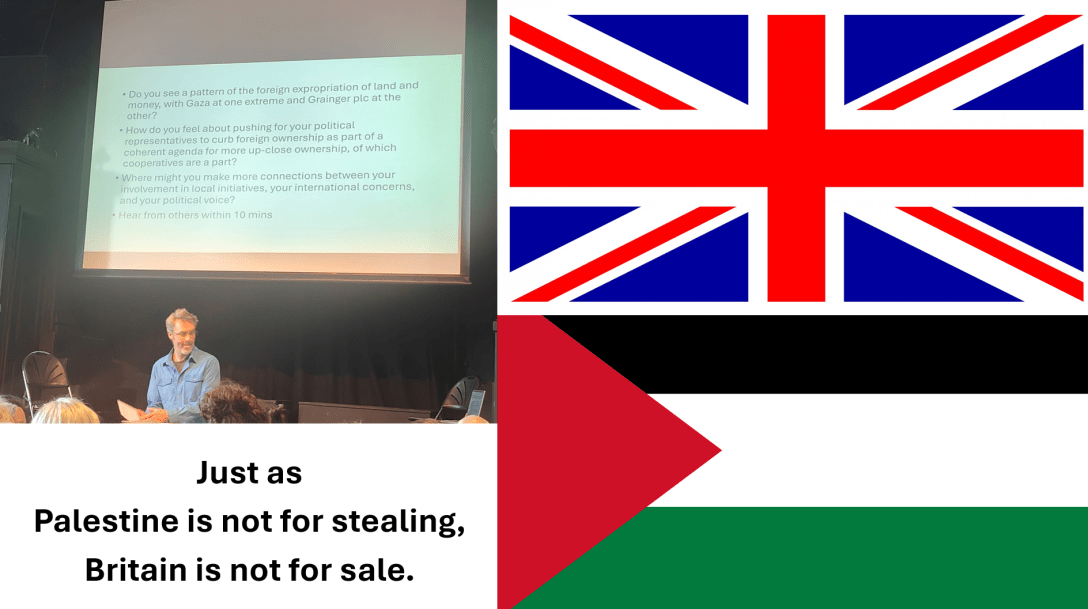
Centering Citizen Ownership: Britain is not for sale and Palestine is not for stealing.

The transcript of a speech delivered in Stroud, UK on 13th Sept 2025, by Professor Jem Bendell.

“Britain’s not for sale and Palestine’s not for stealing – defending and restoring citizenship ownership in the face of collapse.”

I am pleased to be back in ‘The People’s Republic of Stroud’. I first saw that phrase in the background of a talk entitled ‘heading for extinction’ by Gail Bradbrook back in 2018. People in the town of Stroud played a key role in the formation and growth of Extinction Rebellion, which sparked a new wave of environmentalism, bringing wider attention to the climate crisis. I mention that today, as I’m interested in connections between more commonly-owned assets, on the one hand, and a political voice on the other. Only with both of those do we increase the chances of coping better with a creeping collapse of the systems and opportunities we once had.

Today is unusual for me, as I am going to talk about politics. I have never given a speech before that is explicitly about politics. In the first half of 2017, I worked in front line politics with Jeremy Corbyn and his team. I advised on strategic communication, co-wrote speeches, and some of the manifesto. I went on to train some of the current backroom staff for PM Keir Starmer, including Morgan McSweeney. But I have never given a political speech myself. I feel now is the time to do that, because of what’s happening in Britain right now.

Continue reading “Centering Citizen Ownership: Britain is not for sale and Palestine is not for stealing.”

Here’s how we get serious about the awful monetary system

I have been hearing more of my environmentalist friends mention that the monetary and banking systems are driving a metacrisis, where nearly everything is getting worse, nearly everywhere. Like me, they have come to realise that by incentivising endless commodification, debt, and growth, an expansionist monetary system is at the root of so much of what’s going wrong. But most of them are at a loss for what to do about it. Why? Because it’s big, vague, and hard to understand. In my case, it took years of study to feel that I could speak clearly on the subject – finally taking to the TEDx stage in 2011. In the years since then, I met many environmentalists who were so overwhelmed by the topic that they went back to what was familiar to them: fighting plastics, pushing for stricter deforestation laws, or calling for lower carbon footprints. All are important. But if we ignore the expansionist monetary system that drives such harms, amongst others, our situation will only get worse. That’s why it is important that more of us do the ‘hard yards’ in learning about the nature of current monetary systems, what the alternatives are, and how to enable them. That is important, whatever our current assessment on the pace of societal disruption and collapse; although a breaking of old systems can create space for the alternatives. 

The mainstream still needs to wake up to money 

Today, when I look at leading green groups like WWF, Greenpeace, Friends of the Earth, I see that they are still focusing on what we did 20 years ago when I was head of the ‘markets and economic governance’ team at WWF-UK. For instance, they continue to criticise bank loans to oil or mining companies, but rarely mention how money itself is created

Continue reading “Here’s how we get serious about the awful monetary system”

Why Isn’t Organic the Norm in Bali?

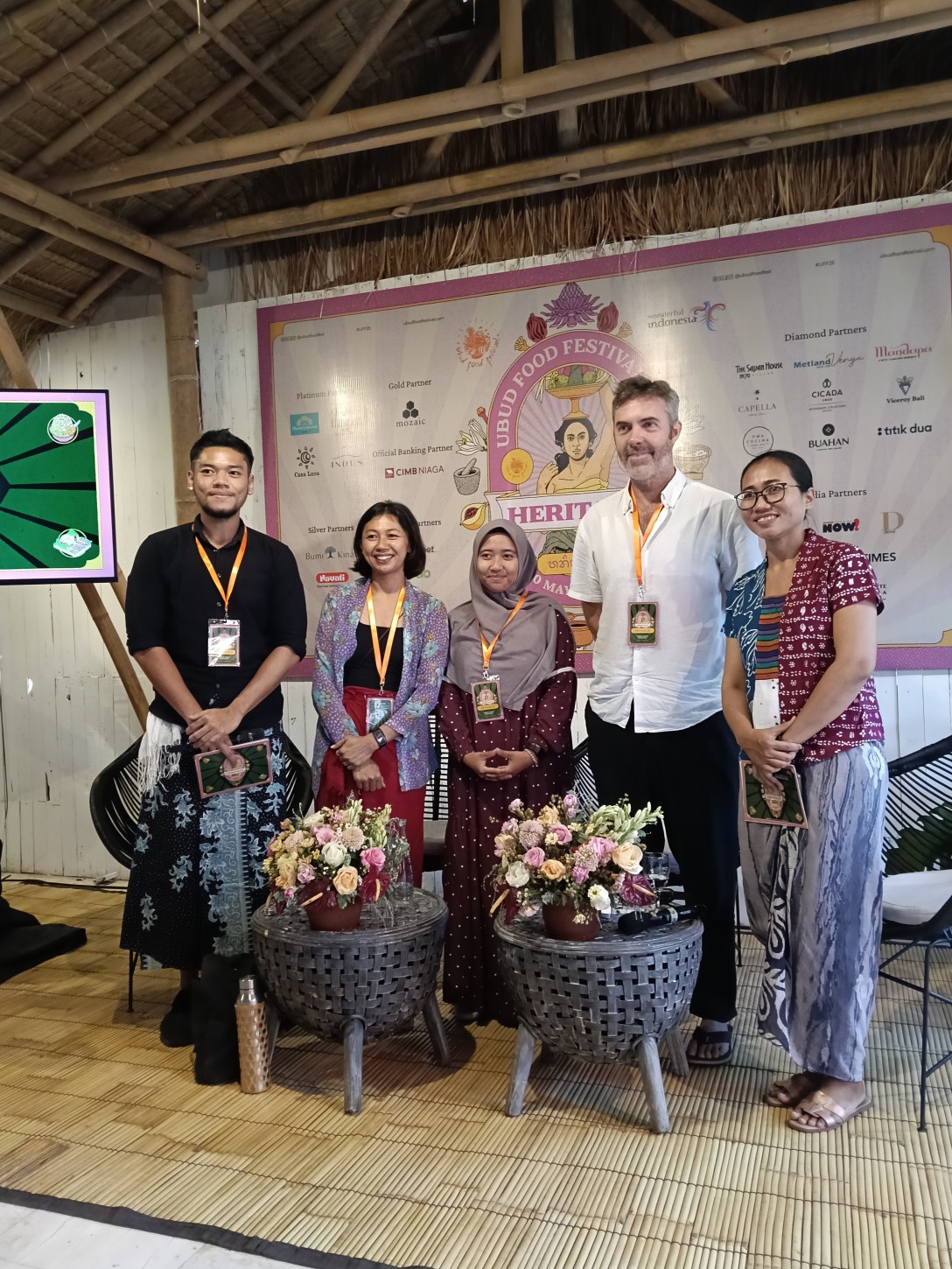
The Ubud Food Festival concluded yesterday here in Bali, Indonesia. I spoke at an event on how to work better with nature to achieve greater food security. I was invited due to my co-founding of an organic farm school, and was pleased to attend as we encourage collaboration amongst restaurants to scale up organic farming. Our crowdfund to help with that is still a few thousand short of the necessary target. In preparation for the event, I drafted some notes on what I’d say. They follow below. If you can support us, please take a moment to contribute. Thx, Jem

It’s a pleasure to be here with you in Ubud — a town that’s become an international symbol of nature-based spirituality, conscious living, and the pursuit of wellness. 

Let me start with a question: How many of you would prefer to eat organic food, that’s food grown without any chemicals? And now — how many of you know that you always eat organic food here in Bali?

Continue reading “Why Isn’t Organic the Norm in Bali?”

The Magic of the Metacrisis

The following is a talk I gave to open the 2nd Alumni Gathering for the course ‘Leading Through Collapse.’ After 7 years we ended teaching the course, but invited the 300+ alumni to gather. The talk is available as a video, and transcript. I touch on some issues about how to remain outward in our focus, and the importance of thinking about what terms might help engage people in the transformative opportunities of accepting our predicament. Thx for watching or reading! Jem

Subscribe / Support / Study / Essays

May 9th 2025, from Indonesia

Collapse is undeniably painful, especially for those directly affected, and it’s difficult to witness when it unfolds. However, within this process, there are spaces of possibility that arise when we stop denying the reality of our situation. A collapse of systems, while disorienting, also makes room for transformation.

In our relative privilege, many of us have been shy to speak about any of these upsides to what is otherwise a tragic situation. But I have come to realise that there could be a benefit for others, not just ourselves, if we are more open about those upsides. Because the way we are transformed can make us more open to others, and help people to recognise that there can be positive ways to live in this era of collapse.

Continue reading “The Magic of the Metacrisis”

How People Get Ready – building the commons in working-class communities is key to collapse preparation.

The one talk that I’m scheduled to give in the UK this year is at the Festival of Commoning in Stroud. My reason for that is my support of what Michel Bauwens describes as cosmolocalism [0] in the face of collapse, and what I term the ‘Great Reclamation’ of our power. It is best explained and illustrated by one of the organisers of the Festival, Dave Darby, in a guest article…

“All civilisations collapse in the end. The Roman Empire is long gone, along with the ancient Greeks, Egyptians and Sumerians. Will the global civilisation of corporate capitalism buck the trend? Of course not, but how long does it have left? In such a complex system, it is impossible to predict when there will be a sudden shift, but there is good evidence that the process of breakdown has already begun. Damage to soils, water tables, forests, the oceans and climate is occurring alongside economic and political upheaval. No longer is this a theoretical matter about the distant future, but something we should be preparing for today. But how? 

Continue reading “How People Get Ready – building the commons in working-class communities is key to collapse preparation.”

Holding Space for Strong Emotions

“I wanted to punch the guy, but when I realised I couldn’t do that, I just switched off.”

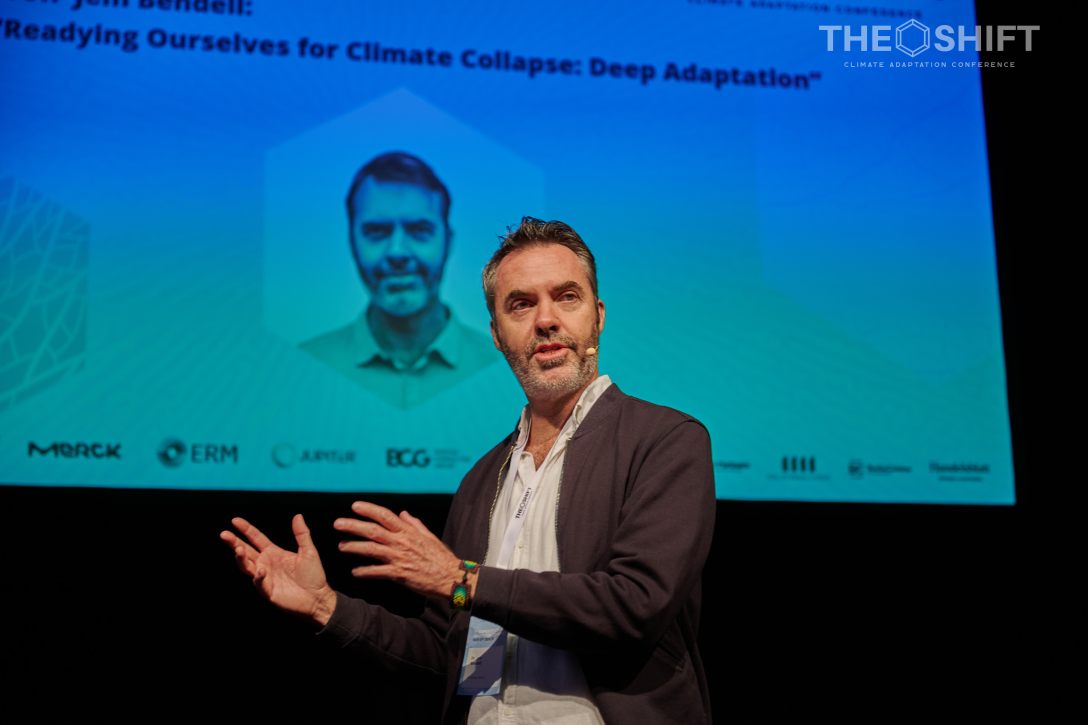
This was certainly a new kind of response to giving a speech. I’d just left the stage at a conference on adaptation to climate change, and was surrounded by people wanting to exchange a few words and contact details. “You really stimulated the audience, as we hoped you would,” one of the organisers said, smiling as he told me of the guy who liked my views so much that he wanted me to connect with his knuckles.

I’d already heard enthusiastic praise from another organiser, so I reacted to the negative feedback in dismissive fashion. “Anger is a way of responding to difficult information, situations and emotions. It gets us out of fear,” is more or less what I said. I continued with my mini lecture by saying “Fight or freeze are two normal responses to fear. It’s why I talked about the benefit of getting better with allowing, witnessing and working through difficult emotions. It’s also why we must recognise so much of our conversation in professional circles is to avoid conflict and emotional difficulty, using convenient narratives, that stop us from facing reality.” This all tripped off my tongue because being intellectual and slightly combative is my go-to response when under threat. However, I’m writing this essay because I was on the cusp of noticing that go-to response, and chose a different way to engage when experiencing conflict. If you also navigate strong emotions about the state of our world, I hope the following thoughts may be of use.

Continue reading “Holding Space for Strong Emotions”

The Freedom in Truth – launching ‘Cayendo Juntos’

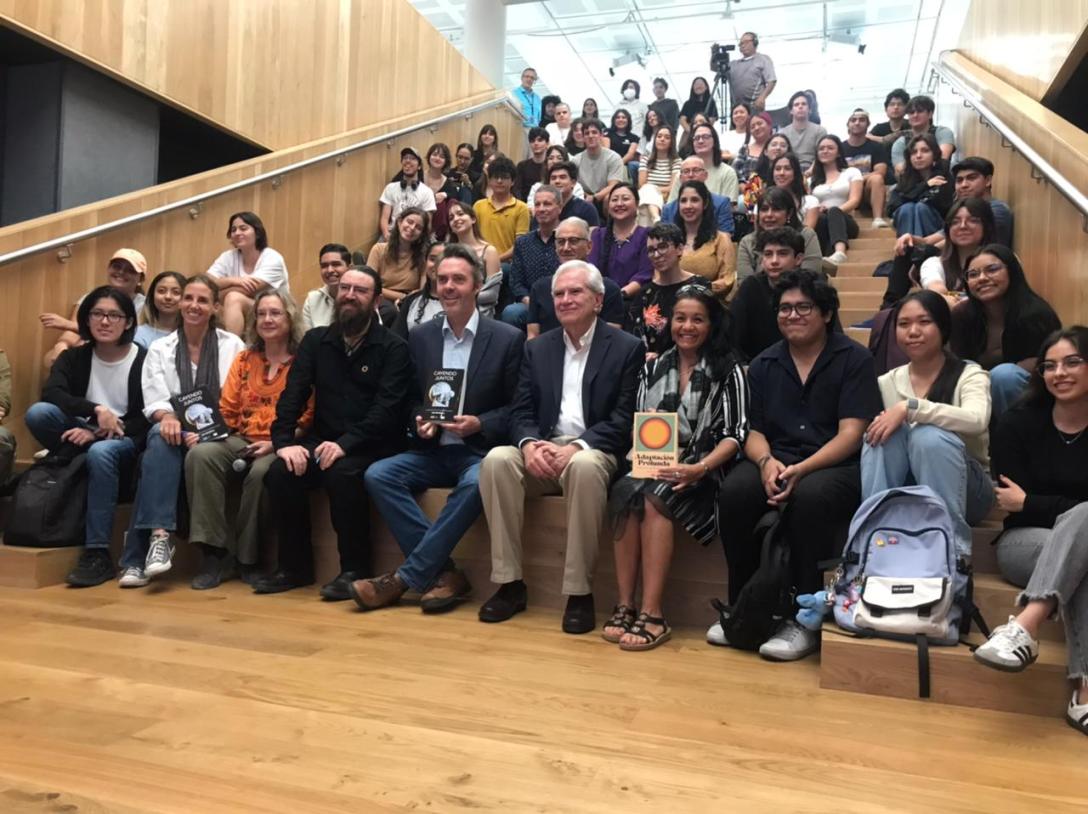
Transcript of speech given at the Monterrey Book Festival (Feria Internacional del Libro Monterrey), Mexico, 6th October 2024, to launch Cayendo Juntos, the Spanish edition of Breaking Together.

I am pleased to have reached you here in Monterrey just before the close of this remarkable event – one of the largest book fairs in the world. It is probably best that I was kept back until the final day, so that I wouldn’t spoil the mood of your previous days here. Because what I am going to talk about is not very fun. In fact, it is so heavy that I don’t talk about it much in public. But coming to Mexico felt important to me. That’s because I believe that Latin America, more generally, can play a significant role in softening the collapse of modern societies around the world. Three different areas of wisdom and struggle from this region offer signposts for how our human race might cope with the consequences of having overshot planetary limits and poisoned our living home. Those traditions are liberation theology, anti-imperialism, and indigenous cultures. So I’m honoured to be invited to offer my own ideas into your rich mix of intellectual traditions in Latin America.

For over 30 years this event has showcased a breadth of ideas in the Spanish language. Both fiction and non-fiction. I believe that is still a valid distinction, is it not? I know some people do wonder. I saw a sign in a bookshop that they had moved their apocalyptic fiction books into their current affairs section. Maybe one day they’ll move their current affairs books into the section for apocalyptic fiction.  

Continue reading “The Freedom in Truth – launching ‘Cayendo Juntos’”

The Nine Lies of the Fake Green Fairytale

Essay shared to coincide with my speech at the 2024 Festival of Dangerous Ideas.

Self-deception is rife within the environmental profession and movement. Some denial or disavowal is not surprising, due to how upsetting it is to focus on an unfolding tragedy. But our vulnerability to self-deception has been hijacked by the self interests of the rich and powerful, to spin a ‘fake green fairytale’. Their story distracts us from the truth of the damage done, that to come, and what our options might be. Indeed, their fairytale prevents us from rebelling to try to make this a fairer disaster, or a more gentle and just collapse of the societies we live in. Averting wider rebellion might be why the fairytale receives loads of funding for books, awards, feature articles and documentaries, as well as videos for popular YouTube channels. That’s why, like me, you might not have realised for years that it is a fairytale. In this essay I will explain the nine lies that comprise this ‘fake green fairytale’ before explaining how much damage is being done to both people and planet from the dominance of this story within contemporary environmentalism.

Continue reading “The Nine Lies of the Fake Green Fairytale”