Latest

What has Wikileaks got to do with sustainability?

People working on the environment, human rights, and social progress have not always had an easy relationship. The idea of “sustainable development” that first became popular 20 years ago was meant to bring them together. Instead, it has enabled an obsession with profit making to creep into thinking and practice in most areas of environment, rights and social progress. On the positive side, that has led to business and banks engaging with these issues more than they might otherwise – something Ive been involved in for the last decades. But what might have been lost in that process?

A speech on rights and media freedoms was the keynote at a festival to celebrate what an amazing future we have ahead of us if we embrace the transition to sustainability. In Sweden, at FuturePerfect, Wikileak’s editor in chief, Julian Assange, delivered a recorded speech from the Embassy where he has been given asylum by Ecuador.
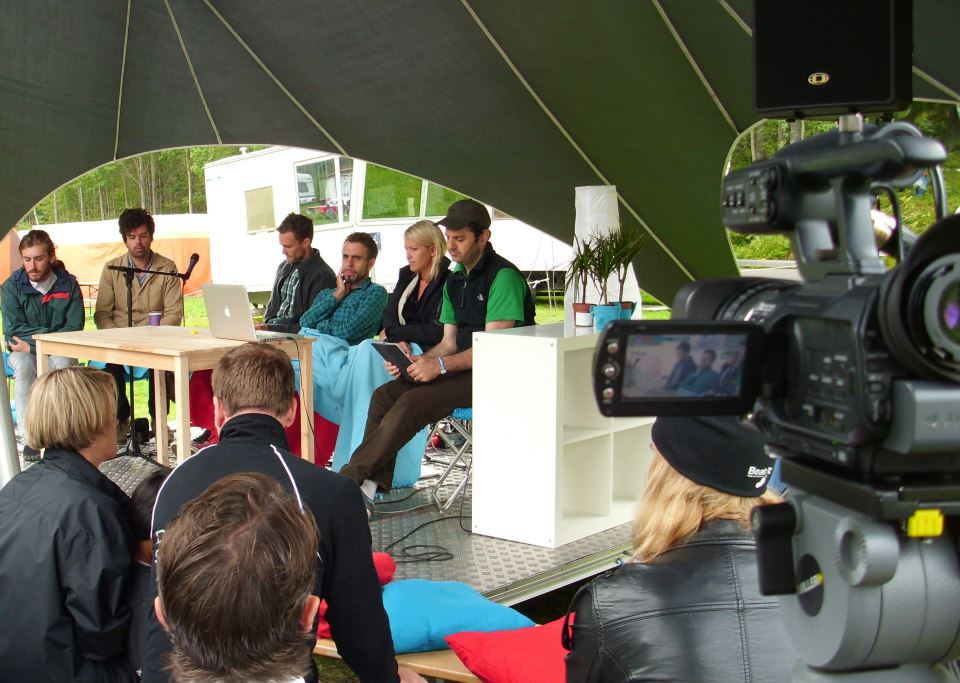
SBS TV focuses in on laptop as Assange audio address played at FuturePerfect Festival

What has Wikileaks got to do with sustainability? Here are some highlights from the talk, and some reflections on what they mean for the “sustainability profession”, by which I mean those of us who have day jobs working on the social and environmental aspects of business, finance and economy.

Assange believes free media is critical to us understanding our society and what challenges we face. Thats key to enough people organising to promote sustainability:

“there is no civilisation, there is no society without media. That is: let’s take away all media, let’s take away all mediums, let’s take away all ability for humans beings to communicate with each other in the present and also it will learn from past experiences to teach the future. If there is no communication between people, if every person is entirely isolated like a tree in a forest, then clearly there is no civilisation and there is no society.”

“With the best possible communication, with the best possible ability to learn from our experiences, we have a chance of not simply doing the dumb thing. We have a chance of being more civilised to each other, we have a chance of avoiding pitfalls that have been discovered in the past.”

He also explains that our media is now so controlled by incumbent interests, that it marginalises critique, or those who want to see a transformation in society, such as towards a more sustainable one:

“Now the [corporate] media insofar as it is successful and is profitable and widely distributed, as an industrial body is inherently corrupt. And to understand where the corruption comes from, first of all see that an industrial body, an organisation that becomes powerful in influencing others, is able to manufacture consent and suppress dissent. As a result, the people who work within it, and those proprietors who own it, are invited to sit down at the table of power and are given certain concessions in their life and their business practices. They thereby become part of the very establishment that they are meant to be policing.”

The internet provides us with an opportunity to communicate and better understand our common predicaments, but not one that isnt being counter-acted by the amount of content produced by mainstream media:

“it is clear that most of the mainstream media outlets in Sweden are able to publish a truthful article on even perhaps the most controversial issues. But what they cannot do is show any sign of an institutional agenda to do so. They cannot publish in volume on those issues. Of course, when we are dealing with politics, we are dealing with perceptions en masse. And perceptions en masse are affected by communications en masse. It is not enough to simply reveal the truth in one isolated article or one isolated tweet; what is important is to have the truth revealed en masse, where people can see it en masse and where opinions can be affected en masse.”

The answer, Assange says, is therefore for all of us, in our personal and professional lives, to become engaged in developing and scaling up alternative media. Many people working on sustainability are working towards a better future, and can sometimes forget that may be taking for granted existing hard one freedoms and situations. Assange reminded participants at the conference of the situation facing many people today:

“We face a choice of  whether we can have something not just for our grandchildren but even  something for ourselves,” he noted. “We are rapidly approaching continuous war, in fact most of the Western countries have now been involved in war over 10 years and are being
increasingly involved. We see a tremendous increase in the size of intelligence agencies; the border between police and military is starting  to collapse, with the weaponisation of police; increasing amount of body armour that police have. Across the world we see a collapse in the rule of law, politicised and arbitrary justice, with U.S. assassination lists approved by the President in secret with no due process; the continued  detention without charge of children in Guantanamo Bay for over 10 years with no prospect of release.Mass surveillance being introduced into every country with no effective oversight by the population.  The linking up of international companies and networks of influential people of the banking people, all these people lifting up the democratic and electoral control of their respective population bases.”

In the past decades “sustainability” has become a profession, with people working in business, government and civil society on various aspects of the agenda. It is useful therefore, to be reminded of the insights of those who are activists, people who take personal risks and do not have to worry about their employer or client.

“We face a serious global crisis, so we must understand that this is not a choice about doing the right thing, this is not a choice about whether we
appear to be moral, this is not a choice about whether we make friends, or are approved as an effective member of society. We face a choice of whether we will have a civilisation that is civil or not.”

So what should sustainability folk do?

“first of all we must understand the problem, we must understand the severity of the problem, we must tell the others the severity of the problem, we must explain that it is not a choice, that is not something we could get out of, that there is a very real chance of a global technological and political dystopia appearing…”

Thats an useful reminder of speaking it as you see it, rather than worrying about how to frame your message in a positive tone that will help sell some products or votes.

“Then we must link together with people with a similar understanding, we must invent new technological means to fight fire with our own form of fire, we must have absolute unity and determination in the response. If we look back at the previous resistance struggles, similar phenomenon that occurred in the past, that is what has held the day in the end. Unity, determination, understanding and creativity, looking for every possible venue where the forces of darkness can be held back, that is the only way that we are all going to survive that ongoing threat that is against everyone.”

So what has Wikileaks got to do with sustainability?

In a field in Sweden, I learned that we should, sometimes, ditch our silos, labels, and professional affiliations in order to get a better sense of the interconnected causes of the various problems we face. If sustainable development is to be a true integration of social, enviornmental and economic priorities, then we need to lose the blinkers that our desire for an easy life have given us.

You can hear the speech or visit the organisers of FuturePerfect to see more about this great festival project. Im proud to have been associated with the organising of it, and look forward to more conversations and celebrations of how to be fully awake, connected and hopeful in our work at these critical times.

Elegant Disruption

Just over five years ago I began working on the luxury industry.  I thought, why cant these elite brands not excel in social and environmental performance? I researched, wrote and produced the report Deeper Luxury for WWF-UK, and it triggered a bit of a furore in the fashion press and wider luxury industry (about 8000 sites now link to the report). 5 years on, I’ve helped some luxury companies with their social and environmental impacts. But I havent seen much change. Some large firms like PPR have embraced the agenda, although we wait in anticipation for more results, in terms of positive social and environmental outcomes. In the 5 years, what inspired me the most were the entrepreneurs I met. People who were creating businesses to address social and environmental problems, and targetting the luxury segment as a way to do that. I began to realise something might be in this – that these entrepreneurs might be shaping the future of luxury, and that they might be revealing a new way we can engage in social change. In the new study, I profile sustainable luxury firms Elvis and Kresse, Tesla Motors, Shokay, Source4Style, Rags2Riches, Positive Luxury, Timothy Han and Nue Luxe… It’s called “Elegant Disruption: How luxury and society can shape each-other for good”. It took about a year to write, as it involved a lot of conversations to understand just what the potential of luxury might be to influence social change. Ill be presenting it at conferences in Brisbane and Barcelona in the coming weeks.Elegant Disruption

Abstract, August 2012.

From http://www.griffith.edu.au/business-government/asia-pacific-centre-for-sustainable-enterprise/publications/working-paper-series/issue-9
This paper outlines the contemporary luxury sector, showing it is global, thriving and influential. It shows how creative destruction is typical in most industry sectors, including luxury, and how disruptive innovation by entrepreneurs is key to that process. It proposes that the current time is potentially disruptive for incumbent luxury brands and groups, due to five key trends that are beginning to re-frame the markets that luxury brands sell to. Sustainable luxury entrepreneurs from USA, UK, Philippines, India, Argentina, China and Hong Kong are profiled and described as  pursuing “elegant disruption”: a well-designed intervention in markets that both uses and affects aspirations in ways that change patterns of consumption, production or exchange, for a positive societal outcome. The paper reviews the response of mainstream luxury brands to the sustainability agenda, proposing some possible reasons why they appear to be encumbered in embracing this agenda fully. Some of the paradoxes in the notion of “sustainable luxury” are described, in order to draw implications for both the luxury industry and people interested in positive social change. The paper draws upon the authors five years of interaction with the luxury industry on sustainability issues, and is therefore written as a “first person inquiry” and draws upon principles of “appreciative inquiry” in documenting the breakthrough approaches of some sustainable luxury entrepreneurs.

Download PDF (3.1 MB)

Join some meaningful fun in Crete

View from ESA
View from the Academy

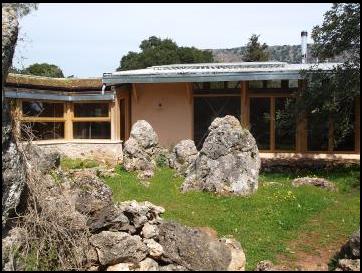
An important milestone arrives in October – my 40th. I’ll be in Crete, where friends in the field of sustainability have created a unique place for experiential learning about sustainable enterprise and living. Lovely people doing great things across Europe will come together for the ‘end of summit’ party, and my birthday, in true Cretan style with lots of tasty local food with far too much wine and raki accompanied by raucous Cretan music and dancing!

Would you like to join us in a stunning state of the art eco-building in an ancient Cretan olive grove with 2000m snow capped mountain backdrop? I would be chuffed if you did.

Outside the Academy
Outside the Academy

My birthday, Friday 12th October, will be the final day of the Inaugural Summit of the European Sustainability Academy (ESA). So, if you are interested in sustainability or social change, then you would enjoy arriving earlier in the week for some of the courses and events. And especially if you are inquisitive about wellness practices, such as Yoga or Qi Gong, which will occur at various times that week. Then on Saturday 13th October there is an organised tour of local eco-enterprises and a boat trip.

Nearby Almyrida
Nearby Almyrida

The party will be happening at Liberta Villas, 2km from ESA in the village of Palaloni. I’m promised its an exquisite location with a stunning 2600m mountain backdrop. ESA is on the edge of the village of Drapanos. Liberta has some accommodation, as do the two villages, and there is still more at the nearby beach town of Almyrida (email Sharon for info: Sharon.Jackson at eurosustainability.org).

Liberta Villas
Liberta Villas

I hear that in Greece right now there is an exciting air of change and thirst for new ideas and innovations. On the 10th I will co-lead a seminar with Matthew Slater of CommunityForge.net on creating and participating in alternative exchange systems and community currencies. We will be joined by Greeks who are pioneering these solutions to the current crisis. On the 11th I will support my Lifeworth colleague Ian Doyle in leading the now-famous ‘Giving Voice to Values’ training, which helps us to understand our values and express them in difficult situations. On the morning of the 12th there will be a ‘sustainability leadership’ round-table involving some Young Global Leaders of the World Economic Forum. Then Eva Voutsaki, from Crete, will guide us through a process of developing autobiographic narratives for clarifying our personal goals, and Ed Gillespie, from Futerra, will helps us explore the importance of authenticity in our communications. Greek pioneers of sustainable enterprise and lifestyles will also be attending during the second week of the summit (which starts Oct 8th).

Inside ESA
Inside ESA

The programme will be uploaded and updated soon at www.EuroSustainability.org. The nearest airport is Chania, and Heraklion is an hour and a half away: www.whichbudget.com and www.skyscanner.net are places to find out routes. At least one guest is coming by ferry and trains. See http://www.loco2.com/ or ask me for info on overland/sea transport (as you could travel with other sustainability adventurers).

ESA opening
ESA opening

There’s no cost for attendance on the 12th or for the party. No presents either, please. Just support something local if you want to (we’ll come up with ideas). If you want to come earlier in the week for some of the events, which makes total sense, or even the full 2 week sustainability summit (what a treat!), then please email Sharon Jackson about details and fees: Sharon.Jackson at eurosustainability.org As the academy building isnt huge, and transport is cheaper if booked earlier, you should go for it now!

I do hope you can come and help me celebrate in a meaningful way.

The address:

European Sustainability Academy
Jackson A.S, Drapanos, 73008 Vamos, Chania.
http://www.EuroSustainability.org
Inaugural Sustainability Summit
2nd October – 14th October 2012

The address of my party on the 12th:
http://www.libertavillas.gr/

Award for Outstanding Paper 2012 on Scaling CSR Standards

Yesterday I was awarded a prize by Emerald publishers for Outstanding Paper 2012. Here is my recollection of I said during the cocktail party at the EABIS colloquium, IMD, Lausanne, July 3rd, 2012 (minus the dirty joke).

Getting grips with the mic before remarks at EABIS/IMD
Thank you for the Outstanding Paper award 2012. The paper is about mainstreaming innovations in sustainable and responsible business; about ways governments can help to scale up positive innovations. In the aftermath of the Rio conference, talking about progress in government policy could seem rather naïve. However, this paper shows what some governments are already doing with innovative policies to scale voluntary initiatives. Since the first Rio summit 20 years ago businesses and NGOs have worked together to create innovative certification systems. They are widespread, but they are not mainstream. For instance, the certification system of the Forest Stewardship Council, which was the focus of my very first job after leaving university, now accounts for about 11% of the world’s trade in wood and wood products. That is great, but it also means that 89% of wood products could come from trashed forests. Some governments, from all continents of the world, have been adopting innovative policies to help scale such voluntary initiatives, to achieve public goals. We present a typology of those policies.

The paper grew out of a UNCTAD study I worked on, which also informed the G20 discussions on greening international trade. So I thank my colleagues at UNCTAD who are coauthors of the paper. The support from Griffith helped me to re-purpose the research and set it in a wider context to share with academe. My research has always been shaped by what I considered relevant to change, whether in policy or practice. I haven’t always been able to have it published academically, and have previously been rejected for being too interdisciplinary. So I’m grateful for this new journal and the accolade from Emerald publishers. I supports the notion that theory should be the servant, not master, of our inquiry, and that disciplines should be our foundations, not cages.

The Outstanding Paper 2012 is available for free download for another month:

http://www.emeraldinsight.com/authors/literati/awards.htm?year=2012&journal=sampj

Jem Bendell, Anthony Miller, Katharina Wortmann, (2011),”Public policies for scaling corporate responsibility standards: Expanding collaborative governance for sustainable development”, Sustainability Accounting, Management and Policy Journal, Vol. 2 Iss: 2 pp. 263 – 293

The answer to financial chaos lies on an island in Sweden

The financial crisis is actually a monetary crisis, and you can do something about it now.

On an island next to Stockholm, leaders in systemic solutions to financial chaos are gathering at a sustainability festival. Join them at the Future Perfect festival in Stockholm on 23-26 August, and hear a panel on monetary reforms and innovations for sustainability, and a workshop for executives who want to start, scale or participate in alternative means of exchange.

Panel: “Currencies of Transition: monetary reforms and innovations for sustainability.”

Chair: Professor Jem Bendell (Lifeworth Consulting, Community Forge and Griffith Business School)

Ben Dyson, director of Positive Money, which campaigns for a systemic solution to monetary crises, by full reserve banking.

Josh Ryan Collins, New Economics Foundation, the Brixton Pound and co-author of “Where does money come from?”

Lynnea Bylund, Board Member, Ormita, the international business barter network.

Matthew Slater, Board Member, Community Forge, a leading provider of open source software for community currencies, and editor of Community Currency magazine.

The panel will address the questions: Is a fair and sustainable economy possible with our debt-driven money system? If not, what needs to change? What is being done already? What can we do to get involved, personally and professionally? How can we make this a movement? What mistakes can we avoid?

Workshop: “How alternative exchange systems work and how to get started”

Trainers: Professor Jem Bendell and Matthew Slater

The trainers work with Community Forge, which provides free open source software for community currencies. This video explains why, what and how Community Forge operates.

You will be able to interact with these experts and others attracted to the topic, at a world class music festival! To book your tickets to the festival, visit http://www.futureperfect.se

The workshop will also be offered in Greece in the second week of October. Contact the European Sustainability Academy for more information.

Fixing the Global Jobs Crisis: time to leave assumptions behind

Mass unemployment is becoming a headache for all world leaders. At the World Economic Forums (WEF) in Davos, Bangkok and Istanbul, people were talking about how to address growing unemployment.

To find real solutions to this global jobs crisis we need to be clear on the cause of the problem. Some of the conversations I heard at the WEF revealed widely shared yet questionable assumptions about key causes of unemployment. The key myths are, as follows:

Myth 1: “Unemployment is due to falling demand.”

Are people’s needs really falling? Or just the amount of money in circulation to employ people/assets to meet those needs?

Myth 2: “Unemployment is due to technology displacing human labour.”

Could we not design systems of ownership and revenue distribution so that the income from technology frees us to work creatively and caringly for each other? How can we govern technology to release us to a world of service, not a life of redundancy?

Myth 3: “Unemployment is due to the cost of hiring and firing.”

Why then do some countries with high wages and labour standards, like Scandinavia, have less % unemployment? Where would competition between nations to lower costs of hiring and firing lead us?

Myth 4: “Unemployment is due to a lack of skills and appetite for the new types of work.”

The world has more skilled labour than ever before, and more labour mobility than ever before, and many people with Masters degrees can’t get a job.

Myth 5: “Unemployment is due to the option to claim benefits.”

Why then was the existence of benefits not keeping people out of the workforce before the recession? Why do some countries with the most supportive welfare states, like Scandinavia, have less % unemployment?

These assumptions may arise from a general lack of understanding about the first key function of a currency, which is to help connect assets, including people’s time, with needs. If a currency becomes scarce in an economy, then there is less ability for exchange. That means needs go unmet, and assets go underutilised. Its called unemployment.

I recorded a short interview for the social media corner of WEF in Istanbul to explain where we need to start looking for real solutions to the global jobs crisis.

Job Creation Without Austerity or Debt

In the face of financial crisis and mass unemployment, do you believe we have to choose between either austerity or debt-funded economic growth? Its a false choice, based on false assumptions. My video-keynote at a forthcoming conference in Denmark, explains how we can achieve job creation without austerity or more debt, by redesigning our monetary systems.

If you are near Denmark, go join the conversation at Rebuild21.

Want to learn more? Access more materials.

Collaborative Consumption and Beyond

Do you have a car pool at work? Car-sharing revenues in North America have been predicted to reach US$3.3 billion by 2016. There are many start-ups in this field, including Zipcar, which floated last year for US $174M. Enabling the more efficient exchange and sharing of products and services, in order to increase human well-being while reducing the consumption of natural resources, is a key dimension to the sustainability transition. The increasing penetration of the internet means new systems of exchanging and sharing products and services, are growing, in many areas. Facebook’s CEO has even emphasised the potential for developing new sharing enterprises as key to its future financial success, after floatation.

These developments in “collaborative consumption” bring a new dimension to the existing forms of alternative exchange systems, such as business barter networks or countertrade agreements, and community currency systems that help connect underused assets with unmet needs. Countertrade accounts for around 20% of world trade, while one national barter network now involves 1 in 5 small or medium sized companies in Switzerland, amounting to over US$1.5 billion a year. The new sphere of peer-to-peer financial-lending has taken off, and predicted to reach US$5 billion next year. It appears to be a time of disruptive innovation through new forms of sharing, exchanging, renting and co-owning.

Some of these activities are important to sustainable development, and, therefore, to the broad field of responsible enterprise (whether we label our work corporate social responsibility, sustainable business, social enterprise, shared value, responsible or impact investment, or some other term). For business executives to contribute to a positive sustainability outcome from these developments requires enhanced understanding of how to explore ways to become involved, including by adapting their own business models.

Which means there is an educational need, for those of us interested in enabling the sustainability transition. Lifeworth Consulting is conducting research on these developments, for presentation in July at the EABIS colloquium at IMD (in Lausanne), and in September at the Necessary Transition conference at GBS (in Brisbane). So, if you are currently employed, and would like to receive the results of this research, please participate in our 5 minute survey, it would really help:

http://www.lifeworth.com/survey-responsible-enterprise-collaborative-consumption

Please, click that link!

Thanks, Jem Bendell

Lifeworth founder and Adjunct Professor @ GBS

The Part of NO That Anglo Could Understand

Ten environmental groups recently took out a full page ad in the Financial Times and the New York Times, against the plans of Anglo American and Rio Tinto to mine in Bristol Bay, Alaska. The title went “Anglo American and Rio Tinto: what part of NO don’t you understand?”

I think the answer to that question is quite simple: Many senior managers in the company, and their shareholders, don’t understand the part of “NO” that doesn’t affect their bottom line. To be heard, “NO” needs to affect the bottom line. So, to help the more ethical staff in these companies win arguments in headoffice, there needs to be a clearer threat to the mining companies’ bottom line. So, here is how to do it….

Stop Pebble Advert
Stop Pebble Advert appearing in FT and NYT

Anglo American is not susceptible to public pressure in the way that a famous consumer brand could be. But since November last year, Anglo American became the majority shareholder in De Beers. This famous diamond company is not, in most countries, a famous consumer-facing brand. However, it is fast becoming a consumer brand in Asia. De Beers has partnered with the luxury group LVMH to develop the De Beers brand as standing for prestigious high quality, and is opening 6 stores this year in China. Although the United States is still the world’s largest diamond jewellery consumer, by 2015 it will be overtaken by China, India and the Gulf. Interestingly, recent market research shows that wealthy consumers in China are concerned about the environment and beginning to make connections to their purchasing. In Japan such concern, and associated consumer behaviour, is even higher.

Would it be right to tarnish De Beers in China with the activities of its parent company? And would it be effective?

Compared to other diamond companies, De Beers is doing a lot on its social and environmental impacts, particularly with the Forevermark diamonds that are traced to mines that are meant to abide by basic social and environmental standards. And in Bristol Bay, the mining companies are after copper, not diamonds. However, De Beers is effectively now Anglo American. And De Beers is a major profit centre for Anglo American, which makes it easier for Anglo to fund new projects like the Pebble Mine. If De Beers does well, Anglo does well, and thus Anglo can do what it wants in Bristol Bay and elsewhere.

Over many years during the campaign against Nestle, people didnt want to buy a Kit Kat from a company that marketed milk powder to mothers with only dirty water to mix it to feed their babies. Kit Kats didnt kill babies. But babies were dying from the way the products of the same firm were being used.

So, might people not want to mark something as beautiful as their engagement with a ring that co-finances ugly destruction?

We don’t know if such a campaign would be effective, but it would make the campaigners’ criticisms more relevant to the board.

So, Bristol Bay campaigners, I reckon you should drop the ads in the New York Times and Financial Times. Instead, engage the elite social networks in Shanghai and Beijing, or start a viral campaign on QQ, and other networks in China… get famous Chinese film stars to quit their LVMH promotional contracts in protest at the potential destruction.

In this strange new globalised world, even some Chinese consumers may come to the rescue of the Alaskan environment, as ultimately, we share one global environment. We should not assume people won’t care, and instead provide them opportunities to express themselves. In the end, the sustainability of the planet will depend more on Asian middle classes being concerned about the impacts of their consumption and savings on the world at large, than it will depend on the traditional Western middle class targets for ethical campaigning.

More on the campaigns:
http://www.savebristolbay.org/
http://www.stoppebble.org/

More on the issue of responsible jewellery: http://www.lifeworth.com/consult/2011/06/uplifting/

You have to go to this festival

Am stoked to be speaking at the world’s best sustainability festival this summer in Sweden. Once you go, you wont want to go to conferences again… and music festivals might even seem a bit has-been!

What’s Future Perfect Festival?

World-leaders in sustainable enterprise, science, design, media and more; at a world-class summer music festival; with high-quality health and well-being experiences; using creative and collaborative facilitation; enabling personal action and social enterprise. FuturePerfect Festival 2012 rises from the water on 23-26 August, at Lillsved, on the island of Värmdö in the Stockholm archipelago, Sweden. Pack your paddles, dancing shoes, sunglasses and dreams for three incredible days and nights of inspiration, creativity, exchange, passion, and relaxation offering. This is for professionals and public, young and old, individuals and group, it’s the next stage of the conversation on living well without compromise – a celebration of potential and practical change. Lifeworth is pleased to be participating in making FuturePerfect.

Check it out at http://2012.futureperfect.se/

Or see last years, to get a better sense of how the programme is going to develop:
http://2011.futureperfect.se/

Get your organisation to send a group of you… its great inspiration.