Latest

Opinion about Business will reach a ‘Tipping Point’ Worldwide

Hi Blog subscribers, Im sending you a sneak preview of what Lifeworth are publishing on wednesday…

LW Logo B&W

Interest in ‘Moral Markets’ Significant, says Review of Global Business Trends.

People’s deepest assumptions about both business and work could be changing in cities around the world, with major implications for future competitiveness. A more subtle shift than the widely reported growth in entrepreneurialism across Asia, it is nonetheless significant. It is a shift towards moral markets. This is the suggestion from Lifeworth’s 6th Annual Review of Corporate Responsibility, published today.

In the foreword, Professor Michael Powell explains how “the dominant paradigm for business success is changing to recognize the absolute necessity of social and environmental sustainability in tandem with financial viability.” Dean and Pro Vice Chancellor of Griffith Business School, Professor Powell is leading the Australian university’s effort to play a leading role in this new approach to business in the Asia Pacific region.

The Review argues this shift is partly the result of changes in technology and industry that are leading to greater ‘work-life blending’ which erode barriers between what we aspire to in our lives, who we work for and what we work towards. It is also the result of growing awareness of the scale, urgency and depth of the challenge posed by climate change. “Last year views on Climate Change ‘tipped’ in much of the Western world,” explains lead author of the review, Dr Jem Bendell. “It used to be a nerdy issue of scientific interest and environmental concern. Now it is a personal issue, of political interest and humanitarian concern.”

The Review, entitled ‘Tipping Frames’, introduces a strategic model for people working on social change, which combines the concept of a ‘Tipping Point’, involving the rapid dissemination of ideas, with that of ‘Cognitive Frames’, involving the assumptions and ideas triggered by key words and terms. Other frames identified as on the verge of tipping concern finance and international development.

A plethora of initiatives such as The Marathon Club, Enhanced Analytics Initiative (EAI) and UN Principles for Responsible Investment (UNPRI) are reshaping what finance professionals understand as material and relevant to their fiduciary duty. Also important is the emergence of a positive connotation to the environmental challenge of consumption. As the social and environmental impacts of economic growth intensify, new visions of sustainable development may be emerging in China and India. As Rajesh Sehgal, Senior Law & Policy Officer at WWF-India explains in the Review, “Indian companies can become leading exporters of and investors in sustainable goods and services, whilst emerging as key actors in promoting a proactive international sustainable development agenda.” Whether this will lead to a tipping point in the way Asian nations generally view and pursue ‘development’ is currently unknown. A counter process of reframing has been underway for sometime, with the shift to individualism and materialism most clearly illustrated in 2006 by the economic boom in Vietnam, which is chronicled in the Review.

Therefore Dr Bendell argues that “although important, the trend towards moral markets is not the dominant one in many parts of the world, such as the rapidly emerging countries. If we want to end poverty and protect the planet we must make it the decisive trend. Although we can’t legislate for personal morals, we can legislate to create market frameworks, enabling conditions and incentives that support moral behaviour.”

Bendell suggests business leaders should both track and become involved in progressive changes in cognitive frames, for strategic reasons. “Changes in basic assumptions about the nature and purpose of business and work will have major knock on effects for the behaviour of consumers, staff, investors and regulators.” Consequently he calls for more research and analysis of these assumptions in societies around the world.

The Lifeworth Review “illustrates well how many assumptions and values in society are shifting as the scale and urgency of the challenges we face finally sinks in,” concludes Professor Powell.

Publisher information:

Incorporating trends analysis from the leading academic journal in its field, ‘The Journal of Corporate Citizenship’ the Review is sponsored by Griffith Business School and the International Centre for Corporate Social Responsibility at the University of Nottingham. It is published by the professional services firm Lifeworth, in association with Greenleaf Publishing, both of whom specialise in organisational responsibility, accountability and sustainability.

‘Tipping Frames: The Lifeworth Review of 2006’ can be downloaded for free at www.lifeworth.net from March 28th 2007.
The ideas in the introduction are in development… what do you think of the model?

If I can Make it There (by video), I’ll make it Anywhere…

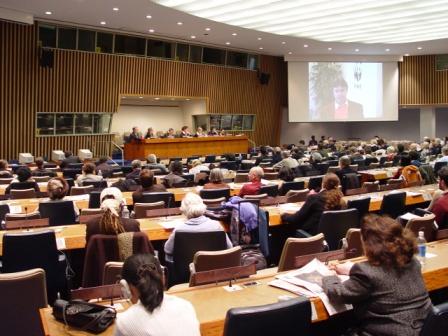
I’ve never been to New York. I even lived in America, but never made it to the 2nd largest financial centre in the world (London rules). So an invitation to launch my new UN report at the UN HQ was great. Kinda. I had just been in the pub with a colleague from WWF talking about climate change and his concerns about flying. It’s the fastest growing form of carbon pollution, and by making it far easier to whiz around great distances it means we maintain personal and work relations over greater distances… and so lock ourselves into a new pattern of pollution. Argh! I couldn’t go and launch my book on ‘NGO accountability’ and in the process add more crap into the atmosphere… I’m working with WWF, for God’s sake.

UN Launch

Already at +0.6 degrees, human-caused Climate Change is causing water and food shortages, increased storm damage, and river bank erosion, leading to millions more refugees. Hundreds of thousands of plants and animals are now under threat of extinction. Scientists say we have to keep climate change below 2 degrees otherwise it will go beyond our control. That will require a halving of global carbon emissions in the next 2 decades, which means that people like us (presuming you are in the consumer class) have to cut our emissions by over 2 thirds right now.

Yes, that’s unlikely. Especially when much of our emissions come from products from companies whose actions we don’t directly control. Which means our current form of civilisation is unlikely to see out this century. So why bother? Two reasons. First, we have to try, and if we slow the pace of damage the suffering will be less. Second, because I want us to be worth saving. There are various sides to the human character, we are all saints and sinners in different ways at different times. I have a hope that the loving, caring, thoughtful side of human character is our defining one. Climate change is a symptom of us losing touch with who we are, as part of nature, and results from the desire to consume stuff, as if more stuff makes us who we are. With this view, the means for combating climate change also become the ends.

This is not to say there are difficult balances to be struck. Some blithely say “my work to save the world offsets my emissions”. In some cases they may be right…. but whether someone’s policy or advocacy work stops tonnes of carbon being tipped into the air is impossible to judge, by them or anyone else. And the time and effort to work it out would be a wasteful exercise. To make the right decisions about this people need to understand the challenge, and be working on this for the right reasons. No flight is essential. But there are also other ways to reduce your own carbon emissions such as not running a car or keeping your heating down. Ultimately, personal lifestyle change is not the whole solution. I could fall under a bus and reduce my emissions to zero, but that wouldn’t change climate change one bit. We need major changes from industry and government to meet the challenge. But living more lightly and consciously on this planet is consistent with a demand for systemic change from business and government, not a replacement for it.

It’s for this interest in the way to live that I worked on NGO accountability. I think debates about accountability could help NGO staff to connect with a common purpose in promoting collective benefit. It’s time for NGOs to begin describing themselves not in terms of what they are not (such as non-governmental and not-for-profit), but in terms of what they are commonly for. There’s many ways to describe this common ethic, which is about expressing oneself in ways that help rather than hinder others’ expression, and the basis for all of Life’s expression – our planet. I also hope that by engaging in questions of accountability, NGOs will become clearer about issues of power, given how unaccountable power in society underlies many social and environmental problems that NGOs address.

To get a grip of accountability, we need to be clear on the type and means. There is bad type of accountability. “I was just following orders” they say in war crimes trials. But there is a good form of accountability to the intended beneficiaries of our work, and others we affect in helping them, if they have less power than those beneficiaries. In my dossier I call this ‘democratic accountability’, which is a situation where people affected by decisions or indecisions can affect them. An organisation can either promote or hinder democratic accountability by i) helping hold powerful organisations to account to those they affect ii) so long as when doing this they are accountable to affected 3rd parties with less power iii) so long as those 3rd parties are accountable in the same way. Once that bigger picture is established of the type of accountability needed, then we have to focus on the means. Too much has been done in this field that is about binding us up with paper and reports, or creating new hierarchies of reporting to people who don’t know how to be agents of downwards accountability. Instead, effective accountability processes need to encourage people to connect with their sense of purpose, be reminded of it, encouraged to explore it and what it means, to be clear on the WHY not just what and how. So I’m pleased at WWF a colleague of mine has launched a project on what the organisations beliefs are. That’s more important than additional form filling.

Last week I had lunch with someone from an international environmental organisation comprised of NGOs and governments, and she said they only just had video conferencing installed – and she didn’t even know where it was. As I walked out through their car park full of 4x4s, I thought if organisational accountability is seen in terms of paper, not people, and doesn’t encourage us to be more authentic and reflective in our work, then it will hinder us in meeting the challenges we face.

Thanks Elisa and NGLS for making it possible for me to walk the talk. As ol blue eyes almost sang… New York, New York, If I can make it there (by video), I’ll make it anywhere…

The UN webcast of the launch is at: http://webcast.un.org/ramgen/specialevents/se070119.rm

The report is at: http://www.un-ngls.org/site/article.php3?id_article=202

The UN did their own press release, edited version follows:

As NGOs Multiply, Study Urges More Public Scrutiny, by Thalif Deen

UNITED NATIONS, Jan 22 (IPS) – Just after the coastal regions of South and Southeast Asia were devastated by a disastrous tsunami in December 2004, hundreds of non-governmental organisations (NGOs) descended on Thailand, Indonesia, Sri Lanka and the Maldives armed with relief supplies — and good intentions.

The massive humanitarian effort, according to a new study, was “testimony to the skills and power of many NGOs.”

“But it also heightened concerns about opportunities for the misuse and abuse of humanitarian funds,” says the 102-page report, titled “Debating NGO Accountability”, released here.

Within months, says the study, there were complaints in Sri Lanka about corruption in aid distribution, and the lack of strong political will on the part of the government to address the challenge. A series of about 30 articles in U.S. newspapers also raised the issue of ethical failures — including “sky-high salaries of top executives and expenses for offices, travel and perks” — while disputing the motives of some of the so-called humanitarian missions. “They highlighted conflicts of interest, failures to adhere to an organisation’s mission, questionable fundraising practices, and a lack of transparency,” says Dr. Jem Bendell, author of the study, which was commissioned by the U.N. NGO Liaison Service (NGLS).

Tony Hill, coordinator of NGLS, points out that the heads of 11 leading human rights, environmental and social development international organisations publicly endorsed the first global accountability charter in June last year — perhaps as a result of the increasing number of scandals involving charitable organisations. The organisations that signed the Charter included ActionAid International, Oxfam International, Amnesty International, CIVICUS World Alliance for Citizen Participation, Transparency International and Save the Children Alliance….

However, Bendell, an associate professor at Griffith University Business School in Australia and director of the consulting firm Lifeworth, argues that “accountability” in itself is not simply a good thing, as it so often assumed. Rather, he says, it must be clear that groups must be accountable specifically to those that are affected by their decisions and actions. It is this concept of “democratic accountability” that lies at the heart of the study, and will allow NGOs to continue to develop as effective and important actors in the international arena, notes Bendell, who is currently advising the World Wildlife Fund (WWF), the world’s largest environmental organisation, on strategic development…

Asked if all international NGOs should sign the charter, Bendell told IPS: “Yes, it would be great for every major international NGO to sign the Accountability Charter.” He said the charter provides a basis for NGOs to come to a greater awareness of their common purpose in promoting public benefit, not private profit. “We need innovative approaches to be shared amongst charter signers, to find out the least bureaucratic and most meaningful mechanisms for promoting coherence with the human rights and democratic principles it states,” he added.

Yet these NGOs can only be as effective as their donors allow, he pointed out. So the study “emphasises the importance of the accountability of donors to those they identify as their intended beneficiaries.” He also said that too much money is spent on pet causes and political meddling, and not at all responsive to the needs of people affected by the giving. “And too much of these funds are generated from investments in companies and financial products with damaging impacts on society.”…

Asked about government regulation of NGOs, Bendell said that charity law and tax law are key mechanisms that governments use to regulate NGOs. “We would benefit from more sharing between governments on the best practices in these regulations to promote vibrant civil societies, with NGOs that are accountable to their intended beneficiaries and broad principles of human rights,” he added. (END/2007)

Colourful Cuba (cos your gray ain’t my grey)

I sometimes chat with my flatmate about what it was like growing up in the Communist East. We joke about how grey it was. In my books and films it was grey… the buildings, people, all shades of dull depressed and repressed grey. She tells me that books about the West that she read in East Germany showed the West as… also grey! “OK, so it was so grey in the East, that even our pictures of the West were grey!”.

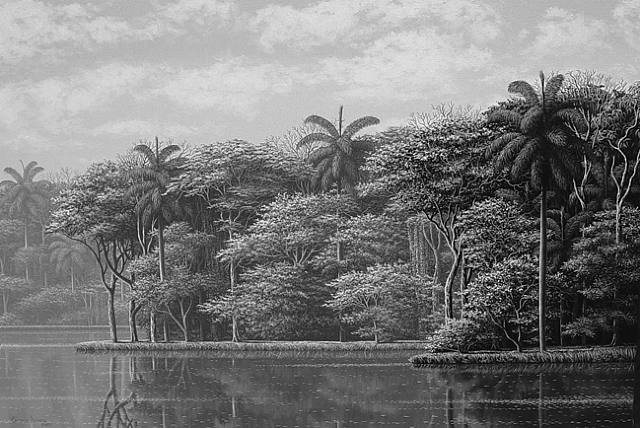
Was an absence of neon lights and bright paints and colourful advertising actually grey? Its amazing how urban our thinking is… nothing is as colourful as nature. Walking through the UN today I saw paintings from an exhibition sponsored by Cuba. The artist from this communist country, Luis Antonio Espinosa Fruto, chose to paint all his pictures in… grey. But hey, they are bright, brilliant, beautiful images. They are all paintings of the natural environment in Cuba (continues below…).

artwork_images_424056915_238119_luis-antonio-espinosa-fruto.jpg

Cuban nature is mentioned in the depths of a report published by WWF earlier this week. The Living Planet Report tells a shocking story of what we are doing to ourselves and our planet… as Frank Dixon said at a talk on Monday, “the science is telling us we are like the meteor that hit the Yucatan and wiped out the dinosaurs, we are the new great exterminator”. We really are behaving on this planet like we have another one to go to.

On page 19, in a section comparing the amount of resources each country is gobbling up in comparison to the social development they have acheived, as indicated by the UN’s Human Development Index, shows that only one country has achieved a level of social development and environmental protection that can be considered “sustainable development”. That country? Grey-painted communist Cuba. The journos seem to have missed that one in their coverage of the report.

This state of affairs should make us ask some serious questions about current forms of economy and capitalism… are they helping us get what we really want? Is the world any more colourful for its shining lights and gaudy adverts, if these help melt the glaciers, dry up the lands, and degrade nature? Is it any more colourful when people run the rat race to souless material excess while others are malnourished and oppressed?

I guess one reason Cuba comes out on top is because the HDI statistics dont place decisive weightings on certain political freedoms. Cuba probably comes out on top environmentally because of the US embargo has encouraged local production of foods for local consumption. Organic market gardening isnt a lifestyle choice for the middle classes wanting some more meaning to their lives, but a basic necessity for many Cubans. Whats the policy conclusion? That everyone needs to be embargoed by the US?

Open borders only work when you’ve got a fair game going on, with ground rules that mean you dont trade away the environment or people as mere ‘externalities’ that can be disregarded. The evidence from the Living Planet Report is more an indictment of the West than it is praise for Cuba. But, well done Cuba for reminding us that our brains are the only grey matter in nature, and its our choice to make them vitally brilliant or deadly dull.

Thank you Jill

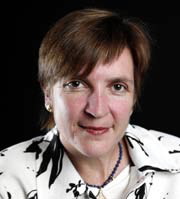
jill

On Monday 25th, at the start of my first day in the WWF-UK office, the death of WWF-UK’s Director of Programmes, Dr Jill Bowling, was confirmed along with 23 passengers on a helicopter in Nepal.

Jill was the reason I joined WWF. I have mixed feelings about NGOs, given the tendency for big egos to badly manage, sometimes confusing their public purpose and the values from which this arises, with their own status or that of their organisation. But Jill embodied a different approach. In the three times I met her, and few times we discussed on the phone, I found someone who was focused on the imperative of positive change for people and planet. Someone who wanted to support and enable talented and decicated people to achieve more than they could on their own. I was really looking forward to working with and learning from her.

Jill was in Nepal to mark a historic event, which illustrated both the need for and practicality of people living in harmony with nature and with eachother, to gain welfare, wellbeing and meaning from our living planet. “This historic step is an important landmark in the history of biodiversity conservation in the country… the devolution of power to local communities, especially with regard to natural resources and equitable sharing of benefits,” a press statement issued by the WWF Nepal said.

There was a memorial service in the offices of WWF-UK for Jill and Jenn Headley who had also worked at WWF-UK previously and died in the crash. Jill was a trustee of the Alliance of Religions and Conservation (www.arcworld.org) and a representative lead the service. To the staff he said of Jill: “you are her memory, you are her future.” Part of Jill’s legacy will be expressed though how we embrace the message of people-planet unity that underlay the important work in Nepal that she was there to celebrate.

This blog was meant to be about my random attempts at understanding things, and where failing that then just musing or laughing. With such sad and shocking news the only option is to seek some learning, some truth, some implication… thankfully Jill’s life is fertile for such lessons and legacy.

The week before, from the airport on her way to Nepal, Jill called me and apologized that she was not going to be in the office on my first day. Those little things speak volumes, don’t they? Thank you Jill.

Why was she there? An historic event: http://www.nepalmountainnews.org/news.php?subaction=showfull&id=1158998430&archive=&start_from=&ucat=1&do=news

WWF book of condolences: http://www.panda.org/news_facts/newsroom/crisis/helicopter_crash_nepal_2006/book_of_condolences/messages/index.cfm

Down to the bottom dollar

In the next couple of months I’ll be adding some material from the past 3 years of pre-blog-life that’s still relevant (or so I think). The following features me in the Sydney Morning Herald squaring up to strategy guru CKP … kinda.

Pub: Sydney Morning Herald

Pubdate: Wednesday 27th of April 2005

Edition: First

Down to the bottom dollar, by Wendy Frew  

As big companies look for ways to sell to developing countries, Wendy Frew asks if they’re doing right by the poor.

NEELAMMA, from the town of Kuppam in south-east India, is one of the
US computer giant Hewlett-Packard’s least lucrative customers. But she has become one of its most valuable customers in terms of public relations. The 27-year-old rents a digital camera and printer from the company at market rates, and makes a living charging about 90 cents to take pictures of fellow villagers.

Although Neelamma is from one of the poorest regions in the world, she is presented as the future of Hewlett-Packard’s revenue growth. “Neelamma joined the HP Village Photographer program in
India, using a solar-powered HP camera and printer to record events in her rural community and take photos for a government program,” its promotional material says. “She has expanded her work, ultimately doubling her family’s income.”

Neelamma and 4 billion people like her are the target of a Hewlett-Packard division called “Emerging Market Solutions”, which recognises developing regions “as one of the most significant business growth opportunities of the 21st century”. The 10 biggest of these emerging-market countries spent nearly $US77 billion ($99billion) on computer equipment in 2003. IT sales growth averages 12 per cent in these economies, compared to 5 per cent in developed countries.

Elsewhere in India, entrepreneurial villagers can rent a Hewlett-Packard “Digital Rural Theatre”, with a video projector, DVD player and speakers, to show movies in local neighbourhoods. Poor communities can also buy cheap wireless computers that use “cantennas” – antennas made of discarded tin cans – to cut costs.

Other multinational companies are following suit. Hindustan Lever, the Indian subsidiary of the world’s largest whitegoods maker, the Dutch giant Unilever, distributes soaps and detergents to villages across the country. The soaps are the same as those marketed to wealthier communities, but are sold in small packages to save costs. Sales representatives drive trucks around the villages, spruiking the products over a microphone.

In Brazil, the whitegoods retailer Casas Bahia provides credit to consumers with low and unpredictable incomes. In
Mexico, Cemex, one of the world’s biggest cement suppliers, has set up a scheme to help the poor save and invest so they can afford to buy the materials to extend their homes.

Is the Western world stooping to a new low in exploiting poorer countries? Or are these enlightened multinational companies figuring out how to help kick-start undeveloped economies and make a buck at the same time? Leading the debate is the US academic and business consultant C.K. Prahalad, whose new book, The Fortune at the Bottom of the Pyramid: Eradicating Poverty Through Profits, promotes the idea that companies can make money and help create jobs in developing countries by doing business with the poor.

Prahalad’s views carry weight because he is considered a member of the elite business academia, alongside gurus such as Michael Porter and Gary Hamel. His ideas, which centre on the buying power of the poor, have been described as visionary by some in business and political circles, and were on the agenda at several World Economic Forum seminars.

However, sceptics in aid and development circles describe his thesis as simplistic and possibly environmentally unsustainable. But even critics agree his work has started a fresh debate about how to tackle world poverty.

The Indian-born academic, who works from the Stephen M. Ross School of Business at the University of Michigan, says the developed world should stop thinking about the poor “as victims or as a burden, and start recognising them as resilient and creative entrepreneurs and value-conscious consumers”.

“Four billion poor can be the engine of the next round of global trade and prosperity,” Prahalad says. “It can be a source of innovations … Market development at the bottom of the pyramid will also create millions of new entrepreneurs at the grassroots level – from women working as distributors and entrepreneurs to village-level micro enterprises.”

Prahalad defines the bottom of the period as the 4 to 5 billion people in the world who live on less than $US2 a day. Instead of assuming their plight can be alleviated only through aid, businesses should consider them as worthwhile customers. He says the challenge is in finding ways of profitably selling to this group using a combination of high-technology solutions, private enterprise and co-operation between business, government and non-government organisations.

To succeed, business has to rethink how to produce, package and distribute goods to the poor, who have volatile earnings and little disposable income. For example, Prahalad says, in the case of consumer goods such as shampoo, the poor are unlikely to be able to afford a standard-sized bottle but will buy a one-wash sachet on an irregular basis.

In many countries, the poor are paying up to 30 per cent more for basic necessities because of poor distribution networks, fragmented markets and corruption. The rural poor are particularly disadvantaged because of their distance from markets and the lack of affordable transport to those markets.

It is also near-impossible for them to borrow money except at extortionate interest rates from local money lenders.

Prahalad concedes the biggest risk to his vision is convincing the business world to change its attitude to the poor. “To approach this market, we have to fundamentally challenge our existing cost assumptions. That means the existing way of going to market is not sacrosanct. That creates some doubt about whether this is possible because we don’t have economic models on how we can create the same features and functionality [for products sold in undeveloped markets]. But once you cross that, the solutions are more obvious than people think.”

Success in marketing to the poor will also depend on approaching them as valuable consumers. “The [bottom-of-the-pyramid] consumers get products and services at an affordable price, but, more important, they get recognition, respect, and fair treatment,” writes Prahalad in his book. “Building self-esteem and entrepreneurial drive at the bottom of the pyramid is probably the most enduring contribution that the private sector can make.”

Statements such as these have attracted the sharpest criticism from development experts. Atul Wad, a sustainable-business consultant, says Prahalad’s argument that the corporate world needs to go beyond corporate philanthropy is compelling. However, many of the world’s poor suffer not just from a lack of money but from everything from the HIV/AIDS epidemic to civil wars and natural disasters.

“These people are not even close to being active participants in any marketplace … selling shampoo to them is not the solution,” he wrote in an article on the website SustainableBusiness.com.

“Though the collective purchasing power of the poor is enormous, buying decisions are still individual. By rampant marketing, a rural household may well end up spending its small disposable income on inappropriate products … It is morally reprehensible to see people as purely consumers for shampoo and beer.”

Dr Jem Bendell, a consultant to the United Nations and professor of management at the University of Nottingham’s International Centre for Corporate Social Responsibility, says Prahalad’s focus on the poor as consumers overlooks the damage multinational companies could do to employment in poor communities if they do not manufacture locally. Selling goods in much smaller serves also increases the amount of packaging, which puts pressure on environments. “It’s good Prahalad has opened up the door [to such discussions], but we need more work on it.”

He says Prahalad risks joining those academics whose main contribution to debate is presenting complicated ideas in a sexy, simplistic package, but that may not help solve long-term problems. “You need a much more critical examination of how corporations can help the poor but still make money.”

The chief executive of Opportunity International Australia, Paul Peters, agrees there is money to be made from poorer markets if products are well-priced. “If you go into any slum, the people there buy products at many times the cost that you and I pay here … there are just so many more middlemen in the process. If you just look at the sheer number of people … there is a lot of money being transacted.”

However, Peters, whose group aims to create jobs and stimulate business by providing micro-finance to the poor, says businesses face several challenges: finding the right models for the markets they target, and finding local staff with the appropriate skills and a commitment to serving the poor.

It is not enough to inject cash into the top of an economy. “Coke can put a bottling plant anywhere. The question is, does the economic benefit of that just sit with the shareholders? Unless you are doing things that will get to the bottom of the market or create wealth at the bottom [it won’t make much of a difference],” he says.

Prahalad contends his book was not meant as a solution to all the ills facing the world’s poor. “What I am suggesting is that leaving people in abject poverty without giving them a sense of hope and opportunity creates all kinds of disturbances,” he says.

“[The book] provides a fresh perspective to the biggest development challenge we have faced in the past 50 years: subsidies, foreign aid, philanthropy and corporate social responsibility can only take us so far.

“We have tried it but the sustainable solution that seems to work is when business gets involved and creates markets.”


How to Begin? On consciousness and foot massage

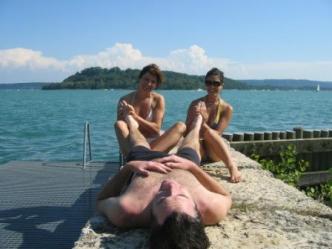
foot massage june 06

How should I begin my own blog? Its going to be a mix of work and life. I want to use it partly as my own diary or journal, and use the informal setting to write more freely than I do in my publications (which, by the way, plug, are available via http://www.jembendell.com, end plug). So it will reflect what I think about. This summer, during a July of 30+ heat in Geneva, I spent time reflecting on what my worldview is today… I had some decisions to make about future work and where to live. Ive made those decisions… more on that later, but for now, this is what Ive come up with…

What is my belief system? I don’t think I have one… other than the importance of foot massage (well I’d had a hard weekend walking in the Jura.). I have hopes, about the way things might be, and know how I would like things to be, but not beliefs. I see beliefs as those things we say are so, despite evidence to the contrary. Instead, my ethos is partly informed from experiences of consciousness, combined with reason.

foot massage june 06

I take inspiration from peak experiences, momentary states of consciousness which can be called ‘universal love’ consciousness or spiritual consciousness, where the sense of separateness of oneself from everything else melts away. For me these are important in 3 respects.

a) Insight into reality. This consciousness suggests that there is a reality that is non-separate. That there is some unity of being that we do not always perceive in daily living. This consciousness happens within my brain-and-body, and so could be either entirely bounded within that, or could involve my mind connecting with something outside it. I do not know. Anyone who says they do know are probably just speculating in ways that reflect their emotional needs, social conditioning etc.

b) Experience of the experiencer. This consciousness can release a great sense of joy. That joy comes, I think, from all the fears we have that arise from our separateness and fixation on forms not flows e.g. how we fit in, whether we are good, that we will die, that things or people we like or love will change, disappear, suffer. Joy itself has value.

c) The effect on interpersonal relations. This consciousness CAN, but not necessarily WILL, create mutually supportive interaction between people, leading to more people self-actualizing in harmony.

None of these interpretations of the meaning, importance and implications of peak experiences or higher states of consciousness are complete: we should not just focus on one aspect.

The memory of these peak experiences can motivate people to act in ways that are

i) self-expressing in ways that correspond with a greater more connected self and

ii) self-effacing (and even self-harming) in the sense that the acting or ways of thinking involve subsuming the self to the other.


Some people think that ii is of higher worth in terms of transcending self-interest, whereas some think that ii is a pathology, not a spiritual quality. I believe that both self-expression and self-effacing are essential aspects of a life arising out of the knowledge and experience of higher consciousness, and that one and not the other is not complete.

From realizing that in a night club, in a church and by a lake I have had these moments of higher consciousness, I do not see this consciousness as purely material, purely supernatural and religious, or purely natural and ecological…. I even feel like this a bit when I spend time with good friends. It was great when Adam and Fay popped in for a surprise visit to Geneva. (OK, Fay and Adam I wasnt overwhelmed by the holy spirit, but it was nice to see u).

fay adam and jem

So I’m beginning the blog with consciousness. Appropriately perhaps, because “in the beginning there was consciousness.” That’s how I understand the opening phrase of the bible “In the beginning was the Word”. The original word was “logos” and this doesnt mean “word” but alludes to thought, concept, or, consciousness. In this way the Abrahamic religions correspond with Eastern philosophy on consciousness preceding matter. Its just that in the West we have got too attached to and proud of language, worshipping the false idols of ink on a page and sounds from the mouth. Im not sure whether moments of altered consciousness are moments when we connect to that original universal consciousness… That would have to be a belief. But it certainly seems experientially as if there is a fundamental unity being connected to.

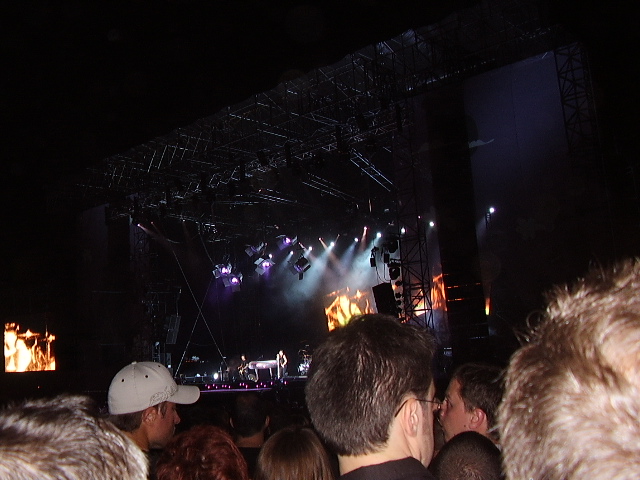
I’ll leave it there for now.. not bad for a first blog post to reveal both post-christianity and forays into the chemical world. Speaking of which… how DOES Dave keep doing it? Wild show at Paleo from Depeche Mode this summer… loved it.

depeche mode