A Personal Message on Covid-19

I was surprised recently that someone close to me likely had Covid-19 again less than 3 months after her previous infection. She didn’t take a test for it either time, but the symptoms suggested it wasn’t the flu. Fever, headache, lethargy, loss of smell, but no sneezing or phlegm. As the initial symptoms didn’t put her in bed, sick, we didn’t take it too seriously. But this second infection has lingered, and created recurring lethargy and insomnia, while also bringing back some old health problems. That encouraged me to look into the latest information on Covid-19. What I found concerned me. I am sharing about it here for the same reasons I did so in the past. Since looking into it more closely in 2021, I have thought that the policy orthodoxy on Covid-19 has been counterproductive. Additionally, I have been concerned that most commentators in the environmental field are aligned with the orthodoxy and thereby turning many people away from the environmental cause. Thirdly, pandemics have often played a key role in societal breakdowns and transformations in the past, and so the risks of the Covid-19 pandemic, and future ones, is within my field of analysis and comment. Looking back, one sad aspect of speaking out over the last four years has been that many people assumed that questioning the orthodoxy means caring less about this disease, or public health in general. Such prejudice was produced by Big Pharma and their supporters in politics, the medical establishment, and mass media. In sharing on Covid-19 now, I don’t expect to have much influence, but if some of you, my readers, take the following ideas seriously enough to check them out for yourself, then at least a few of you might benefit. 

My past essays on the topic were always well referenced, and I provided links to credible sources, such as official data sets or peer-reviewed papers. I wanted to be as factual and precise as possible, and avoid the misleading spin from various commentators. This post will not be like that. I write not to influence agendas but to nudge those of you who follow my blog to act to be healthier than you might otherwise be… that’s if you look into the information for yourself and agree. You could use an AI chatbot to check some of my statements that will follow and look for relevant data. I think if we don’t do our own checking then we don’t convince ourselves enough to change behaviours. 

Anyway, here goes, with my personal message on Covid-19…

Continue reading “A Personal Message on Covid-19”
Mary Magdalene and the Mariam Mantra

If we are truly in a situation of ‘metacrisis’ then the foundations of our understanding of life and death are being challenged. It feels that way for many people who conclude that the upheavals of recent years are aspects of a breakdown in ‘normal’ life. Such a deep disturbance can be fertile ground for rethinking dominant ideas we received from our culture. For some, that can involve rethinking our relationship to religion, spirituality and the divine. That has brought me to a point of recognising that the cultural mis-shaping of our shared interpretations of personal experiences of non-separation and existential gratitude, are at the root of widespread destruction and exploitation. Even without the scandals and violent histories, institutionalised religion has a lot to answer for. Beyond that, exploring an enlivening and empowering spirituality can be an amazing outcome of the metacrisis. It doesn’t make the bad stuff go away, but it can change how we respond to it.

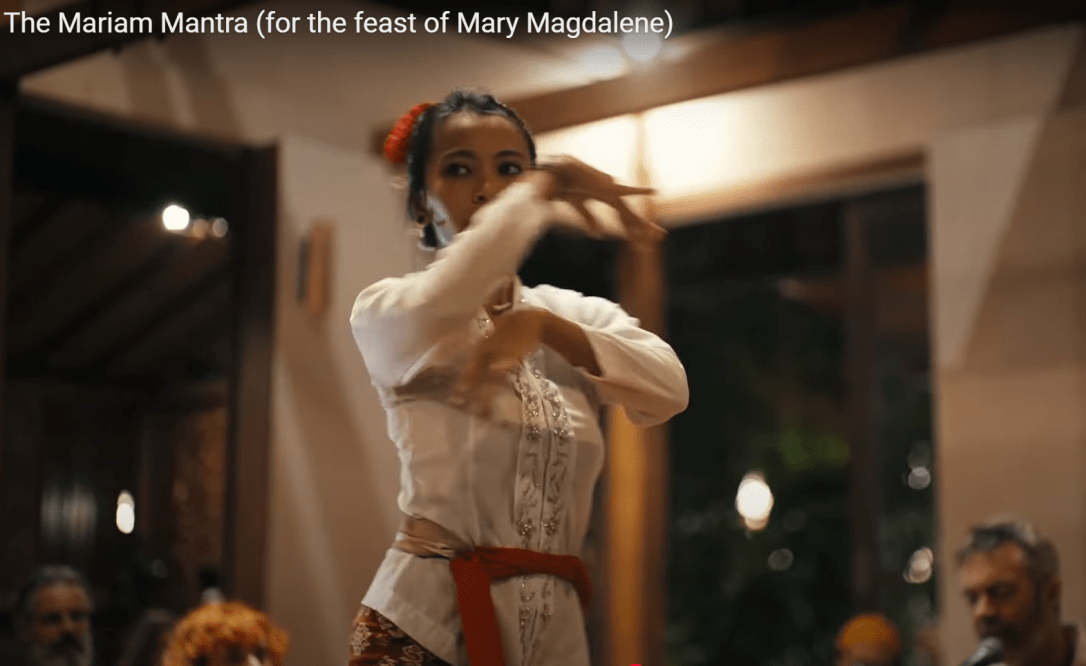
I was born into Christianity, in the Anglican tradition. It took me until my 50s to look into the content of those Gospels that were excluded from the official canon. One of those is the Gospel of Mary Magdalene. Upon studying it, I composed a mantra that draws from one of its phrases about the sacred interbeing of all that exists. I performed the mantra at a musical gathering, or Kirtan, which occurred on the day of the feast of Mary Magdalene (July 22nd, 2025). The band had not heard it or rehearsed it before, but as we had Ezca dancing with us, I wanted to record the occasion – and the video follows below. The result is a bit messy, musically, but I think it conveys some of the feeling of the moment. The chords and words of the mantra follow at the end of these reflections.

Continue reading “Mary Magdalene and the Mariam Mantra”

Christianity and Hope – when the Pope does hopium, what do the mystics do?

For anyone who has grown up in a Christian country, the past week can be a time for reflection on values and purpose. It can be a moment where we find calm away from the rush of our normal lives and re-assess. Any religious festival can provide us with that opportunity, if we are open to that. On religious occasions like Christmas and Easter, people exposed to Western media will read or hear about what The Pope says about the world. So that’s why I heard the Pope’s new message on hope in difficult times. My discomfort about his message meant I shared some thoughts on social media, which generated feedback and dialogue. Rather than repeating myself in comments on those threads, I thought I’d write a post about ‘Christianity and Hope’ on my blog… so here goes.

The Pope’s message seemed to be asking us all to have hope in a better tomorrow. But he went much further than that, when claiming that hope for a materially better situation in the world is a requirement and concomitant with being loving towards others. He wrote:

“Those who love, even if they find themselves in uncertain situations, always view the world with a gentle gaze of hope.”

Continue reading “Christianity and Hope – when the Pope does hopium, what do the mystics do?”

It’s not too late to stop being a tool of oppression

An audio version of this essay is available.

Death rates are still above normal in many countries of the world. The medical experts don’t know why. It could be from the long-term complications from past Covid infections, or it could be from the impacts of novel vaccines, or it could be from the delayed treatments due to lockdowns. Or perhaps it is from a mixture of these causes, or even from some other factor altogether. Even writing those two sentences induced in me a feeling of trepidation. I find myself readying for the annoyance or even aggression from some people. Which is odd: people did not behave so stridently on public health issues before 2020. I think the decay in normal scientific dialogue and policy scrutiny is a significant lasting damage from the last few years. It is why I am not going to let it lie. Instead, I hope we can all learn more about why people became so badly informed and aggressive towards others who reached conclusions different to their own. Only then might we avoid making matters worse when future public health crises occur. And if the excess mortality does not return to normal, then we are already within an ongoing health crisis right now.

It is why in this essay I am returning to the scientific facts which prove the medical authoritarian orthodoxy on Covid has been scientifically wrong. Not just wrong in hindsight, but now more widely recognised as wrong by experts and scientists who ignored some of the earlier concerns. This recent science can’t be ignored unless someone is no longer interested in the science on public health.

Continue reading “It’s not too late to stop being a tool of oppression”

The Wisdom of Play in Times Like These

I first met Zori at an Improvisational Theatre workshop. I set up the free weekly gathering as I had recently discovered Improv and knew I needed it in my life. It is the perfect therapy for a perfectionist, for someone who feels they need to know and calculate everything before doing something. Because you can’t do that with Improv. After the workshop a group of us went to dinner and I told Zori the paper I had been working on. As a former IT entrepreneur and someone exploring the possibility of starting a business, she was interested in the environmental theme. I explained how during my year unpaid sabbatical from my University job, I had returned to reading the scientific literature on climate change, and had concluded that it is too late to sustain the industrial consumer societies that we depend upon. I had also concluded that this scenario was not in the distant future, but that many of us would suffer and die as a result of the breakdown of the systems that feed, cloth, house, protect and motivate us. 

“How long do we have?” asked Zori, as we waited for our dinner.  

Continue reading “The Wisdom of Play in Times Like These”

A Positive Song in a World Gone Silly

During the pandemic many people appear to have had their capabilities for logic and ethics vaporised in the heat of fear and the distortions of reality from elite interests.  Consequently, from a serious public health perspective, the conversations about the pandemic are mostly silly. That does not mean there are really serious and damaging outcomes for individuals and societies. Millions of lives were lost and many might have been saved with smarter actions and more free flowing information. Now millions more lives are being risked due to the impacts of policies on supply chains and the cascading impacts on the poor worldwide. But given how much misinformed piety and pseudo professionalism is on show, it can be helpful at times to simply laugh at the orthodoxy on the pandemic. Here are some examples. 

Medical officials ignoring early outpatient treatment from their frontline colleagues? Arrogantly silly. 

Bigtech firms suppressing such information that might save lives? Ruthlessly silly. 

Continue reading “A Positive Song in a World Gone Silly”

Decolonize the World Health Organisation (WHO)

There is now much peer-reviewed science on the medicinal benefits of various natural foods. Which is obvious as humans have been healthy and recovering from disease since… um… well… prehistory. 

So science is playing catch up with traditional and community knowledge on how to help stay healthy and recover when we get sick. But that wisdom is studiously ignored by medical bureaucracies that have been trained to only accept large clinical trials of the type that (mostly Western) pharmaceutical companies can pay for. It means that esteemed institutions like the World Health Organisation (WHO) mostly ignore what is being done with healing plants in many countries. Worse, their staff devoutly and proudly ignore it as a matter of professional and personal identity as being strictly “scientific.” I know that because I worked as a consultant with them before. And there is evidence that millions are suffering as a result of their conceit. 

Continue reading “Decolonize the World Health Organisation (WHO)”

Uniting in Love and Rage against Corporate Power

If you think things in society are going wrong, how does that make you feel? Sad? In some situations, might you feel some rage?

It is natural to feel angry about a bad situation. The issue is then what we do about it. Our culture tends to denigrate anger in ways that mean we do not have a healthy discussion or understanding of the difference between a positive anger and a destructive anger. Anger suppressed can lead to a destructive anger which manifests as aggressions towards people. However, there can also be a righteous anger which is a natural and important response to unnecessary harm and injustice. Such an anger can remain connected to our sense of love for creation and each other. But it needs to flow somewhere…

When you feel righteous anger about a situation, what do you do next? 

Continue reading “Uniting in Love and Rage against Corporate Power”

Finding my voice through a fever

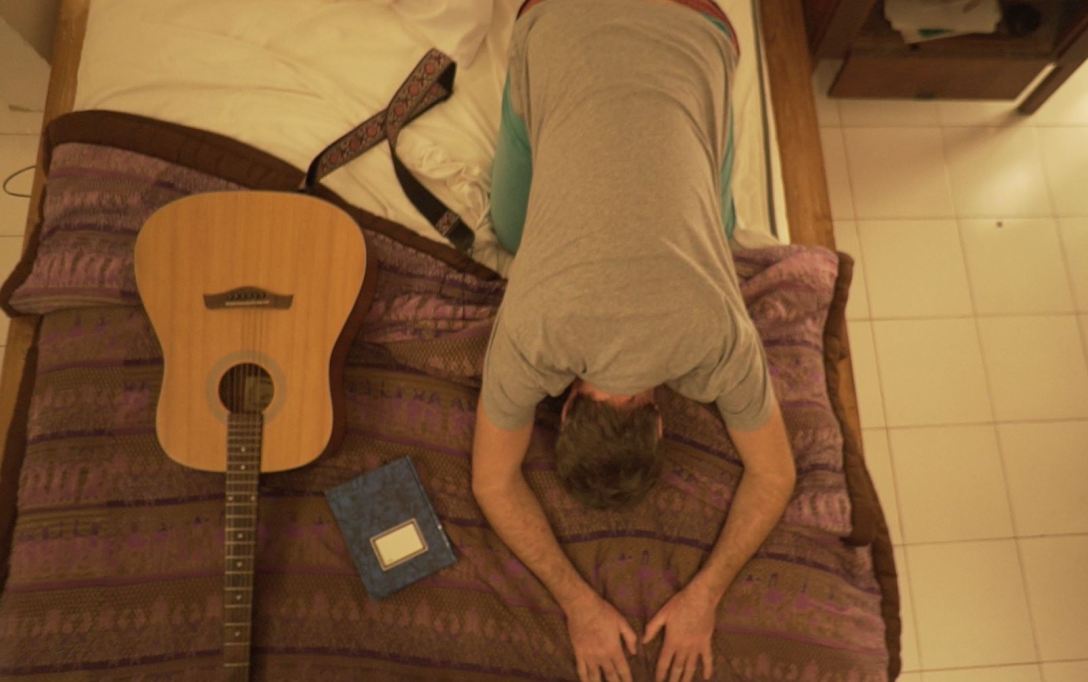
Getting sick with Covid-19 forced me to stop. I had to experience my busy mind without the habitual means of entertaining or busying myself. I found little energy or interest for anything other than strumming my guitar. But as I can’t play properly, I knew only two songs the whole way through. So within a few days I started singing my own words and melody. Sometimes I liked what I heard, so recorded it on my phone. Then I experimented with expressing a mood I was feeling through a melody and words. That produced some chunks, but nothing like a song. So I called a friend and asked him how to create verses if I have a chorus. “Try doubling the chords you used for the chorus” he said. With that I was on my way, soon writing down lyrics for verses and deciding when to return to a chorus. “You need a bridge” said another friend, after I sent him my first attempts. I didn’t know how to create a bridge, but after messing around with some ideas, I found what sounded about right.

Continue reading “Finding my voice through a fever”