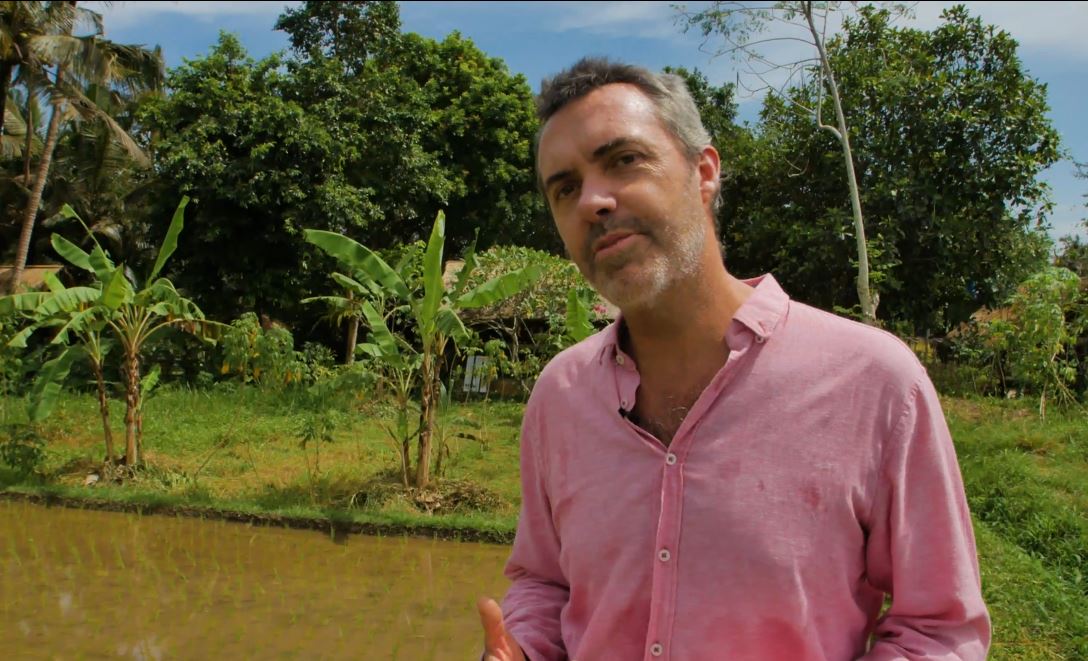
The Benefits of Africa Evading Western Panic

Africa has fared far better than the West in the direct impacts of Covid-19. With 16% of the world’s population, Africa has had only around 5% of the world’s Covid cases, with only about 7% of the population double-jabbed against the virus. Half of African countries have Covid mortality rates lower than 1 in 10,000 people – less than one-twentieth the rate in the USA.

So what can people in the West, of any political leaning, learn from the pandemic response in Africa?

Tragically, the impacts of policies against Covid have put tens of millions of people into poverty through their disruption to economies and supply chains. That shows how ‘Western panic’ may be exerting severe collateral damage around the world. So what can people outside the West learn about the dangers of ‘Western panic’?

In an invited contribution to the ‘Existing Otherwise’ art exhibition in Ghana I share reflections during a 15 minute ‘walk and talk’ video.

Continue reading “The Benefits of Africa Evading Western Panic”

Reverend Stephen G Wright on Spirituality and #DeepAdaptation

Reverend Stephen G Wright is Spiritual Director and trustee for the Sacred Space Foundation and the the founder of the St. Kentigern School for Contemplatives. Recently he was elected as a member of the Holding Group of the Deep Adaptation Forum.

In this #DeepAdaptation Q&A hosted by Katie Carr, Reverend Wright explores spirituality and the role of the mystic-contemplative in deep adaptation. It includes “the spiritual life as a fierce de-addiction programme”, “Learning to keep your heart open in hell” (#RamDass), and Peggy Lee’s “Is That All There is?”

Continue reading “Reverend Stephen G Wright on Spirituality and #DeepAdaptation”

Deep Adaptation Q&As in 2022

Hear from people who are responding to their anticipation or experience of societal disruption in fascinating ways – and ask them questions. These Q&A sessions are hosted by either Professor Jem Bendell or Katie Carr and feature questions from participants in the DA movement. They are free to attend and most are open to anyone. Videos of the Q&As are posted online afterwards and previous ones with guests including Joanna Macy and Charles Eisenstein can be viewed here. Further Q&As will be added to the programme in 2022 – stay up-to-date with the latest additions via the DA Leadership group.

Reverend Stephen G Wright – Interfaith minister and member of the Holding Group of the Deep Adaptation Forum. January 25th 2022

Join Katie Carr as Stephen discusses engaged spirituality, and the role of the mystic-completive in deep adaptation to societal collapse. Check details and book your place.

Continue reading “Deep Adaptation Q&As in 2022”

Et si ça y était ? ¿Es este el momento que esperábamos? Siamo davvero alla frutta?

Editorial pour le bulletin d’information du 7 janvier 2022 : Et si ça y était ? Répondre consciemment aux perturbations sociétales.

Editorial para el boletín del 7 de enero de 2022: ¿Es este el momento que esperábamos? Una respuesta consciente a la desintegración social.

Editoriale della newsletter del 7 gennaio 2022. Siamo davvero alla frutta? Come rispondere consapevolmente ai disagi della società.

Continue reading “Et si ça y était ? ¿Es este el momento que esperábamos? Siamo davvero alla frutta?”

100s of scholars worldwide engage on collapse risk and readiness

In December 2020 over 600 academics signed an international Scholars’ Warning on societal disruption and collapse. It led to the formation of an initiative to help more scholars to engage publicly about their views on collapse risk, readiness and response. This is a quick summary of what has happened and what is in the pipeline.

The second public Scholars’ Warning letter appeared in the Independent Newspaper at the close of COP26 and was written about in a number of articles. It also appeared in French newspapers. Over 200 scholars responded within the 24 hours to sign and help the sense-making of journalists and others as the summit closed. If you agree with the sentiment of this latest letter, please share this video of some of the signatories reading it.

By registering their support for a more radical agenda on our climate predicament, including the need to discuss collapse risk, readiness and response, now journalists can find these scholars and bring these ideas to wider attention. One example is an ‘Inside Climate News’ article that interviewed a number of signatories.

Continue reading “100s of scholars worldwide engage on collapse risk and readiness”

Essentials of Life and Death – part 6 of a #RealGreenRevolution

This is the 6th in a 7-part essay on the type of policy innovations that would respond to the truth of the environmental predicament and, also, why most environmental professionals ignore such ideas to promote limited and limiting ideas instead. These ideas on a #RealGreenRevolution provide a contrast to current agendas, with the aim of encouraging a global environmental movement as a rights-based political force.  In this part of the essay, I focus on some sensitive issues about life and death, which have become even more polarised due to pandemic policy responses.

To receive each part of the essay, subscribe to my blog, using the box on the right (or right at the bottom of this post). To engage with other people who are responding to these ideas, either visit the Deep Adaptation Leadership group on LinkedIn (where I will check in) or the Deep Adaptation group on Facebook, or by following the hashtag #RealGreenRevolution on twitter. A list of previous parts of this essay is available.

Agricultural Transformation

The impacts of current levels of climate change on agriculture are already scary. The modelling of what could happen when we pass 1.5 degrees global ambient warming is much scarier. Our civilisation is based on grains, which feed us humans about 80 percent of our calories, either directly or via animal feed. With 1.5 degrees warming the risk becomes high for prolonged droughts or unseasonal frosts harming the production in multiple major grain exporting regions around the world in the same year. Therefore, our agricultural and food systems need urgent diversification in ways that do not increase, but reduce carbon emissions.

Continue reading “Essentials of Life and Death – part 6 of a #RealGreenRevolution”

Are Intergovernmental Alliances for Saving Humanity Still Possible? Part 5 of a #RealGreenRevolution

This is the 5th in a 7-part essay on the type of policy innovations that would respond to the truth of the environmental predicament and, also, why most environmental professionals ignore such ideas to promote limited and limiting ideas instead. These ideas on a #RealGreenRevolution provide a contrast to current agendas, with the aim of encouraging a global environmental movement as a rights-based political force.  In this part of the essay, I focus on financing initiatives, geoengineering (climate restoration and repair), reparations and ecocide, migrating ecosystems, nuclear power and the difficult reality of systemic work on climate adaptation – nothing much to argue about then 😉

To receive each part of the essay, subscribe to my blog, using the box on the right (or right at the bottom of this post). To engage with other people who are responding to these ideas, either engage on the Deep Adaptation Leadership group on LinkedIn (where I will check in) or the Deep Adaptation group on Facebook, or by following the hashtag #RealGreenRevolution on twitter. A list of previous parts of this essay is available.

Intergovernmental Climate Emergency funds

Over the past decades many pledges to fund climate action and other international causes, such as poverty reduction, have remained unfulfilled. Even though the pledged amounts fall short of what is required, and are peanuts compared to the bailouts for banks or spending on the military, nevertheless they are retracted when governments seek to cut expenditures on what they consider non-essential. The climate predicament is a shared global concern and therefore efforts on the whole #ClimatePlus agenda need a new global financing system. No longer must we rely on existing government budgets or the benevolence of richer nations and their future politicians. Therefore we need serious consideration of new forms of international seigniorage of monetary instruments.  

Continue reading “Are Intergovernmental Alliances for Saving Humanity Still Possible? Part 5 of a #RealGreenRevolution”

We Can’t Live on Borrowed Freedom Forever – part 4 of a #RealGreenRevolution

This is the 4th in a 7-part essay on the type of policy innovations that would respond to the truth of the environmental predicament and, also, why most environmental professionals ignore such ideas to promote limited and limiting ideas instead. These ideas on a #RealGreenRevolution provide a contrast to current agendas, with the aim of encouraging a global environmental movement as a rights-based political force.  In this part of the essay, I focus on the impossible yet essential matter of governance reform. It is something made even more difficult by the recent capture of public space to global tech platforms, which most politicians choose to ignore.

To receive each part of the essay, subscribe to my blog. To engage with other people who are responding to these ideas, either engage on the Deep Adaptation Leadership group on LinkedIn (where I will check in) or the Deep Adaptation group on Facebook, or by following the hashtag #RealGreenRevolution on twitter. A list of previous parts of this essay is available.

Governance Reform

The past decades have witnessed similar political trends across many countries, involving market deregulation, privatisation, foreign ownership and increased financialization. The way such trends have occurred worldwide is an indication of the lack of sovereignty of individual nations. Instead, global financial institutions provide the intellectual resources and talking points via professional institutes, media, universities and thinktanks, and exert a disciplinary force via the government bond and foreign exchange markets. In each country there is a particular packaging for this agenda, and a story told about how it is a result of the leadership of a particular politician or political faction. But the global trend reveals as a complete fraud the story in mainstream media that individual politicians are leaders rather than administrators of the interests of national and international capital, however knowingly or not, and the sales assistants for the ideas that advance those interests. Many politicians are actually trained in such sales techniques, including public relations professionals, actors, presenters and celebrities.

Continue reading “We Can’t Live on Borrowed Freedom Forever – part 4 of a #RealGreenRevolution”

Tax Carbon Not Income and Reform Markets – part 2 of a #RealGreenRevolution

This is the 2nd in a 7-part essay on the type of policy innovations that would respond to the truth of the environmental predicament and, also, why most environmental professionals ignore such ideas to promote limited and limiting ideas instead. These ideas on a #RealGreenRevolution provide a contrast to current agendas, with the aim of encouraging a global environmental movement as a rights-based political force.  In this essay I focus on that sexy topic of taxation, and how to transform it to provide the price signals and funds to radically alter behaviours in fair ways.

To receive each part of the essay, subscribe to my blog, using the box on the right. To engage with other people who are responding to these ideas, either engage on the Deep Adaptation Leadership group on LinkedIn (where I will check in) or the Deep Adaptation group on Facebook, or by following the hashtag #RealGreenRevolution on twitter. The introductory Part 1 provides context.

Global Carbon Energy Tax Treaty

In 1997 one of the key ideas being discussed for how to help the whole planet reduce its carbon emissions was a taxation on carbon emissions. Using taxes to influence behaviours through market systems was something most governments had experience of and could be trialled quite easily. However, under the then US Vice President Al Gore, the delegation from the United States stopped that initiative and instead advanced the idea of creating markets for carbon permits. The resultant Kyoto Protocol started that process whereby we have witnessed polluters being given permits which they could then sell. Many environmental experts regurgitated the arguments of corporate public relations, that a cap-and-trade system would be better for the climate by identifying specific limits. Such carbon pie in our overheating sky was gobbled up by financial elites. The cap-and-trade systems have done little to nothing on carbon emissions, which have continued to rise ever faster around the world. I mention this history, as it is an example of how the mundane everyday influence of people working for corporations and governments focused on corporate interests can produce results that are ‘omnicidal’. That word means the killing of all life, and I use it because 1997 was the last chance humanity had to create a framework that could have slowed climate change sufficiently to avoid a manmade catastrophe for life on Earth. I don’t blame you Al, but the fact you are quoted with respect and excitement by environmentalists today suggests how ill informed, uncritical, timid and sycophantic to power the green movement and sector has become.

Continue reading “Tax Carbon Not Income and Reform Markets – part 2 of a #RealGreenRevolution”

This is what a #RealGreenRevolution would include

This is the first in a 7-part essay on the type of policy innovations that would respond to the truth of the environmental predicament and, also, why most environmental professionals ignore such ideas to promote limited and limiting ideas instead. It provides a contrast to current agendas, with the aim of encouraging a global environmental movement as a rights-based political force. This introduction provides context and a #ClimatePlus framework, with the policy proposals coming in the subsequent parts.

Introduction

As humanity faces catastrophic climate change, we hear calls for ‘systemic change’, or ‘transformation’. However, the familiar policy ideas shared by politicians, business leaders, climatologists and campaigners fail to be systemic. That includes the new announcements coming from governments during COP26, on matters like forest conservation and financing coal. But it also includes many of the bolder ideas from environmental campaigners, as some uncomfortable examples will illustrate… No, banks divesting from fossil fuels is not systemic, because if it works enough to lower the share-price of international oil companies, then competitors, rich families, or sovereign wealth funds from around the world will take them over and keep the oil pumping to supply ongoing demand. That doesn’t mean that banks and pension funds are doing the right thing to invest in oil companies – they are not. But trying to change that is not a systemic aim because it won’t change humanity’s impacts at scale. Neither is calling for governments to stop focusing on GDP growth a systemic idea, if the monetary system that requires their economies to grow in order to achieve economic stability remains enthroned. Condemning the UN processes as failures as a way of calling for multi-stakeholder alliances on climate is not a transformative stance, when it ignores how corporate influence over decades destroyed the potential of those UN processes and will likewise distort the initiatives coming out of any new alliance.

So am I just being defeatist? No – otherwise I would not bother writing this 7-part essay on radical and transformative policy responses to our environmental predicament. There are many systemic policy innovations that could help humanity right now, but you won’t hear them from the professionals engaged in climate policy this month. That is because the professional classes, who are people with time to engage in the policy jamborees, have been schooled within the ideology of our time, which defers to existing power in a global capitalist system. I know because I am one of them. I lied to myself for decades as I tried to encourage significant reform through voluntary corporate sustainability initiatives. What’s worse, we professionals working on public challenges are surrounded by people with an unacknowledged narcissism, where the motivation to feel ethical, smart, and contemporary, trumps any depth of inquiry into what might be going on and might be possible. It is a strange but silver lining of the terrifying climate news that more of us are being forced out of such patterns through a dark night of the soul. It means we can consider again what might work, rather than what has been just easy stuff to tell ourselves – or our professional admirers, clients or donors.

Continue reading “This is what a #RealGreenRevolution would include”