
“The Governor of the Bank of England has warned of “apocalyptic” global food price rises and said he is “helpless” in the face of surging inflation” reported The Daily Telegraph newspaper in the UK last year.
It feels a little odd when a central banking head uses words associated with doom-mongers like me. Governor Andrew Bailey was making headlines for describing his difficulties with managing inflation. The news coverage was a stark, if momentary, reminder that we exist in a living world, where our health and nutrition come from the soil, water, plants and animals, and not the abstract digits that pass across our screens. No, we can’t eat money, as Native Americans elders pointed out to the genocidal invaders centuries ago. Governor Bailey’s comment revealed how environmental change is impacting on modern societies in tangible ways. In my book Breaking Together, I marshal evidence that the fall in standard of living in most countries prior to the pandemic was partly the result of the fracturing biophysical foundations such societies. However, I can’t claim ‘I told you so’ as I disagree with the Governor on the key causes of inflation. Although the war in Ukraine matters greatly to grain markets, recent inflation has had little to do with our damaged global environment. Instead, as I describe in detail in Chapter 2 of my book, inflation since 2020 has been the result of the cavalier policies that central bankers, including Bailey himself, launched under the cover of the pandemic. The impacts of environmental change on prices are only now beginning to be felt. Because central bankers caused a wave of inflation prior to ecologically-driven inflation, the longer-term situation is going to be worse than the Governor claimed. So, I want to share with you what I think the implications are for those of us who care about both environmental and economic justice. But first, let’s go a little deeper into the inflation situation.
Subscribe / Support / Study / Essays / Covid
It’s true that environmental degradation, including a destabilized climate, is beginning to impact on the production and distribution of everything that we consume in a modern society. There is only one future for that trend, whatever we do with carbon emissions during this decade. By recognising this situation publicly, Bailey was aligning with alert economists like James Meadway and his colleagues at The Progressive Economy Forum. Since 2021, they have described the ways that climate change and environmental degradation are affecting the quality and availability of many products, and will do so increasingly in future. Meadway summarises this thesis in a recent episode of Planet Critical. I agree with their analysis of what is ahead, but it seems premature to blame the higher inflation of the last few years on environmental disruption. For instance, one key input is oil, which has often been identified as likely to ‘peak’ and drive inflation. In Chapter 2, I note that the price of a barrel of oil was much higher for consecutive years in the past without that impacting significantly on the price of food and other products. Instead, monetary policies launched during the pandemic caused a flood of money into economies around the world. That chapter is now available as a free audio, as well as a discussion paper. In it, I detail how the central bankers justified their novel purchasing of bonds issued by the largest companies in their countries as a sensible response to the economic impacts of lockdowns, and that story was accepted uncritically by the world’s business and financial press. However, I provide the evidence that the central bankers had the policy ready to go before the lockdowns were announced, and launched them when the lockdowns were expected to only be for a few weeks (so not presenting a significant impact economically). Moreover, anyone who knows the first thing about business could see that money given to corporations would not be used by them to keep staff employed to serve customers that didn’t exist anymore. Instead, they took the money, sacked thousands of people, and invested in foreign acquisitions. I perceived this as a neo-colonial dash for corporate territory, perhaps as a hedge by the ruling class against future currency declines or collapses.
I know James Meadway from when we were working for the Labour Party under Jeremy Corbyn in 2017 and he was advancing bold policies for a more environmentally-smart economy. He continues to be an important voice on economic affairs through his Macrodose podcast. Although we might disagree on the extent of ecological contributions to past inflation, I think his analysis of what is ahead for societies is spot on, and he powerfully challenges the basis of economics as an anthropocentric discipline. That is how economists stupidly assume the wider world to be infinite. Unfortunately, leftist intellectuals in the West have generally been timid, or absent, in critiquing the orthodox policy agenda on the pandemic. Therefore, a ‘disaster capitalist’ form of feasting on society by Big Pharma, Big Tech, and Big Finance, went largely unchallenged by those best equipped to do so. For some, that might have been due to a fear of being labelled as disrespectful to medical staff, arrogant about science, or lacking concern for the vulnerable. Such labels of disdain for people who questioned the narrative were promoted by politicians and mass media. They were then falsely promoted to us as widely-held opinions as US Big Tech platforms choose what we all saw, and did not see, from our friends and colleagues online. One doesn’t need to endorse any conspiracy theory about the pandemic to see that the dates and impacts of monetary decisions do not fit with the official explanations (as I detail in my book), and instead the situation was used an excuse for an agenda that the ruling class already had in mind.
Unfortunately, the ecological drivers of inflation will kick in over the coming years, especially given the recent acceleration of global warming. That inflation begins from a baseline of prices forced higher by the policies of central banks. But that isn’t where the crimes of the bankers end. Astonishingly, given their claims to take climate change seriously, they dished out huge amounts of pandemic cash to corporations in the oil sector as well as those sectors that consume large amounts of oil. More deeply, they continue to oversee an expansionist monetary system. That is one where over 97% of all money in circulation in modern economies is issued by private banks in the form of interest-bearing debt. In Chapter 10 of my Breaking Together, I explain how that monetary system requires the ever-increasing consumption of natural resources to enable economic growth, rather than allowing for a steady-state economy. That pressure to grow is exactly what we don’t need in an era when we are hitting the limits of the Earth to provide our resources and process our wastes.
If you like this analysis, then send it to someone influential, and if you want more, please help fund future writing.
Speaking of the many intersecting factors driving inflation, the Governor of the Bank of England joked that he had ‘run out of horsemen’. Yet all he had to do was look in the mirror for a little longer. Central bankers have neither the skills nor the legitimacy to shape any society’s response to the global predicament. Will anything change? There is zero evidence of that, despite the valiant efforts of people engaged in The Progressive Economy Forum, and similar groups worldwide. Therefore, the most likely scenario is that the monetary system will collapse in on itself. We don’t know when. Perhaps the bankers do. Nevertheless, we won’t need to wait that long: in Chapter 1, I pull together the data that indicates the breakdown of modern societies has already begun.
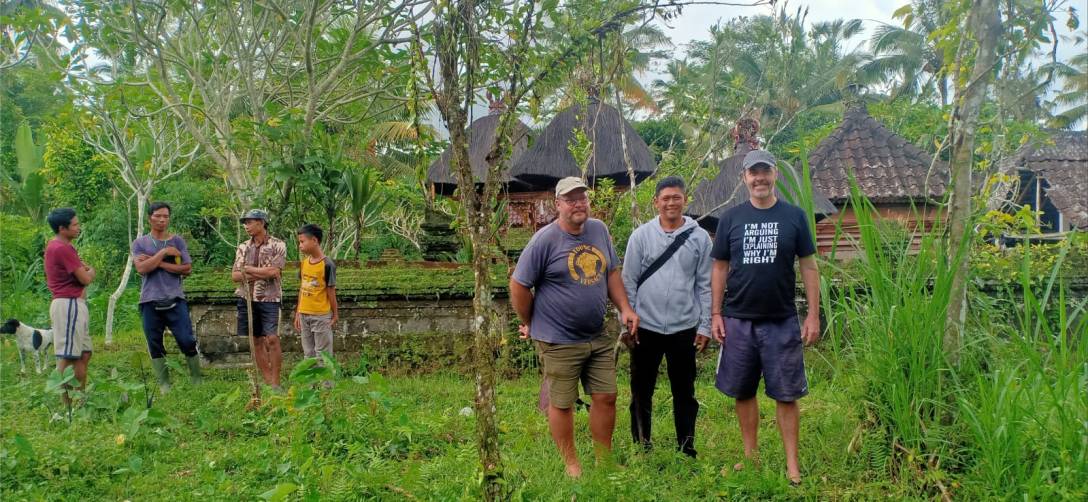
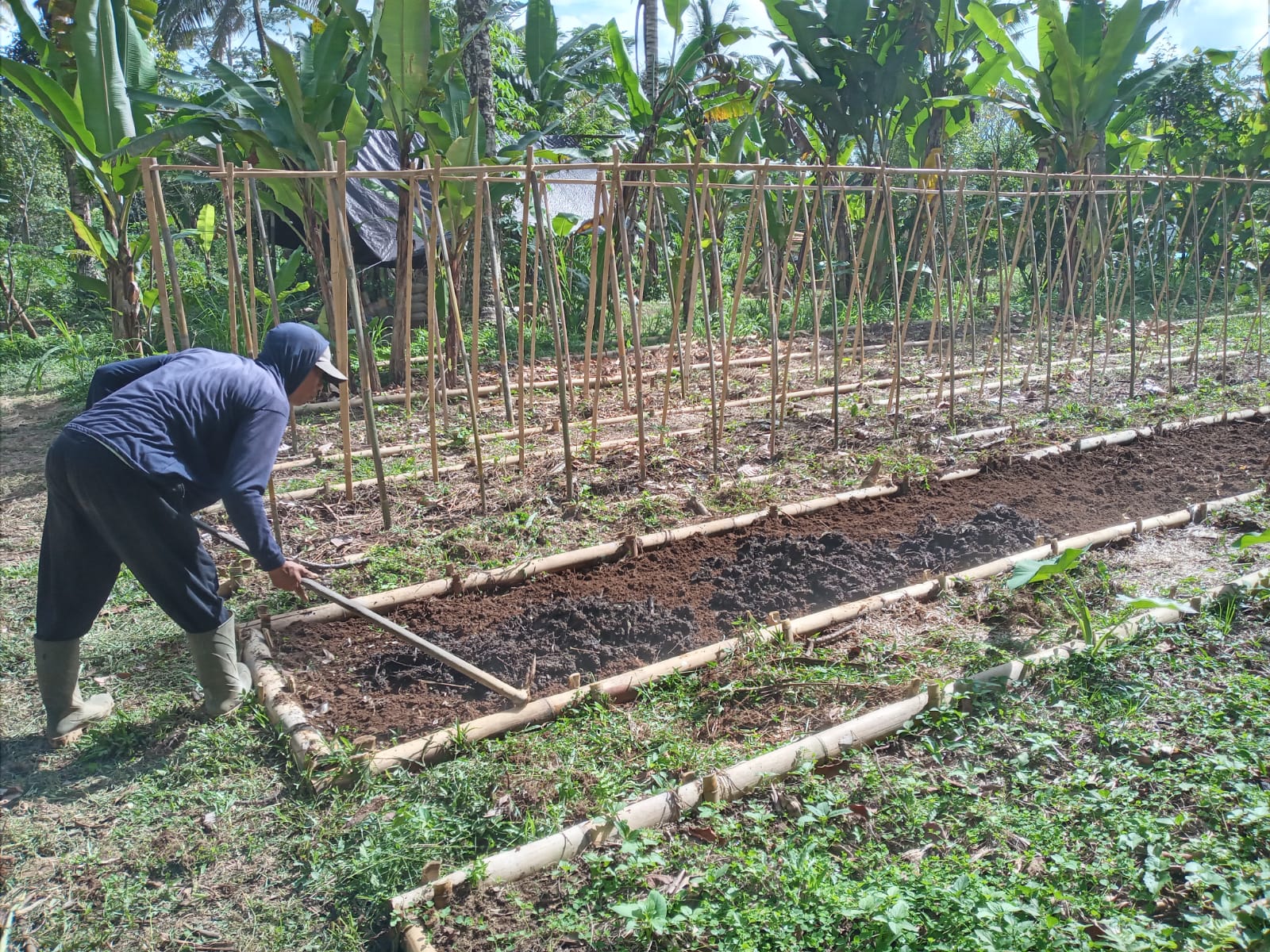
So, what can we do? Some socialists are discussing whether future persistent and even runaway inflation, especially for food, that is caused by environmental pressures will radicalise populations. Disgruntlement is inevitable, but channelling that into a coherent political agenda that includes changing monetary systems is extremely unlikely (and I am not aware of it happening before). I would be ecstatic if a political party could be elected on an agenda to take over central banks and make them serve the public again. That agenda would also require recognising the era of societal disruption and decline that we now face and reshaping monetary systems accordingly. Sadly, all evidence in my lifetime, and in history, is that the ‘powers-that-be’ won’t allow such fundamental change. Perhaps our only solace is knowing that during collapse, the bankers have further to fall. I say that without wishing to accelerate a collapse… in their hubris the bankers have that well covered themselves. Instead, it is time for more of us to turn away from the suits administering destructive systems and their stenographers in media. Instead, we can turn to each other. In Chapter 12 of Breaking Together, I describe a range of community economy initiatives, seeking to re-localise production, consumption, and exchange systems. Key to their efforts is that they are developing alternative means of exchange that do not rely on the banking system. I was therefore pleased to see the book reviewed by Shareable, an organisation that is promoting such local-scale initiatives, including those that are explicitly aimed at restoring or protecting the common ownership of shared resources. This perspective is why I will be promoting local exchange systems between small regenerative businesses here in Indonesia, alongside our training centre at Bekandze Farm. If successful, we won’t need to eat the rich. Which might be another reason to channel philanthropic funds to the project?! I’ll be talking about these ideas at the Ubud Writers and Readers festival on October 19th, as well as with Gaia Education, online on September 9th.
Perhaps you want to ‘up your game’ during the unravelling of modern societies? If so, please consider studying with me.
Donate to keep Jem writing / Read his book Breaking Together / Read Jem’s key ideas on collapse / Subscribe to this blog / Study with Jem / Browse his latest posts / Read the Scholars’ Warning / Visit the Deep Adaptation Forum / Receive Jem’s Biannual Bulletin / Receive the Deep Adaptation Review / Watch some of Jem’s talks / Find Emotional Support / Jem’s actual views on Covid










You must be logged in to post a comment.